
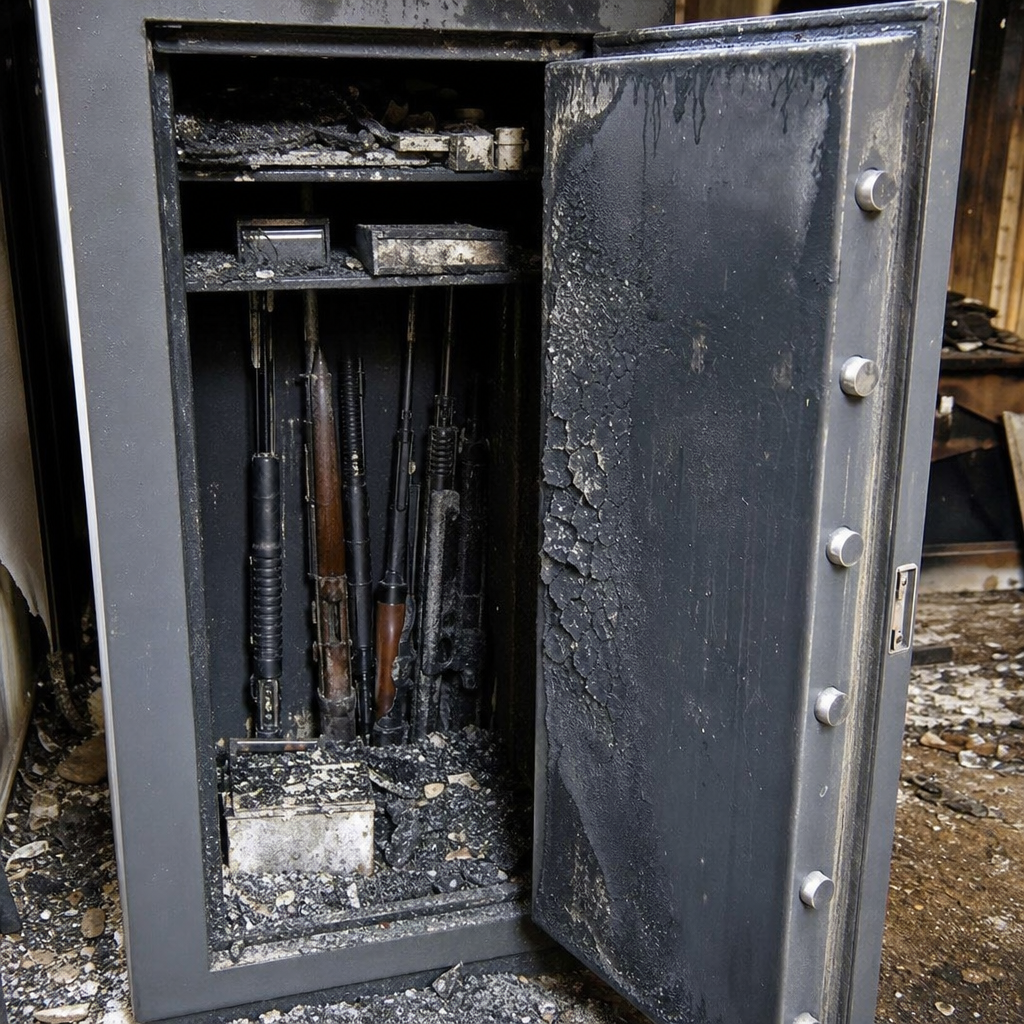
Shopping for a fireproof gun safe sounds simple until you read the labels. One brand promises sixty minutes at 1,400 degrees, another claims ninety minutes, and a third says its composite door offers superior protection. Many buyers assume those numbers are directly comparable and that “fireproof” means guns, documents, and valuables will survive any house fire. After years of evaluating safes, reviewing burn tests, and helping owners after real fire losses, I can say the truth is less comfortable: gun safe fireproofing is real, but marketing often hides the conditions, limits, and tradeoffs that matter most.
This topic matters because a gun safe is usually purchased to solve multiple risks at once: theft, unauthorized access, humidity, and fire. Fire ratings are especially misunderstood. In strict terms, no gun safe is literally fireproof; the more accurate word is fire-resistant. A fire-resistant safe slows heat transfer for a defined time under defined test conditions. That distinction is critical. Steel alone is a poor insulator, so manufacturers add gypsum board, ceramic wool, proprietary composite fill, door seals, and layered construction to keep the interior below temperatures that damage wood stocks, optics, ammunition packaging, paper records, and electronic media.
The problem is that many shoppers never see the full story behind the rating. Was the safe tested by an independent lab such as UL? Was it a complete product test or only a material estimate? What was the starting internal temperature? Did the test include a cooldown period, which often destroys contents after flames are gone? Was the safe bolted down on concrete, placed on carpet over a wood floor, or exposed to collapse from above? These details determine whether a fire rating means something useful or functions mostly as a sales number.
As a hub for gun safe myths and misconceptions, this article covers the claims buyers hear most often, explains what fire ratings actually measure, and shows how to compare safes without getting distracted by glossy brochures. You will learn where manufacturer claims are reliable, where they are incomplete, and how to make a purchase that matches the real fire risk in your home. If you own firearms, heirlooms, tax records, or suppressor paperwork, understanding gun safe fireproofing is not optional. It is the difference between informed protection and expensive false confidence.
Myth 1: “Fireproof” Means Your Contents Will Survive Any Fire
The biggest misconception is also the most important. A residential gun safe with a fire label is not designed to guarantee survival in every fire. House fires vary dramatically by fuel load, ventilation, room size, flashover conditions, and burn duration. According to the National Fire Protection Association, modern homes can reach dangerous temperatures faster than older homes because synthetic furnishings burn hotter and produce rapid fire growth. A safe that performs acceptably in a controlled furnace test may still fail in a garage fire with accelerants, a wildfire exposure, or a structural collapse that leaves it buried in debris.
What the rating usually means is narrower: the manufacturer believes the safe interior will remain under a target temperature for a stated time. Common thresholds include about 350 degrees Fahrenheit for paper, while digital media requires much lower temperatures and lower humidity. That matters because many gun owners store passports, deeds, cash, family photos, backup drives, and NFA documents in the same safe as firearms. A gun safe that protects rifles may still ruin a hard drive or melt plastic magazines. “Fire-resistant” should be read as “limited protection for certain contents under certain conditions,” not blanket immunity.
I have seen post-fire safes where the guns remained structurally intact but optics were cooked, sling hardware deformed, and wood stocks cracked from heat and moisture. Owners often said the same thing: “I thought fireproof meant everything inside was fine.” It never does. The safe buys time. Time is valuable, but it is not absolute protection.
Myth 2: All Fire Ratings Are Comparable
Manufacturers often place large rating numbers on product pages because shoppers naturally compare minutes and temperature. The catch is that these ratings may come from entirely different methods. One company may use an independent laboratory furnace test. Another may rely on internal testing. A third may calculate expected performance based on insulation thickness rather than full finished-safe testing. Without a common standard, sixty minutes from Brand A is not necessarily better or worse than forty-five minutes from Brand B.
Independent testing matters because the protocol constrains how claims are made. UL 72 is the best-known standard for fire resistance of record protection equipment, though many gun safes are not fully UL-classified under that standard. Some brands instead reference factory tests with thermocouples placed inside the safe while the exterior is heated to a target temperature. Those tests can still provide useful information, but they are not equal to third-party certification. The burden is on the buyer to ask what exactly was tested.
| Claim on Label | What It May Mean | What You Should Ask |
|---|---|---|
| 60 minutes at 1,200°F | Factory estimate or furnace test result | Who tested it, what was the pass temperature, and was cooldown included? |
| UL rated | May refer to burglary components, not full fire classification | Is the entire safe UL fire classified, or only certain locks or materials? |
| Composite fire door | Layered insulation construction in the door | What insulation type is used in the body and door, and how thick is it? |
| Palusol heat seal | Expanding seal that helps block smoke and heat at seams | Is there a continuous seal on the door, and how does it affect moisture retention? |
When you compare ratings, compare the whole testing context, not just the headline number. A shorter, independently documented rating is usually more trustworthy than a longer claim with no disclosed methodology. This is one of the most important lessons across gun safe myths and misconceptions: specifics beat slogans every time.
Myth 3: More Steel Automatically Means Better Fire Protection
Thicker steel improves security, resists pry attacks, and adds structural rigidity, but it does not automatically improve fire performance. In fact, steel conducts heat. Left uninsulated, a heavier steel box can still transfer dangerous temperatures to the interior. Good fire design depends on the insulation system, seam construction, door gap control, and expansion seals more than raw steel thickness alone.
Most residential gun safes use one of three approaches. Entry-level models often line the interior with layers of gypsum board. Gypsum contains chemically bound water that releases as steam when heated, slowing temperature rise. This is why many affordable safes achieve meaningful fire resistance at moderate price points. Better composite safes may combine steel shells with poured or packed insulating material, ceramic fiber, and more elaborate door structures. Premium true safes can add multiple barriers and tighter tolerances, but cost and weight rise quickly.
The tradeoff is that insulation takes space and can create moisture issues. Gypsum-based construction may release humidity during heating events and even in some high-moisture environments over time. That is one reason dehumidifiers, desiccants, and careful placement matter. If a brand advertises thick steel without explaining the fire barrier, treat it as a security feature first, not proof of superior fire resistance.
Myth 4: The Door Seal Solves Everything
Expanding door seals are useful, but they are not magic. Many gun safes use intumescent seals such as Palusol that swell when exposed to heat, helping close gaps around the door and reduce smoke and hot gas intrusion. This can improve performance significantly because door seams are common failure points. However, a seal cannot compensate for weak body insulation, poor fit, thin door construction, or weld gaps elsewhere in the safe.
Another overlooked issue is water. During firefighting, safes are often drenched. Steam and moisture can enter around penetrations, bolt holes, and damaged seals. After the fire, interiors stay hot and humid. I have opened safes days later and found surface rust beginning on blued firearms because owners assumed surviving the fire ended the risk. In reality, the recovery stage is when corrosion often starts. A good seal helps, but post-fire drying, oiling, and documentation are still necessary.
This is also why “waterproof” claims deserve the same scrutiny as fire claims. Some brands test for sprinkler resistance or shallow water exposure, but a gun safe is rarely built like a purpose-made document chest. If flood risk is part of your profile, placement above grade and elevated anchoring deserve as much attention as the seal itself.
Myth 5: House Fire Duration Matches the Marketing Number
Shoppers often imagine a safe rating and a house fire timeline lining up neatly, but real events are messier. Fire departments may control one structure fire in fifteen minutes and spend hours on another. The hottest part of a fire may be brief, while the cooldown period remains damaging. Some tests ramp heat in a predictable curve and stop once the time target is met. In a real house, a safe may be heated, cooled, reheated, toppled, and buried under burning debris. Those repeated thermal cycles are brutal on seals, drywall liners, adhesives, and interior fabric.
Location inside the home changes outcomes dramatically. A safe on a concrete slab in a basement or first-floor utility room may fare better than one on an upper wood-framed floor that collapses into a hotter burn zone. A safe near a garage, ammunition storage, fuel cans, or a workshop carries different exposure than one in a climate-controlled interior closet. Even wall proximity matters. Exterior walls may allow faster firefighter access, while interior rooms can trap heat longer.
The practical lesson is simple: buy the best documented fire resistance you can reasonably afford, then improve the environment around the safe. Placement, anchoring, room choice, and combustible load reduction all extend the value of the safe’s fire barrier.
Myth 6: Fire Protection Is the Same for Guns, Paper, and Electronics
Different contents fail at different temperatures. Paper chars around 451 degrees Fahrenheit, but record-protection standards typically aim to keep interiors at or below about 350 degrees because long before ignition, paper browns, curls, and becomes fragile. Optical media, USB drives, hard drives, and memory cards are more sensitive. Data-safe standards use much lower internal thresholds and humidity controls because plastics warp, adhesives fail, and magnetic or electronic components are damaged well below paper ignition temperature.
Firearms themselves also vary. Steel actions tolerate heat better than polymer frames, optics, batteries, lubricants, and laminated stocks. Ammunition generally does not detonate like a movie scene when loose in a fire, but cartridges can still cook off and create hazards for responders and damage for nearby contents. Suppressors, serialized parts, and antique guns present another issue: even if they survive structurally, heat can ruin value, finish, and legal documentation stored beside them.
For mixed storage, I recommend using nested protection. Keep guns in the main safe, but place irreplaceable documents in a listed document chest and digital backups in a media-rated container if they truly matter. That layered approach costs less than moving to a commercial record safe and avoids the misconception that one residential gun safe can optimally protect every type of item.
How to Evaluate a Gun Safe Fire Claim Like a Pro
Start by asking for the test source, not the brochure. A credible seller should be able to tell you whether the rating came from UL, Intertek, ETL, a proprietary furnace test, or a material-based estimate. Next, ask for the internal pass temperature, because a minute rating without an interior threshold is incomplete. Then ask whether the body and door share the same insulation design, whether the safe uses one or multiple layers of gypsum, and whether an intumescent seal is continuous around the door opening.
Look closely at weight and dimensions. If two safes of similar size differ in weight by several hundred pounds, the heavier unit may contain more steel, more insulation, or both. Weight alone is not proof, but extreme claims on an unusually light safe deserve skepticism. Examine bolt-hole locations, electrical pass-throughs, and anchor openings, because each penetration can become a heat and moisture pathway if poorly designed.
Also evaluate the company’s transparency. Brands that publish detailed specs, explain test conditions, and distinguish security ratings from fire ratings tend to be more reliable than brands relying on dramatic furnace imagery and vague language. This principle applies across all gun safe myths and misconceptions: the safest marketing is usually the least theatrical. When in doubt, ask your dealer to show you cutaway diagrams, certification documents, and warranty language for fire loss claims.
What Manufacturers Usually Leave Out
The omissions are usually not outright lies; they are missing context. Many manufacturers do not emphasize that drywall-lined safes can produce interior moisture, that interior carpeting and adhesives may off-gas under heat, or that the stated rating may not include the cooldown phase. They also rarely explain that most warranties replace the safe, not the contents, and replacement terms can require proof of purchase, photos, and specific claim timelines.
Another gap is service life. Door seals, lock escutcheons, wiring for interior lights, and aftermarket holes drilled for power can all affect performance over time. A safe modified after purchase may no longer match the tested configuration. The same is true if owners overload door organizers, block boltwork, or route dehumidifier cords through poorly sealed openings.
The most honest view is that a gun safe is one part of a layered protection plan. Insurance, photographed inventories, off-site document storage, humidity control, and smart placement matter just as much as the sticker on the door. Fire resistance is valuable, but only when you understand its boundaries and build around them.
The truth about gun safe fireproofing is not that manufacturers are always deceptive; it is that buyers are often shown the headline before the conditions. Fire ratings measure limited performance, not invincibility. Independent testing matters more than big numbers. Insulation design matters more than steel alone. Door seals help, but they do not erase weak construction, poor placement, or post-fire moisture damage. And one safe rarely protects guns, paper, and digital media equally well.
For anyone researching gun safe myths and misconceptions, this is the central takeaway: read every fire claim as a specific engineering statement, not a promise. Ask who tested the safe, how it was tested, what internal temperature was allowed, and whether cooldown was considered. Then match the safe to your real risks at home, including theft exposure, room location, humidity, and the type of valuables stored inside.
If you are comparing models now, use this article as your checklist and review the related pages in your Gun Safes & Safety research. The best purchase is not the safe with the boldest label. It is the one with the clearest evidence, the right fire performance for your situation, and a storage plan built on facts instead of assumptions.
Frequently Asked Questions
What does a gun safe fire rating actually mean?
A fire rating is usually a manufacturer’s estimate of how long the safe’s interior may stay below a target temperature when exposed to a specific external heat level. On paper, that sounds straightforward, but in practice it is often anything but. One safe may be advertised as “60 minutes at 1,400 degrees,” while another says “90 minutes at 1,200 degrees,” and many buyers assume the second safe is automatically better because the time is longer. The problem is that those ratings are often based on different test methods, different temperature curves, different pass/fail standards, and sometimes in-house testing rather than a strict independent laboratory standard.
What matters most is not just the number on the sticker, but how the test was conducted. Was the entire safe tested or only a similar model? Was the interior measured for paper protection, which usually means staying below about 350 degrees Fahrenheit, or was the claim simply about surviving visible flame exposure? Was the safe heated gradually in a lab, or subjected to a more realistic burn and cooldown cycle? Many labels leave out these details, and those missing details are exactly what determine whether the rating has real-world value.
Another important point is that house fires are unpredictable. Temperatures can spike, structural collapse can trap a safe under debris, and the cooling phase can be just as damaging as the burn itself because heat continues transferring inward after flames die down. So a fire rating should be treated as a comparative guideline, not a guarantee that your firearms, optics, paperwork, cash, or heirlooms will come out unharmed. If you want to judge a safe intelligently, ask who performed the test, what standard was used, what interior temperature limit was measured, and whether the rating reflects a full fire-and-cooldown cycle.
Are fire ratings from different gun safe brands directly comparable?
No, and this is one of the biggest misconceptions in the safe market. Two safes can have very similar-looking fire labels while offering very different levels of actual protection. Manufacturers do not all follow the same testing protocol, and some use proprietary methods that sound impressive in advertising but do not allow apples-to-apples comparison. That means a “75-minute” rating from one brand may not equal a “75-minute” rating from another, and in some cases a shorter rating from a more rigorous test may be more credible than a longer rating from a looser one.
There are several reasons for this. First, test temperatures vary. A safe rated for 60 minutes at 1,680 degrees may outperform one rated for 90 minutes at 1,200 degrees, depending on construction and internal heat rise. Second, internal temperature thresholds vary. Paper chars at a much lower point than steel is damaged, and items like hard drives, photos, and certain ammunition components can be even more heat-sensitive. Third, some tests do not account for the cooldown period, even though safes often continue heating internally after the furnace shuts off. Fourth, some brands test only select models or prototypes and then extend the rating across a product line.
The practical takeaway is simple: never compare fire ratings by time alone. Look for independent testing, clearly stated furnace temperatures, stated interior temperature limits, and details about whether the safe was tested as a complete unit. Construction details also matter, including insulation type, door gaps, seal design, steel thickness, and total mass. If a company gives a big fire number but cannot explain how it was earned, that number should be viewed as marketing first and evidence second.
Does “fireproof” really mean my guns, documents, and valuables will survive a house fire?
In most cases, no. “Fireproof” is more of a sales term than a literal promise. The more accurate term would be “fire-resistant,” because every safe has limits. A safe may help delay heat transfer long enough to protect contents in a moderate fire, but that does not mean everything inside will be fully preserved in a severe or prolonged fire. Fire damage is not just about direct flame. It is about internal temperature rise, steam, smoke infiltration, pressure changes, and how long the safe remains hot after the fire is under control.
Your contents also do not all have the same heat tolerance. Paper documents can be damaged once interior temperatures rise enough to char or discolor them. Electronics, backup drives, passports, photographs, suppressor accessories, and optics can fail at much lower thresholds than many people realize. Firearms themselves may survive cosmetically yet still suffer damage to finishes, stocks, lubricants, optics, seals, and precision tolerances. Wood grips, polymer parts, adhesives, and ammunition storage conditions can all be affected by heat long before the steel receiver shows obvious distress.
This is why experienced owners separate risk by item type. A gun safe may be suitable for firearms and some rugged valuables, but highly sensitive items are often better stored in a dedicated interior fire chest, document box, or media-rated container placed inside the safe. It is also why placement matters. A safe in a garage, near fuel sources, or on an exterior wall with collapse risk may face a harsher fire environment than one installed on a slab in a climate-controlled interior location. So yes, a good safe can improve your odds significantly, but “fireproof” should never be treated as absolute protection.
What do manufacturers usually leave out when advertising fire protection?
The biggest omission is context. Manufacturers highlight the best-looking number and often skip the test details that would help you judge what that number really means. You may not be told whether the rating came from an independent lab, whether the safe was heated from room temperature or preheated conditions, whether the interior was loaded or empty, or whether the test included the cooldown period that can continue cooking contents after active flames subside. Those omissions matter because they can dramatically change outcomes.
Another thing often left out is the difference between protecting paper and protecting everything else. Many fire claims are effectively aimed at keeping paper below a certain temperature, but buyers assume that means their optics, electronics, hard drives, jewelry adhesives, and other valuables are equally protected. They are not. Some of those items fail far sooner. Likewise, brands may discuss “composite doors,” “multiple layers of fireboard,” or “intumescent seals” without explaining that build quality, fit and finish, seam design, and consistency of installation are just as important as the material itself. Fire protection is a system, not a buzzword.
Manufacturers also tend to downplay real-world variables such as safe location, the intensity and duration of residential fires, and the role of water and steam. Fireboard can release moisture when heated, which can help in some scenarios by slowing temperature rise, but it can also increase humidity inside the safe during a fire event. After a fire, the contents may still be exposed to corrosive conditions if the safe is not opened and treated quickly. In short, what many ads leave out is the uncomfortable truth that fire resistance is conditional, relative, and highly dependent on both the construction of the safe and the circumstances of the fire.
How can I choose a gun safe with better real-world fire protection?
Start by looking past the headline fire rating and asking better questions. Who tested the safe? Was the test independent? What was the furnace temperature? What maximum interior temperature was allowed? Did the test include cooldown? Was the entire safe tested, including the door and seals, or just a representative body shell? A manufacturer that is transparent about these details is usually more credible than one that relies on vague claims and oversized decals. Transparency is often a stronger signal of quality than the rating itself.
Next, evaluate the physical construction. More mass generally helps because it slows heat transfer. A well-built safe with solid overall construction, tight door fit, good sealing, robust hinges, and properly installed insulation is often a better long-term investment than a lighter safe with a flashy fire number. Pay attention to body thickness, door design, the quality of the fire seal, and whether the safe uses multiple layers of fireboard or a true poured composite construction. None of those features alone guarantees performance, but together they paint a much clearer picture than the marketing label on the door.
Finally, think in terms of layered protection. Place the safe in the best possible location, ideally on a slab and away from obvious fuel loads. Use interior document or media containers for irreplaceable papers, digital backups, and heat-sensitive valuables. Maintain a dehumidification plan because moisture and post-fire corrosion are real concerns. Consider your insurance coverage and document serial numbers separately. The smartest buyers understand that a gun safe is one part of a larger protection strategy. The goal is not to find a magical “fireproof” box. The goal is to stack the odds in your favor with honest information, sound construction, and realistic expectations.