
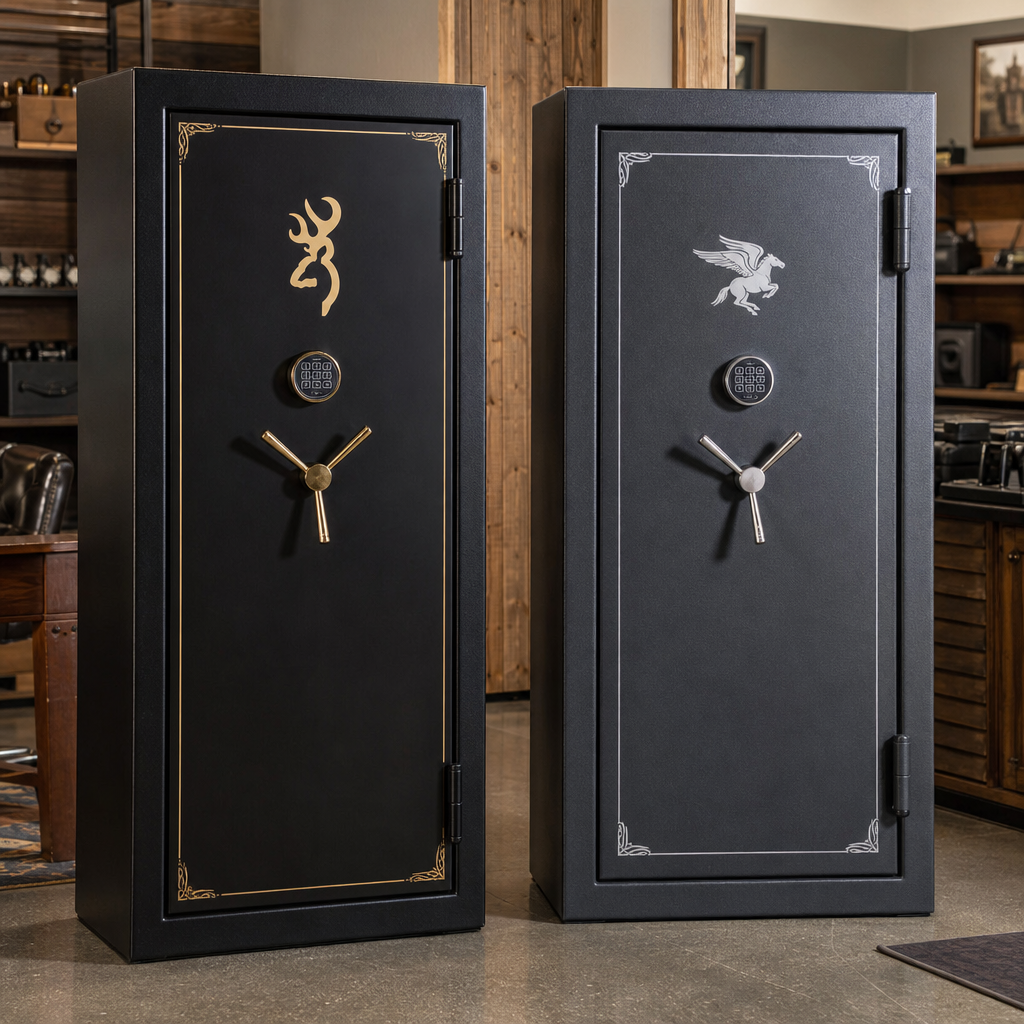
Choosing between Browning and Winchester gun safes comes down to more than brand loyalty. It is a question of security design, fire protection, interior usability, long term durability, and overall value. For buyers building out a firearms storage plan, this comparison matters because a gun safe is both a security product and a preservation tool. It protects rifles, handguns, documents, optics, and heirlooms from theft, heat, moisture, and unauthorized access.
In practical terms, a gun safe is a reinforced steel enclosure with a locking mechanism designed to resist forced entry and provide organized storage. Key terms matter when comparing brands. Gauge refers to steel thickness, and lower gauge numbers mean thicker steel. Fire rating estimates how long the safe can withstand a specified temperature. Locking bolts secure the door into the body. Relockers, hard plates, and pry resistant door edges are anti attack features that increase real world protection. Interior configuration determines how efficiently the safe stores scoped rifles, accessories, and valuables.
I have evaluated gun safes in showrooms, installed them in garages and interior rooms, and worked through the tradeoffs that buyers discover only after delivery. On paper, many safes look similar. In person, differences show up in door fit, bolt travel, shelving flexibility, lock quality, and finish consistency. Browning and Winchester are two recognizable names in the category, but they occupy slightly different positions in the market. Browning often emphasizes premium organization and refined fit and finish, while Winchester usually competes hard on accessible pricing and broad retail availability.
This hub article covers the broader landscape of gun safe comparisons and brand spotlights through the lens of this specific matchup. If you are deciding between a feature rich safe for a long term collection and a budget conscious option that still covers the essentials, Browning versus Winchester is a useful case study. The better investment depends on what you own, where the safe will live, and how seriously you weigh burglary resistance, fire performance, and interior efficiency against purchase price.
Brand Positioning, Manufacturing Focus, and Who Each Safe Fits Best
Browning safes are generally positioned as upper midrange to premium products. Across multiple lines, Browning puts unusual effort into interior organization. Its Axis Adjustable Shelving system is one of the most recognizable examples, allowing shelves and barrel rests to move in a way that accommodates scoped rifles, shorter carbines, and mixed storage. For owners with varied long guns, that system solves a common problem: advertised gun counts often assume slim rifles placed tightly together, which does not reflect real collections. Browning also tends to present stronger visual refinement, from door organizer layouts to fit and finish details.
Winchester safes typically target mainstream buyers who want broad feature coverage at a more approachable price. The brand is heavily visible through large retailers and warehouse channels, which makes it easier to see models in person and catch promotions. In many cases, Winchester gives buyers a bigger capacity number or more headline features per dollar, especially in entry level and lower midrange tiers. That does not automatically make it the better buy, but it does make Winchester compelling for first time safe purchasers, hunters who need practical storage, and households balancing security with strict budget limits.
The best fit depends on user profile. If you own optics heavy rifles, value flexible shelving, and want a safe that feels easier to grow into, Browning often has the edge. If your priority is obtaining a larger safe footprint and decent fire protection without moving into premium pricing, Winchester can be the smarter starting point. Neither brand is universally superior across all model lines, which is why comparing construction details matters more than comparing logos.
Steel Thickness, Door Construction, and Burglary Resistance
For burglary protection, steel thickness and door construction matter more than glossy finishes or inflated capacity claims. Browning and Winchester both offer models that vary widely by line, so buyers need to read specifications closely. In this category, the difference between a 12 gauge body and a thinner body is meaningful. Thicker steel resists prying, flexing, and hand tool attacks better. Door edge design also matters because many attacks focus on creating a pry point near corners or around the locking bolt path.
Browning often distinguishes itself with robust door systems, reinforced frames, and thoughtful anti pry engineering in its higher lines. Winchester can be competitive, but many of its best value models are built to a price, which means buyers may find thinner steel or simpler construction in lower tiers. This is not unique to Winchester; it is standard across the market. The lesson is straightforward: compare body steel, door thickness, bolt diameter, relockers, and hard plate protection before trusting marketing language such as “tough” or “vault style.”
A useful buying rule is to prioritize steel over accessories when theft risk is a primary concern. A well organized interior does not offset lighter construction if the safe is installed in a vulnerable garage. I strongly recommend checking whether the safe includes anchor holes and using high quality concrete anchors or lag bolts into structural framing. A bolted moderate weight safe is far more secure than a heavier unanchored safe. Real security comes from the total system: steel, lock, installation, room placement, and concealment.
Fire Ratings, Heat Protection, and What the Numbers Really Mean
Fire ratings are one of the most misunderstood specifications in the gun safe market. Browning and Winchester both publish time and temperature ratings, but those numbers are not always directly comparable because testing protocols can differ by manufacturer and model line. Some ratings rely on independent standards, while others are based on proprietary tests. Buyers should ask how the rating was established, what peak temperature was used, whether the interior threshold was measured, and whether the safe includes expanding door seals that limit smoke and heat transfer.
In general, Browning tends to emphasize more premium fire packages in upper lines, while Winchester often provides competitive fire ratings that look attractive at retail. The practical question is not whether one number is larger. It is whether the fire protection aligns with your environment. A safe in an attached garage may face different heat exposure than one placed on an interior ground floor slab. Fireboard layers, door seal quality, and body construction all influence real performance. Moisture after firefighting also matters, so dehumidification and document protection should be part of the plan.
For most households, a realistic approach is to treat the fire rating as one layer of loss reduction rather than an absolute guarantee. If you store irreplaceable documents, consider a separate UL rated document container inside the gun safe. If your collection includes expensive optics, suppressor paperwork, or family records, that extra layer is often worth more than upgrading to a slightly larger advertised gun count.
Interior Layout, Capacity Claims, and Everyday Usability
Interior usability is where Browning often justifies its higher price. The Axis system, door organizers, and modular shelf layouts make it easier to store modern firearms with large scopes, bipods, slings, and chassis stocks. In real use, this matters more than buyers expect. A safe advertised for thirty rifles may hold far fewer once you add optics and try to access each firearm without knocking into the next one. Browning usually handles this reality better than most mass market alternatives.
Winchester interiors are often functional and straightforward. Many include door panel storage and adjustable shelving, but they typically do not feel as refined or adaptable as Browning’s premium layouts. Still, for buyers with mostly standard hunting rifles and shotguns, Winchester storage can be perfectly adequate. The question is whether the interior will still work after your collection changes. Handgun racks, magazine storage, document shelves, and jewelry compartments all affect daily convenience.
| Comparison Point | Browning | Winchester |
|---|---|---|
| Interior flexibility | Usually stronger, especially with Axis shelving | Good on many models, less specialized |
| Perceived finish quality | Often more premium in trim and organization | Practical, retailer friendly, value oriented |
| Entry pricing | Higher in comparable size classes | Often lower and more promotion driven |
| Best fit | Collectors wanting adaptability and polish | Budget focused buyers needing broad coverage |
When choosing capacity, buy larger than you think you need. My standard recommendation is to double your current realistic long gun count if space and budget allow. Accessories multiply quickly, and cramped storage increases the chance of stock scratches, optic contact, and frustrating access. On investment value, a flexible interior often pays back over years of ownership because it delays the need for a second safe.
Locks, Electronic Reliability, and Long Term Ownership Costs
Both Browning and Winchester commonly offer electronic locks, with mechanical dial options available on some models. Electronic locks are convenient and fast, especially for frequent access, but quality varies by lock supplier and model year. Established names such as Sargent and Greenleaf or SecuRam generally inspire more confidence than generic units. Buyers should verify the actual lock brand, battery access design, and warranty terms rather than assuming all electronic locks perform equally.
From service experience, most lock complaints are not catastrophic failures but low battery issues, keypad wear, or user setup mistakes. Even so, lockouts are expensive and stressful. For a safe in a vacation property or one opened infrequently, a mechanical dial still has merit. For a primary residence where quick access and ease of use matter, a reputable electronic lock is usually the better choice. Browning often pairs its higher end safes with better overall hardware packages, while Winchester’s value models may require closer scrutiny on lock specification.
Long term ownership costs also include moving fees, interior accessories, dehumidifiers, and potential warranty service. A cheaper safe that is difficult to configure or less satisfying to use can become the more expensive decision if you replace it early. By contrast, paying more upfront for thicker steel and a superior interior may deliver better lifetime value, especially if the safe remains in service for decades.
Price, Resale, and Which Brand Is the Better Investment
So which gun safe is the better investment, Browning or Winchester? For most buyers seeking the best balance of premium organization, stronger perceived build quality, and long term satisfaction, Browning is the better investment. It usually costs more, but the practical benefits are easy to feel every time you open the door. Better interior adaptability, stronger fit and finish, and a more upscale ownership experience support that premium.
Winchester is the better value play for buyers who need usable capacity and respectable protection at a lower price. If you choose carefully within the lineup, anchor it properly, and match the model to your actual risk level, a Winchester safe can be a smart purchase. It is especially compelling when on sale through major retailers, where the price gap versus Browning can become substantial.
The smartest decision is specification driven, not brand driven. Compare steel gauge, lock brand, fire test methodology, interior layout, warranty coverage, and installation plan. If burglary resistance and flexible storage are top priorities, lean Browning. If budget discipline and broad feature coverage matter most, lean Winchester. For your next step, measure your space, list what you will store, and compare two specific models side by side before you buy.
Frequently Asked Questions
1. Is Browning or Winchester the better overall investment for a gun safe?
The better investment depends on what you value most over the long term. Browning often stands out for premium interior organization, polished fit and finish, and higher-end features that appeal to collectors, hunters, and owners with a mix of rifles, handguns, optics, and documents. Many buyers see Browning as a strong investment when interior flexibility, convenience, and a more refined ownership experience matter just as much as basic security. Winchester, on the other hand, is frequently viewed as a value-driven choice because it can deliver solid protection and larger storage capacity at a more accessible price point. For buyers who want a practical safe with dependable locking performance and respectable fire protection without stretching the budget, Winchester can offer excellent return on investment.
In real-world terms, a gun safe is both a security product and a preservation tool. It is there to deter theft, slow unauthorized access, protect firearms from fire exposure, and help shield valuables from humidity and everyday wear. That means the best investment is not always the most expensive safe. It is the one that matches your storage needs, home environment, and security expectations for the next decade or more. If you want premium interior design and are willing to pay more for comfort and organization, Browning may justify the extra cost. If your priority is maximizing usable storage and protection per dollar, Winchester may be the smarter buy.
2. How do Browning and Winchester compare in security and anti-theft protection?
Both brands offer models designed to provide meaningful residential security, but they can differ in how they approach that protection across their product lines. The most important security factors are steel thickness, door construction, locking bolt design, pry resistance, hinge design, relocker systems, and how well the safe can be anchored to the floor. A heavier safe with a stronger body and reinforced door generally offers better resistance to forced entry than a lighter model, regardless of logo. Browning is often associated with well-engineered door systems and refined build quality in many of its midrange and premium safes, while Winchester commonly appeals to buyers seeking practical security features at a more affordable cost.
For most homeowners, the difference between these brands matters less than the specific model you choose. A premium Winchester may outperform an entry-level Browning, and the reverse is also true. The smartest approach is to compare exact specifications rather than relying only on brand reputation. Look for thick steel, multiple locking bolts, a dependable lock type, and a model that can be securely bolted down in a discreet location. Placement also matters. A safe installed in a garage corner, basement alcove, or closet with limited access around the sides is much harder to attack. In short, both Browning and Winchester can provide solid theft deterrence, but buyers should evaluate model-by-model construction details to determine which safe truly delivers the stronger security value.
3. Which brand offers better fire protection for firearms, documents, and valuables?
Fire protection is one of the most misunderstood parts of gun safe shopping because advertised fire ratings are not always measured under identical standards. Browning and Winchester both market fire-resistant models, but the quality of protection depends on insulation type, door seal performance, construction integrity, and the length and temperature of the rating. A longer fire rating at a higher temperature may suggest stronger protection, but buyers should still look into how that rating was established and whether it reflects realistic residential fire conditions. Browning often attracts buyers looking for higher-end fit, internal finish, and premium features, while Winchester often competes aggressively on rated protection at various price points.
For practical storage planning, remember that firearms, optics, paper records, heirlooms, and electronics do not all tolerate heat the same way. A gun safe can buy critical time in a fire, but it is not a substitute for full commercial-grade media protection if you are storing irreplaceable documents or digital backups. If fire protection is your top priority, compare not just the stated rating, but also the door seal design, body construction, and whether the interior has features that help reduce heat and moisture stress after a fire event. In many cases, the better choice between Browning and Winchester comes down to the exact fire package offered in the model you are considering. Buyers should focus on tested performance, sealing quality, and overall construction rather than assuming one brand always wins.
4. Are Browning safes better for interior organization and everyday usability than Winchester safes?
In many cases, yes, Browning has a stronger reputation for thoughtful interior layouts and user-friendly organization systems. That can make a major difference if you own scoped rifles, shorter firearms, handguns, accessories, important paperwork, and other valuables that all need secure but efficient placement. A well-designed interior does more than look good. It prevents crowding, reduces the chance of scratches or damage, improves access, and helps the safe function as a complete storage system rather than just a steel box. Browning often appeals to users who want configurable shelving, door-mounted storage, and flexible arrangements for different firearm sizes and non-firearm valuables.
Winchester interiors can still be very functional, especially for buyers who prioritize straightforward storage and larger capacity at a reasonable price. However, buyers comparing the two often notice that Browning places extra emphasis on layout refinement and premium usability. This matters over time because safe ownership is a daily or weekly experience, not a one-time purchase. If you frequently rotate rifles for hunting season, store optics and suppressor accessories, or need a place for documents and family valuables, interior design becomes part of the investment value. A safe that is easier to organize, easier to access, and more adaptable to your collection can feel like the better buy even if it costs more upfront.
5. What should buyers look at besides brand name when choosing between Browning and Winchester?
Brand name should be only one part of the decision. The most important factors are the safe’s size, steel construction, weight, lock type, boltwork, fire rating, interior layout, warranty support, and installation plan. Start with capacity, but be careful with advertised gun counts. Those numbers are usually optimistic, especially if you own scoped rifles, lever guns, tactical firearms, or long-barreled shotguns. A safe that claims to hold 24 guns may feel crowded far sooner than expected. Buyers should also think beyond firearms. Many people end up storing passports, cash, jewelry, tax records, estate documents, and family heirlooms in the same safe, which means extra space and adjustable shelving are more valuable than they first appear.
You should also evaluate long-term durability and ownership costs. Consider where the safe will sit, whether the floor can support the weight, how it will be moved into place, and whether you need dehumidification or lighting. Check lock options carefully, since some buyers prefer the simplicity of a mechanical dial while others want the speed of an electronic lock. Review warranty terms and service reputation as well, because support after purchase can matter if you ever face a lock issue, fire event, or shipping-related damage. In the end, Browning and Winchester both make compelling options, but the better investment is the safe that fits your security goals, your collection, your home, and your budget with the fewest compromises.