
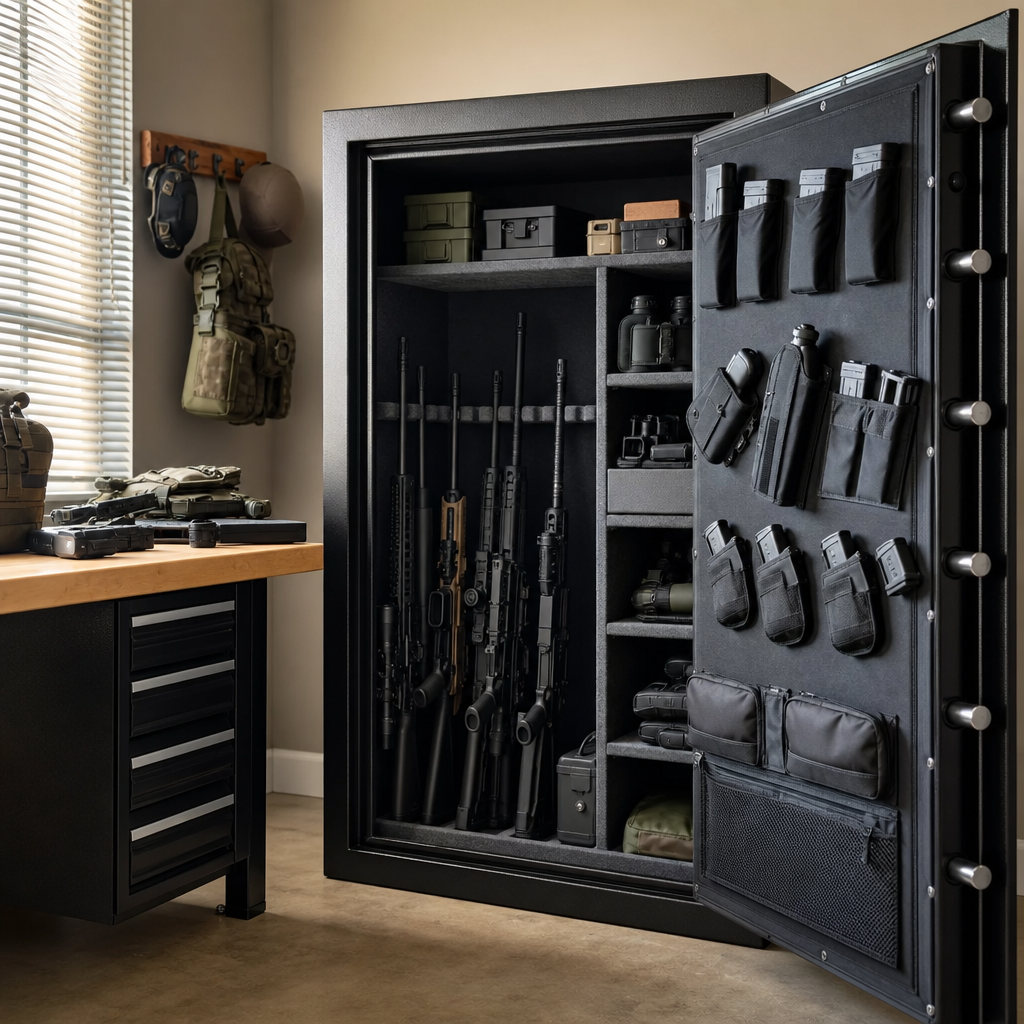
Firearm instructors need more from a gun safe than the average gun owner because their storage has to support daily access, student safety, legal compliance, liability control, and the protection of a larger, more varied inventory. In practical terms, the best gun safe features for firearm instructors are the features that let a trainer secure handguns, training rifles, inert demonstration guns, optics, ammunition, records, and range supplies without slowing down instruction or creating avoidable risk. This matters because instructors often move between classroom teaching, live-fire sessions, private coaching, and off-site events, which means their storage system becomes part security device, part workflow tool, and part risk-management plan.
When I evaluate safes for instructors, I start by defining the buyer persona. A buyer persona is a detailed profile of a specific type of customer with distinct goals, constraints, and habits. In the gun safe buyer personas category, firearm instructors stand out because they balance professional access with institutional-grade responsibility. A concealed carry instructor teaching weekend classes has different needs than a full-time academy trainer, a competitive shooting coach, or a mobile instructor serving multiple ranges. Yet they all need reliable access control, documented security, enough capacity for growth, and features that reduce the chance of unauthorized handling.
For this sub-pillar hub, the central question is not simply which safe is strongest. The better question is which gun safe features actually improve an instructor’s day-to-day operation while keeping firearms secured under real-world conditions. That includes lock type, fire rating, organizational layout, anchoring, interior flexibility, audit capability, and placement strategy. It also includes practical details many buyers miss, such as whether a safe door clears a garage wall, whether the lock can handle frequent openings, or whether the interior supports both long guns and handgun racks without wasting cubic space.
Instructors also have unique exposure to legal and reputational risk. A stolen firearm, an unattended training pistol, or poorly controlled student access can lead to insurance claims, criminal investigation, civil liability, and business damage. Standards vary by jurisdiction, but secure storage is increasingly scrutinized by insurers, law enforcement, and clients. Choosing the right safe is therefore not just a hardware decision. It is a business continuity decision. The right features can make setup faster, training days smoother, inventory checks easier, and documentation stronger if an incident ever occurs.
Why firearm instructors are a distinct gun safe buyer persona
Firearm instructors form a separate buyer persona because they use firearms as professional teaching assets rather than occasional personal possessions. Their inventory typically includes carry pistols, full-size handguns, rifles, blue guns, red guns, SIRT trainers, dummy rounds, holsters, lights, shot timers, and student handout materials. Many also store serialized firearms alongside non-serialized training aids, which creates a mixed-use storage challenge. In my experience, instructors outgrow consumer safes quickly because they need organization and repeatable access, not just basic burglary resistance.
A good example is the instructor who teaches permit classes two nights a week and range sessions on Saturdays. That instructor may need six demonstration pistols, two carbines, eye and ear protection, trauma kits, and attendance records ready to load in under fifteen minutes. A generic safe with a fixed shelf and narrow long-gun slots slows that process down. By contrast, a modular interior with pistol pouches, adjustable shelving, and door storage cuts setup time and reduces handling. Less handling means fewer chances to leave a firearm in the wrong case or on the wrong bench.
Another defining trait of this persona is growth. Instructors tend to add equipment over time as courses expand. A new red-dot curriculum requires optics and mounting tools. Women’s classes may add smaller-frame demonstration pistols. Low-light instruction adds weapon lights and handheld lights. Youth safety programs may use inert replicas and lock devices. The best safe for this buyer persona must support changing inventory without forcing a complete replacement in two years.
Core security features that matter most
The first priority is burglary resistance. For instructors, that means looking beyond marketing labels and checking steel thickness, door construction, hard plate protection for the lock, relockers, pry resistance, and anchor provisions. Many residential security containers on the market use 14-gauge steel bodies, which may be acceptable for low-risk households but are less reassuring for a professional storing multiple firearms. Heavier bodies, reinforced door edges, and solid boltwork increase attack time and noise, which are key deterrents. A safe that can be anchored into concrete is vastly more secure than one that can be tipped and removed.
Lock selection deserves careful attention. Mechanical dial locks remain proven and durable, but they are slower for instructors who open the safe frequently before and after classes. Electronic keypad locks offer faster access and easy user code changes, which is helpful for multi-instructor operations. Higher-end options may include redundant entry, EMP-resistant modules, or networked audit trails. Biometric locks can be convenient, but I generally treat them as secondary convenience features unless the model has strong false-reject performance, backup access, and a track record in high-use environments.
Fire protection is the second core requirement. Fire ratings vary widely, and manufacturers do not always test to the same standard, so buyers should read the specifics rather than trusting a large sticker. Instructors often store paper rosters, certificates, tax records, laptops, and optics in or near the safe. Heat, smoke, and steam can damage all of them. A practical approach is choosing a safe with a credible fire rating and pairing it with document sleeves, desiccants, and a dehumidifier to manage both heat and moisture-related risk after suppression efforts.
| Feature | Why it matters for instructors | Best use case |
|---|---|---|
| Electronic keypad lock | Fast repeated access and easy code changes | Daily class prep and multi-user operations |
| Thicker steel body and reinforced door | Improves resistance to pry attacks and smash attempts | Higher firearm counts and detached buildings |
| Adjustable interior shelving | Fits mixed inventories of handguns, rifles, optics, and supplies | Instructors with evolving course offerings |
| Anchor holes and hardware | Prevents removal of the entire safe | Garages, workshops, and training offices |
| Documented fire rating | Protects records, electronics, and accessories | Businesses storing admin materials with firearms |
Interior organization and access efficiency
The best gun safe features for firearm instructors are often inside the safe. If retrieval is clumsy, security practices degrade because users start leaving gear out between classes. Adjustable shelving is essential because instructors rarely store only long guns. Door organizers create room for pistols, magazines, medical supplies, bore lights, batteries, and paperwork. Pistol racks help separate training guns by model or class role. Labeled bins for dummy rounds, chamber flags, and snap caps save time and prevent live and inert training items from mixing.
I strongly recommend thinking in workflow zones. One zone holds serialized firearms ready for transport. Another holds inert trainers and classroom aids. A third stores high-value accessories such as optics, suppressor paperwork where lawful, and handheld electronics. This layout speeds inventory verification at the start and end of a training day. It also supports a clean chain of control, which matters if several assistants help stage equipment. The less rummaging inside the safe, the lower the chance of an item being overlooked.
Capacity planning is where many buyers make expensive mistakes. Manufacturers often advertise long-gun counts that assume slim, unscoped rifles packed closely together. That number rarely reflects reality for instructors who use slings, bipods, optics, and soft cases. A safe listed for thirty guns may hold half that number comfortably once shelves and accessories are added. My rule is to buy for at least thirty to fifty percent more capacity than the current inventory requires. That buffer preserves organization and delays replacement costs.
Compliance, records, and liability reduction
Professional instructors should treat the safe as part of a broader compliance system. Even where the law does not prescribe a specific safe standard, insurers, landlords, and range partners may expect secure storage practices. Maintaining serial number inventories, purchase records, training logs, and photographs of stored firearms helps support insurance claims and police reports if loss occurs. A safe with interior document storage or space for a fire-resistant document box makes that easier. Some commercial-grade lockers and smart safes also provide access logs, which can strengthen accountability in shared environments.
There is also a student safety dimension. Instructors routinely host new shooters who may not understand boundaries around firearms before formal supervision begins. If students gather in a home classroom, office, or training bay, the safe must prevent casual access and reduce the visibility of unattended equipment. This is why external hinges, recessed doors, concealed placement, and disciplined key or code control matter. A safe that sits open while gear is being sorted undermines the very habits instructors teach. Good storage supports good demonstration.
Liability reduction is often about simple, repeatable controls. Keep ammunition stored in a separate locked container if that fits your operating model. Use sign-out sheets for loaner guns. Restrict safe codes to essential personnel only. Change codes immediately after staffing changes. Anchor the safe and document the installation. Retain receipts, model numbers, and photos. These are not dramatic steps, but they are the details insurers and investigators look for after a theft, fire, or unauthorized access event.
Placement, installation, and environmental control
Where the safe is installed is nearly as important as which safe is chosen. For instructors, ideal placement balances concealment, structural support, ease of loading vehicles, and humidity control. A garage may offer easy transport to and from classes, but it can expose the safe to temperature swings, moisture, and visibility when the door is open. A climate-controlled interior room is better for firearms and optics, though it may complicate moving heavy cases on training days. In split-level homes and commercial units, floor load and stair access must be planned before delivery.
Anchoring should never be optional. Even a heavy safe can be defeated if thieves can lay it down and attack the door with better leverage. Concrete anchoring is preferred where available. If installation is on a framed floor, reinforcement may be necessary depending on safe weight and building structure. Professional delivery teams can place and bolt the safe correctly, but owners should still verify bolt size, substrate condition, and door swing clearance. I have seen excellent safes become frustrating daily obstacles because no one checked whether the door could open fully beside shelving or a wall.
Environmental control protects the investment over time. Instructors who store firearms after wet range days should use desiccants, goldenrod-style dehumidifiers, or room-level humidity management. Foam-lined cases should not become long-term storage inside the safe because they trap moisture. Stainless guns resist corrosion better than blued guns, but optics mounts, magazines, and internal components still suffer in damp conditions. A disciplined routine of drying, wiping down, and returning gear to a humidity-managed safe extends service life and keeps training guns dependable.
Choosing the right safe by instructor type
Different instructor profiles call for different safe configurations. A part-time concealed carry instructor usually does well with a mid-size safe emphasizing handgun organization, fast keypad access, document protection, and moderate rifle storage. A full-time academy trainer benefits from a larger unit with heavier steel, better fire protection, broad shelving flexibility, and dedicated admin storage. A competitive shooting coach often needs space for multiple pistols, magazines, belts, and optics rather than maximum long-gun capacity. A mobile instructor may pair a primary home safe with a separate vehicle lockbox and hardened transport cases.
For training companies with several staff members, the best option may be stepping up from a typical residential gun safe to a commercial security cabinet or modular armory system. These systems can support compartmentalization by course type, user-specific access, and easier auditing. They cost more, but the gain in control can be substantial. On the other hand, new instructors should avoid overspending on prestige features that do not match the actual workflow. Thick steel and sound access control matter more than glossy interiors or decorative hardware.
The key takeaway across all gun safe buyer personas is fit. The right safe for a hunter, collector, first-time owner, or firearm instructor is not identical because the daily use pattern is different. Instructors need security that works at professional speed. If you are building or upgrading your training operation, map your inventory, count your access events, measure your installation space, and choose features that support control, organization, and growth. Then review related pages in this Gun Safes & Safety hub to compare safes for other buyer personas and refine your shortlist with confidence.
Frequently Asked Questions
What gun safe features matter most for firearm instructors compared with regular gun owners?
Firearm instructors usually need a safe that does far more than simply lock away a few personal firearms. A trainer may be storing carry pistols, full-size handguns, training carbines, inert blue guns, demonstration firearms, optics, ammunition, medical gear, student paperwork, and class records all in one place. That means the most important features are capacity, organization, fast but controlled access, strong construction, and the ability to separate different categories of equipment. Instructors benefit from adjustable shelving, door organizers, modular racks, and interior layouts that can be reconfigured as class needs change.
Security features also matter at a higher level because instructors often have a larger inventory and greater liability exposure. A quality safe should include a robust steel body, a reinforced door, pry-resistant design, solid locking bolts, and a reliable lock system. Fire and water protection are also especially important because replacing teaching materials, firearms, optics, training aids, and business records can be expensive and disruptive. For instructors, the best safe is usually one that combines burglary resistance, internal organization, reliable daily access, and enough space to keep training gear secure without creating delays before or after class.
Is quick access still important if a firearm instructor is storing many guns and training supplies?
Yes, but quick access for an instructor means something slightly different than it does for a homeowner focused only on defensive use. In an instructional setting, the goal is not just speed for emergencies. It is also efficient, repeatable access that supports class preparation, range transitions, equipment checks, and end-of-day accountability. A safe that opens reliably and allows the instructor to retrieve the correct firearms and tools without digging through clutter can save time and reduce mistakes. Features like interior lighting, labeled compartments, handgun racks, pull-out shelves, and door-mounted storage can make a major difference during busy training days.
At the same time, fast access should never come at the expense of control. Firearm instructors often work around students, assistant instructors, and visitors, so the access system should be secure and deliberate. High-quality electronic locks, biometric systems from reputable manufacturers, or mechanical locks paired with disciplined procedures can all work well depending on the environment. The key is to choose a setup that allows authorized access without creating opportunities for unauthorized handling. For many instructors, the best answer is a larger primary safe for long-term storage combined with carefully controlled quick-access options for the firearms and equipment needed most often.
How important is internal organization inside a gun safe for a firearm instructor?
Internal organization is one of the most overlooked but most valuable features for firearm instructors. A poorly organized safe slows down class setup, increases the chance of gear being misplaced, and can even create safety issues if training guns, live firearms, ammunition, and accessories are not clearly separated. Instructors often need to retrieve specific equipment quickly, such as inert demonstration firearms for classroom use, optics for a rifle block, or individual handguns assigned to a lesson. Adjustable interiors, dedicated handgun holders, rifle barrel rests, bins, shelves, and document compartments help create a system rather than a pile.
Good organization also supports inventory control and liability management. When every item has a designated place, it becomes easier to verify that all firearms are accounted for before students arrive and after training ends. This matters not only for safety but also for insurance documentation, maintenance tracking, and regulatory compliance. Instructors should look for safes with configurable interiors that can evolve over time. A safe that lets you separate ammunition from firearms, live guns from inert trainers, and teaching materials from valuable optics can make daily operations smoother and significantly more professional.
What level of fire protection and build quality should a firearm instructor look for in a gun safe?
Fire protection and build quality are critical because instructors often have a larger investment at risk than the average owner. Beyond firearms themselves, there may be optics, magazines, holsters, slings, electronics, certification records, printed materials, and business documents stored inside. A safe should have meaningful fire resistance backed by credible testing information, not just marketing language. Instructors should pay attention to fire ratings, seal design, insulation, door fit, and whether the safe is built to protect paper records as well as metal items. In areas prone to humidity or water exposure, interior dehumidification options and water-resistant features are also worth considering.
Build quality matters just as much as fire protection. A safe with heavier steel, strong door construction, quality hinges, hardplate protection, and a dependable lock will generally offer better long-term value and better resistance to tampering. Instructors open and close their safes frequently, so durability is especially important. A flimsy cabinet may be inexpensive, but it can fall short in both security and daily use. Because an instructor’s equipment supports a business, training schedule, and professional reputation, investing in a well-built safe is often less about luxury and more about protecting continuity, compliance, and operational reliability.
Should firearm instructors choose one large safe or multiple safes for different types of equipment?
In many cases, multiple storage units are the better solution. One large safe can work well for central storage, especially if it has enough room and an adaptable interior, but firearm instructors often benefit from dividing storage by function. For example, a primary safe can hold the main firearm inventory and high-value optics, while a secondary safe or locking cabinet can store inert training guns, support gear, or administrative materials. Separate storage can improve organization, reduce handling of unrelated equipment, and make it easier to control who has access to what.
This approach can also strengthen safety procedures and liability control. Keeping live firearms and ammunition in one highly secure area while storing demonstration tools and less sensitive training items elsewhere helps reduce confusion and supports cleaner workflows. Some instructors also use smaller quick-access safes in controlled locations for frequently used handguns, while reserving the main safe for bulk inventory and long guns. The best choice depends on inventory size, class volume, legal requirements, available space, and how often equipment is moved. For many instructors, the smartest setup is not simply the biggest safe they can buy, but a layered storage system that supports security, efficiency, and consistent professional practice.