
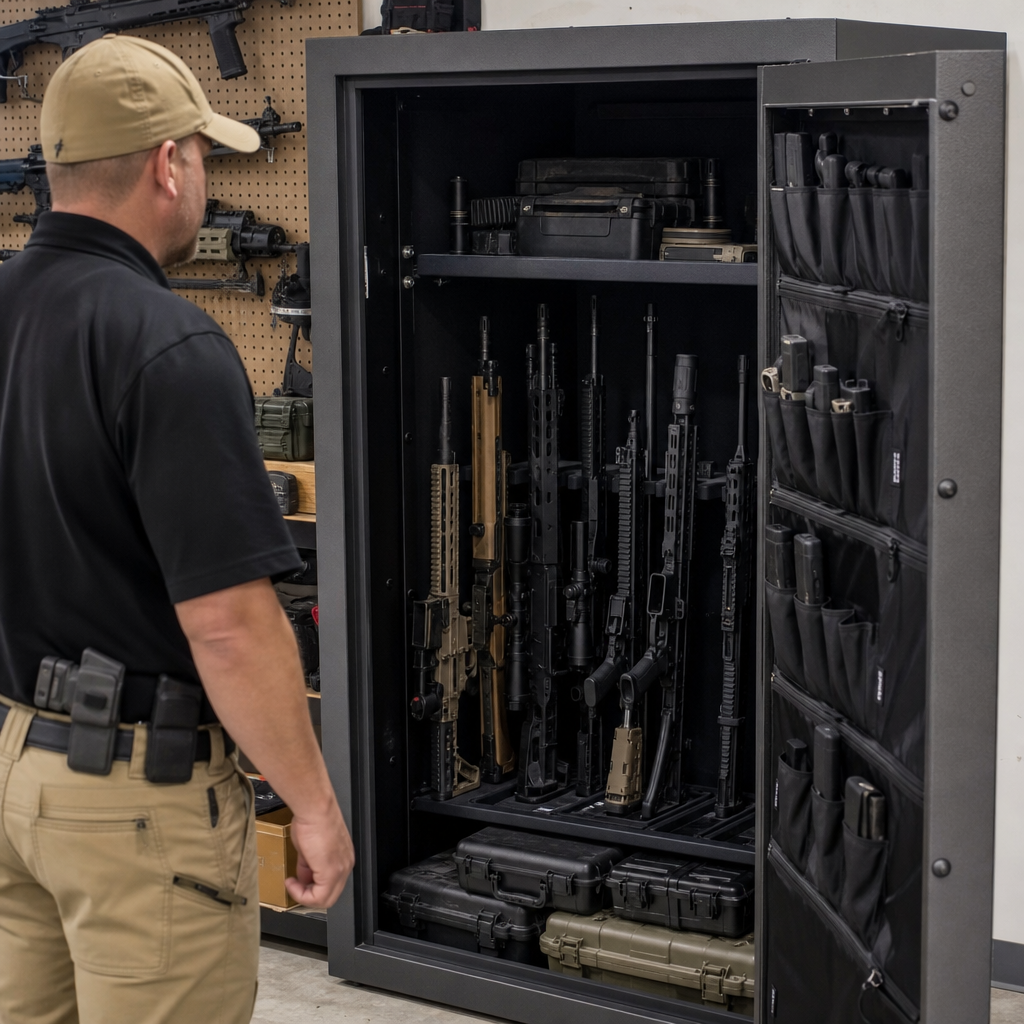
Firearm instructors and range owners need gun safes built for volume, access control, liability reduction, and daily operational abuse, not just basic burglary resistance. In this buyer-persona hub, “gun safe” means more than a heavy steel box: it includes long-gun safes, modular vault cabinets, ammo lockers, pistol safes, and controlled-access storage systems that protect firearms from theft, unauthorized use, fire, moisture, and negligent handling. I have helped evaluate storage setups for training bays, retail counters, and private lesson studios, and the pattern is consistent. The right safe supports instruction, range workflow, insurance compliance, and reputation. The wrong safe creates bottlenecks, key-management problems, unsafe staging practices, and preventable losses. Because instructors and range operators often store mixed inventories—demo guns, rental fleets, customer transfers, optics, suppressors where lawful, training ammunition, and records—they need a more deliberate selection process than a typical homeowner. This article explains the main buyer personas within this market, the safe features each persona should prioritize, and how to match construction, lock type, capacity, fire rating, and installation method to real operating conditions.
Why this buyer persona is different from the average gun owner
Most consumer gun-safe advice assumes a single household with predictable access needs. Firearm instructors and range owners operate differently. They move guns in and out throughout the day, oversee students with varying skill levels, manage employees, and often face public foot traffic. That changes the risk profile. A solo concealed-carry instructor teaching weekend permit classes may need secure overnight storage for ten to fifteen handguns and a few training carbines, plus rapid access before class starts. A busy indoor range with rentals may need organized storage for dozens of handguns, loaner rifles, serialized parts, magazines, and maintenance tools, with separate access permissions for managers and line staff. The practical question is not simply, “What size safe should I buy?” It is, “What storage system reduces theft, supports supervision, protects inventory, and keeps operations efficient?”
Commercial exposure also raises the standard for documentation and construction. Insurance carriers often ask about alarm integration, anchoring, monitored premises, after-hours procedures, and inventory records. Depending on the business model, local fire codes, lease terms, or ATF expectations around recordkeeping and security may influence placement and design, even when no single nationwide rule dictates a specific safe. Instructors who travel to off-site classes face another issue: staging firearms temporarily without leaving them vulnerable in vehicles. Range owners must think about employee turnover, cash handling, and what happens during power outages or opening-closing transitions. In practice, that means choosing safes with durable lock hardware, meaningful steel thickness, anchored installation, and interior layouts that prevent guns from being piled together where damage and counting errors happen.
Another distinction is how often these safes are opened. In a home, the door may open once a day. At a range, it may cycle constantly. Repetitive use exposes weak hinges, cheap relockers, fragile keypad membranes, and poorly designed interiors. I have seen bargain safes become operational headaches long before they failed structurally; shelves sagged under ammo, keypads became unreliable, and staff started propping doors during busy periods, defeating the whole purpose. For this persona, usability is a security feature. If retrieval and return are cumbersome, people improvise. Good commercial-minded storage encourages the safe behavior you want every day, not just in emergencies.
The core buyer personas within firearm instruction and range operations
Not every instructor or range owner needs the same gun safe. The best buying decisions start by identifying the operating persona. The independent instructor usually prioritizes compact footprint, moderate capacity, and controlled access for one or two trusted users. This buyer often teaches from a home office, private studio, or shared range bay and may need a fire-rated long-gun safe paired with a small handgun vault for quick staging. The mobile instructor cares more about vehicle-adjacent temporary storage, modular cases inside a secured room, and a safe that can hold class guns, blue guns, red dots, and lesson records without consuming an entire room.
The training academy persona needs higher throughput. Multiple instructors may issue carbines and pistols for classes, armorers may need separate tool control, and students may bring loaned firearms back in uneven waves. For this operation, interior organization matters as much as gross capacity. Door-mounted pistol racks, labeled shelving, bins for magazines, and segregated compartments for optics batteries or bolts save time and reduce inventory mistakes. Lock programming should support user-specific credentials so management can change access without rekeying the whole system.
The rental-range owner sits in a different category. Rental fleets generate revenue but also concentrate risk. Guns are handled constantly, cleaned often, and retired or rotated based on wear. These businesses benefit from vault-style storage or multiple dedicated safes rather than one oversized box. Segmentation matters: one area for active rentals, one for backstock, one for guns awaiting repair, and one for firearms held for transfer or gunsmithing. Separating those categories reduces both confusion and liability when an employee is moving quickly.
The retailer-range hybrid has perhaps the broadest needs. Inventory may include new firearms, used firearms, customer guns left for service, NFA items where legal, serialized receivers, and high-value optics. This persona frequently benefits from layered storage: display-security hardware on the sales floor, a burglary-rated safe or vault room for premium inventory, and secondary cabinets for accessories and ammunition. Finally, the club or nonprofit training program often works with tighter budgets but still needs accountability. In that case, a smaller number of better safes usually beats many low-grade cabinets. Buying fewer, stronger units and anchoring them correctly is almost always the smarter long-term move.
Key gun safe features that matter most for instructors and range owners
For this audience, the most important features are steel quality, lock reliability, anchoring, internal organization, and realistic fire protection. Start with construction. Many mass-market gun safes advertise impressive door thickness while using thinner body steel than buyers expect. Look for published steel gauges for both door and body, reinforced door frames, hard plates protecting the lock, and relocker mechanisms that activate during attack. If the safe will store higher-value inventory or sit in a commercial setting with known burglary exposure, step up from entry-level residential security containers toward heavier commercial units or a vault room. Weight alone is not proof of quality, but very light safes are easier to pry, tip, or remove.
Lock choice deserves more attention than it usually gets. Mechanical dial locks remain durable and are less dependent on power, but they are slower during high-volume operations. Electronic keypad locks are faster and easier to assign among trained staff, provided you choose commercial-grade components from established makers such as Sargent and Greenleaf, SecuRam, or La Gard. Redundant locks with override options can be valuable, but only if key control is strict. Biometric locks are convenient for single-user handgun safes, yet I rarely recommend them as the primary access method for a business because wet fingers, dirt, and user turnover make them less predictable than a robust keypad or dial.
Inside the safe, capacity numbers are often inflated. A “36-gun safe” may realistically hold far fewer rifles once optics, slings, and wider fore-ends are included. Instructors using AR-platform rifles, pistol-caliber carbines, and scoped precision guns should assume real capacity may be fifty to seventy percent of the advertised maximum. Adjustable shelving, barrel rests, and door organizers can improve usable space dramatically. I also advise separating handguns from long guns when possible. Pistol hangers, pull-out racks, and labeled bins speed morning setup and evening counts.
| Persona | Best Safe Type | Top Priority | Common Mistake |
|---|---|---|---|
| Independent instructor | Mid-size fire-rated long-gun safe plus handgun vault | Fast controlled access | Buying for advertised capacity only |
| Training academy | Large modular safe or small vault room | User management and organization | One shared code for all staff |
| Rental range | Multiple segmented commercial safes | Inventory separation | Mixing rentals, repairs, and backstock |
| Retail-range hybrid | Burglary-rated safe with layered storage | Theft resistance and accountability | Relying on floor displays after hours |
Fire ratings, humidity control, and installation realities
Fire ratings cause confusion because manufacturers do not all test to the same standard. Some use independent labs such as UL for certain products, while many gun safes rely on proprietary testing. That does not make every published fire rating useless, but it does mean buyers should read carefully. Ask how long the safe is rated, at what external temperature, and whether the rating reflects maintaining an internal temperature below the threshold that damages paper, plastics, wood, lubricants, and optics components. For instructors and range owners, fire protection is not only about preserving guns. It may also protect training records, serial-number logs, tax documents, suppressor paperwork where applicable, and electronic media backups stored in a separate rated box inside the safe.
Humidity control is equally important, especially at indoor ranges where HVAC cycles, lead-management procedures, and frequent door openings can create moisture swings. Rust prevention starts with a dry building envelope, but safes still benefit from dehumidifier rods, rechargeable desiccants, and enough airflow around stored items to prevent trapped condensation. Foam-lined cases placed inside a safe can hold moisture against metal; for long-term storage, open racks and silicone-treated socks are usually better. I have seen pristine handguns develop spotting because they were put away hot after class in closed cases inside a humid safe room. A simple end-of-day routine—wipe down, cool, inspect, then store—prevents expensive corrosion.
Installation often decides whether a safe performs as intended. Even a strong unit can be compromised if it is left unanchored on a smooth slab where thieves can tip it and attack the door with better leverage. Bolt the safe to concrete whenever possible, or to engineered structural supports if installed on an upper floor. Keep it away from obvious front windows and ideally out of public sight. In commercial spaces, verify floor load limits before placing very heavy units. Modular safes and vault panels can be the better answer when stair access, leased buildings, or limited doorway widths make one-piece safes impractical. Proper placement should also support workflow: close enough for efficient opening procedures, far enough from customer areas to reduce observation and crowding.
How to choose the right setup, budget wisely, and build a safer operation
The smartest way to buy is to match the safe to the role, then layer security around it. Start by listing what will be stored: number of long guns, handguns, magazines, ammunition, high-value optics, records, and any customer property. Next, define who needs access and when. If only the owner opens the safe twice a day, a heavier dial-lock unit may be fine. If multiple employees issue rentals from morning to night, invest in a faster commercial-grade keypad system, segmented compartments, and a written access policy. Then estimate growth. Most instruction businesses and ranges outgrow their first safe because they buy for current inventory instead of projected operations twelve to thirty-six months ahead.
Budget should cover more than the sticker price. Include delivery, stair fees, anchoring, electrical access for dehumidifiers, lock upgrades, interior accessories, and alarm integration. A bargain safe that needs replacement in three years is rarely cheaper than a better unit bought once. I typically advise allocating the highest budget to the container protecting the most valuable or hardest-to-replace inventory, then using secondary cabinets for lower-risk support items. Insurance discounts may offset part of the investment, but the bigger payoff is reduced theft exposure, smoother audits, and fewer daily workarounds that undermine safety culture.
This hub exists because “Gun Safe Buyer Personas” is not a cosmetic marketing label; it is the practical way to choose correctly. Firearm instructors and range owners need safes that fit their training model, staffing, inventory mix, and risk tolerance. Independent instructors should emphasize efficient access and realistic capacity. Training academies need organization and controlled permissions. Rental ranges need segmentation and durability. Retail-range hybrids need layered protection for mixed inventory. Across all personas, the constants are strong construction, dependable locks, proper anchoring, moisture control, and a system that employees can follow consistently. Review your current storage against those criteria, identify the weak point, and upgrade the setup that most improves security and daily operations first.
Frequently Asked Questions
What kind of gun safe is best for firearm instructors and range owners?
The best gun safe for a firearm instructor or range owner is usually not a single “one-size-fits-all” safe, but a storage system built around how firearms are actually used in a training or range environment. Instructors and range operators often manage multiple handguns, long guns, training weapons, optics, ammunition, and accessories, all with frequent daily access. That means the ideal setup typically includes a primary long-gun safe or modular vault cabinet for rifles and shotguns, a separate controlled-access pistol safe for defensive handguns or rental firearms, and dedicated ammo lockers that keep ammunition organized and secured apart from the guns when appropriate for the operation.
What matters most is matching the storage to operational reality. A home-style safe designed for one owner opening it a few times a week may not hold up well in a commercial or instructional setting where doors open repeatedly, gear is checked in and out, and multiple authorized users may need controlled access. Firearm instructors and range owners should look for heavier steel construction, reinforced door frames, commercial-grade hinges or internal hinge systems, reliable locking mechanisms, and interiors designed for high-capacity storage without creating unsafe clutter. Adjustable shelving, rack systems for optics-equipped rifles, and compartmentalized handgun storage are especially useful.
Just as important is access control. If more than one employee, instructor, or range officer needs access, the safe should support a clear chain of responsibility. That may mean electronic locks with user codes, audit-capable access systems, key control procedures, or even networked storage solutions in larger facilities. In this context, the right “gun safe” is really a liability-management tool: it reduces theft risk, limits unauthorized handling, protects expensive equipment, and helps create a safer, more professional operation overall.
How much storage capacity should a range or training business plan for?
Most instructors and range owners underestimate capacity needs if they shop the same way a residential buyer would. A safe advertised for a certain number of firearms often assumes tightly packed guns without optics, slings, lights, bipods, or protective sleeves. In a real training environment, those accessories take up space quickly, and densely packed storage can slow retrieval, increase the chance of damage, and create unnecessary handling risks. A good rule is to buy significantly more capacity than your current inventory suggests, especially if you expect to expand classes, add rental firearms, or maintain dedicated training platforms.
Capacity planning should start with a practical inventory count, not a catalog number. Count handguns, AR-style rifles, shotguns, precision rifles, blue guns or inert training replicas, suppressors if applicable under law, and all supporting gear that may need secure storage. Then think in terms of categories: active-use firearms, reserve firearms, guns awaiting maintenance, student loaner guns, and firearms that need restricted access. Separating those categories inside one oversized safe or across multiple storage units usually improves both efficiency and accountability.
It is also smart to plan for workflow, not just volume. A range owner may need quick morning access to rental handguns while keeping back-stock inventory more deeply secured. An instructor running mobile courses may need modular cabinets or vault-style storage that let them stage specific class guns and accessories for transport or same-day use. If firearms are coming in and out constantly, a safer and more professional approach is often several purpose-built storage units rather than one giant overloaded box. Extra capacity today usually becomes operational breathing room tomorrow, and that reduces both wear on equipment and mistakes by staff.
Are fire ratings and moisture protection important for commercial gun storage?
Yes, and they are often more important than buyers first realize. Theft prevention gets most of the attention, but fire and moisture can destroy a firearms inventory just as effectively as a break-in. For firearm instructors and range owners, the financial exposure can be substantial because the contents may include multiple guns, expensive optics, serialized inventory, records, and training equipment. A meaningful fire-rated safe or vault cabinet can buy valuable time during a building fire, helping protect firearms from catastrophic heat exposure and reducing the chance that stocks, optics, electronics, and documents are ruined immediately.
That said, fire ratings should be read carefully. Not all ratings are equal, and some are based on manufacturer testing rather than independent verification. Commercial buyers should ask how long the safe is rated for, at what temperature, and whether the rating reflects realistic protection for firearms and sensitive accessories. If paper records, hard drives, or electronic devices are stored inside, those items can have different heat tolerances than the guns themselves. For some operations, keeping records and electronics in separate fire-rated containers makes sense.
Moisture protection is equally critical, especially in humid climates, unconditioned buildings, or facilities where temperature swings cause condensation. Rust, corrosion, pitting, and damage to wood stocks or optics can become ongoing maintenance and liability issues. A proper setup may include dehumidifier rods, desiccants, climate management in the room itself, door seals, and enough internal airflow and spacing to prevent moisture from being trapped between firearms. In a high-use business environment, moisture control is not a luxury feature; it is part of preserving the safety, reliability, and service life of the firearms you depend on every day.
What security and access-control features should instructors and range owners prioritize?
The most important security features are the ones that balance real protection with safe, accountable daily access. For firearm instructors and range owners, that usually starts with strong physical construction: thick steel body panels, reinforced doors, hard plates that protect the lock area, quality bolt work, and secure anchoring to prevent removal. A safe that can be tipped, pried, or carried away is a weak point no matter how advanced the lock looks. Commercial users should also think beyond the safe itself and consider placement, camera coverage, alarm integration, and who can physically approach the storage area.
From an access-control standpoint, accountability is everything. If multiple people may need entry, simple shared access can create serious problems after a loss, inventory discrepancy, or negligent handling incident. Electronic locks with individual user codes, time-delay features, scheduled access windows, and audit trails can be extremely valuable for a range or instructional business. In some settings, dual-control access or manager-only authorization for certain compartments may make sense, especially for restricted inventory, rental fleet handguns, or firearms awaiting transfer, repair, or investigation.
Another priority is organized internal control. Security is not only about keeping outsiders out; it is also about reducing confusion among authorized staff. Clearly defined sections for rental guns, training guns, customer firearms, and maintenance hold items make it easier to maintain logs and spot discrepancies quickly. Some businesses also benefit from separate day-use and after-hours storage systems, so frequently accessed firearms do not require opening the main inventory safe constantly. The goal is a storage solution that supports disciplined procedures, limits unauthorized use, and gives ownership a clear, defensible system if questions ever arise about who accessed what and when.
How can the right gun safe setup help reduce liability for a range or firearms training business?
The right gun safe setup reduces liability by making secure storage part of a documented operating system instead of an afterthought. Firearm instructors and range owners face risk from theft, unauthorized employee access, negligent handling, improper after-hours storage, inventory disputes, and damage caused by fire or environmental conditions. A well-designed storage plan helps address all of those issues by controlling who can access firearms, when they can access them, and how firearms are checked in, checked out, staged, and returned. That matters not only for safety, but also for insurance, compliance, incident response, and overall business credibility.
For example, if a firearm goes missing, a facility with segmented storage, controlled user access, inventory logs, and surveillance around the storage area is in a much stronger position than one relying on a single shared key and an overcrowded cabinet. If an employee mishandles a gun after hours, documented access limits and secure compartments can show that management took reasonable precautions. If a fire or break-in occurs, using purpose-built safes, ammo lockers, and controlled-access systems can help demonstrate that the business invested in recognized protective measures rather than relying on minimal residential storage.
Liability reduction also comes from improving everyday habits. When firearms have designated storage locations, staff are less likely to leave guns unattended, stack them unsafely, or mix customer property with business inventory. When ammunition is stored in an orderly, secure way, the risk of confusion and negligent loading issues can drop. When moisture and fire protection are built into the storage plan, the business is less likely to face preventable damage claims or service interruptions. In short, the right gun safe setup helps create repeatable, defensible procedures, and that is exactly what serious instructors and range owners need from their storage investment.