
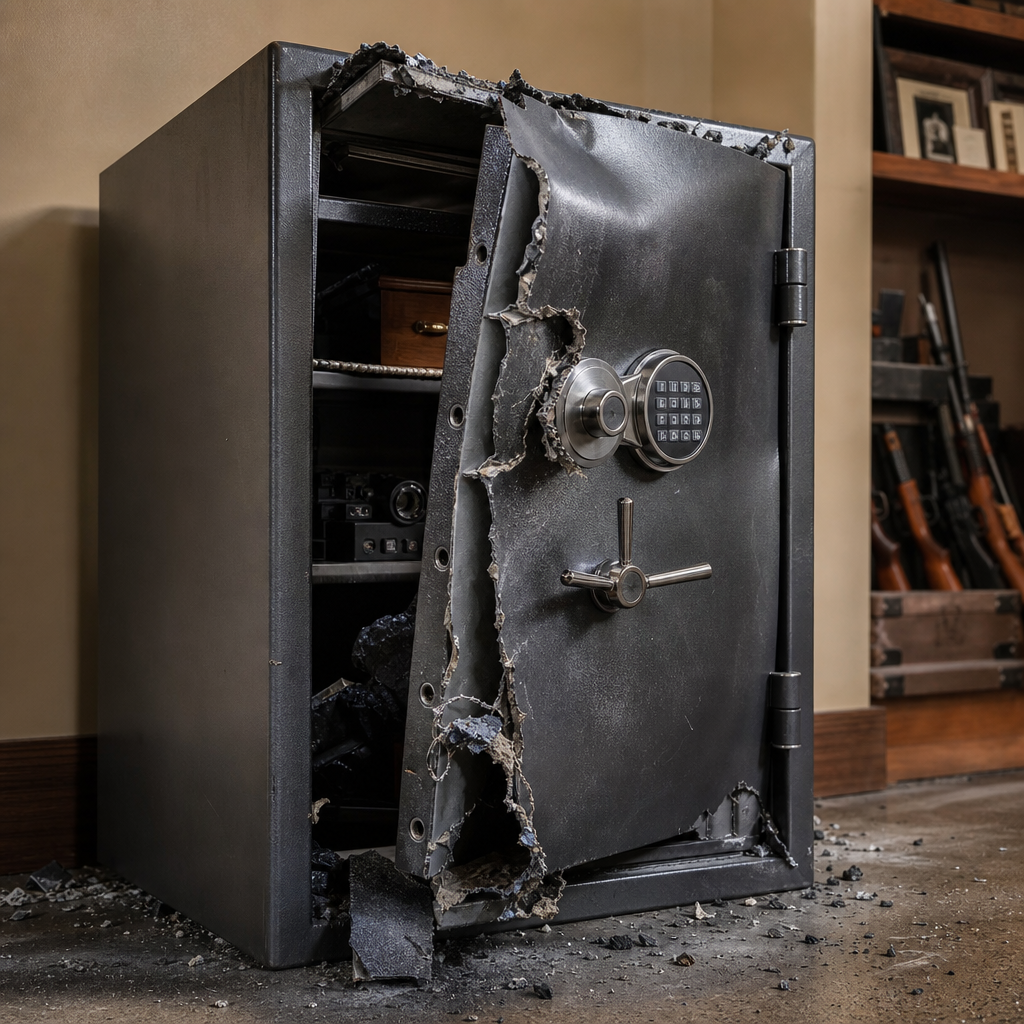
Steel thickness is one of the first specifications shoppers compare, yet more steel does not automatically create a more secure gun safe. In real evaluations, I have seen heavy cabinets fail quickly because the door flexed, the boltwork was weak, the lock was poorly protected, or the safe was installed badly. Security is a system, not a single number on a spec sheet. For anyone researching gun safes and safety, this matters because marketing often reduces protection to gauge ratings, body weight, and dramatic claims about “vault-like” construction.
A gun safe is a secure storage container designed to restrict unauthorized access to firearms while also helping organize guns, documents, and other valuables. Security, however, has layers. Burglary resistance depends on steel thickness, yes, but also on door design, lock reliability, relockers, hard plates, pry resistance, hinge construction, anchoring, and the amount of time and noise an attack requires. Fire protection involves insulation type, door seals, and test methods, which are separate from burglary performance. Safety also includes preventing child access and reducing theft risk through responsible placement and installation.
The misconception that more steel always equals more security persists for understandable reasons. Steel is measurable. A body made from 10-gauge steel sounds stronger than one made from 14-gauge steel, and in isolation it usually is. But burglars rarely attack a safe as if it were a simple wall panel in a laboratory test. They exploit seams, corners, doors, locks, and anchoring failures. A thinner-body safe with a reinforced door frame, quality lock, active relockers, and proper anchoring can outperform a thicker but poorly engineered box. That is why buyers need a fuller framework for comparing gun safe myths and misconceptions before they make a purchase.
Why steel thickness matters, but only within a complete design
Steel thickness does affect resistance to cutting, punching, and flexing. In practical terms, thicker steel usually slows hand tools and adds stiffness to the structure. Many residential gun safes use 14-gauge to 10-gauge steel bodies, while higher-security models may use 3/16-inch or 1/4-inch plate. The confusion starts when brands advertise the thickest piece of steel on the safe, often the door, and imply that the entire unit matches that standard. Some use composite construction, where multiple thinner layers are combined with insulation. Composite is not inherently bad, but it is different from a solid plate body and should be described clearly.
The key point is that steel thickness has diminishing returns when the rest of the safe is underbuilt. If the body is thick but the door gap is generous, a long pry bar may still create leverage at the frame. If the lock area lacks a hard plate, a drill attack can bypass impressive body steel. If the bolts are numerous but shallowly seated, they may look formidable while contributing little. I have inspected safes with thick outer shells and flimsy interiors around mounting points; once tipped, they became much easier to attack. Good security engineering distributes strength across the entire enclosure.
Another often-missed detail is steel quality and shape. Formed steel with bends and returns can become significantly stiffer than a flat sheet of the same thickness. Reinforced door jambs, boxed frames, and anti-pry tabs increase real resistance without relying solely on heavier plate. Weld quality matters too. Continuous welds, especially on critical seams, generally offer better integrity than widely spaced stitch welds. So when evaluating a gun safe myth that “heavier steel solves everything,” the smarter question is this: how does the whole structure behave when attacked at its weakest point?
Doors, frames, and boltwork usually decide the outcome of forced entry
The door is the most attacked part of any gun safe because it contains the lock and offers leverage points. A common misconception is that visible locking bolts equal security. In reality, bolt diameter and count are secondary to bolt engagement, door frame strength, and whether the bolts are supported against side pressure. Many pry attacks do not shear bolts; they bend the door edge or spread the frame enough for bolts to slip free. That is why a robust door structure and close-fitting frame often matter more than decorative arrays of chrome-plated bolts.
A secure door system includes active bolts on the opening side, dead bars or fixed bolts on the hinge side, and a reinforced frame that resists peeling. Internal hinges can reduce exposed attack points, though quality external hinges are not automatically less secure if the hinge side has dead bars. I prefer to see evidence of anti-pry design, such as interlocking door lips, recessed doors, or substantial return bends. These features force a burglar to work longer, create more noise, and use more specialized tools. Time and attention are the enemy of most residential thieves.
Lock protection is equally important. A UL-listed mechanical or electronic lock is a baseline signal of quality, but the lock should also sit behind a hard plate that resists drilling. Better safes include relockers, mechanical devices that trigger if the lock is punched or attacked, blocking bolt movement even if the main lock is compromised. Glass relockers and spring-loaded relockers are examples found in higher-grade units. Without these protections, extra steel elsewhere may not matter because the burglar can focus directly on the locking mechanism, the true heart of the enclosure.
Common gun safe myths and what buyers should check instead
Several myths distort gun safe buying decisions. The first is that weight alone equals security. Weight can come from insulation, interior materials, or decorative features, not just protective steel. The second is that a safe with more bolts is better, even though frame rigidity and bolt support matter far more. The third is that any “fireproof” safe is secure against burglary. Fire and burglary ratings measure different things. The fourth is that a safe made in one country is automatically superior; manufacturing origin can matter, but design, quality control, and certification matter more. The fifth is that any safe can protect guns if hidden well. Concealment helps, but once found, weak construction is quickly exposed.
| Myth | Why It Misleads | What To Verify Instead |
|---|---|---|
| More steel always means more security | Attackers target doors, seams, locks, and anchors | Door construction, frame design, lock protection, relockers, anchoring |
| Heavier safes cannot be stolen | Groups can dolly, tip, and load unanchored units | Anchor bolts, slab quality, placement against walls, delivery path security |
| More locking bolts mean stronger protection | Cosmetic bolt count can hide shallow engagement | Bolt depth, frame reinforcement, anti-pry features, hinge-side dead bars |
| Fire rating proves overall quality | Fire claims often use nonuniform testing methods | Test duration, temperature, seal design, independent certification details |
What buyers should do instead is read specifications skeptically and ask direct questions. Is the body steel a true single thickness or part of a composite wall? What lock brand is used, and is it independently listed? Is there a hard plate and relocker? How deep do the bolts engage? How is the safe anchored, and are anchor holes reinforced? These are the questions that reveal whether a product is genuinely engineered for burglary resistance or simply marketed to appear tough on a showroom floor.
Installation and location can matter more than another gauge of steel
One lesson from field experience is simple: an excellent safe installed poorly becomes an average safe fast. Burglars prefer to tip safes onto their backs because that position makes prying easier and lets them use body weight on long bars. Anchoring a safe to a concrete slab dramatically reduces this risk. On wood-framed floors, proper lagging into structural members helps, but concrete remains the stronger option for most full-size gun safes. If the floor system is elevated, weight distribution and engineering review may be necessary for very heavy models.
Placement also changes attack difficulty. A safe tucked into a corner, close to side walls, gives a burglar less room to swing tools or spread the door with leverage. Closets, utility rooms, and finished basements often offer better defensive geometry than open garage placement. Garages are convenient, but they expose safes to temperature swings, moisture, and easier observation during deliveries or open-door periods. If a garage installation is unavoidable, dehumidification, concealment, and solid anchoring are mandatory. The best safe in the wrong place is still a compromised security decision.
Home security integration multiplies safe performance. Alarm contacts on the room, motion detectors, cameras, and monitored intrusion systems reduce the uninterrupted time a burglar has to work. Most residential safe attacks are time-limited. Thieves want quick wins, not a prolonged fight with hardened steel while a siren sounds and neighbors notice. In practice, I would rather see a well-built, anchored 10-gauge safe in a monitored interior location than a thicker but unanchored safe sitting visibly in a garage. Security layers work together, and installation is one of the highest-value upgrades any buyer can make.
Fire ratings, certifications, and marketing language often confuse shoppers
Another major misconception is that all fire ratings are comparable. They are not. Some manufacturers use internal tests with temperatures and durations that cannot be compared directly across brands. Others reference recognized standards or third-party evaluations, which carry more weight. For burglary resistance, certifications from organizations such as Underwriters Laboratories provide a clearer benchmark than generic advertising phrases like “tamper-proof” or “drill resistant.” A Residential Security Container classification, for example, signals that a product has passed a specific attack test, even though it is not equivalent to a commercial TL-rated safe.
This distinction matters because a safe can be strong enough for household theft deterrence without meeting the standards of a jewelry store safe. Buyers should match ratings to realistic threats. For many homes, the goal is to defeat smash-and-grab burglary, unauthorized access by children or visitors, and short-duration pry attacks. That is a different mission than resisting professional crews equipped with grinders, thermal tools, and extended time. Honest manufacturers explain this difference. Overstated claims usually signal a brand relying more on emotion than on engineering evidence.
Marketing terms also blur the line between safes, gun safes, security cabinets, and residential containers. A thin metal cabinet with a key lock may provide basic child access prevention, but it should not be confused with a burglary-resistant safe. Conversely, a legitimate safe may still have weak interior hinges, poor paint durability, or an unreliable electronic keypad. Balanced evaluation means looking beyond one label or one standout specification. When shopping in the gun safes and safety category, buyers should prioritize verifiable construction details and third-party tested claims whenever possible.
How to judge real value when comparing gun safes
The smartest purchase is rarely the one with the most steel for the money. Real value comes from balanced construction, credible ratings, and a design that fits the actual risk profile of the home. Start with your threat model. If your primary concern is preventing unauthorized family access, a modest but well-made safe with a reliable lock may be enough. If you live in an area with higher burglary rates, own collectible firearms, or store optics, suppressors, and documents, moving up to thicker steel, stronger boltwork, and better lock protection makes sense. But every upgrade should solve a defined problem.
Capacity claims deserve scrutiny too. A “24-gun safe” often holds far fewer long guns once scopes, slings, and modern sporting rifle profiles are involved. Overcrowding forces awkward storage and frequent door contact, which can damage finishes and complicate access during emergencies. Interior layout, door organizer quality, power access for dehumidifiers, and shelf adjustability all affect long-term usefulness. A secure safe that is frustrating to use may encourage bad habits, including leaving guns out temporarily. Practical usability supports safety just as much as steel thickness does.
Price should be viewed across ownership years, not just at checkout. Delivery, professional installation, humidity control, and alarm integration are part of the real cost. So is lock support. Reputable lock brands such as Sargent and Greenleaf or SecuRam generally inspire more confidence than unknown private-label components with little service history. If I am advising a buyer, I would rather trim cosmetic upgrades and put the budget toward better lock protection, anchoring, and a realistic size margin. Those choices improve day-to-day ownership and actual security more than chasing the thickest advertised wall.
The core lesson is straightforward: steel matters, but it is only one variable in a secure gun safe. Door engineering, frame strength, lock protection, relockers, anchoring, placement, and honest certification usually determine whether a safe resists real-world attacks. Many gun safe myths and misconceptions start when buyers compare one visible number and ignore the rest of the system. That is exactly how weak products earn strong reputations.
For anyone building a safer storage plan, the benefit of understanding these tradeoffs is clear. You can choose a safe that matches your risks, protects firearms from unauthorized access, and stands up better to common burglary methods without paying for misleading features. Use this hub as your starting point for evaluating fire claims, lock types, installation practices, and rating standards across the wider Gun Safes & Safety topic.
Before you buy, make a checklist and compare complete designs, not marketing shortcuts. Ask about steel thickness, but also ask how the door is reinforced, how the lock is protected, what certifications apply, and how the safe should be anchored in your space. Better questions lead to better security decisions, and better security decisions are what truly protect your firearms and your home.
Frequently Asked Questions
Why doesn’t thicker steel automatically make a gun safe more secure?
Thicker steel can improve resistance to certain kinds of attack, but it is only one part of the security equation. A gun safe is a complete system made up of the body, the door, the frame, the hinges, the locking mechanism, the relockers, and the way the unit is anchored in place. If one of those elements is weak, an attacker usually does not need to defeat the thickest part of the safe. In real-world break-ins, pry attacks often target the door edge, the gap between the door and frame, or the boltwork path rather than trying to cut directly through the body panels.
That is why a heavier safe or a lower gauge steel rating can look impressive on paper but still perform poorly if the door flexes under pressure, the locking bolts do not engage deeply, or the lock area lacks hardplate and relocker protection. Marketing often isolates steel thickness because it is easy to advertise, but criminals exploit the weakest point, not the best-looking specification. A well-designed safe with balanced engineering can outperform a heavier model if the lighter unit has stronger door construction, better internal reinforcement, superior boltwork, and proper installation. In short, thicker steel helps, but security depends on how the entire safe works together under attack.
What other features matter as much as or more than steel thickness in a gun safe?
Several features can matter just as much as steel thickness, and in some cases they matter more. Door construction is one of the biggest factors because the door is the most common attack surface. A rigid door with strong internal reinforcement resists bending and prying far better than a large, heavy door with poor structure. The frame and door jamb design also matter because wide gaps or weak edges give pry tools room to work. Boltwork quality is another major issue. Large locking bolts may look impressive in a showroom, but what matters is how they are supported, how far they engage, and whether the mechanism remains secure if force is applied.
Lock protection is equally important. A quality lock should be backed by hardplate to resist drilling, and a relocker should trigger if the lock is attacked. Without those protections, a thief may bypass the safe without ever challenging the body steel. The safe’s anchoring system is also critical. Even a solid safe can become vulnerable if it is not bolted down, because attackers may tip it over to gain leverage or remove it entirely to open elsewhere. Fire lining, interior finish, and branding may influence buying decisions, but for burglary resistance, shoppers should focus on attack-resistant design details, lock protection, boltwork engineering, door rigidity, and installation quality. Those are the features that often decide whether a safe slows a burglar down or fails quickly.
How can a gun safe with more steel still fail during a break-in?
A safe with more steel can still fail if its design allows force to be concentrated on weaker components. One common example is a body made from relatively thick steel paired with a door that flexes when pried. Once the door bows or the frame spreads, the locking bolts may lose effective engagement and the door can be forced open without cutting through the body at all. Another failure point is weak boltwork. Some safes emphasize the number or size of bolts for marketing value, but if the mechanism behind them is lightly built, poorly supported, or vulnerable to shock, those bolts may not provide the protection buyers expect.
Lock vulnerability is another reason heavier safes fail. If the lock area lacks hardplate, drill-resistant barriers, or a relocker, an attacker may defeat the locking system directly. In that case, the extra steel in the body adds little practical benefit. Installation mistakes also create major problems. A heavy safe that is not anchored can be tipped onto its back, making pry attacks easier and giving burglars much more leverage against the door. In some cases, thieves simply remove an unanchored safe and open it later with more time and better tools. This is why experienced evaluators look beyond weight and gauge ratings. A safe fails at its weakest link, and that weak link is often not the thickness of the outer steel shell.
What should shoppers look for instead of focusing only on gauge ratings and safe weight?
Shoppers should treat gauge ratings and total weight as starting points, not final answers. Begin by examining how the door is built and how tightly it fits the frame. A secure safe should have minimal pry points, a well-reinforced door, and a frame designed to resist spreading under force. Next, look closely at the lock and the area around it. Ask whether the safe uses drill-resistant hardplate, internal relockers, and a reputable lock type from a known manufacturer. These details directly affect whether a burglar can attack the lock instead of the steel.
It is also smart to evaluate the boltwork honestly. Do not assume that more bolts automatically mean more security. Ask how the bolts engage, whether all sides of the door are active or some are fixed, and how the mechanism is protected against force. Pay attention to construction quality, including welds, internal reinforcements, hinge-side security, and the overall rigidity of the cabinet. If independent testing or burglary ratings are available, those are often more useful than raw marketing claims because they reflect performance, not just specifications. Finally, think about placement and installation. A safe installed in a corner, bolted to a solid foundation, and positioned to limit pry access is usually far more secure than the same model sitting loose in an open room. Smart buyers compare safe design, lock protection, and installation strategy together rather than chasing the thickest steel number on the label.
Does proper installation really make that much difference in gun safe security?
Yes, proper installation can make a dramatic difference, and it is one of the most overlooked parts of gun safe security. Even a well-built safe becomes easier to attack if it is not anchored correctly. When a safe is free-standing, burglars may tip it over to change the angle of attack, gain more leverage on the door, or exploit weak points that are harder to reach when the safe is upright. Once a safe is on its back, pry attacks often become much more effective because the attacker can use body weight and longer tools more efficiently. If the safe is small enough, thieves may simply carry it out and open it later in a more controlled setting.
Proper anchoring helps prevent removal and reduces opportunities for leverage-based attacks. Placement matters too. Installing a safe in a confined space, such as a corner or alcove, can restrict access to the sides and limit room for pry bars or cutting tools. Mounting into a suitable concrete slab or reinforced structural surface is typically more secure than relying on weak flooring alone. Good installation also includes choosing the right fasteners, following the manufacturer’s anchoring recommendations, and making sure the floor can support the load. In practical terms, installation turns the safe from a movable object into part of the structure. That is a major security upgrade, and it reinforces the core idea behind this topic: real protection does not come from steel thickness alone. It comes from the total system, including design, lock protection, and how the safe is secured in the real world.