
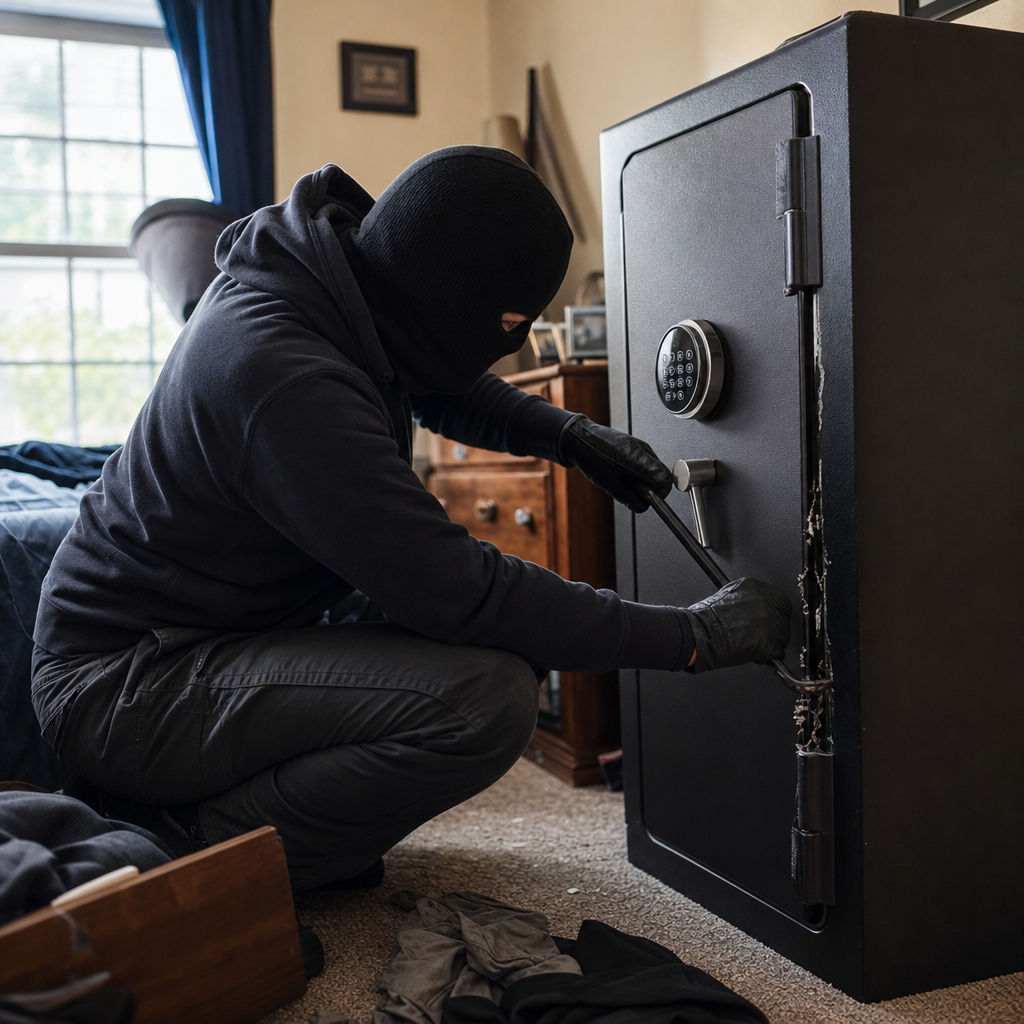
A common question I hear from first-time buyers and long-time firearm owners alike is simple: can thieves easily break into a gun safe? The honest answer is that it depends on the safe, the attacker, the tools available, and the time on site, but the myth that every gun safe can be popped open in minutes is misleading. Some containers sold as “gun safes” are little more than thin steel cabinets with basic locks. Others are engineered security products with reinforced doors, hard plates, relockers, composite barriers, and anchoring systems that dramatically raise the difficulty of forced entry.
To assess this topic clearly, it helps to define terms. A residential security container, often labeled RSC under UL 1037, is not the same as a high-security burglary safe rated TL-15 or TL-30 under UL 687. Most products marketed to gun owners fall into the RSC category. That does not make them useless. It means they are designed to resist a limited attack by common hand tools for a defined test period, while also delivering storage capacity, basic fire protection, and deterrence for home use. Confusion starts when marketing language blurs these categories and buyers expect commercial vault performance at consumer prices.
This matters because firearm storage is not just about theft loss. A compromised safe can put guns into criminal circulation, create legal exposure after negligent storage, and increase risk to children or prohibited persons in the home. In my experience evaluating safes, the most important question is rarely “Can it be broken into?” Nearly every physical security product can be defeated with enough time and the right tools. The useful question is “How hard is it to break into compared with other targets, and what practical steps reduce that risk?” That framing leads to better buying decisions and safer storage habits.
As a hub for gun safe myths and misconceptions, this article tackles the core claims buyers hear most often: that any thief can pry open a safe fast, that heavier automatically means more secure, that fire ratings guarantee burglary protection, that electronic locks are inherently weak, and that a safe alone solves the problem. The reality is more nuanced. Construction details, installation quality, lock type, attack surface, and household context all matter. Understanding those factors helps you separate internet folklore from real-world security performance.
Why the “easy break-in” myth persists
The belief that thieves can easily break into any gun safe survives because there is a grain of truth behind it. Online videos often show inexpensive imported cabinets or entry-level safes being opened with long pry bars, grinders, or improvised leverage. Those demonstrations can be valid, especially when the body steel is thin, the door gap is generous, or the safe is not anchored and can be tipped onto its back. Once a thief gains better leverage and uninterrupted time, attack resistance drops sharply. That is not evidence that every gun safe is pointless. It shows that design differences matter.
Another reason the myth spreads is marketing shorthand. Retail listings may call multiple products “gun safes” even when their construction differs substantially. A stack-on style cabinet, an RSC with 12-gauge steel and active bolts, and a burglary safe with a TL rating all occupy different security tiers. Buyers who compare them as if they are interchangeable miss the central point: the label on the box matters less than tested performance, steel thickness, door design, and installation.
Crime patterns also shape perception. Most residential burglaries are quick, noisy, and opportunistic. Offenders often target cash, jewelry, and electronics first. A bolted-down safe with a protected lock and limited exposed seams may force them to abandon the attempt. But when a criminal specifically knows firearms are present, arrives with tools, or has extended privacy, the risk changes. The myth turns into a reality only under certain conditions, usually involving weak equipment or poor setup.
What actually determines whether a thief can get in
The first determinant is steel thickness. Thin sheet metal bends, peels, and tears under pry force. Many entry-level products use body steel around 14 to 16 gauge, while stronger residential models may use 12 gauge, 10 gauge, or thicker plate in critical areas. Door construction matters as much as body thickness. A formed door with a thin skin can look robust but perform differently from a solid plate or composite door with reinforcement behind the panel.
The second determinant is the door gap and frame design. Pry attacks succeed when a bar can enter the seam and create mechanical advantage against weak edges. Continuous welds, return bends, reinforced door jambs, and interlocking anti-pry features reduce that opportunity. Bolt count alone is not decisive. I have inspected safes with many chrome bolts that added visual appeal but little real resistance because the frame around them was weak. Fewer well-supported bolts in a stronger door can outperform a “more bolts equals more security” design.
The third determinant is lock protection. Common attacks target the lock body, spindle area, or boltwork. Better safes use hard plates to slow drilling and relockers that fire if the lock is attacked. UL-listed locks, whether mechanical or electronic, are significantly preferable to off-brand units with unknown tolerances and weak mounting arrangements. The lock should be one part of a system, not the entire security story.
The fourth determinant is anchoring and placement. An unanchored safe is dramatically easier to attack because thieves can tip it over, attack the thinner top or rear, or remove it entirely for off-site entry. Concrete anchoring with rated hardware changes the problem. So does placing the safe in a corner, closet, or alcove that limits pry bar swing and side access. In practice, installation often determines whether a mediocre safe performs acceptably or a good safe performs poorly.
Common attack methods and how gun safes resist them
Most residential attacks fall into a few categories: prying, drilling, cutting, lock manipulation, and full removal. Prying is the most common because crowbars and long pry tools are easy to obtain. Safes resist prying with thicker steel, tight door gaps, reinforced frames, internal hinges or protected external hinges, and anti-pry tabs. When I see a safe fail quickly, it is usually because the seam allowed tool purchase and the body flexed before the boltwork could matter.
Drilling targets the lock, relocker, or boltwork path. Hard plates made from drill-resistant alloys can slow this method substantially, and glass relockers in higher-end safes can trigger secondary locking if the area is attacked. Cutting attacks with angle grinders are increasingly relevant because cordless tools are powerful and common. No consumer gun safe is immune to sustained grinder work, but thicker plate, composite barriers, and tight spaces that reduce access can add critical minutes and noise.
Lock manipulation is often overstated. Quality mechanical combination locks from brands such as Sargent and Greenleaf or La Gard are not casually manipulated by typical burglars. Electronic locks also are not inherently “hackable” in the movie sense. Their real vulnerabilities are poor quality control, low battery neglect, or exposed mounting weaknesses in cheap implementations. Full removal remains one of the biggest risks for smaller safes. If two thieves can move it with a dolly, they may defeat it later in privacy.
| Attack method | What thieves need | What slows them down |
|---|---|---|
| Prying | Long bars, door access, leverage | Thicker steel, reinforced frame, tight gaps, corner placement |
| Drilling | Knowledge of lock area, bits, time | Hard plates, relockers, UL-listed lock bodies |
| Cutting | Angle grinder, blades, privacy | Plate steel, composite doors, alarm response, restricted access |
| Removal | Dolly, vehicle, unanchored safe | Concrete anchoring, weight, concealed installation |
Biggest gun safe myths and misconceptions
Myth one: all gun safes offer the same protection. Reality: security varies enormously by construction standard, steel thickness, and lock protection. A low-cost cabinet may keep children out, while a better RSC may stop a smash-and-grab burglary, and a true burglary-rated safe may withstand far more determined attacks.
Myth two: heavier always means safer. Weight can reflect thicker steel, but it can also come from fireboard, interior finish, or decorative features. A safe can be heavy yet still vulnerable to prying if the body is thin and the frame is weak. Check body gauge, door composition, and test ratings, not just shipping weight.
Myth three: more locking bolts equal better security. Bolt count is often a marketing feature. What matters is the quality of the boltwork, the support around the locking edge, and whether the inactive sides are reinforced. A safe with fewer robust bolts and a stronger door frame can outperform one covered in decorative bolt ends.
Myth four: fire ratings prove burglary resistance. Fire and burglary are separate engineering problems. Gypsum-based fire liners add heat protection but do little against pry attacks. Some safe bodies become heavier from insulation without becoming materially harder to penetrate. Evaluate fire claims independently from forced-entry performance.
Myth five: electronic locks are unsafe. Good electronic locks from established brands are reliable and widely used. They offer fast access, easy code changes, and audit features on some models. Their weakness is usually not digital compromise but cheap components or ignored battery maintenance. Mechanical locks remain excellent, but they are not automatically superior for every owner.
How to choose a gun safe that is hard to break into
Start with your threat model. If your main concern is unauthorized access by children or casual visitors, a quality cabinet or entry RSC may be enough when paired with discreet storage. If you own a valuable firearm collection, live in a burglary-prone area, or expect targeted theft risk, move up in steel thickness, lock protection, and installation planning. For some owners, a true burglary-rated safe or vault room is justified.
Look for independent testing and clear specifications. UL-listed lock components, an RSC label, or stronger burglary ratings are meaningful because they indicate a defined test protocol. Ask for body steel thickness, door steel thickness, hinge design, boltwork details, and whether hard plates and relockers are standard. If the seller avoids specifics and relies on generic phrases like “military style” or “drill proof,” treat that as a warning sign.
Prioritize anchoring from the beginning. A strong safe that is not bolted down is an incomplete security system. Use manufacturer-approved anchor points and install into concrete whenever possible. If the safe sits on wood framing, verify load capacity and use proper reinforcement. Placement should reduce visibility and restrict side and rear access. Closets, utility rooms, and corner installations can materially improve resistance by denying leverage.
Layer protection around the safe. Monitored alarms, door and motion sensors, cameras, exterior lighting, and solid-core doors shorten the time a thief has to work. The best gun safe is one element in a delay strategy. In practical security, delay plus detection beats delay alone. If law enforcement response or a neighbor call interrupts the attack, the safe has done its job.
Practical guidance for owners who already have a safe
If you already own a gun safe, you can still improve security without replacing it immediately. First, anchor it properly if you have not done so. Second, move it to a location that limits leverage and visibility. Third, inspect the lock, battery routine, and mounting hardware. Fourth, document serial numbers and photograph your firearms for insurance and police reporting. Fifth, avoid broadcasting your collection on social media or to casual acquaintances, because targeted theft often starts with information leakage.
Also review your insurance. Standard homeowners policies may limit firearm coverage or require scheduled items for higher-value collections. A safe reduces risk, but it does not remove financial exposure after theft, fire, or water damage. Finally, be realistic about access speed versus security. A large safe in the basement may protect long guns well, while a smaller quick-access bedside safe addresses defensive storage needs. Matching the storage type to the use case is smarter than expecting one container to solve every problem.
The myth that thieves can easily break into any gun safe collapses once you examine the details. Yes, weak containers exist, and yes, determined criminals with tools and time can defeat many consumer safes. But that does not mean gun safes are ineffective. A well-chosen, properly anchored safe with quality lock protection, sensible placement, and layered home security is a serious obstacle that prevents many thefts and reduces unauthorized access.
The key takeaway is straightforward: do not buy based on paint, bolt count, or marketing language. Buy based on tested standards, steel thickness, anti-pry construction, lock quality, and installation. If you treat your gun safe as one part of a broader security plan, it will perform far better than the myths suggest. Use this hub as your starting point, then review related articles on ratings, lock types, fire claims, and installation so you can build a storage setup that is secure, practical, and responsible.
Frequently Asked Questions
Can thieves really break into a gun safe in just a few minutes?
Sometimes, but not nearly as universally as people claim. The idea that every gun safe can be opened in minutes is more myth than reality. What actually happens depends on several variables: the construction of the safe, the quality of the lock, whether the safe is bolted down, the tools the thief has, how much privacy and time they have on site, and how determined or experienced they are. A thin metal cabinet with a simple locking system is very different from a true security safe built with thicker steel, reinforced doors, hard plates, relockers, and a properly designed bolt system.
Most residential burglaries are fast. Thieves usually want easy access to valuables and prefer not to spend long periods making noise with pry bars, grinders, or other tools. That is exactly why a well-chosen gun safe can be highly effective even if it is not literally “impenetrable.” In real-world conditions, the goal is often to delay access long enough that the burglar gives up, runs out of time, or risks detection. A cheap enclosure may fail quickly under attack, but a better-built gun safe can create enough delay and difficulty to change the outcome entirely.
What makes one gun safe much easier to break into than another?
The biggest difference is construction quality. Many products marketed as gun safes are entry-level residential security containers made with relatively thin steel and basic lockwork. These may be adequate for keeping children, guests, or casual snoops away from firearms, but they are far less resistant to aggressive attacks with pry bars, drills, or cutting tools. By contrast, more robust safes typically use thicker steel bodies, stronger door frames, better welds, reinforced locking areas, and internal mechanisms designed to keep the door secured even if the lock is attacked.
Important features include a solid bolt system, hard plates that resist drilling, relockers that trigger when the lock is tampered with, tight door gaps that reduce pry opportunities, and quality hinges and frames that do not deform easily under force. Fire rating and burglary resistance are also separate issues, so buyers should not assume a safe with good fire protection automatically offers strong theft protection. In short, the easier a container is to flex, pry, drill, or cut, the easier it is to defeat. The more engineered the safe is for delay and resistance, the harder it becomes for a thief to open quickly.
Are electronic locks or dial locks better for preventing break-ins?
Both can be secure when they are high quality and properly installed. The lock type alone does not determine whether a thief can easily break into a gun safe. A good electronic lock from a reputable manufacturer can provide fast access, reliable performance, and strong resistance to casual tampering. A quality mechanical dial lock can offer long service life and does not rely on batteries, which appeals to owners who prefer a traditional setup. In either case, poor lock quality or poor overall safe design can undermine security.
What matters more is whether the lock is paired with anti-drill protection, relockers, and a strong door structure. If a thief can attack the lock area because the steel is thin or the design is weak, the style of lock becomes less important than the lack of physical resistance around it. Buyers should focus on the entire security package, not just the keypad versus dial debate. A strong safe with a reputable lock is what matters most, and regular maintenance, correct battery replacement for electronic models, and proper operation all help ensure the lock performs as intended when needed.
Does bolting down a gun safe really make a big difference?
Yes, absolutely. Bolting down a gun safe is one of the most important steps you can take to improve real-world security. A thief may not have the time or tools to break into a safe on site, but if the safe is small enough to tip, drag, or load into a vehicle, they can remove it and attack it later in a more private location. Once they have unlimited time and access to larger tools, the odds shift in their favor. Bolting the safe to a concrete floor or another solid structural surface helps prevent that scenario.
Anchoring also makes forced entry harder because many attacks depend on leverage. A safe that can be tipped over or shifted around is easier to pry, peel, or position for cutting. A secured safe is more stable, more difficult to manipulate, and more time-consuming to attack. Placement matters too. Installing the safe in a corner, closet, or confined area can reduce access to the sides and rear and limit the room available for long pry bars or power tools. In practical terms, a decent safe that is properly anchored and smartly placed is often far more secure than a more expensive safe that is left freestanding and exposed.
How can I choose a gun safe that is harder for thieves to defeat?
Start by being honest about your threat level and your priorities. If your main concern is preventing unauthorized access by children or visitors, an entry-level gun cabinet or light-duty safe may serve a limited purpose. But if you are specifically worried about burglary, look beyond marketing language and focus on build quality. Pay attention to steel thickness, door construction, lock reputation, anti-drill features, relockers, internal hinges versus exposed hinges, and whether the safe has a credible burglary or security classification. Marketing terms can be vague, so independent ratings and detailed specifications are far more useful than glossy brochures.
You should also think about size, installation, and long-term use. Buy larger than you think you need, because overcrowding makes storage inconvenient and can lead owners to leave guns unsecured. Plan to bolt the safe down, place it in a low-visibility location, and consider how room layout can restrict attack angles. Layered security is equally important: alarms, cameras, reinforced doors, monitored systems, exterior lighting, and common-sense discretion all reduce the chances that a thief will have the time and confidence to target the safe. The best gun safe is not one that promises invincibility. It is one that realistically matches your risk, is built to delay attack, and is installed in a way that makes theft as difficult, noisy, and time-consuming as possible.