
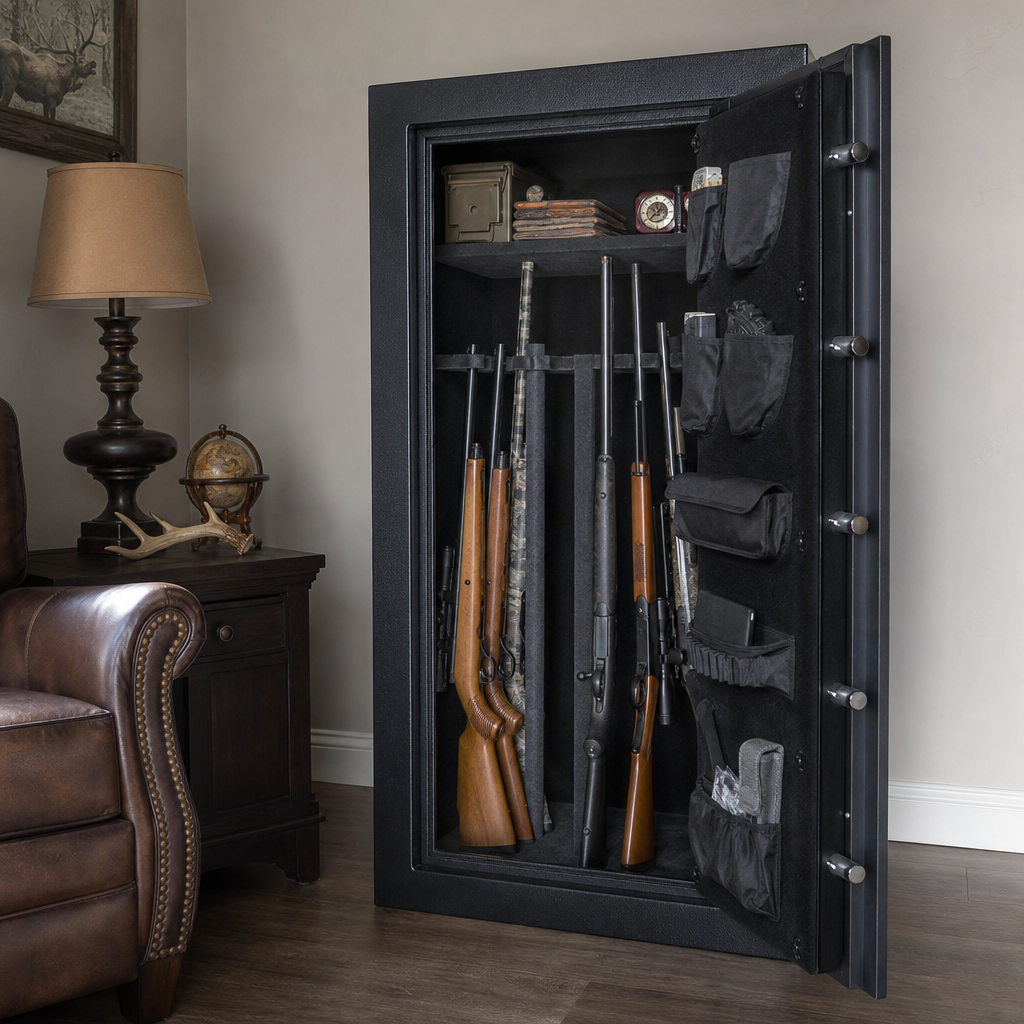
Choosing the best fireproof gun safe starts with understanding that no safe is literally fireproof; the meaningful question is how long a safe can keep its interior below a damaging temperature during a real house fire. In practical buying terms, a fireproof gun safe is a residential security container or gun cabinet built with insulated walls, reinforced steel, and tested fire ratings, usually expressed as minutes at a stated external temperature. For gun owners, that matters because heat, smoke, steam, and firefighting water can damage firearms, optics, paper records, and ammunition long before a total structural collapse occurs. I have evaluated safes in dealer showrooms, read manufacturer test sheets, and helped buyers compare Liberty, Browning, Fort Knox, Rhino Metals, Winchester, Cannon, and Hornady models side by side, and the biggest mistake people make is shopping by the sticker that says “fire rated” without asking how that rating was earned.
A strong comparison has to balance four variables at once: fire protection, burglary resistance, usable storage, and long-term reliability. A safe with thick steel but weak door seals may survive theft attempts better than heat. A model with a generous 90-minute rating may use thinner steel and basic lockwork. Interior layout matters too, especially for scoped rifles, handguns, and documents that need separate shelves or door organizers. Price complicates the picture further. Entry-level big-box safes often advertise impressive capacity numbers and bold fire claims, while premium brands spend more on thicker bodies, continuous welds, better relockers, and upgraded bolt systems. This hub compares the top brands commonly considered in the United States, explains how fire ratings really work, and helps you decide which safe fits your risk profile, your collection, and your budget.
How to Judge a Fireproof Gun Safe Before Comparing Brands
The best way to compare fireproof gun safes is to separate marketing language from measurable construction details. Start with the fire rating itself. Most manufacturers publish something like 30 minutes at 1,200 degrees Fahrenheit, 60 minutes at 1,400 degrees, or 90 minutes at 1,680 degrees. Those numbers are not standardized across the industry unless the safe is tested under a recognized laboratory protocol such as UL 72, and many residential gun safes are not. That does not automatically make the rating meaningless, but it means you should ask whether the test was independent, whether the safe reached the published temperature, and what internal temperature threshold the company used. Paper chars around 350 degrees Fahrenheit, while plastics, optics, adhesives, and wood stocks can be damaged at lower temperatures or by humidity and steam.
Construction details often tell you more than the headline claim. Look for layered gypsum board, proprietary insulation, expanding intumescent door seals, full-door contact, and a body that is not full of gaps around corners and hinges. Steel thickness matters because heavier steel slows pry attacks and helps the shell hold its shape during heat exposure. In this category, 12-gauge steel is common in entry-level safes, 11-gauge and 10-gauge are stronger mid-tier options, and premium models may use 3/16-inch or 1/4-inch plate doors and heavier bodies. Lock type also affects ownership. Electronic locks offer fast access and multiple user codes, but mechanical dial locks still have a reputation for long service life. The strongest buying move is matching the safe to your actual threat model: suburban house fire, smash-and-grab burglary, child access prevention, or all three.
Top Fireproof Gun Safe Brands Compared
Among widely available brands, Liberty remains one of the most referenced benchmarks because it covers nearly every tier, from Colonial and Centurion to Franklin and Lincoln. Liberty safes generally offer solid interior finish quality, flexible door panel storage, and broad dealer support. Their higher lines combine stronger steel, more locking bars, and longer fire ratings that appeal to buyers protecting both firearms and important records. Browning competes strongly on interior organization. Its Axis shelving system is one of the better layouts for mixed collections because it adapts for scoped long guns, handguns, and shelves without wasting width. Browning’s marketing often emphasizes capacity and convenience, and in showroom comparisons its interiors frequently feel more usable than similarly sized competitors.
Fort Knox sits in the premium conversation because it allows deep customization in steel thickness, liners, lock choices, and finish options. If your priority is burglary resistance first and fire protection second, Fort Knox often deserves a close look because buyers can spec heavier bodies and plate upgrades that move beyond typical big-box construction. Rhino Metals, including the Kodiak and Ironworks lines, has built a reputation for good value and distinctive design. The Ironworks series is especially popular with buyers who want furniture-grade appearance rather than an industrial box in the corner. Winchester and Cannon dominate many mass retail channels. They can be practical options for households needing moderate capacity and basic fire protection at a lower price, but shoppers should inspect steel gauge, bolt count, and warranty terms carefully rather than assuming all large safes in a store are equivalent.
| Brand | Typical Strength | Best For | Main Tradeoff |
|---|---|---|---|
| Liberty | Balanced fire ratings, dealer network, solid layouts | Buyers wanting broad model choice and support | Premium lines get expensive quickly |
| Browning | Excellent interior organization and access | Mixed firearm collections with optics and accessories | Need to compare steel specs model by model |
| Fort Knox | Customization, heavy steel, strong security options | Serious collectors prioritizing burglary resistance | High price and longer lead times |
| Rhino Metals | Good value, attractive finishes, varied lines | Homeowners wanting style plus practical protection | Specs vary significantly between product families |
| Winchester | Accessible pricing and common retail availability | First-time buyers needing a mainstream option | Entry models may use lighter steel |
| Cannon | Large capacities at competitive prices | Budget-conscious households with many long guns | Features can look stronger on paper than in hand |
| Hornady | Thoughtful rapid-access and specialty storage products | Supplemental storage and handgun-focused setups | Not always the first choice for large rifle collections |
Fire Ratings, Steel Thickness, and Locking Systems Explained
When buyers ask what makes the best fireproof gun safe, I usually answer with a layered explanation: insulation buys time, steel buys security, and sealing buys survivability. Fire ratings on consumer gun safes generally rely on gypsum-based board, ceramic wool, or proprietary composites installed in walls and doors. More layers usually mean longer stated ratings, but installation quality matters. A poorly fitted door with thin seals can let smoke and superheated gases enter long before the insulation reaches its limit. During actual structure fires, temperatures are not uniform and often spike, drop, and spike again as fuel changes and firefighters ventilate the building. That is why a safe with a realistic 60-minute rating and good sealing can outperform a cheaper “90-minute” model in real conditions.
Steel thickness is the easiest way to compare physical security. A safe body made from 14-gauge steel is substantially weaker than one built from 10-gauge steel, even if both advertise similar dimensions. Door construction can be even more important, because pry attacks target corners, locking edges, and door skin rigidity. Internal hard plates, relockers, and multiple active bolts help, but they do not erase weak body steel. As for locks, UL-listed electronic locks from SecuRam, Sargent and Greenleaf, and La Gard are common and generally dependable when paired with fresh batteries and sensible use. Mechanical dial locks remain slower but proven. For many homes, the right compromise is a safe with at least 11-gauge or 10-gauge construction, a credible 60-minute fire rating, an intumescent seal, anchored installation, and a lock from a recognized manufacturer.
Choosing by Budget, Collection Size, and Home Risk
The best brand for one buyer can be the wrong safe for another because household risk is never identical. If you live in a newer suburban home with smoke alarms, nearby fire response, and a modest firearm collection, a well-built mid-tier safe from Liberty, Browning, Rhino, or Winchester may be perfectly adequate. In that situation, anchored placement in a climate-controlled interior room often adds more real protection than spending thousands extra on cosmetic upgrades. If you live in a rural area with longer fire department response times, wildfire exposure, or detached outbuildings, you should lean toward longer fire ratings, stronger seals, and heavier steel. Buyers storing suppressors, tax stamps, jewelry, cash, and irreplaceable documents should think beyond gun count and treat the safe as a whole-home protection unit.
Capacity is another place where shoppers routinely get misled. A “36-gun” safe rarely stores 36 modern rifles with optics, bipods, slings, and large bolt handles in a convenient way. In real use, many owners should buy one size larger than they first planned. Browning’s flexible shelving helps here, and Liberty’s door organizers are also useful, but no brand completely escapes the math of modern rifle spacing. Budget buyers under roughly the mass-market threshold are often comparing Winchester, Cannon, and entry Liberty models. In the mid-range, Liberty Franklin, Browning Hunter and Medallion tiers, and select Rhino safes become more compelling. Premium buyers looking at Fort Knox, upper Liberty lines, and heavier custom builds are paying for steel, lockwork, fit, and options that materially improve resistance rather than just appearance. That distinction should guide your shortlist.
Installation, Placement, and Maintenance Matter as Much as Brand
Even the best fireproof gun safe can underperform if it is badly installed. The first rule is simple: anchor the safe. Most residential burglaries are quick, and thieves prefer to tip or remove lighter safes rather than attack them in place. Bolting the safe to concrete dramatically improves real-world security. If installation is on a wood floor, use the manufacturer’s approved hardware and verify load capacity, especially for larger models that can exceed 800 to 1,500 pounds before contents. Placement also changes fire exposure. A garage is convenient but usually harsher for humidity and can expose the safe to hotter, longer-burning fuel loads from vehicles, fuel cans, and tools. An interior ground-floor corner can be a better compromise, especially on a slab.
Moisture control deserves equal attention because fire protection does not prevent rust. In practice, I recommend a dehumidifier rod or desiccant system in nearly every long-gun safe, particularly in humid climates. Check door seals annually, replace electronic lock batteries on a schedule rather than after failure, and test the lock with the door open whenever programming changes are made. Keep paper records in a separate document pouch or interior fire box if they are truly critical; gun safe interiors are not all equivalent for document survival. Review the warranty as carefully as the specs. Liberty, Browning, Fort Knox, Rhino, Winchester, Cannon, and Hornady each handle claims differently through dealers, freight networks, and service partners. A strong warranty with realistic service support is part of the product, not an afterthought, because a safe is meant to serve for decades.
Which Fireproof Gun Safe Brand Is Best Overall?
For most buyers, the best overall fireproof gun safe brand is the one that gives the strongest mix of credible fire protection, adequate steel, practical interior storage, and dependable support at your price point. If you want the safest broad recommendation, Liberty is often the easiest brand to shortlist because its lineup is deep, parts and dealers are widely available, and the better models strike a sensible balance between fire rating and security. If interior organization matters most, Browning deserves serious attention. If maximum security and customization are the goal, Fort Knox is hard to ignore. If value and aesthetics matter, Rhino Metals is stronger than many shoppers expect. Winchester and Cannon remain relevant for entry-level buyers, but they should be purchased carefully, with close attention to construction details rather than marketing labels alone.
The main takeaway is straightforward: compare real specifications, not just brand reputation or a printed fire rating. Focus on tested or clearly explained fire claims, steel gauge, door design, lock quality, seal type, anchoring, and the way you will actually store firearms and valuables. That process will lead you to a better choice than chasing the biggest capacity number or the lowest sale price. As the hub for gun safe comparisons and brand spotlights, this guide gives you the framework to evaluate every model more intelligently. Use it to narrow your options, then compare the specific safe lines within each brand before you buy. A well-chosen safe protects more than guns; it protects time, money, records, and peace of mind. Start with your risks, then match the safe to them.
Frequently Asked Questions
1. What does “fireproof” really mean for a gun safe?
In the gun safe industry, “fireproof” is really shorthand for “fire-resistant for a limited period of time.” No residential gun safe can guarantee that it will survive every fire under every condition. What matters is how long the safe can keep the interior below a temperature that could damage firearms, ammunition, optics, documents, and other valuables while the outside is exposed to intense heat. Most manufacturers express this as a fire rating, such as 30, 60, 75, or 120 minutes at a specific external temperature.
That distinction is important because house fires are not uniform. Burn intensity, fuel load, ventilation, room location, and how quickly firefighters respond all affect the heat a safe experiences. A safe that performs well in a controlled factory test may face very different conditions in a real structure fire. For that reason, buyers should focus less on the word “fireproof” and more on the safe’s tested fire resistance, insulation design, door seals, steel construction, and the reputation of the brand behind the rating.
For gun owners specifically, fire resistance matters because high heat and smoke can damage wood stocks, finishes, lubricants, optics, slings, paperwork, and electronic accessories long before a safe actually fails structurally. In practical terms, the best fireproof gun safe is the one that combines a credible fire rating with solid burglary protection, enough storage space, and the right fit for where it will be installed in your home.
2. How do fire ratings on gun safes work, and can they be trusted?
Fire ratings usually tell you how long a safe is claimed to protect its contents while exposed to a certain external temperature. For example, a safe might be rated for 60 minutes at 1,200 degrees Fahrenheit or 90 minutes at 1,400 degrees Fahrenheit. The general idea is simple: better insulation, stronger construction, and tighter sealing should help keep interior temperatures lower for longer. The challenge for consumers is that not all fire ratings are created equal.
Some safes are tested by independent laboratories, while others are tested by the manufacturer using proprietary methods. That does not automatically make manufacturer testing meaningless, but it does mean you should read the details carefully. A credible rating should explain the temperature used, the duration of the test, whether the interior temperature was monitored, and whether the safe was also tested after being heated and dropped, which can better simulate structural collapse in a real fire.
Trusted brands often provide more transparent testing information and tend to have more consistent quality control. When comparing top brands, look beyond the headline number. A 90-minute rating is only useful if you know the temperature standard and testing process behind it. Also remember that fire protection is only one part of the equation. A safe with a strong fire rating but weak steel, poor locking bolts, or thin door construction may not be the best overall choice. The safest buying approach is to compare the rating, the testing method, the brand’s reputation, and the safe’s real-world build quality together rather than relying on one marketing claim.
3. Which gun safe brands are usually considered the best for fire protection and overall value?
Several brands routinely come up when buyers compare fire-resistant gun safes, but the “best” one depends on your budget, risk level, and expectations. Brands such as Liberty, Fort Knox, Browning, Winchester, Cannon, Sports Afield, Rhino, and AMSEC are often discussed because they offer a range of models with varying fire ratings, steel thickness, lock options, and interior layouts. Some focus on premium construction and customization, while others aim to deliver more storage and fire protection at a midrange price.
Liberty is often popular for balancing brand reputation, decent fire ratings, broad dealer support, and accessible pricing across multiple product lines. Fort Knox is frequently viewed as a more premium option, especially for buyers who want heavier steel and customization. AMSEC tends to earn attention from shoppers who want stronger security credentials alongside meaningful fire protection. Browning is often appreciated for user-friendly interiors and practical long-gun storage features. Winchester, Cannon, and Sports Afield commonly appeal to value-oriented buyers looking for larger capacity and usable fire ratings without entering the highest price tiers.
The key is understanding what each brand emphasizes. Some models advertise long fire times but use lighter steel. Others use thicker steel and stronger anti-theft design but offer more moderate fire ratings. Premium safes may provide better fit and finish, tighter tolerances, and more substantial overall construction, but they also cost more and can weigh significantly more. For most homeowners, the best value comes from choosing a reputable brand with transparent fire-test information, adequate steel thickness, a quality locking system, and enough interior space that the safe will still work a few years from now after your collection grows.
4. What features should I look for when choosing the best fireproof gun safe?
Start with the fire rating, but do not stop there. You want a safe with insulated walls, a heat-expanding door seal, reinforced steel construction, and a fire rating that aligns with your risk level and budget. In many residential situations, a 60-minute fire rating is a common baseline for serious buyers, while 75- to 120-minute ratings may make more sense if you live in a rural area with slower fire response times or want more margin for protecting documents and sensitive accessories in addition to firearms.
Steel thickness matters because a gun safe is not just protecting against heat; it is also protecting against theft. Many entry-level models prioritize size and fireboard insulation but use lighter-gauge steel. That may be fine for some households, but buyers who want stronger overall protection should compare body steel, door plate thickness, locking bolts, hard plates, relockers, and hinge design. An excellent fire rating does not compensate for weak burglary resistance.
Lock type is another major consideration. Electronic locks are fast and convenient, especially if you need quick access, while mechanical dial locks are often favored for long-term durability and simplicity. Interior layout also deserves attention. Adjustable shelving, scoped-rifle clearance, door storage, power outlets, and humidity-control options can make a huge difference in day-to-day usability. Finally, weight and installation are critical. Even a well-built safe performs better when it is properly anchored, placed on a solid surface, and located in a part of the home that reduces both theft risk and exposure to the hottest fire conditions.
5. Where should I place a fire-resistant gun safe, and how can I improve its real-world protection?
Placement has a major impact on both fire survivability and theft resistance. In general, a safe should be installed on a solid, level surface and securely bolted down. Concrete is often ideal, especially in a basement or ground-floor location, because it provides strong support and helps prevent thieves from tipping or removing the safe. Anchoring is one of the simplest and most important upgrades you can make, since even a heavy safe becomes more vulnerable if it can be moved.
From a fire perspective, lower levels of the home can sometimes offer advantages, but placement is not one-size-fits-all. Basements may stay cooler in some fires, yet they can also introduce moisture issues or water exposure from firefighting efforts. Garages are convenient, but they may be less climate-controlled and can contain fuel sources that intensify a fire. Upper floors are generally less ideal because of structural load concerns and because collapse risk may be greater in severe fires. Interior walls or corners can sometimes offer more protection than areas surrounded by combustible clutter.
To improve protection further, use a dehumidifier or desiccant system to control moisture, especially if the safe contains blued firearms, wooden stocks, optics, and paperwork. Store irreplaceable documents, passports, cash, and digital media inside smaller dedicated fire-rated containers placed within the gun safe if the dimensions allow. Keep in mind that smoke and steam can still be damaging, so layered protection makes sense. Finally, treat the safe as part of a broader plan: install smoke alarms, maintain homeowners insurance, document your firearms with serial numbers and photos, and choose a safe with enough fire resistance and security to match the actual risks in your area.