
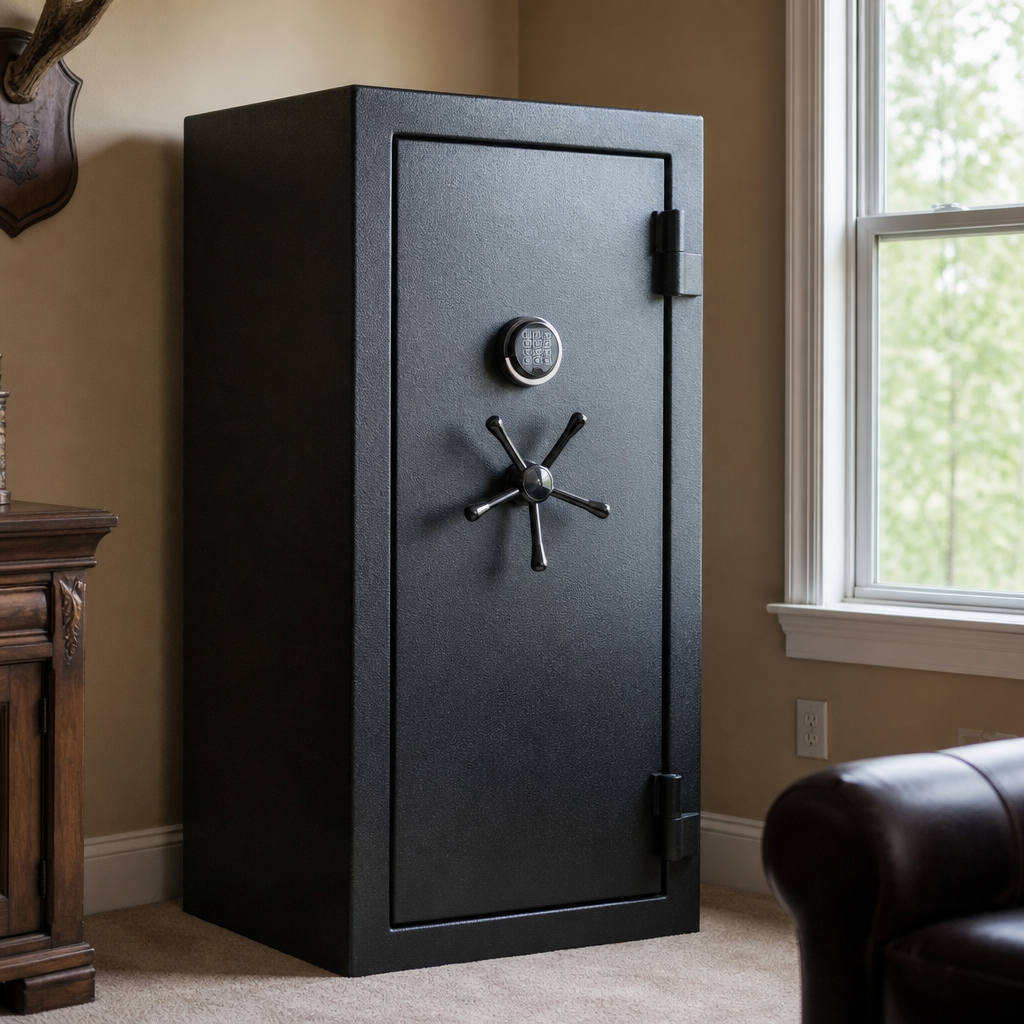
A heavier gun safe can be more secure, but weight alone does not determine whether a safe will resist theft, fire, moisture, or unauthorized access. In my experience evaluating residential safes, the biggest misconception is that sheer mass equals protection. It does not. A safe’s true security comes from steel thickness, door construction, lock quality, anchoring, fire insulation design, fit and finish, and how well the safe matches the risks in a specific home. That distinction matters because buyers often pay for pounds that add little protection while overlooking features that stop real break-in attempts.
To answer the title directly: a heavier gun safe usually gains some theft resistance because it is harder to tip, move, or load onto a dolly. However, heavy safes vary enormously in build quality. One 700-pound safe made with thin sheet steel and lots of drywall fireboard may offer less burglary protection than a 450-pound safe with thicker plate steel, a reinforced door edge, hardplate, relockers, and proper anchor bolts. Weight is a clue, not a verdict. Understanding that principle is the starting point for separating gun safe myths from facts.
This topic matters because gun safes serve several jobs at once. They are expected to prevent child access, deter smash-and-grab thieves, slow determined burglars, protect documents and optics from heat, and control humidity that can rust firearms. Those goals overlap, but they are not identical. The best safe for a suburban closet may differ from the best safe for a detached shop, a hunting cabin, or a collector with high-value rifles. Buyers need clear guidance because marketing language can blur the difference between residential security containers, gun cabinets, true burglary safes, and fire-rated document safes.
As a hub for gun safe myths and misconceptions, this article explains the common beliefs that mislead buyers, then shows what actually matters when choosing and using a safe. If you are comparing entry-level big-box models, premium American-made safes, modular safes for upstairs rooms, or compact quick-access units, the same logic applies: examine the entire security system, not one headline number.
Why Weight Helps, and Where It Misleads
Weight improves security in one important way: it makes theft by removal harder. Most residential burglars want speed. If a safe can be rocked, tipped, slid across a garage, or wheeled into a truck within minutes, the criminal gains unlimited time to attack it elsewhere. Extra mass raises that barrier. A safe weighing 800 pounds is significantly harder to move than one weighing 180 pounds, especially through hallways, stairs, and narrow doorways. That is a real advantage, and anyone denying it is ignoring basic physics.
Still, weight can mislead because not all pounds contribute equally to security. In many gun safes, a large share of the total weight comes from gypsum-based fireboard rather than thick steel. Fireboard helps with heat resistance, but it does little against pry attacks, abrasive cutting, or punching near the lock area. I have seen buyers assume a 900-pound safe must be massively built, only to learn that the body steel was around 14 gauge while much of the mass came from layered insulation. The result was respectable fire performance on paper but modest burglary resistance.
The opposite can also happen. A smaller, denser safe made with thicker plate and less decorative interior space may weigh less yet fight tools better. Steel quality, body gauge, door plate thickness, continuous welds, and internal reinforcement matter more than gross weight when the attack involves prybars, carbide bits, grinders, or a sledge. Weight remains useful, but only when interpreted alongside construction details and certification.
What Actually Makes a Gun Safe More Secure
The first factor is steel thickness. For burglary resistance, body steel and door steel are foundational. A thinner 14-gauge body can be cut or peeled far more easily than 10-gauge, 7-gauge, or plate steel construction. Door design matters even more because that is where most attacks focus. A composite door with substantial steel, a tight door gap, reinforced hinge side, and anti-pry structure outperforms a flashy door with many locking bolts but weak surrounding steel. Marketing often emphasizes bolt count, yet active bolts mean little if the door skin and frame are easy to flex.
The second factor is lock protection. A dependable UL-listed mechanical dial or electronic lock, paired with hardplate and one or more relockers, dramatically improves real security. Hardplate helps resist drilling into the lock or boltwork. Relockers trigger if the lock is punched or attacked, jamming the mechanism. These are not glamorous features, but they matter more than velvet interiors or embossed paint.
The third factor is anchoring. A mediocre safe anchored correctly usually beats a better safe left free-standing. Bolting a safe into concrete or substantial framing prevents tipping and removes the burglar’s easiest win: taking the entire unit. It also makes pry attacks harder because a stable safe cannot be laid on its back for leverage. In practical home security, anchor bolts deliver one of the highest returns per dollar.
The fourth factor is placement. A safe in a visible garage corner invites attacks with room to swing tools. A safe installed in a closet alcove, with limited side clearance and a short route from living areas, is harder to work on unnoticed. Security is never just the box itself; it includes the environment around it.
Common Gun Safe Myths Buyers Still Believe
The biggest myth is that heavier automatically means better. As noted, weight helps, but it does not replace build quality. Another persistent myth is that more locking bolts mean more protection. In reality, boltwork is often oversold. If the door jamb bends or the body steel tears, a dozen chrome bolts add little. A well-engineered safe with fewer, stronger bolts and better door support can outperform one covered in marketing labels.
Another common belief is that any fire rating is trustworthy. Fire claims vary widely because many gun safes are not tested to the same standard used for true record safes. Some brands publish internal tests with temperatures, durations, and pass criteria that are difficult to compare. That does not mean every claim is false, but buyers should ask what test was used, whether the rating came from an independent lab, what internal temperature threshold was measured, and whether door seals expand under heat. Fire protection is real, but ratings are not interchangeable.
Many owners also believe an electronic lock is inherently less secure than a dial. The truth is more nuanced. Cheap electronic locks can fail prematurely, especially in humid or high-use environments, but quality UL-listed electronic locks from established manufacturers can be reliable, fast, and secure. Mechanical dials have their own drawbacks, including slower access and user error. The right choice depends on your access needs, maintenance discipline, and tolerance for battery management.
A final myth is that any safe sold for guns offers serious burglary protection. Many products marketed as gun safes are closer to residential security containers than high-security burglary safes. For most households, that can still be appropriate, but buyers should understand the category and buy according to realistic threats.
How to Compare Safes Without Falling for Marketing
The simplest way to compare safes is to look at measurable specifications in the order burglars exploit weaknesses. Start with body steel gauge and door steel thickness. Then verify lock type, hardplate, relockers, hinge design, anchor holes, and weld quality. After that, examine fire construction and interior layout. Capacity claims should come last because stated gun counts are routinely optimistic, especially for scoped rifles, AR-style platforms, and guns stored in sleeves.
| Feature | Why It Matters | What to Look For |
|---|---|---|
| Body steel | Resists cutting and prying | 10-gauge or thicker for stronger burglary resistance |
| Door construction | Primary attack point | Plate or reinforced composite door with tight gaps |
| Lock protection | Stops drilling and punch attacks | UL-listed lock, hardplate, relockers |
| Anchoring | Prevents removal and tipping | Concrete anchor bolts or structural installation |
| Fire design | Protects contents from heat | Documented rating, expanding seal, layered insulation |
| Interior size | Affects real storage capacity | Allow space for optics, shelves, and dehumidifiers |
Recognized standards and labels can help. UL lock listings are meaningful. California DOJ compliance may matter for legal storage requirements, but it is not a comprehensive burglary rating. If a buyer needs genuine burglary performance, they should distinguish between consumer gun safes and higher-rated commercial burglary safes, which are heavier, costlier, and often smaller internally for the same exterior size.
Real-World Scenarios: When Heavy Is Worth It and When It Is Not
If you own a large firearm collection, live in an area with longer police response times, or need to secure expensive optics, suppressors, and documents together, buying a heavier, better-built safe usually makes sense. In those cases, the safe is not just storage. It is a delay device designed to survive concentrated attack long enough for alarms, cameras, dogs, lighting, and time pressure to work in your favor. Here, paying more for thicker steel and greater mass is rational.
But heavy is not always practical. Upstairs installations create floor-loading concerns. Rental properties may limit anchoring. Narrow staircases can make delivery dangerous. For some homes, a modular safe assembled in place offers better real security than a giant unanchored safe left in the garage because movers could not place it properly. Likewise, a parent needing fast defensive access may be better served by a full-size anchored safe for long guns plus a separate quick-access handgun safe near the bed. Security is about use, not just specifications.
I often advise buyers to think in layers. A safe should work with monitored alarms, reinforced doors, cameras, hidden placement, and discreet ownership habits. Posting new purchases on social media, discussing your collection openly, or leaving a garage door open during deliveries can undo some of the benefit of even an excellent safe. Criminals exploit information first and hardware second.
The Broader Misconceptions Around Gun Safe Safety
Security is only one part of the gun safe conversation. Moisture control is another area full of myths. A safe does not automatically prevent rust. In fact, a tightly closed safe in a humid climate can trap moisture. GoldenRod-style dehumidifiers, rechargeable desiccants, hygrometers, and sensible airflow management are often necessary, especially for blued steel firearms and wooden stocks. Storing guns in foam cases inside the safe can worsen corrosion because foam retains moisture.
Another misconception is that a bigger safe solves future needs. Oversizing helps, but only if the interior supports how you actually store firearms. Adjustable shelving, door organizers, pistol racks, and room for optics often matter more than advertised long-gun numbers. A nominal “36-gun” safe may realistically hold half that if you own scoped bolt guns and modern sporting rifles. Buyers should plan for accessories, documents, ammunition separation practices, and clearance for dehumidifying equipment.
People also underestimate maintenance. Locks need battery changes if electronic. Anchor bolts should be checked. Door seals and hinges should be inspected. Humidity should be monitored seasonally. Combinations should be updated when household access changes. A safe is not a one-time purchase that can be forgotten for twenty years.
The key takeaway across all gun safe myths and misconceptions is simple: buy for the threat, verify the specifications, install correctly, and maintain the system. A heavier gun safe may be more secure, but only when that weight reflects stronger materials, better engineering, and smarter use. If you are building out your gun storage plan, use this hub as your starting point, then compare safe construction, fire protection, lock options, installation methods, and humidity control with the same critical eye. Better decisions begin with better questions.
Frequently Asked Questions
Does a heavier gun safe automatically mean it is more secure?
No. Extra weight can help, but it does not automatically make a gun safe more secure. A heavy safe may be harder for a thief to carry away, but that is only one part of the security equation. True protection comes from the safe’s overall construction, especially the thickness of the steel body and door, the strength of the locking mechanism, the quality of the boltwork, and whether the safe is properly anchored. A safe can weigh a lot because of added fireboard, decorative panels, shelving, or oversized dimensions, not necessarily because it has better burglary resistance. In practical terms, a lighter safe built with thicker steel and a stronger door can outperform a heavier unit made with thinner materials. That is why weight should be treated as one data point, not the deciding factor. The real question is what the weight consists of and whether that design actually improves resistance to theft, forced entry, fire, moisture, and unauthorized access.
What factors matter more than weight when choosing a secure gun safe?
Several features matter more than raw weight. First is steel thickness. Thicker steel on the body and door generally offers better resistance to pry attacks, cutting attempts, and blunt-force abuse. Second is door construction. A well-built door with reinforced edges, solid internal structure, and tight tolerances is much harder to compromise than a large but loosely fitted door. Third is lock quality. Whether you choose a mechanical dial, electronic keypad, or other locking style, the lock should come from a reputable manufacturer and be paired with dependable relockers and solid boltwork. Fourth is anchoring. Even a very heavy safe can be tipped, attacked from a vulnerable angle, or removed with equipment if it is not bolted down. Fifth is fire protection design. You want to look beyond the marketing label and consider how the insulation is arranged, how the door seal performs under heat, and whether the rating comes from credible testing. Moisture control also matters, especially if the safe will be stored in a basement, garage, or humid room. Finally, the safe should match your actual risk profile. A household with children, frequent visitors, a remote location, or a higher theft risk may need a different level of protection than someone storing a small collection in a lower-risk environment.
Why are some heavier safes still vulnerable to theft or break-ins?
Some safes are heavy for reasons that have little to do with burglary resistance. For example, a safe may contain substantial fire insulation, thick interior materials, or decorative exterior components that add mass without significantly improving defense against pry bars, grinders, or attacks on the lock area. In residential settings, many break-ins are fast and opportunistic. Thieves often target weak points such as thin steel walls, flexible doors, exposed hinges, poor welds, and low-quality locks. If those vulnerabilities exist, added weight does not fix them. A heavy safe that is not anchored can also be tipped over, making it easier to attack the door or pry at seams. In some cases, burglars may use dollies, straps, or multiple people to move even a large safe if it is installed carelessly. That is why experienced evaluators focus on construction details rather than assuming mass equals strength. Heavy can be helpful, but poorly designed heavy is still poorly designed. The safe must resist real attack methods, not just look impressive on a spec sheet.
Should a gun safe always be anchored even if it is very heavy?
Yes, in most residential situations, anchoring is strongly recommended regardless of the safe’s weight. A heavy safe may seem immovable, but determined thieves do not always try to open a safe where it stands. They may try to tip it, slide it, place it on a dolly, or reposition it to attack weaker areas more effectively. Once a safe is on its back or side, pry attacks can become easier, and the leverage working against the door can change dramatically. Anchoring the safe to a concrete slab or another suitable structural surface makes removal much harder and often discourages the attempt altogether. It also helps keep the safe stable, which is important for safety in homes with children and for long-term performance of the door and hinges. Proper placement adds another layer of protection. Installing the safe in a tight location, such as a closet corner or alcove, can limit access to the sides and reduce pry opportunities. In real-world home security, anchoring is one of the most cost-effective ways to improve a safe’s performance, and it should be viewed as essential rather than optional.
How can I tell whether a gun safe is truly secure instead of just heavy?
Start by looking past the advertised weight and reading the construction details carefully. Check the steel thickness of both the body and the door, not just vague claims about “solid steel” or “heavy-duty design.” Evaluate the lock type and the reputation of the lock manufacturer. Examine how the door is built, whether the boltwork appears robust, and whether the safe includes features such as hard plates or relockers to protect against lock attacks. Ask how the fire rating was determined and whether the design includes expanding door seals and sensible insulation placement. Look at fit and finish too, because tight door gaps, clean welds, and consistent alignment often reflect better manufacturing quality. If possible, inspect how the interior handles moisture management and whether there is provision for dehumidification. Also consider where and how the safe will be installed. A well-built safe in the wrong location can still be at risk. The best approach is to match the safe to the specific threats in your home: burglary risk, fire exposure, humidity, access by children or guests, and the value of what you are storing. A truly secure gun safe is one that balances construction quality, installation, and intended use, rather than relying on weight alone as a selling point.