
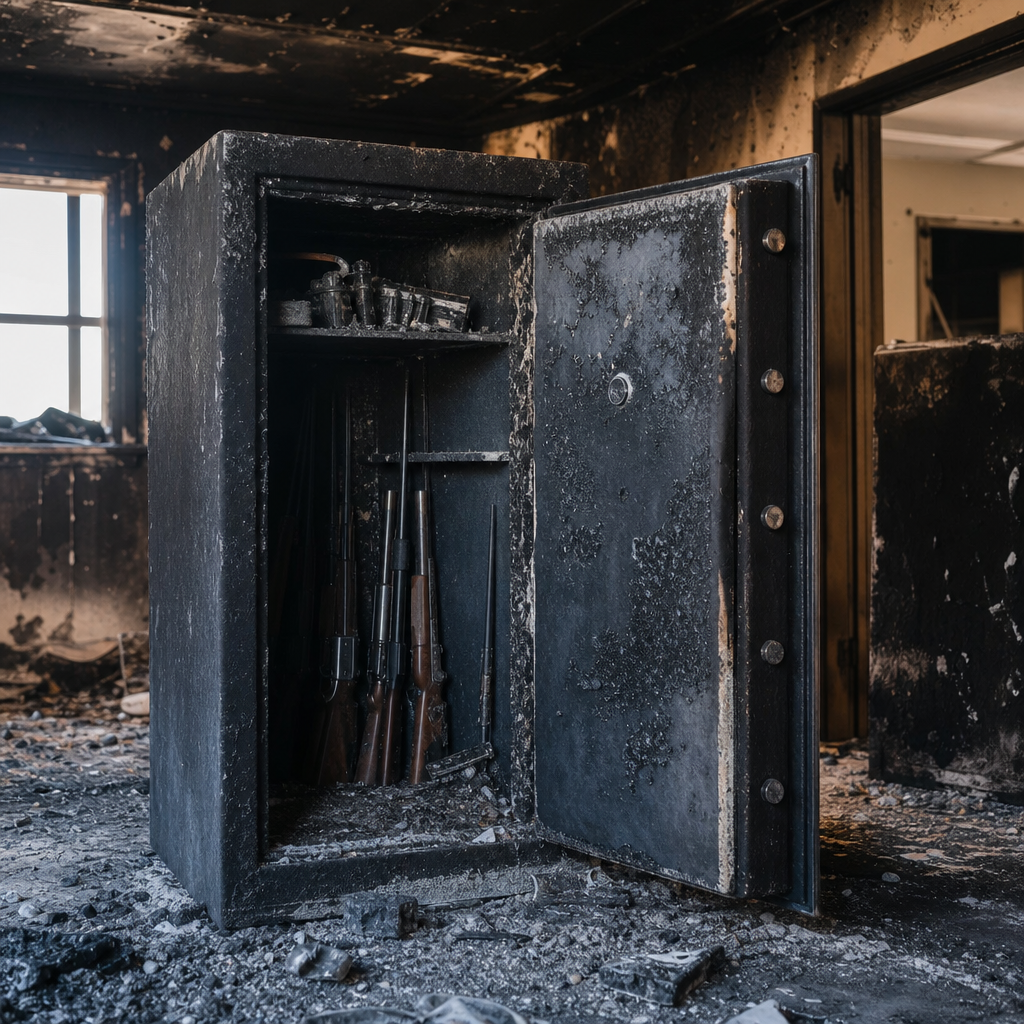
Many buyers assume every gun safe is fireproof, but that belief collapses the moment you examine how fire ratings are tested, marketed, and misunderstood. In the gun safe industry, “fireproof” is often used loosely, even though no safe is literally proof against all fire conditions for unlimited time. A more accurate term is fire resistance: the ability of a safe to keep interior temperatures below a threshold for a stated period under specific test conditions. That distinction matters because firearms, optics, documents, wood stocks, polymer frames, and ammunition all respond differently to heat, steam, and smoke. In my experience reviewing safe specifications and comparing manufacturer testing claims, fire ratings are where good products and good marketing most often diverge.
For gun owners, this topic matters for three reasons. First, house fires are common enough that fire protection should be part of any safe purchase, not an afterthought. Second, a misleading fire label can create false confidence, causing people to store irreplaceable firearms, tax stamps, deeds, photos, and digital media in a container that cannot realistically protect them. Third, understanding fire ratings helps you buy the right safe for your risk profile instead of overpaying for features you do not need or underbuying when your collection justifies more protection. This hub on gun safe myths and misconceptions explains what fire ratings actually mean, what they do not mean, and how they fit into broader safe selection decisions.
Key terms need to be clear from the start. Fireboard usually refers to layers of gypsum drywall or similar insulation placed inside the steel shell. Intumescent seals expand under heat to slow smoke and heat entry around the door. A fire rating usually states a duration and a temperature, such as 60 minutes at 1,200 degrees Fahrenheit, while also implying a maximum allowed internal temperature. In document safes, that internal target is often around 350 degrees Fahrenheit because paper chars above roughly 451 degrees Fahrenheit. Gun safes may borrow similar language, but many do not follow the same rigorous standards used for certified media or document protection containers. Understanding the test method behind the claim is more important than the sticker on the door.
This article also serves as a hub for the wider “Gun Safe Myths & Misconceptions” topic. Buyers frequently ask whether heavier always means safer, whether thicker steel matters more than locks, whether an electronic lock is less reliable than a dial, whether humidity control is optional, and whether a safe in a garage performs as well as one inside conditioned space. Those questions connect back to fire ratings because fire protection is only one part of a complete storage strategy. A safe can advertise a long fire duration and still have weak burglary resistance, poor fit and finish, or inadequate interior protection. The goal is not to dismiss fire ratings; it is to interpret them correctly and place them in context.
Why “fireproof” is the wrong word
No gun safe is universally fireproof because real fires vary too much. Residential fires differ in duration, peak temperature, ventilation, collapse events, and suppression response time. A safe that survives one room-and-contents fire may fail in a hotter, longer burn, especially if the structure collapses and leaves it exposed to prolonged heat from multiple sides. That is why credible manufacturers describe fire resistance in measured terms rather than making absolute promises. If a label says “fireproof” without disclosing test conditions, treat it as advertising language, not engineering data.
The biggest misconception is that a safe either passes or fails fire in simple binary fashion. In reality, fire performance exists on a spectrum shaped by insulation type, steel thickness, door fit, seal quality, and safe mass. Heavier safes generally heat more slowly, but mass alone does not guarantee better performance. A thin steel cabinet stuffed with gypsum can sometimes outscore a heavier but poorly insulated unit in a limited test. Likewise, a long advertised rating means little if the company never explains whether the safe was tested from cold, whether thermocouples tracked internal temperatures, or whether the unit was opened hot after the burn. Those details determine whether a rating deserves confidence.
Another myth is that if paper survives, firearms automatically survive. Steel guns can tolerate more heat than paper, but they are not immune to damage. Bluing can discolor, springs can lose temper, optics can fail, adhesives can soften, polymer components can warp, and wood stocks can crack from heat and moisture swings. Smoke residues and steam can also accelerate corrosion after the fire. A safe that keeps papers intact may still expose firearms to harmful internal conditions, especially if humidity spikes during the event. Fire resistance should be seen as damage reduction, not guaranteed perfect preservation.
How fire ratings are created and why standards matter
When a gun safe maker advertises “60 minutes at 1,400 degrees,” the first question should be: according to whose test? Established organizations such as Underwriters Laboratories have long published protocols for fire endurance, impact, and explosion resistance for certain classes of protective containers. However, many gun safes on the market are not UL fire classified products. Instead, they are tested in-house, by a contract laboratory, or according to a manufacturer-designed procedure. That does not automatically make the rating false, but it does mean the burden shifts to the buyer to inspect the methodology.
The most useful fire tests disclose five elements: furnace temperature curve, duration, acceptable internal temperature, sensor placement, and post-test condition. Some also include a drop test to simulate floor collapse, then a reheat cycle. That matters because a safe may resist direct heat yet fail when its door warps after impact. In practical terms, if a brand publishes a chart, identifies independent testing, and explains that the interior stayed below a specified threshold throughout the test, the claim has more value than a simple badge reading “90 minute fireproof.” Specificity is a trust signal.
Here is a plain-language way to compare common fire-rating claims buyers encounter:
| Claim Type | What It Usually Means | What To Verify |
|---|---|---|
| “30 minutes at 1,200°F” | Entry-level protection for shorter fires | Independent lab, interior temperature limit, seal type |
| “60 minutes at 1,400°F” | Common midrange marketing claim | Test curve, cold start or preheated furnace, door gap performance |
| “90+ minutes” | Higher-tier insulation package | Safe weight increase, added drywall layers, body and door consistency |
| UL-classified fire container | Tested to published third-party standard | Exact class, label authenticity, contents the class protects |
One nuance many buyers miss is that the safe industry mixes standards intended for different contents. A container suitable for paper documents is not automatically suitable for digital media, which can fail at much lower temperatures and higher humidity. Likewise, a gun safe with interior carpeting, foam barrel rests, and long-gun spacing may not perform like a dedicated record safe built around document protection standards. If you plan to store tax records, passports, suppressor paperwork, hard drives, or photo archives with firearms, you need to evaluate all contents by the most heat-sensitive item, not the most durable one.
What determines real fire performance in a gun safe
Insulation is the core variable. Most residential gun safes rely on gypsum-based fireboard because it is affordable and releases chemically bound water as it heats, helping slow temperature rise. Multiple layers generally improve resistance, but installation quality matters. Gaps, unsupported spans, and inconsistent door coverage reduce effectiveness. Higher-end safes may use poured or composite insulation systems that perform better and distribute protection more uniformly, but they raise cost and weight significantly. In side-by-side comparisons, construction quality often matters as much as the insulation material itself.
Door design is another decisive factor. The body can be heavily insulated, yet the door remains the thermal weak point because it contains seams, boltwork cavities, lock penetrations, and hinges. Better safes use stepped door profiles, more complete fire lining, and intumescent seals that expand during heat exposure. I have seen lower-cost safes with respectable steel thickness but minimal door insulation and uneven seal contact; on paper they looked competitive, but the design gave away where heat would intrude first. Buyers should inspect cutaway diagrams or cross-sections whenever possible, not just exterior finish and branding.
Safe placement changes performance too. A safe installed on a concrete slab in a climate-controlled interior room typically faces lower risk than one in a garage, workshop, or upper-floor room loaded with accelerants and subject to structural collapse. Exterior walls can be good or bad depending on likely fire path and firefighter access. Basements can moderate heat but add water and humidity risks. One of the most practical steps is to place the safe where fire load is lower, response is easier, and post-fire recovery is feasible. Location is part of fire protection, not separate from it.
Finally, understand what heat does after the flames are out. A sealed, hot safe can trap humidity, acidic smoke compounds, and condensation. Firefighters may drench the structure, then the cooling cycle pulls moisture into materials and onto metal surfaces. That is why desiccants, dehumidifier rods, corrosion inhibitors, and prompt post-incident handling matter. Fire resistance is not just about surviving the burn; it is about limiting the damage cascade in the hours and days after the event.
Common gun safe myths buyers still believe
Myth one: a longer fire rating always means a better safe. Not necessarily. Some brands emphasize fire minutes because burglary resistance is harder and costlier to improve. A safe with thin 14-gauge steel and a bold 75-minute fire claim may be easier to pry, cut, or remove than a sturdier 10-gauge model with a shorter but more credible rating. For most owners, theft risk is more probable than total-fire loss, so the right balance matters. Compare steel gauge, body design, anchor provisions, lock quality, and boltwork before treating fire duration as the headline metric.
Myth two: all independent fire tests are equal. They are not. The terms “independently tested” and “verified” can describe anything from a formal recognized protocol to a one-off burn observed by a third party. Ask whether the laboratory followed a published standard, whether the furnace was calibrated, and whether the full report is available. Reputable brands usually provide more than a brochure graphic if you ask dealer support.
Myth three: ammunition will explode and destroy the safe from inside. Small-arms ammunition stored loose generally cooks off under sufficient heat, but without a chamber or barrel it does not create the same projectile hazard many imagine. The greater concern is heat damage to firearms, interior materials, optics, and documents. Myth four: heavier equals certified protection. Weight can come from thicker steel, more drywall, larger dimensions, or decorative features. Always determine what the weight consists of.
Myth five: a humidifier or dehumidifier is optional if the safe is fire rated. Fire and moisture protection are different systems. Good fire lining does not prevent routine condensation, especially in garages and coastal climates. Myth six: any “gun cabinet” with a lock counts as a safe. Security cabinets serve a purpose for access control and organization, but they usually lack meaningful fire insulation and burglary resistance. Knowing these distinctions prevents expensive disappointment later.
How to evaluate a gun safe before you buy
Start with a simple checklist. Ask for the exact fire test source, duration, external temperature, and maximum internal temperature. Ask how many layers of fireboard are in the body and door, whether the door has an expanding seal, and what the safe weighs in the size you want. Then evaluate burglary basics: steel gauge, hard plate protecting the lock, relocker presence, anchor holes, and hinge-side reinforcement. If a seller cannot answer those questions, move on.
Next, match the safe to your contents. If you store collector-grade wood-stock rifles, engraved shotguns, passports, titles, and optics, your priorities differ from someone storing two polymer handguns and range ammo. Consider a small certified document safe inside a larger gun safe for paperwork and digital media. That nested approach is common because it solves a real limitation: most gun safes are built first for firearm storage and second for document protection.
Budget honestly for the full system. Delivery, bolting, dehumidification, lighting, door organizers, and insurance all matter. So does local fire response time. A rural homeowner with a volunteer department several miles away should think differently from a suburban owner two minutes from a staffed station. The best buying decision comes from assessing your likely risks, then choosing the strongest overall package you can afford.
Bottom line: what fire ratings really tell you
Fire ratings on gun safes are useful, but only when you read them as qualified performance claims rather than absolute guarantees. “Fireproof” is marketing shorthand. The truth is that every safe has limits set by test method, insulation design, seal quality, and real-world fire conditions. A credible rating can meaningfully reduce damage, protect many firearms, and preserve some valuables long enough for suppression or burnout. A vague rating can do little more than create confidence unsupported by evidence.
The practical takeaway is straightforward. Buy a gun safe by balancing fire resistance, burglary resistance, placement, humidity control, and the value of what you are protecting. Verify who tested the safe, how it was tested, and what the rating actually covers. If you are building out your broader gun storage plan, continue into related topics in this hub: lock types, steel thickness, moisture prevention, garage placement, and the difference between cabinets and true safes. The better you understand these myths and misconceptions, the more confidently you can choose storage that protects your firearms when it matters most.
Frequently Asked Questions
Are all gun safes actually fireproof?
No. Despite how often the term appears in ads and product descriptions, not all gun safes are fireproof, and in strict terms, no safe is truly “fireproof” against every possible fire scenario. What most manufacturers are really talking about is fire resistance: how long a safe can keep its interior below a certain temperature during a controlled test. That is a much narrower claim than many buyers assume. A safe may survive a moderate house fire for a limited period, but that does not mean it can withstand extreme temperatures indefinitely, protect contents during structural collapse, or perform the same way in every real-world fire. This is why the wording matters. “Fireproof” sounds absolute, while “fire-rated” or “fire-resistant” reflects the reality that protection depends on temperature, duration, construction, and test method.
What does a gun safe fire rating really mean?
A fire rating is supposed to tell you how long a safe can protect its contents at a stated external temperature while keeping the interior below a target threshold. For example, a safe might be advertised as lasting 30, 60, or 90 minutes at a certain degree level. The goal is to prevent the inside from reaching temperatures that can damage firearms accessories, documents, optics, electronics, ammunition packaging, or other valuables stored inside. However, the details behind the rating are critical. You need to know who performed the test, what temperature was used, whether the safe was preheated gradually or exposed rapidly, whether humidity and steam were considered, and whether the test included a cool-down phase or structural impact afterward. Without that context, a fire rating can be more marketing shorthand than a meaningful performance standard. In other words, the number alone does not tell the whole story; the test protocol is what gives the rating credibility.
Why are gun safe fire ratings so confusing or inconsistent?
They are confusing because the gun safe market does not always use one uniform testing standard, and manufacturers do not always present ratings with the same level of transparency. Some safes are independently tested by recognized laboratories, while others are rated based on proprietary methods, engineering estimates, or internal manufacturer testing. That makes comparisons difficult. A “60-minute” rating from one brand may not represent the same level of protection as a “60-minute” rating from another brand if the temperature, pass criteria, and test procedures were different. Marketing language also adds to the confusion. Terms like “fireproof,” “tested,” “verified,” and “certified” are sometimes used interchangeably, even though they can mean very different things. Buyers who only look at the headline claim may miss whether the safe has gypsum board insulation, door seals that expand under heat, reinforced seams, or an independently documented test report. The safest approach is to treat broad fire claims with caution and look for specifics rather than assuming all ratings are equally reliable.
How can I tell if a gun safe has a trustworthy fire rating?
Start by looking beyond the front-label marketing and searching for the details of the test. A trustworthy fire rating should clearly state the duration, the test temperature, and ideally the maximum interior temperature allowed during testing. It is also a strong sign if the rating comes from an independent testing organization rather than only from the manufacturer’s own claims. Ask whether the safe was tested as a complete unit, including the door and seal system, and whether the rating reflects a recognized standard or simply an internal benchmark. Construction details matter too. Fire-resistant safes often use layered insulation, heat-activated door seals, tighter body-to-door gaps, and robust steel construction that helps maintain structural integrity under heat. Reputable brands are usually more willing to publish technical information, answer questions about their testing methods, and explain limitations honestly. If the company gives only vague phrases like “fireproof design” or “factory tested” without numbers or documentation, that should be a red flag rather than a reason for confidence.
What kind of fire protection should most gun safe buyers realistically look for?
That depends on what you are storing, where the safe will be installed, and what fire risks are common in your home. For many buyers, the goal should not be chasing the most dramatic “fireproof” claim, but finding a realistic level of fire resistance from a reputable manufacturer. If the safe will be used for firearms alone, your needs may differ from someone also storing paper documents, passports, cash, hard drives, or sensitive optics, all of which can be damaged at lower temperatures or by moisture and smoke. Consider how long it might take for emergency response in your area, whether the safe will sit in a garage, basement, or upper floor, and whether the room itself contains extra fuel sources. A moderate, clearly documented fire rating from a reliable company is often more valuable than an inflated rating with little explanation behind it. In practical terms, buyers should focus on overall build quality, verified testing information, proper installation, and storage strategy. A gun safe can offer meaningful fire resistance, but it should be viewed as one layer of protection, not a guarantee against every fire event.