
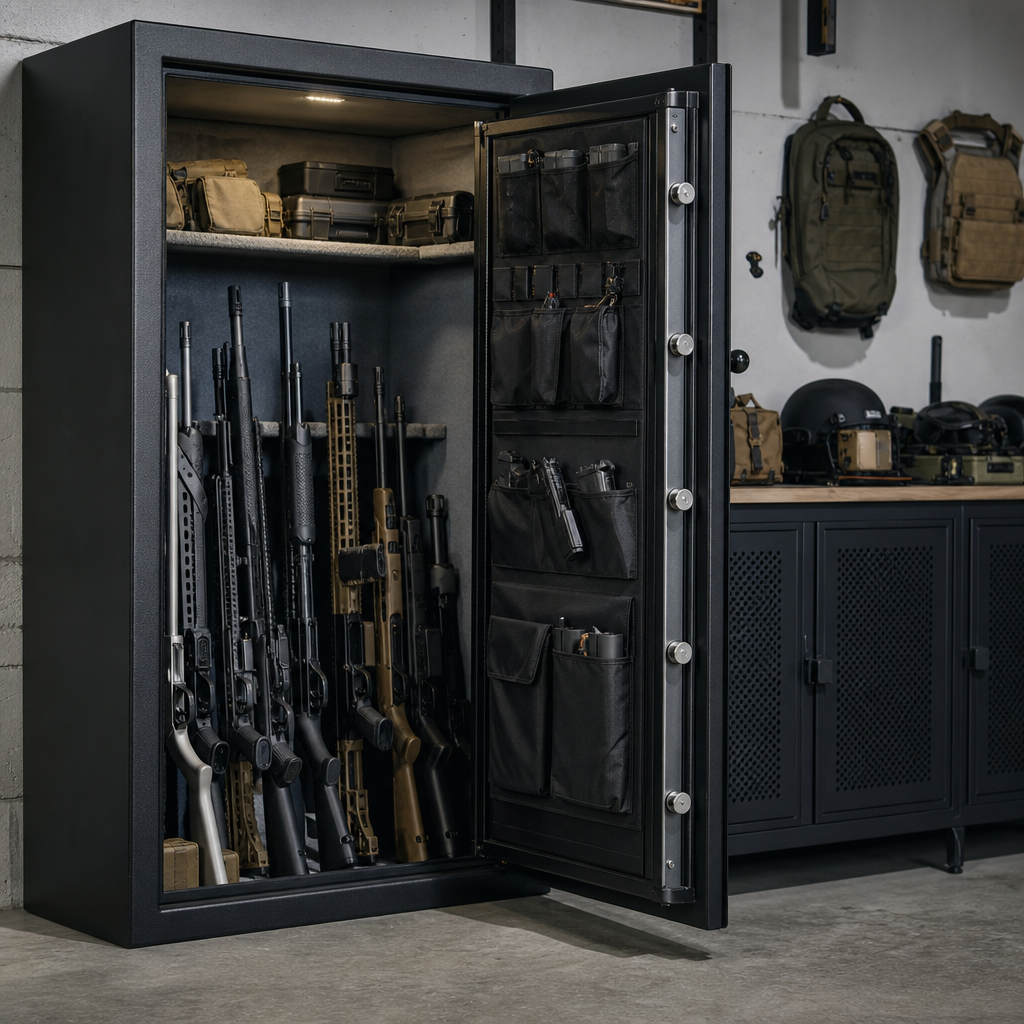
Choosing the best gun safe brands for tactical and emergency-ready storage starts with understanding that not every safe is built for the same mission. Some are designed for fast access during a home defense event, while others prioritize fire protection, long-gun capacity, or organized storage for optics, suppressors, and documents. In practical terms, tactical storage means a safe supports rapid retrieval, smart interior layout, dependable locking hardware, and durability under hard daily use. Emergency-ready storage adds another layer: the safe must protect firearms from unauthorized access, survive likely residential threats, and stay usable when stress is high, power is out, or seconds matter.
That distinction matters because shoppers often compare gun safe brands by marketing labels instead of construction details. I have evaluated safes in showrooms, on delivery installs, and during retrofit projects, and the differences become obvious once you inspect steel thickness, door design, boltwork, anchor options, and lock redundancy. A safe that looks impressive on a retail floor may still rely on thin bodies, superficial fire claims, or cramped interiors that become frustrating the moment you mount rifle lights or larger scopes. By contrast, the best gun safe brands for tactical and emergency-ready storage treat access speed, theft delay, and interior usability as a single system.
This hub article covers the core of gun safe comparisons and brand spotlights under the broader gun safes and safety category. It explains what separates major brands, where each fits, and how to think about quick-access pistol safes, modular cabinets, full-size residential security containers, and premium American-made models. It also addresses the questions buyers actually ask: Which brands are best for home defense? Which safes offer the strongest fire protection? What should you buy for AR-style rifles with accessories? Which brands provide real value instead of inflated capacity numbers? If you are building a shortlist, this guide gives you the framework to compare models confidently and identify the right brand for your space, risk profile, and storage priorities.
What to look for in a tactical and emergency-ready gun safe brand
The best gun safe brands consistently perform well in five areas: security construction, access speed, fire resistance, usable capacity, and installation flexibility. Security construction starts with body steel and door steel. Many mass-market gun safes use 14-gauge or 12-gauge steel bodies, which can be acceptable for basic residential storage when properly anchored, but stronger models move to 10-gauge, 3/16-inch, or thicker plate. Door fit matters just as much. Pry resistance depends on door overlap, reinforced frames, hard plates protecting the lock, and robust locking bolts that engage on multiple sides.
Access speed is critical in emergency-ready storage. A tactical safe should open predictably under stress, including in the dark. Mechanical Simplex locks remain respected because they require no batteries and have a long service history. Electronic keypad locks are common and convenient, but quality varies widely by manufacturer. Biometric access can be useful for bedside or closet deployment, yet fingerprint readers are best viewed as a convenience layer, not a substitute for proven mechanical reliability. On larger long-gun safes, many owners prefer UL-listed electronic locks from SecuRam or Sargent and Greenleaf because they balance speed and established performance.
Fire protection claims need scrutiny. Some brands list 30, 60, 75, or 120 minutes at specific temperatures, but there is no universal consumer standard across all gun safes. Manufacturers may use different testing conditions, furnace curves, and pass criteria. In practice, better fire protection usually means more substantial insulation, intumescent door seals, tighter construction tolerances, and a reputation for consistent manufacturing. Realistically, placement helps too. A safe installed on a concrete slab, away from combustible clutter, generally has better survival odds than one isolated in a garage corner surrounded by fuel and tools.
Usable capacity is often where brand comparisons become most valuable. Advertised rifle counts are typically optimistic. A “24-gun” safe may store far fewer modern rifles once you add variable optics, offset mounts, bipods, wider handguards, or magazine couplers. Brands that offer modular racks, door organizers, and deeper interiors deserve extra attention because tactical gear takes space. Finally, installation flexibility matters. Pre-drilled anchor holes, pallet-friendly delivery dimensions, optional power ports, dehumidifier support, and interior lighting all improve long-term ownership and emergency readiness.
Top gun safe brands and where each one fits
Liberty Safe remains one of the most recognized names in the category, largely because it spans entry-level to premium residential security containers with broad dealer support. Buyers often consider Liberty for balanced theft protection, practical interior options, and strong aftermarket familiarity. Models such as the USA series and Franklin line fit homeowners who want traditional long-gun storage with respectable fire ratings and easy service access. For tactical use, Liberty interiors are functional, though heavily accessorized rifles may still push capacity limits.
Fort Knox occupies the premium custom segment and has long appealed to buyers who want thicker steel, higher build flexibility, and American-made construction. If your priority is configuring shelving, door storage, color, lock type, and upgraded steel packages, Fort Knox is one of the strongest brand spotlights in any gun safe comparison. These safes are expensive, but they are built for owners who plan around decades of use, not short-term retail convenience. In homes where burglary delay and storage customization matter more than bargain pricing, Fort Knox deserves a place near the top of the list.
American Security, widely known as AMSEC, is especially important because it bridges the gap between residential gun safes and commercial-grade security products. The BF series is often recommended for buyers who want a credible mix of burglary resistance and fire protection without jumping immediately into the highest price bracket. AMSEC also manufactures true high-security safes, so the company’s engineering depth is significant. In my experience, buyers who compare AMSEC against similarly priced competitors often notice better lock protection, more confidence-inspiring door construction, and more serious specifications overall.
Rhino Metals, including Kodiak and Ironworks lines, targets buyers who care about features and styling as much as raw numbers. Their safes often include attractive interiors, shelving flexibility, and decorative exteriors that suit living spaces rather than utility rooms. For tactical and emergency-ready storage, Rhino’s value depends on the exact model tier. Some are feature-rich with good accessibility; others should be compared carefully on steel thickness and certification details before purchase.
Browning stands out for interior organization. The company’s Axis shelving and door-mounted systems make it easier to store a mixed collection of scoped rifles, handguns, and accessories. For households managing hunting guns and tactical carbines in the same safe, Browning often uses space more efficiently than brands that rely on fixed rack geometry. Vaultek, by contrast, dominates the conversation around modern quick-access handgun safes and compact smart safes. Its products are relevant when the emergency-ready goal is immediate bedside access, vehicle-adjacent staging inside the home, or secure storage in apartments where a full-size safe is impractical.
Comparing major brands by use case
The right brand becomes clearer when you compare use cases instead of advertisements. Home defense households usually need two layers: a fast-access handgun safe near the sleeping area and a larger anchored safe for long guns, ammunition, documents, and staged equipment. In that setup, Vaultek, V-Line, and Fort Knox pistol boxes handle immediate access, while Liberty, AMSEC, Browning, or Fort Knox long-gun safes manage primary storage. Families with children should prioritize lock reliability, anchor strength, and routines that keep defensive firearms inaccessible except to authorized adults.
Collectors and tactical shooters have different needs. A safe filled with AR-platform rifles, suppressor hosts, chest rigs, and spare optics requires more depth, more door storage, and less reliance on old-style notched barrel rests. Buyers in this category often do better with AMSEC, Browning, or premium Liberty and Fort Knox models because interiors can be adapted for nontraditional firearm shapes. If your rifles wear LPVOs, thermal clip-ons, or large weapon lights, plan for at least one size larger than the advertised count suggests.
| Brand | Best For | Strengths | Main Tradeoff |
|---|---|---|---|
| Liberty | Mainstream home storage | Wide dealer network, balanced features, solid options | Capacity numbers can be optimistic |
| AMSEC | Security-focused buyers | Strong construction, respected lock protection, serious lineup | Higher cost than entry-level competitors |
| Fort Knox | Premium custom installs | Customization, thicker steel options, long-term ownership value | Expensive and heavy |
| Browning | Organized mixed collections | Excellent interior flexibility and door storage | Must compare exact model specs carefully |
| Vaultek | Quick-access handgun storage | Fast entry, compact form factor, modern features | Not a substitute for a full-size long-gun safe |
Rural owners and preparedness-focused buyers often emphasize fire resistance, larger capacities, and room for documents, radios, and emergency cash. Here, Liberty and Browning are common midrange choices, while AMSEC and Fort Knox appeal to buyers willing to invest more in steel and security design. Apartment residents or military families who move frequently may prefer modular solutions from brands such as Zanotti, or compact safes that can be installed without major structural disruption. The best gun safe comparisons always start with the likely scenario of use, not the broadest marketing promise.
Quick-access safes versus full-size gun safes
One of the biggest mistakes I see is trying to make one safe do every job. Quick-access handgun safes and full-size gun safes solve different problems. A bedside safe is about immediate retrieval under stress, one-handed access, and secure control around children or visitors. A full-size safe is about layered protection, inventory management, and delaying theft long enough to defeat a smash-and-grab burglary. Expecting a biometric pistol safe to provide the same security posture as an anchored long-gun safe is unrealistic.
For quick-access storage, the strongest brands are those with consistent lock performance, rigid housings, and simple opening sequences. V-Line’s mechanical pushbutton designs remain highly respected because they eliminate battery dependence. Fort Knox pistol boxes built around Simplex locks are similarly trusted. Vaultek adds app connectivity, rechargeable power, and biometric features that many owners appreciate, though electronic convenience should always be backed by regular function checks and battery discipline. If you stage a defensive handgun, test access in darkness, from awkward positions, and after waking, not just during calm daytime setup.
For full-size safes, prioritize anchoring and burglary delay over flashy electronics. Even a moderate steel safe becomes harder to attack when bolted to concrete, placed in a tight alcove, and concealed from casual view. The best brands design interiors and bolt patterns with real installation in mind. If your emergency plan includes body armor, medical gear, spare magazines, or important records, reserve dedicated shelves instead of stacking equipment loosely around firearms. A well-organized safe is faster in a crisis and less likely to create negligent handling risks.
How to judge quality beyond brand reputation
Brand reputation is useful, but model-specific construction is what protects your firearms. Start with the steel body and ask for exact gauge or plate thickness. Then examine door edge design, hinge configuration, relocker features, and whether the lock is shielded by hard plate. A safe with thicker steel but weak lock protection can still have vulnerabilities. Likewise, a respectable brand may sell an entry-level model that is far less robust than its upper-tier offerings. This is why serious gun safe comparisons should happen at the model level, not just the logo level.
Look for recognized components and standards wherever possible. UL-listed locks matter. Independent burglary and fire certifications matter when available. So does fit and finish, though not for cosmetic reasons alone. Tight gaps, smooth boltwork, and clean welds often indicate better manufacturing consistency. On delivery, inspect whether the door swings cleanly, bolts extend evenly, and interior panels are secured properly. Cheap carpeting, weak shelving clips, or flexing door panels usually signal broader cost cutting.
Serviceability is another overlooked factor. Ask who can service the lock in your area, how replacement parts are handled, and what the warranty actually covers. Some brands have strong dealer ecosystems that simplify ownership, while others rely on remote support and shipping parts. If you are buying a safe for emergency-ready storage, downtime matters. A lock failure during a family move or severe weather event is more than an inconvenience. Choose brands with support structures that match the seriousness of the job.
Final recommendations for building your shortlist
The best gun safe brands for tactical and emergency-ready storage are the ones that match your actual threat profile, access needs, and collection type. For many households, the smartest answer is a two-safe strategy: a proven quick-access handgun safe for immediate defense and a larger anchored long-gun safe for comprehensive security. If you want broad market support and balanced features, start with Liberty. If you care most about stronger security engineering in the mid-to-upper range, put AMSEC high on your shortlist. If customization, heavier construction options, and premium ownership value matter most, Fort Knox is a leading choice. If interior organization is your biggest pain point, Browning deserves close attention. If compact rapid access is the priority, Vaultek, V-Line, and Fort Knox pistol boxes are key names to compare.
As a hub for gun safe comparisons and brand spotlights, this page should help you narrow the field before diving into specific reviews, size guides, and installation topics. Focus on steel, lock quality, interior usability, and anchoring before you focus on cosmetics or inflated capacity claims. Buy one size larger than you think you need, install it correctly, and practice access with the same seriousness you apply to firearm handling. If you are ready to compare specific models, use this framework to build a shortlist and move next into brand-by-brand evaluations, fire rating analysis, and quick-access safe reviews within the broader gun safes and safety category.
Frequently Asked Questions
What should I look for in the best gun safe brands for tactical and emergency-ready storage?
The best gun safe brands for tactical and emergency-ready storage usually stand out in a few critical areas: speed of access, build quality, lock reliability, interior organization, and real-world durability. If your main goal is emergency access, focus first on how quickly and consistently the safe opens under stress. That often means evaluating biometric locks, electronic keypads, mechanical simplex-style locks, or traditional dial systems based on your routine and comfort level. A tactical-safe buyer is not just asking whether the door opens, but whether it opens fast, every time, in low light, with cold hands, or during a high-pressure home defense situation.
Construction matters just as much. Better brands typically use thicker steel, stronger door reinforcements, more robust hinge systems, and solid locking bolts that resist prying. Interior design is also a major differentiator. A tactical-ready safe should not force you to dig through clutter to reach a carbine, handgun, spare magazines, suppressor, flashlight, or important documents. Adjustable shelving, dedicated rifle racks, door organizers, pistol holsters, and modular compartments can make a big difference in both speed and usability.
Fire protection and environmental sealing are also worth comparing, especially if the safe will hold more than defensive firearms. Many buyers want a balance between quick access and broader protection for valuables, optics, paperwork, and heirlooms. Finally, pay attention to the brand’s reputation for quality control, warranty support, and customer service. The best gun safe brand is not always the one with the longest feature list; it is the one that consistently delivers the right combination of access, protection, organization, and reliability for your specific emergency-readiness plan.
Are biometric gun safes a good choice for home defense and emergency access?
Biometric gun safes can be an excellent choice for home defense, but only when they come from reputable brands and are matched to realistic expectations. Their biggest advantage is speed. In a true emergency, being able to open a safe with a fingerprint can be faster and more intuitive than entering a keypad code or turning a dial. That makes biometric models especially appealing for bedside handgun safes, closet-mounted rapid-access units, and smaller tactical storage setups designed around immediate retrieval.
That said, not all biometric systems perform equally well. Sensor quality, processor speed, and memory accuracy vary widely by brand. A well-made biometric safe should recognize enrolled fingerprints quickly and consistently, while also offering backup entry methods such as a keypad override or physical key. This redundancy is important because fingerprints can sometimes fail due to moisture, dirt, cuts, gloves, or awkward hand placement. The most dependable tactical storage setups treat biometric access as one layer of convenience rather than the only plan.
For larger emergency-ready safes, many owners prefer a hybrid approach: an electronic lock or mechanical system for the main safe and biometric access for a dedicated quick-access handgun vault. This can provide both long-term security and fast deployment. In short, biometric safes are a strong option when purchased from trusted brands known for dependable electronics, but they should always be tested regularly and integrated into a broader storage strategy that prioritizes both rapid access and consistent reliability.
How important is interior layout when choosing a tactical gun safe brand?
Interior layout is one of the most overlooked but most important parts of tactical and emergency-ready storage. A safe may have heavy steel construction and a reliable lock, but if the inside is poorly arranged, it can still slow you down when seconds matter. The best gun safe brands understand that tactical owners often need more than a place to stack firearms. They need an organized system that supports fast identification, clean storage, and immediate access to mission-critical gear.
A well-designed interior helps keep rifles separated and accessible, handguns secured but visible, and accessories such as magazines, slings, suppressors, optics, hearing protection, and lights stored in predictable locations. Modular shelving, removable racks, door panels, and configurable storage bins make it easier to build a layout around your actual equipment rather than forcing your gear into a generic format. This is particularly useful for owners of AR-platform rifles, short-barreled firearms, or scoped long guns that may not fit neatly into traditional rack patterns.
Good organization also supports safety and maintenance. Firearms are less likely to get scratched, optics are less likely to be knocked out of alignment, and important documents can be kept separate from oils or cleaning supplies. From an emergency-readiness standpoint, the ideal interior lets you reach what you need without moving multiple items first. That is why strong brands often invest in flexible interiors rather than treating the inside of the safe as an afterthought. For tactical storage, smart internal design is not a luxury feature; it is part of the safe’s real-world performance.
Should I choose a dedicated quick-access safe or a larger full-size gun safe for emergency-ready storage?
For many households, the best answer is not one or the other, but a layered combination of both. A dedicated quick-access safe is designed for immediate use, often storing a defensive handgun or compact firearm in a bedroom, office, or other strategic location. These safes prioritize speed, accessibility, and convenience. They are ideal for home defense scenarios where instant retrieval matters more than maximum storage capacity. Good brands in this category focus on fast lock response, compact strength, tamper resistance, and mounting options that keep the unit secure while still within reach.
A full-size gun safe serves a different mission. It is better suited for storing long guns, extra firearms, ammunition where legally appropriate, accessories, important documents, and other valuables. Larger safes also tend to offer stronger overall burglary resistance, higher fire ratings, and much better organizational flexibility. If you own multiple rifles, store premium optics, or want one central storage hub for both protection and preparedness, a full-size safe from a respected brand is usually essential.
The most effective emergency-ready setup often uses a full-size safe as the main secure storage location and a smaller rapid-access unit for immediate defensive needs. This gives you stronger overall protection without sacrificing response time. When comparing brands, think about how the safe will function in your daily routine, not just how it looks on a spec sheet. Tactical storage is about matching the safe to the role: fast-access vaults for urgent response, larger safes for complete security and organized long-term readiness.
Do premium gun safe brands really offer better security and durability than budget options?
In many cases, yes, premium gun safe brands do offer meaningful advantages over budget options, especially for buyers who want dependable tactical and emergency-ready storage. The difference is not always about flashy features. More often, it comes down to stronger materials, tighter manufacturing tolerances, better lock components, improved door fit, more effective anti-pry design, and more consistent quality control. These factors directly affect how the safe performs over years of use and under real-world stress.
Budget safes can still serve a purpose, particularly for entry-level owners or for secondary storage in lower-risk settings. However, lower-priced models often involve compromises such as thinner steel, simpler boltwork, lighter construction, less refined interiors, and electronic components with a shorter service life. For tactical use, those compromises matter. A safe that flexes too easily, opens inconsistently, or becomes disorganized after heavy daily use may not deliver the reliability you need when speed and confidence are critical.
Premium brands also tend to provide better long-term ownership value through stronger warranties, replacement parts availability, upgrade-friendly interiors, and more responsive customer support. That can make a big difference if you ever need lock service, accessory expansion, or help after a malfunction. While not every buyer needs the most expensive safe on the market, investing in a well-regarded brand often translates into better security, smoother operation, and greater trust in the product. For emergency-ready storage, that peace of mind is a practical benefit, not just a luxury.