
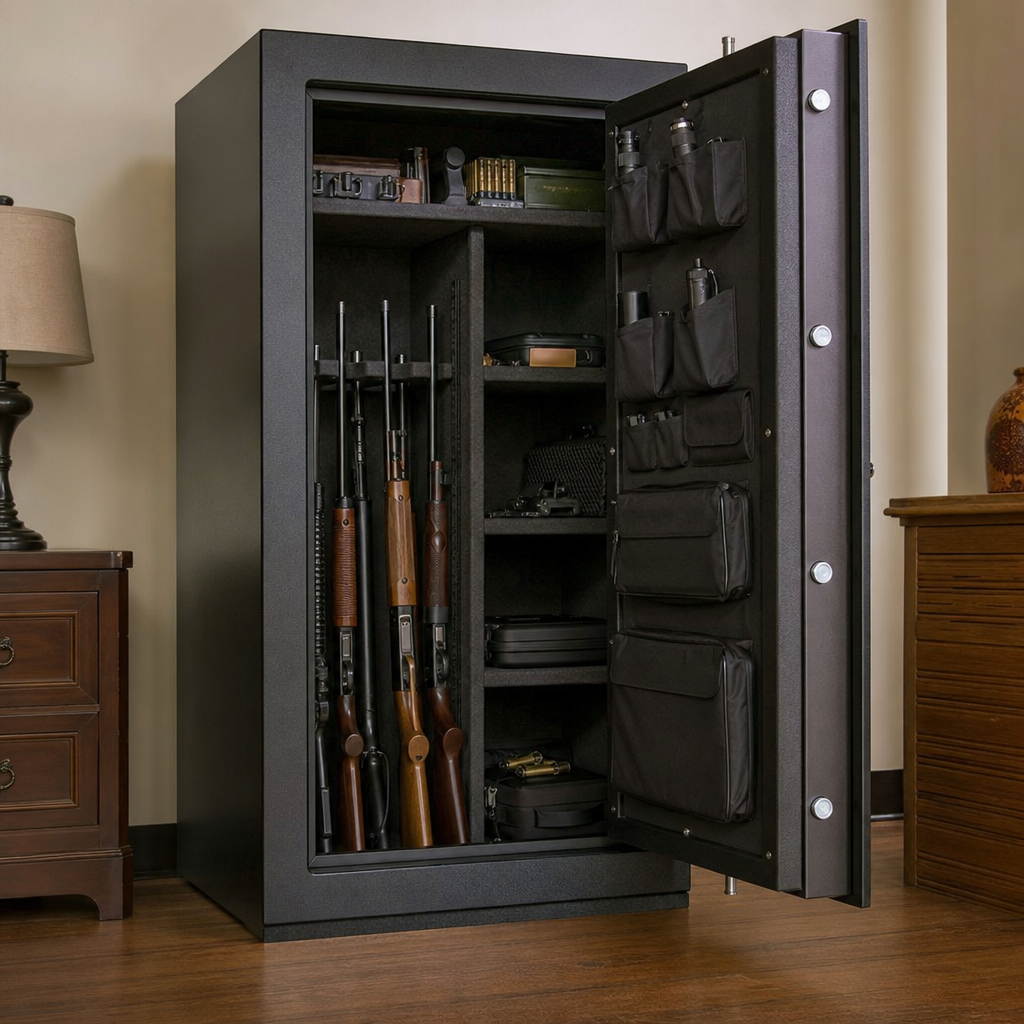
Choosing the best gun safes with auto-locking features for extra security starts with understanding what auto-locking actually solves: it reduces the chance that a safe is left unsecured after access, and it adds another barrier against unauthorized handling, theft, and negligent storage. In practical terms, an auto-locking gun safe is designed to re-engage its locking mechanism after a door closes, after a timed delay, or after repeated failed entry attempts. That matters for households with children, shared living spaces, cleaning staff, frequent visitors, or owners who access firearms under stress and cannot rely on perfect habits every time.
Within the broader category of gun safes and safety, buying guides focus on matching a safe to realistic threats, storage needs, and legal obligations. I have seen buyers overspend on oversized units with weak bolts and flashy electronics, while others buy compact bedside boxes that cannot resist simple prying. The better approach is to evaluate construction, lock design, fire protection, anchoring, interior layout, audit features, and speed of entry together. Auto-locking is valuable, but it is only one part of a complete security system. The best gun safes combine fast authorized access with dependable relocking, solid steel bodies, reinforced doors, and installation methods that prevent removal.
This hub article covers the main buying questions most shoppers ask. What types of auto-locking systems exist? Which lock is most reliable? How much steel is enough? Are biometric safes trustworthy? What size should you buy for pistols, rifles, optics, and documents? The answers depend on use case. A bedside handgun safe for home defense has different priorities than a long-gun safe in a garage or closet. By the end, you should know which specifications matter most, which marketing claims deserve skepticism, and how to choose a gun safe that improves security rather than merely looking secure.
What Auto-Locking Features Actually Mean
Auto-locking features vary more than most product pages suggest. The simplest version is mechanical relocking when the door shuts. Many handgun vaults use a spring-assisted latch that catches automatically as soon as the lid closes. In that design, the owner does not need to turn a key or press a separate lock button. A more advanced version uses an electronic lock that times out after a few seconds and fully secures the bolts once the door is closed. Some premium safes add a penalty lockout after multiple wrong codes, which is not the same thing as normal auto-locking but does enhance security against guessing and tampering.
From hands-on use, the most useful implementation is door-triggered relocking rather than timer-only relocking. If a safe depends on a countdown, a distracted owner may leave the door open and still think the safe is protected. A door-activated mechanism removes that ambiguity. In full-size gun safes, electronic locks from established names such as SecuRam, Sargent and Greenleaf, and La Gard often pair with internal relockers. These relockers are separate defensive devices that engage if the lock is punched, drilled, or attacked. They are different from convenience-focused auto-locking, but together they create better overall protection.
Buyers should also distinguish between locking and latching. Some inexpensive products advertise automatic locking when they really mean the lid clicks shut with minimal resistance. That may stop casual access, but it does not guarantee strong bolt engagement. Read specifications closely. Look for details on locking bolts, anti-pry tabs, reinforced dead bars, and whether the lock secures on closure without requiring a second action. If a brand cannot explain how its auto-locking system functions, treat that as a warning sign.
How to Judge Security Beyond the Lock
The lock gets attention, but safe security begins with the body and door. Steel thickness matters because thin steel bends, peels, and pries open faster. In the residential market, many cabinets and low-cost safes use 14- to 16-gauge steel, which may deter opportunistic theft but offers limited resistance to tools. Better handgun safes often use 12-gauge steel or thicker. For long-gun safes, body steel and door plate construction vary widely, and some stronger models use composite doors with thicker outer plates. A secure lock on a weak shell is a poor investment.
Door design is equally important. Pry-resistant doors use tight gaps, interlocking seams, recessed fronts, and multiple locking bolts. Continuous welds are preferable to sparse stitch welds. Internal hinges are not automatically stronger than external hinges, but hinge placement should not create leverage points. Weight is also a clue. Heavier safes generally use more steel or fireboard, though weight alone is not proof of quality. Whenever possible, compare actual steel gauge and bolt dimensions rather than relying on vague terms such as rugged or heavy-duty.
Anchoring is non-negotiable. I routinely advise buyers that a safe that can be carried out is not truly secure. Handgun safes should bolt to a nightstand, floor, or vehicle mount if designed for car use. Full-size gun safes should be anchored into concrete or structural framing using manufacturer-approved hardware. A mediocre safe that is properly anchored often performs better in a real theft than a stronger safe left free-standing. Placement helps too. Closets, corners, and alcoves reduce pry angles and limit the thief’s working room.
| Feature | Why It Matters | What to Look For |
|---|---|---|
| Steel thickness | Resists prying and cutting | 12-gauge or thicker for many handgun safes; stronger door construction for long-gun safes |
| Auto-locking design | Prevents accidental unsecured storage | Door-triggered relocking, not just a timer |
| Boltwork | Keeps the door engaged under attack | Multiple locking bolts, anti-pry tabs, reinforced dead bars |
| Anchoring | Stops theft by removal | Factory anchor holes and approved mounting hardware |
| Tamper protection | Adds defense against forced entry | Internal relockers, hard plates, drill-resistant lock areas |
Electronic, Biometric, and Mechanical Lock Options
Electronic keypad locks are the most common pairing with auto-locking features because they are easy to program, fast to use, and well suited to timed relock functions. For many owners, a quality keypad safe offers the best balance of speed and reliability. Good units allow silent entry, backlit keys, low-battery warnings, and override access where appropriate. The weak point is usually not the concept but the execution. Cheap membrane keypads, inconsistent solenoids, and poor battery contacts are frequent failure points on low-end models.
Biometric locks appeal to buyers who want immediate access, especially on bedside safes. The best fingerprint readers can work well when enrolled properly and kept clean. However, biometrics still require realistic expectations. Wet fingers, worn fingerprints, awkward hand angles, and rushed access can reduce consistency. That is why the best biometric gun safes include a keypad or key override and store multiple fingerprint profiles. Models from brands such as Vaultek, Fort Knox, Hornady, and Barska differ widely in sensor quality, enclosure strength, and software behavior, so fingerprint access should never be the only reason to buy.
Mechanical push-button locks, such as Simplex-style systems, remain a favorite for users who prioritize durability and independence from batteries. They are not truly high-tech, but they are fast, proven, and well suited to handgun vaults. Their limitation is capacity for user codes and, in some cases, the bulk required by the mechanism. Traditional dial combination locks are durable and familiar on larger safes, yet they are slower to open and rarely associated with convenience-oriented auto-locking. For many households, the safest buying recommendation is straightforward: choose a robust electronic or mechanical system from a reputable lock maker, then confirm the safe body and installation are equally strong.
Best Safe Types for Different Buyers
The best gun safe depends on where and how firearms are stored. Bedside handgun safes prioritize rapid authorized access, compact size, quiet entry, and automatic relocking after closure. These units should fit a full-size pistol with a mounted light if that reflects your actual setup. Too many buyers measure only the firearm and forget holsters, spare magazines, suppressor-height sights, or red-dot optics. A tight fit leads to awkward access, which defeats the purpose of a defensive safe.
Closet or office handgun safes work better for owners storing several pistols, passports, cash, and documents. Here, interior organization, shelving, and tamper alerts become more important than one-second opening speed. Vehicle safes are a narrower category. They can be useful for temporary storage, especially when entering prohibited locations, but they are not substitutes for home safes. Cable-secured lockboxes are better than leaving a gun unsecured in a glove compartment, yet vehicle theft remains common, so storage in a car should be minimized.
Long-gun safes serve hunters, collectors, sport shooters, and homeowners with rifles or shotguns. Buyers should assume stated capacity numbers are optimistic. A so-called 24-gun safe may hold far fewer once scopes, slings, bipods, and modern sporting rifle profiles are involved. Adjustable racks and door organizers help, but buying one size up is usually the right move. For collectors with higher-value firearms, consider stronger steel, better fire sealing, dehumidification, and separate interior compartments for handguns or ammunition. The core rule is simple: buy for the collection you expect to have in five years, not only what you own today.
Fire Ratings, Environment, and Installation Details
Fire protection deserves careful reading because ratings are not standardized across all brands. One manufacturer may claim 60 minutes at a certain temperature based on internal testing, while another uses a different protocol entirely. Established standards from organizations such as UL can provide stronger confidence when available, but many residential gun safes rely on proprietary tests. That does not make every claim meaningless; it does mean shoppers should compare details instead of trusting the headline number alone. Door seals that expand with heat, multiple layers of fireboard, and tighter construction usually indicate a more serious design.
Moisture control is essential, especially in basements, garages, and humid climates. Firearms stored in enclosed safes can rust if humidity is ignored. I recommend planning for a dehumidifier rod or desiccant from the start. Interior fabric and drywall-based insulation can trap moisture, particularly after temperature swings. Elevating the safe slightly off concrete, maintaining room climate when possible, and checking hygrometer readings will protect both metal and wood stocks. This is one of the least glamorous parts of buying guides, but it has major long-term consequences.
Installation details often decide whether a safe performs as intended. Measure doorways, stairwells, and turn angles before delivery. Verify floor load limits for upper stories. Confirm that anchor holes align with your mounting surface and that power access exists if the safe includes lighting, charging, or smart features. For electronic safes, replace factory batteries on a schedule rather than waiting for failure. Finally, test the auto-locking function repeatedly after installation. Close the door from different angles, check bolt engagement, and make sure every authorized user can open and resecure the safe correctly.
How to Compare Brands, Prices, and Marketing Claims
Price shopping without specification shopping leads to bad outcomes. In the entry level, many safes share similar dimensions but differ dramatically in steel thickness, lock quality, warranty support, and fit. Marketing language often emphasizes military-grade construction, advanced biometrics, or impossible-to-pry doors without naming materials or test methods. Serious brands publish gauge, bolt count, lock brand, interior dimensions, and mounting options. They also explain replacement policies, warranty terms, and customer support availability. Those details matter more than dramatic product photography.
Brand reputation should be judged by product line, not logo alone. Some companies make excellent handgun vaults and mediocre cabinets; others excel in large residential safes but offer weaker electronics on compact boxes. Read independent reviews that mention lock behavior over time, not just unboxing impressions. Search for discussions of battery drain, biometric consistency, hinge play, door gap tolerances, and service response. If multiple owners report the same failure mode, pay attention.
As the hub for buying guides in gun safes and safety, this page should help you narrow the field before moving into model-specific comparisons, installation guides, biometric safe reviews, long-gun safe sizing articles, and child-access prevention resources. Start with your use case, filter by construction and lock type, then validate fire protection and mounting. When in doubt, prioritize a stronger body, proven lock, and secure anchoring over app features or glossy finishes. The best gun safes with auto-locking features deliver extra security because they reduce human error while standing up to real-world abuse. Make a shortlist, compare verified specifications, and choose the safe you will install and use correctly every day.
Frequently Asked Questions
What does an auto-locking feature on a gun safe actually do?
An auto-locking feature is designed to make sure the safe does not stay unsecured simply because someone forgot to fully lock it after access. Depending on the model, the locking system may automatically re-engage when the door closes, after a short programmed delay, or after a preset number of incorrect code or biometric attempts. In other words, it adds a layer of protection against one of the most common real-world problems: human error.
For gun owners, that matters because security failures often happen in everyday moments, not only during attempted theft. A safe that automatically returns to a locked state can help reduce the chance of unauthorized handling by children, guests, or anyone else who should not have access. It can also improve theft resistance by making it harder for an opportunistic intruder to take advantage of a safe that was accidentally left unsecured. When comparing products, it is important to read how the auto-locking system works on that specific safe, because “auto-locking” can refer to different mechanisms and timeframes depending on the manufacturer.
Are auto-locking gun safes better for homes with children?
Yes, in many cases they are especially valuable in households with children because they help close a critical security gap: the possibility that an adult accesses the safe and does not manually secure it afterward. Even responsible owners can be interrupted, distracted, or rushed. An auto-locking safe helps reduce the risk created by those moments by ensuring the lock re-engages without relying entirely on memory or routine.
That said, auto-locking should be viewed as one part of a broader safe storage strategy, not the only safety measure. Parents and guardians should still choose a safe with solid construction, reliable access control, and resistance to tampering. It is also wise to store firearms unloaded when appropriate, keep ammunition secured according to your safety plan and local laws, and teach children age-appropriate firearm safety. The best gun safe with auto-locking features for extra security is one that combines quick authorized access with dependable automatic re-locking and a design that stands up to real household use.
What features should I look for when buying the best gun safe with auto-locking?
Start with the locking system itself. You want to understand exactly when and how the safe locks automatically. Some safes lock as soon as the door shuts, while others use an electronic delay or trigger a lockdown mode after repeated failed entry attempts. Reliability is key, so look for high-quality electronic, biometric, or mechanical components from reputable brands with strong reviews and warranty support. If the safe is biometric, check for fast recognition, multiple fingerprint storage, and backup entry methods such as a keypad or override key.
Beyond auto-locking, pay close attention to steel thickness, pry resistance, door construction, internal hinges versus external hinge protection, and the quality of the locking bolts. A strong safe body matters just as much as the locking feature. You should also consider mounting options, since a safe that can be bolted down is much harder to remove during a burglary. Interior layout is another practical factor, especially if you need space for handguns, long guns, documents, magazines, or accessories. Finally, think about your use case: bedside access, closet storage, vehicle use, or full-size home protection. The best choice balances speed, security, durability, and the specific type of firearm storage you need.
Can an auto-locking gun safe still provide quick access in an emergency?
Yes, a well-designed auto-locking gun safe can still provide fast access for authorized users. Auto-locking is intended to improve security after the safe has been used, not necessarily slow down access when you need it. Many modern safes pair automatic re-locking with quick-entry methods such as fingerprint scanners, illuminated keypads, RFID access, or rapid mechanical push-button locks. This allows the safe to remain secure by default while still being accessible in urgent situations.
The key is choosing a model with consistent performance under stress. Fast access means very little if the fingerprint reader struggles with wet hands, poor finger placement, or inconsistent scans. Likewise, an electronic keypad should be responsive in low light and simple to use without guesswork. For the best real-world results, practice opening the safe regularly and test the lock under the conditions you are most likely to encounter. A secure safe should support both priorities: immediate authorized access and automatic protection once the door is closed again.
Are there any downsides to auto-locking gun safes?
There can be, but most are manageable if you choose carefully. One potential drawback is inconvenience. If the safe locks immediately upon closing, you may need to re-enter your code or use your fingerprint again if you are accessing multiple items in a short period. Some owners appreciate that strict behavior because it maximizes security, while others prefer a brief delay or a configurable lock timer. Understanding your daily routine can help you decide which style is best.
Another consideration is power and electronics. Many auto-locking safes rely on batteries or electronic components, so you should verify battery life, low-battery alerts, and available backup access methods. A dependable safe should never leave you locked out simply because a battery dies unexpectedly. Also remember that not all auto-locking systems are equal; lower-quality models may use the feature as a marketing term without delivering strong construction or dependable lock performance. The smartest approach is to evaluate the complete package: lock reliability, build quality, tamper resistance, mounting capability, and ease of authorized access. When those elements come together, auto-locking becomes a meaningful security advantage rather than just an extra feature.