
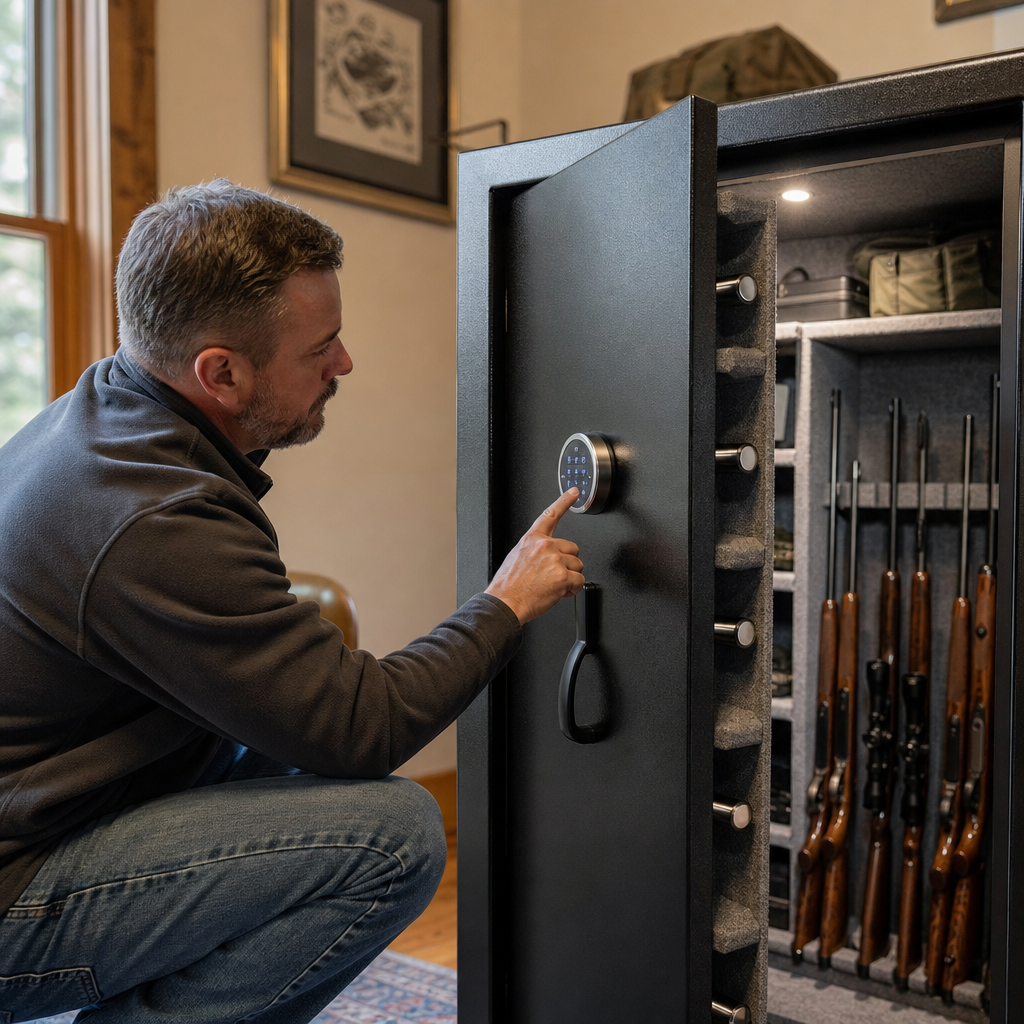
Choosing a gun safe that includes an EMP-resistant lock starts with understanding what you are really buying: not just a steel box, but a layered security system that must still open when power is disrupted, electronics fail, and stress is high. In the gun safes and safety category, buying guides often focus on capacity, fire ratings, and price, yet lock resilience is just as important because the best safe is useless if authorized users cannot access it when needed. An EMP-resistant lock refers to a locking system designed to remain functional after exposure to electromagnetic interference or to offer a reliable non-electronic means of entry if sensitive components are damaged. For most buyers, that means looking beyond marketing claims and examining lock architecture, mechanical redundancy, shielding, certification, serviceability, and safe construction as a whole.
I have evaluated safes for homeowners, hunters, collectors, and small dealers, and the same issue appears repeatedly: buyers assume a keypad safe is modern, therefore better, without asking how it behaves after a surge, nearby lightning event, battery failure, or broader grid disruption. A true buying guide should answer practical questions. What lock types are least vulnerable? Which safe features matter more than branding? How do you compare mechanical dial locks, electronic keypad locks, and hybrid systems? What certifications and standards should you trust? And how do you balance emergency access with long-term reliability, child safety, theft resistance, and budget? This guide covers those decisions in plain terms so you can choose a gun safe with an EMP-resistant lock setup that is credible, not cosmetic, and suitable for real-world use.
Understand What “EMP-Resistant Lock” Really Means
The first step is separating science from sales language. A high-altitude electromagnetic pulse, severe geomagnetic disturbance, localized electromagnetic interference, or even a major nearby surge can affect unprotected electronics. In the consumer safe market, very few manufacturers publish detailed engineering data proving performance under formal military-style pulse testing. That does not mean all claims are false, but it does mean you should treat “EMP proof” as a shorthand term, not a guaranteed standard, unless a manufacturer explains the design basis. In practical buying terms, the safest interpretation is this: an EMP-resistant lock either uses no vulnerable electronics at all or includes a hardened design and a dependable backup entry method that does not depend on exposed circuitry.
That definition matters because most residential gun safes use one of three lock categories. A mechanical combination lock uses wheels, fences, and a dial with no circuit board, so it is inherently less susceptible to electromagnetic damage. An electronic lock uses a keypad, battery, wiring, and internal solenoid or motorized components; convenience is higher, but dependence on electronics increases. A hybrid arrangement combines an electronic interface with a hidden mechanical override or a separate mechanical relocker path. When I inspect safes marketed for preparedness-minded buyers, the strongest offerings usually avoid gimmicks and clearly specify the lock maker, the backup method, and the relocking design. If those details are missing, assume the phrase is mostly marketing.
Also remember that lock resilience is only one part of access reliability. A safe can have a theoretically resilient lock and still fail because the keypad membrane cracks, a battery compartment corrodes, the boltwork binds, or poor installation causes door sag. Ask not only whether the lock can survive interference, but whether the entire opening system remains serviceable under adverse conditions. That broader view leads to better buying decisions than chasing a single label.
Choose the Right Lock Type for Your Risk Profile
For the highest confidence in EMP resistance, a quality mechanical dial lock remains the benchmark. Trusted lock makers such as Sargent and Greenleaf and La Gard have long histories in commercial and residential security applications. A Group 2 mechanical lock, common on better gun safes, offers proven reliability and does not depend on batteries, displays, or circuit boards. The tradeoff is speed. Under stress, dialing a combination accurately in low light takes more time and practice than pressing a keypad. For buyers prioritizing resilience over convenience, especially rural households, off-grid properties, or preparedness-focused owners, a mechanical lock is often the best answer.
Electronic locks can still be a sound choice if the manufacturer discloses how the system is protected and what fallback exists. Better designs place critical electronics inside the safe door, reduce external exposure, use shielded routing, and provide straightforward battery replacement from outside without opening the door. Some premium safes pair an electronic lock with an internal mechanical relocker and hardened plate protection around the lock body. That setup improves resistance to physical attack, but it does not automatically make the electronic portion resistant to a pulse event. If quick access is essential, such as for a home-defense long gun safe in a master bedroom, an electronic lock with a documented mechanical override can be a workable compromise.
Biometric locks deserve caution in this specific buying category. Fingerprint readers are fast in ideal conditions, yet sensor quality varies dramatically, and failure rates rise with dirt, dry skin, gloves, moisture, and inconsistent enrollment. Because biometrics add another electronic dependency, I rarely recommend them as the primary lock for a full-size gun safe where EMP resistance is a core requirement. They can make sense on a secondary bedside safe if there is a reliable keypad or key backup, but for a main collection safe, mechanical or robust hybrid systems are the safer long-term investment.
Evaluate the Safe, Not Just the Lock
A strong lock on a weak safe is a poor purchase. Once lock type is narrowed, assess burglary resistance, fire performance, and construction quality. Start with steel thickness. Many entry-level gun safes use 14-gauge or 12-gauge bodies, which may deter casual theft but are vulnerable to aggressive pry attacks with common tools. Moving up to 10-gauge steel or heavier significantly improves rigidity and attack resistance. Door design matters too. A composite door with reinforced edges, continuous welds, hard plate over the lock area, and multiple locking bolts gives the lock a better chance to do its job.
Pay attention to boltwork and relockers. Active bolts on the opening side are standard, but dead bolts or fixed locking bars on the hinge side prevent door removal from defeating security if hinges are cut. A spring-loaded relocker can engage if the lock is punched or drilled, blocking bolt retraction. This is a serious security feature found on better safes and should be listed clearly in specifications. In my experience, manufacturers that disclose relocker count, hard plate material, and bolt diameter usually build more credible products than those relying on oversized patriotic branding and vague “military style” language.
Fire ratings also need scrutiny. There is no single universal consumer gun-safe fire standard, so test methods vary widely. A claim like “60 minutes at 1400 degrees” is only meaningful if the manufacturer explains whether the rating was independently verified, what internal temperature threshold was used, and whether the test included a cooldown phase. For document protection, internal temperature must stay much lower than for firearms alone. If your safe will store optics, ammunition records, passports, or electronic media, ask exactly what the fire lining is designed to protect. Reliable lock access after a disaster is important, but so is having contents that remain intact.
Use a Buying Checklist to Compare Models
When buyers compare gun safes with EMP-resistant lock claims, the easiest way to avoid mistakes is to score the actual features side by side. Use a shortlist of three to five models and compare lock design, steel thickness, relockers, fire rating, anchor options, and warranty support. The table below reflects the criteria I use when helping buyers narrow a purchase.
| Criterion | What to Look For | Why It Matters |
|---|---|---|
| Primary lock type | Mechanical dial or hybrid with mechanical override | Reduces dependence on vulnerable electronics |
| Named lock brand | Sargent and Greenleaf, La Gard, SecuRam, similar reputable maker | Known components are easier to verify and service |
| Lock protection | Hard plate, relocker, reinforced door around lock body | Improves resistance to drilling and punching attacks |
| Body steel | 10-gauge or heavier preferred for serious theft resistance | Thicker steel slows pry and cut attempts |
| Backup access | True mechanical path, not just external battery jump contacts | Battery backup does not solve electronic failure |
| Anchoring | Pre-drilled anchor holes and hardware guidance | Prevents thieves from removing the entire safe |
| Fire protection | Clear time, temperature, and test method disclosure | Lets you compare claims realistically |
| Service support | Accessible locksmith network and parts availability | Critical if lock service is needed years later |
One detail that often gets overlooked is the difference between battery backup and mechanical backup. Many keypad safes let you replace or jump the battery from the outside. That is useful for dead batteries, but it does nothing if internal electronics are damaged. For this article’s topic, only a non-electronic entry path meaningfully addresses the risk. Likewise, a tubular key override on a cheap cabinet is not equivalent to a commercial-grade mechanical lock. Judge the backup by its build quality, pick resistance, and integration into the safe’s boltwork.
Another practical comparison point is serviceability after purchase. Ask the dealer who can replace the lock locally, whether the lock footprint follows standard mounting patterns, and whether the manufacturer will sell replacement parts to a qualified locksmith. A gun safe is a long-lived product. Locks fail less often than people think, but when they do, support quality matters as much as the original spec sheet.
Match Safe Size, Placement, and Access Needs
Buyers frequently underestimate required capacity. A safe advertised for 24 long guns rarely stores 24 scoped rifles in a practical arrangement. Real capacity drops once you add optics, slings, magazines, documents, handguns, and shelf kits. I usually advise buying at least one size larger than your current collection suggests. Extra interior space also helps prevent stock damage and makes emergency retrieval faster because guns are not packed tightly against each other.
Placement affects both security and lock reliability. A safe installed on a concrete slab in a climate-controlled interior room generally performs better over time than one placed in a damp garage or outbuilding. Humidity can affect finishes, ammunition, documents, and electronic components. Even a mechanical lock benefits from stable conditions because condensation and corrosion can eventually impair moving parts. Use a dehumidifier rod or desiccant system, and make sure there is enough clearance to open the door fully and work the lock comfortably.
Think carefully about access frequency. If you open the safe several times a day, a mechanical dial may eventually feel burdensome, and that can lead owners to leave the safe unlocked during busy periods, defeating the purpose. In those cases, a hybrid lock may be the right answer. If access is infrequent and the safe functions mainly as secure storage, a mechanical lock’s slower opening speed is usually acceptable. The correct choice is not the lock with the flashiest feature list; it is the lock you will use consistently without compromising security habits.
Verify Certifications, Warranties, and Manufacturer Credibility
Certification language can be confusing, so verify what is actually being certified. Underwriters Laboratories has standards for many lock and burglary-resistance categories, but not every consumer gun safe or lock setup undergoes the same testing. If a lock is UL listed, ask which listing applies. If the safe has a residential security container rating, understand that it is not equivalent to a high-end commercial TL-rated burglary safe. An RSC can be suitable for many households, but buyers should know its limits. Clear classification is a sign of an honest manufacturer.
Warranty terms deserve close reading. Lifetime warranties on gun safes often cover attempted break-in and fire, but lock labor, freight, or in-home service may have separate limits. Electronics may carry shorter coverage than the safe body. Some brands advertise extensive warranties while making claims service difficult through dealer-only channels. Before buying, call customer support with a few direct questions: who pays for locksmith service, how long replacement locks stay available, and how warranty claims are handled if the brand changes ownership. The responsiveness of that call tells you a lot.
Finally, buy from manufacturers and dealers with a track record in the safe industry, not generic marketplace listings with recycled photos and unverified specifications. Established brands such as AMSEC, Liberty, Fort Knox, Browning, Rhino Metals, and others vary by model, but they generally provide better documentation, service networks, and dealer support than no-name imports. The best buying guide principle is simple: trust transparent specifications, proven lock brands, and reputable after-sale service more than dramatic marketing claims about unbeatable protection.
The best way to choose a gun safe that includes an EMP-resistant lock is to define the problem correctly and then buy for reliability, not novelty. If maximum resilience is your top priority, a quality mechanical dial lock from a recognized manufacturer is still the strongest option because it minimizes electronic vulnerability altogether. If you need faster access, choose a hybrid system only when the backup path is truly mechanical, clearly documented, and supported by a reputable safe maker. In every case, evaluate the entire safe: steel thickness, hard plate, relockers, fire protection, anchoring, interior capacity, and long-term service support.
This matters because safe ownership is not only about theft prevention. It is about maintaining secure, lawful, and dependable access to firearms under ordinary conditions and under stress. A weak lock can lock you out; a weak cabinet can be stolen whole; a vague warranty can leave you stranded when service is needed most. Buyers who compare specifications carefully, ask direct questions, and verify claims end up with products that perform better over decades, not just on delivery day.
Use this page as your buying guide hub for gun safes and safety decisions, then narrow your shortlist with the checklist above and confirm details with a qualified dealer or locksmith before ordering. A well-chosen safe with a credible EMP-resistant lock strategy protects your firearms, supports responsible storage, and gives you confidence that the door will open when it truly matters.
Frequently Asked Questions
What does an EMP-resistant lock on a gun safe actually mean?
An EMP-resistant lock is a locking system designed to keep functioning, or at least preserve access, after exposure to an electromagnetic pulse or a severe electrical disruption. In practical terms, that usually means the lock is either mechanical by design, electronically hardened against electrical interference, or built with a redundant access method so the safe can still be opened if the electronic portion fails. This is important because a gun safe is not just a storage box. It is part of a larger security plan that has to work under pressure, including emergency conditions where power may be out, batteries may be dead, and digital components may be compromised.
When evaluating this feature, buyers should understand that “EMP-resistant” is not always a tightly standardized consumer term. Some manufacturers use it to describe electronic locks with shielding, surge protection, or isolated circuitry, while others use it more loosely to refer to a safe that includes a reliable mechanical backup. That is why it is smart to look beyond the label and ask specific questions: Is the primary lock mechanical or electronic? If electronic, what protections are built into the lock body and keypad? Is there a key override, a manual dial backup, or another independent means of entry? The best choice is usually a safe that combines burglary protection, dependable lock engineering, and a clear fail-secure but accessible design for authorized users.
Is a mechanical lock better than an electronic lock for EMP resistance?
For pure EMP resilience, a traditional mechanical lock generally has the advantage because it does not rely on circuit boards, batteries, or digital keypads. A quality mechanical dial lock is simple, proven, and less vulnerable to electrical disturbances. That makes it an appealing option for buyers who want the highest level of confidence in low-tech reliability. If your top priority is guaranteed operation during power loss or electronic failure, a mechanical lock is often the most straightforward answer.
That said, “better” depends on how you plan to use the safe. Electronic locks are typically faster to open, easier to use in low light, and more convenient for households that need quick authorized access. Many buyers prefer them because under stress, entering a familiar code can be faster than dialing a combination. The tradeoff is that electronic systems introduce more possible failure points, including battery issues, worn keypads, moisture-related damage, or vulnerability to electrical disruption if the lock is not well protected. If you want the convenience of an electronic lock but are concerned about EMP exposure, look for a safe that uses a hardened electronic lock from a reputable brand and includes an independent mechanical override or redundant entry method. In many cases, the best balance is not choosing one category blindly, but choosing a well-built safe with a lock system designed around both convenience and resilience.
What features should I look for when choosing a gun safe with an EMP-resistant lock?
Start with the lock itself, because that is the feature most directly tied to your concern. Look for a lock from an established manufacturer with a reputation for reliability in the gun safe industry. Ask whether the lock has been tested for electrical interference, surge resistance, or failure recovery. If the lock is electronic, confirm whether it stores access credentials locally, whether the keypad and lock body are shielded, and whether there is a manual override that does not depend on the same vulnerable electronics. Redundancy matters a lot here. A safe that includes two independent ways to gain access is generally more reassuring than one that relies entirely on a single electronic pathway.
Beyond the lock, evaluate the safe as a complete system. Steel thickness, door construction, bolt design, anti-pry features, and anchor capability all affect security. Fire protection is also important, but read the fire rating carefully and understand who tested it and under what conditions. Interior layout matters if you need room for long guns, handguns, documents, or accessories. You should also think about placement inside the home. A safe in a dry, climate-controlled, concealed, and bolted-down location will typically perform better over time than one exposed to humidity, temperature swings, or easy visibility. In short, the right gun safe should give you dependable access, strong physical protection, and realistic performance under the kinds of failures you are actually planning for.
How can I verify whether a manufacturer’s EMP-resistant lock claims are credible?
The first step is to move past marketing language and ask for specifics. A credible manufacturer should be able to explain how the lock is designed to handle electrical disruption and what kind of backup access is available if the primary system fails. Ask whether the lock is mechanical, electronic, or hybrid. If it is electronic, ask what components are shielded, whether the circuitry has surge protection, and whether the company has performed internal or third-party testing related to electromagnetic interference. Even if a manufacturer does not advertise formal EMP certification, clear technical answers and transparent documentation are a good sign.
You should also research the lock brand separately from the safe brand whenever possible. Many safe makers source lock systems from specialized lock manufacturers, and those names may carry their own service history and reputation. Look for long-term owner feedback about failure rates, battery issues, keypad durability, and warranty support. Read reviews carefully, focusing less on general satisfaction and more on comments about lock reliability over years of use. It is also wise to contact the company directly and ask what happens if the lock fails: How is service handled, how quickly can parts be obtained, and can the safe still be opened by the owner without destructive entry? Credibility comes from design transparency, realistic claims, good support, and a backup plan that makes sense in the real world.
Should I choose a gun safe with a backup entry option, and what kind is best?
Yes, in most cases a backup entry option is a very smart feature, especially if EMP resistance is part of your buying criteria. The reason is simple: any single access method can fail. Batteries die, keypads wear out, electronics malfunction, and under emergency conditions even a normally reliable system can become difficult to use. A backup entry option adds another layer of resilience so the safe remains useful when you need it most. For a firearm safe, that matters because delayed access can defeat the purpose of secure but available storage for authorized users.
The best kind of backup is one that is truly independent from the primary system. For example, if your main lock is electronic, a mechanical dial or mechanical key override can provide a separate path that does not rely on the same circuitry. However, not all overrides are equal. A cheap emergency key lock may be less secure than a properly integrated mechanical backup. On the other hand, a dual-lock design from a reputable manufacturer can offer both speed and reliability. The key is to balance accessibility with security. You want a backup method that is hard for unauthorized users to exploit but simple enough for you to operate correctly under stress. Before buying, ask the manufacturer how the backup works, whether it bypasses the electronic components entirely, and whether using it affects security or warranty coverage. A well-designed backup entry system is often what turns a convenient safe into a dependable one.