
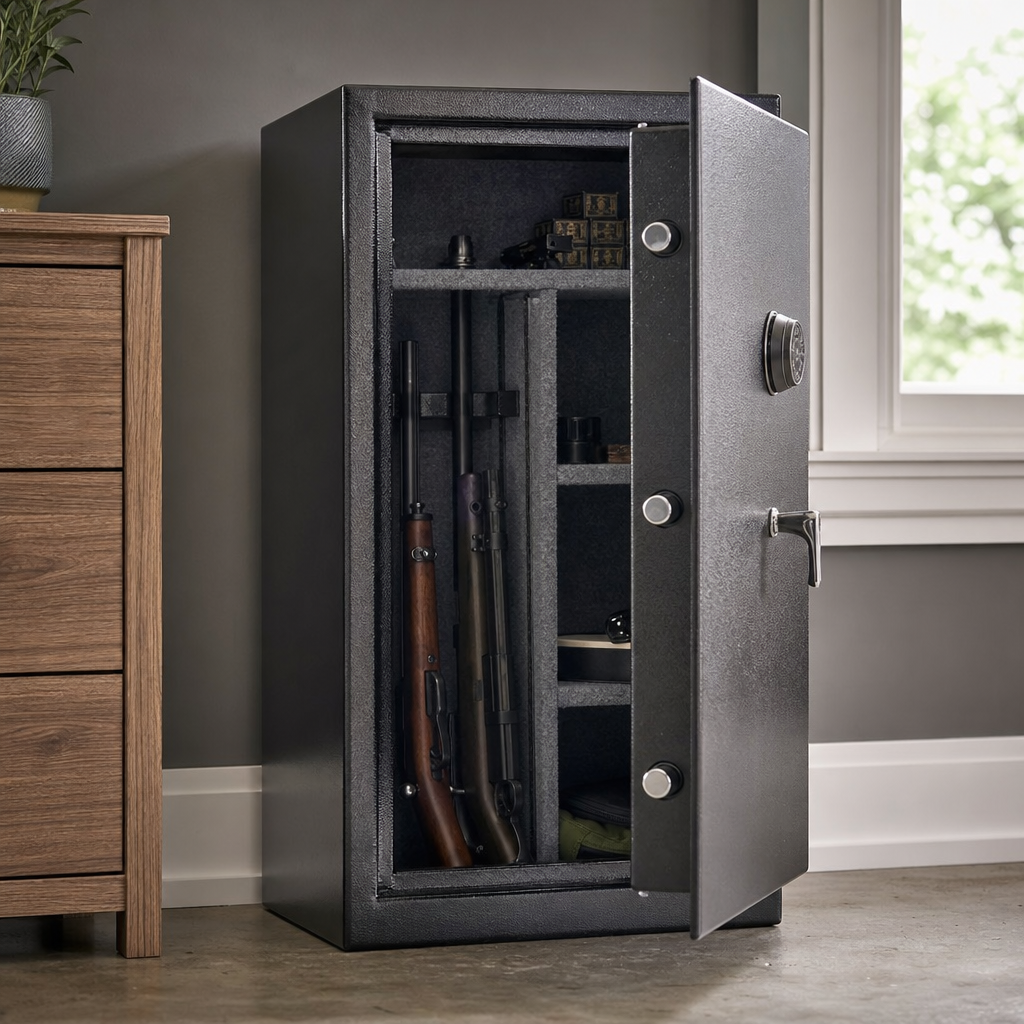
Can a cheap gun safe still offer reliable protection? The honest answer is yes, sometimes, but only when “cheap” refers to price rather than careless design. In the gun storage market, buyers routinely confuse low cost with low security, and that mistake leads to poor decisions in both directions: overspending on features they do not need or underspending on models that fail basic safety requirements. I have helped compare, move, install, and evaluate safes in homes, shops, and small offices, and the pattern is consistent. A budget safe can protect against unauthorized access, keep children out, organize firearms responsibly, and satisfy day-to-day storage needs, yet it may still fall short against dedicated burglary attacks, aggressive prying, or a major house fire.
To judge whether a cheap gun safe offers reliable protection, the first step is defining the job. “Reliable protection” does not mean absolute protection. It means the safe performs dependably against the most likely risks for a specific household: child access, casual theft, smash-and-grab burglary, moisture damage, and limited fire exposure. “Cheap gun safe” is also a slippery term. In today’s market, that might mean a simple locking cabinet under $300, an entry-level residential gun safe around $500 to $900, or a big-box model with electronic lock, carpeted interior, and thin steel that looks more serious than it is. The details matter far more than the sticker price.
This topic matters because safe buying is full of myths. Many owners assume all heavy safes are secure, all fire ratings are equal, all electronic locks fail, or all low-priced units are junk. None of those claims holds up under inspection. The better question is not whether an inexpensive safe is good or bad, but what level of security, durability, and compliance it actually delivers. Once you understand steel thickness, lock quality, anchoring, door construction, pry resistance, fire testing, and humidity control, you can separate useful budget options from misleading marketing. That knowledge turns a cheap gun safe from a gamble into a deliberate risk-management choice.
Why cheap gun safes get misunderstood
Cheap gun safes are often judged by appearance instead of construction. Glossy paint, tactical branding, and embroidered interiors create a premium impression, but security starts with metal thickness, weld quality, hardplate protection over the lock, and a door frame that resists spreading. I have seen budget safes that looked plain yet did a respectable job because they used thicker steel and anchored properly. I have also seen expensive-looking models from warehouse stores that flexed badly under pry pressure because the body steel was thin and the door gap was generous. The misconception comes from treating safes like furniture rather than security equipment.
Another reason for confusion is that the industry uses overlapping terms: gun cabinet, residential security container, gun safe, fire safe, burglary safe. A steel cabinet with a key lock can be useful for preventing unauthorized handling, but it is not comparable to a true burglary-rated safe. Many products marketed as gun safes are really residential security containers designed to slow down opportunistic theft rather than defeat professional attacks. That distinction is not a technicality. It is the difference between “keeps honest people honest” and “resists tools for a measured period under a test standard.” Budget buyers need that plain-language clarity before they compare prices.
The final source of misunderstanding is unrealistic expectations. No consumer gun safe, cheap or premium, is invulnerable if a thief has time, privacy, power tools, and no fear of noise. Security works in layers. Alarm systems, cameras, reinforced doors, hidden placement, and bolting the safe to concrete matter just as much as the box itself. A cheap safe in a visible garage corner with no anchors and no alarm can fail quickly. A modest safe in a closet, bolted down, supported by a monitored alarm, often performs far better in the real world.
What reliable protection actually means in a home
For most households, reliable protection begins with unauthorized access prevention. If children, teens, visitors, contractors, or houseguests cannot access the firearms, the safe is already doing its most important job. In this context, a budget safe can absolutely be effective. A locking mechanism that remains functional, a body that cannot be peeled open by hand, and a mounting system that prevents easy removal often meet the practical need. This is especially true when firearms are stored unloaded, with ammunition secured separately, and access codes or keys are tightly controlled.
Protection against theft is more nuanced. Most residential gun thefts are not sophisticated vault attacks; they are quick searches during short break-ins. Thieves typically target jewelry, cash, small electronics, and unsecured guns they can carry away in seconds. A bolted budget safe can stop this kind of theft because it adds delay and noise. Delay matters. According to long-standing burglary research used by security professionals, offenders strongly prefer speed and low visibility. If forcing entry takes several minutes and creates repeated banging or grinder noise, many intruders abandon the attempt. In that scenario, “cheap” does not mean ineffective; it means sufficient for the most probable threat.
Fire protection is where expectations need more caution. Many low-priced safes advertise fire ratings, but the test conditions vary widely. Some ratings come from in-house testing rather than independent labs, and consumers rarely get details about temperature curve, duration, or acceptable internal temperature. Paper chars around 451 degrees Fahrenheit, but firearms, optics, polymers, lubricants, and ammunition each react differently under heat. A budget safe may buy time in a modest room fire, especially if placed on a lower level away from accelerants, yet buyers should not assume every sticker offers equal protection. Reliable protection means understanding these limitations before disaster, not after it.
The myths that distort gun safe buying decisions
The first myth is that a heavier safe is always a better safe. Weight matters, but it can come from drywall-based fire lining rather than thicker steel. A 500-pound safe can still have relatively thin walls that are vulnerable to pry attacks. The second myth is that more locking bolts equal more security. In practice, bolt count matters less than door design, lock protection, and whether the boltwork engages a strong frame. Decorative active bolts on the hinge side often contribute little because a secure dead bar or fixed hinge system already addresses that side.
The third myth is that electronic locks are unreliable while mechanical dial locks are fail-safe. Both can be dependable when sourced from reputable manufacturers such as Sargent and Greenleaf, SecuRam, or La Gard. Electronic locks offer faster access and easier code changes; mechanical locks avoid battery concerns and can last decades with proper service. Failures happen in both categories, usually because of poor installation, low-grade components, neglected maintenance, or user error. The smart approach is not choosing by myth but by use case. A defensive firearm safe for frequent access may benefit from a quality electronic lock, while a long-term storage safe may suit a dial.
The fourth myth is that any fire-rated gun safe also provides meaningful burglary resistance. Fireboard insulation can add weight and heat resistance but does not replace steel thickness or anti-pry engineering. The fifth myth is that all cheap safes are disposable junk. Some are. Others provide strong value because they skip luxury finishes and focus spending on core components. The sixth myth is that a safe hidden in a closet does not need to be anchored. In reality, unanchored safes are routinely tipped, pried, or removed entirely. Anchoring is one of the cheapest upgrades with the biggest security payoff.
How to evaluate a budget gun safe without being misled
When I assess an entry-level safe, I start with the steel body and door. Look for the gauge or decimal thickness, not vague phrases like “solid steel construction.” Lower gauge numbers mean thicker steel. Around 12-gauge body steel is meaningfully better than 14- or 16-gauge for entry-level use, and thicker is better still. Door construction matters just as much. A formed door can be decent, but plate thickness, edge reinforcement, and minimal door gaps are what improve pry resistance. If the manufacturer refuses to disclose steel thickness, that is usually a warning sign.
Next, check lock pedigree, relocker features, boltwork, and anchor provisions. A recognized lock brand is preferable to an unmarked keypad system. Internal hardplate can help resist drilling. A relocker can secure the mechanism if the primary lock is attacked. Anchor holes should be factory provided, and the base should be robust enough for secure installation. Interior layout also deserves scrutiny because advertised gun counts are famously inflated. A “24-gun” safe may realistically hold 12 to 16 scoped rifles without frustration. Capacity exaggeration is one of the oldest gun safe misconceptions, and buyers who ignore it often outgrow the safe immediately.
| Feature | Budget Safe Acceptable Standard | Red Flag |
|---|---|---|
| Body steel | 12-14 gauge disclosed by manufacturer | No thickness listed or 16 gauge body |
| Lock | Named brand electronic or mechanical lock | Generic keypad with no service support |
| Anchoring | Pre-drilled anchor holes and included hardware guidance | No anchor provision or weak base structure |
| Fire claim | Specific duration and temperature details | Vague “fireproof” label |
| Capacity | Conservative layout for scoped rifles | Marketing count assumes bare guns touching |
Finally, inspect the warranty, replacement policy after fire or burglary, and access to locksmith service. Good support is a practical marker of product seriousness. A safe is not just a metal box; it is a long-term security device that may need batteries, combination changes, or repairs. Companies such as Hornady, SecureIt, Stack-On, Winchester, Liberty, and Cannon occupy different tiers and product categories, so model-level evaluation matters more than the badge on the door.
When a cheap gun safe is enough and when it is not
A cheap gun safe is often enough for first-time gun owners, apartment dwellers, families focused on child safety, and households storing a modest number of firearms without high collectible value. In these cases, the main objective is controlled access and resistance to quick theft. A compact safe bolted into a closet or corner can do that well. For example, a parent storing one defensive handgun and two hunting rifles may gain substantial safety from a basic steel safe with a UL-listed lock and solid anchors. That is a real improvement over under-bed storage, nightstand drawers, or soft cases.
It is not enough when the collection has high financial value, irreplaceable historical value, or elevated theft appeal. It is also not enough for rural properties where response times are long, detached garages where thieves can work privately, or homes without monitored alarms. If you store NFA items, premium optics, suppressors, heirloom shotguns, or a large ammunition reserve, the risk profile changes. In those situations, upgrading to thicker steel, better fire validation, stronger boltwork, and a more robust installation environment is justified. The safe should match the consequences of loss, not just the available budget.
There is also a middle ground many owners miss. Instead of buying one flashy but mediocre large safe, it can be smarter to buy a smaller, better-built unit for high-value firearms and a separate locking cabinet for overflow. Another effective strategy is pairing a budget safe with a door alarm, motion lighting, dehumidifier rod, desiccants, and discreet placement. Reliable protection is rarely the result of one purchase alone. It comes from matching storage design to actual threats and using complementary layers consistently.
Practical buying advice for this gun safe myths hub
If you are using this page as your hub for gun safe myths and misconceptions, keep three rules in mind as you explore related topics. First, ignore marketing labels until you verify construction details. “Fireproof,” “tamper-proof,” and “military-style” are sales language, not standards. Second, rank your threats in order. For most owners, child access and quick theft are the top priorities, not Hollywood-style safe cracking. Third, budget for installation and moisture control, not just the safe itself. Anchors, a goldenrod-style dehumidifier, and proper placement often provide more real protection than cosmetic upgrades.
The main benefit of a well-chosen cheap gun safe is not bragging rights. It is responsible firearm storage that reduces risk today. If you buy with clear eyes, a budget safe can serve reliably for years, especially as an entry point into layered home security. If your needs outgrow it, you will know exactly why and where to upgrade: thicker steel, stronger fire verification, larger usable capacity, or a higher-security lock system. That is a far better outcome than buying based on myths and hoping price alone guarantees safety.
Start by measuring your space, counting your realistic firearm capacity needs, and listing your top risks. Then compare safes by steel, lock, anchoring, fire details, and support, not by marketing gloss. A cheap gun safe can offer reliable protection, but only when you choose it like security equipment instead of furniture. Use that standard for every decision in this subtopic, and you will avoid the most expensive misconception of all: paying for the wrong kind of protection.
Frequently Asked Questions
1. Can a cheap gun safe really provide reliable protection?
Yes, a cheap gun safe can provide reliable protection, but only if the lower price comes from practical design choices instead of major compromises in security. The biggest mistake buyers make is assuming that every low-cost safe is junk or, on the other hand, assuming that any steel box with a lock is good enough. In reality, some affordable safes do a perfectly respectable job for basic residential use. They can keep firearms secured from children, reduce the risk of unauthorized access, and slow down an opportunistic thief long enough to make the safe worth owning.
The key is understanding what “reliable protection” actually means. A lower-priced gun safe is usually not built to resist a skilled burglar with time, privacy, and heavy tools. That level of protection typically requires thicker steel, better boltwork, reinforced doors, and higher-end locking systems, all of which increase cost quickly. However, most home break-ins are fast, noisy, and opportunistic. In those situations, an affordable safe that is properly anchored, reasonably well-built, and equipped with a dependable lock can offer meaningful protection.
Reliable protection at the budget end of the market depends on the basics: solid body construction, a door that fits well, decent locking bolts, anti-pry design features, and secure installation. If the safe is made from very thin metal, has loose-fitting panels, weak hinges, or a poor-quality electronic lock, the low price is probably a warning sign rather than a bargain. But if the manufacturer trimmed cost by limiting cosmetic upgrades, interior accessories, or premium branding, that same lower-priced safe may still be a smart choice. In short, cheap does not automatically mean unsafe. It means buyers need to evaluate where the manufacturer saved money.
2. What should I look for in an affordable gun safe to avoid buying a low-quality model?
When shopping for an affordable gun safe, focus first on construction quality rather than advertising claims. Start with steel thickness. Many budget safes use thinner steel, but there is still a big difference between a model designed to resist casual attack and one that can be bent, cut, or pried open with basic hand tools in minutes. If a manufacturer is vague about steel gauge, that is often a bad sign. Transparent specifications usually indicate a more serious product.
Next, inspect the door and frame design. A safe’s door is one of the most common attack points, so you want a model with a tight door gap, reinforced edges, and locking bolts that engage securely. Larger bolt counts look impressive in marketing photos, but bolt placement and overall door rigidity matter more than a flashy number. A safe with a well-supported door and better anti-pry geometry can outperform a cheaper-feeling model with more visible bolts and weaker construction.
The lock matters just as much. Affordable safes often come with electronic locks, and some are perfectly serviceable, but quality varies widely. Look for locks with a decent reputation, reliable keypad response, and backup access options where appropriate. Mechanical dial locks can be slower to use but are often valued for long-term durability. If the lock brand is unknown and there is little product support behind it, that should raise concern.
You should also check the interior and mounting setup. A budget safe becomes much more effective when it can be securely bolted to the floor or wall according to the manufacturer’s instructions. If it is lightweight and left loose, even a decent unit can simply be tipped over, moved, or attacked elsewhere. Fire protection claims deserve scrutiny as well. Some lower-priced safes advertise fire ratings that sound impressive but are not always supported by meaningful testing. If fire resistance is important, look beyond the sticker and see whether the rating comes from a credible test standard or just a broad marketing statement.
Finally, pay attention to fit, finish, and practical design. Sloppy welds, misaligned doors, rattling panels, weak shelves, and flimsy handle assemblies often suggest corners were cut where it counts. The best affordable gun safes are usually plain, straightforward, and honest about what they are built to do. That is often a better sign than a heavily marketed “premium” budget model filled with features but lacking structural quality.
3. Are cheap gun safes mainly for keeping kids out, or can they also deter thieves?
Cheap gun safes are absolutely useful for keeping children and unauthorized visitors away from firearms, and that alone makes them valuable in many homes. But their role does not stop there. A decent budget safe can also deter thieves, especially the kind of burglar most homeowners are statistically more likely to face: someone looking for a fast, low-effort score. Many residential break-ins are over in a short amount of time. Thieves often target visible valuables, easy electronics, cash, jewelry, and unsecured firearms. If your guns are locked inside a bolted-down safe, the criminal has a much harder choice to make.
An affordable safe changes the situation by adding delay, difficulty, and noise. Those three factors matter more than many buyers realize. A thief who finds an unsecured rifle in a closet can be gone in seconds. A thief who finds a locked safe now needs tools, time, leverage, and privacy. Even if the safe is not a true high-security unit, that added resistance can be enough to make the person give up and move on. In practical home security, forcing a criminal to spend extra minutes creating noise and taking risks is often a meaningful win.
That said, expectations need to stay realistic. A low-cost safe is not the same as a commercial burglary-rated safe, and it should not be treated as one. If you are storing a large firearm collection, high-value optics, suppressors, rare collectibles, or anything especially attractive to organized theft, the security demands are higher. In those cases, relying on an entry-level safe alone may not be enough. Layered protection becomes more important: alarms, cameras, motion lighting, reinforced doors, concealed placement, and proper anchoring all increase the real-world effectiveness of the safe.
So the best way to think about a cheap gun safe is this: it is not just a child-safety cabinet, and it is not a bank vault either. It sits in the middle. A good budget model can absolutely deter many thieves, but it does so most effectively when it is part of a broader security plan and when the buyer understands its limits.
4. Does anchoring and placement make a big difference with a budget gun safe?
Yes, anchoring and placement make a huge difference, especially with a budget gun safe. In fact, a properly installed lower-cost safe can outperform a poorly installed expensive one in some real-world scenarios. Many affordable safes are lighter than premium models, which makes them easier to move into a home but also easier for thieves to tip, drag, or remove if they are not secured. Once a thief can move the safe, the odds improve dramatically in the thief’s favor because they can attack it in a garage, truck bed, or remote location without pressure.
Bolting the safe down is one of the simplest and most important upgrades you can make. Secure anchoring to a concrete floor or a structurally sound surface prevents easy removal and also makes prying attacks harder. A thief cannot as easily exploit leverage when the safe stays planted. The installation should follow the manufacturer’s guidance and use appropriate hardware for the flooring type. If you are unsure, professional installation is often worth the money because the cost is small compared with the added security.
Placement matters just as much. A safe sitting in plain sight in a garage or front room is easier to target than one placed in a closet, corner, utility room, or other less visible area. Tight placement can also work in your favor. If the safe is installed where its sides are close to walls and the top is difficult to access, that can reduce opportunities for prying and tool use. Good placement does not replace good construction, but it absolutely increases the amount of work required to defeat the safe.
Environmental conditions matter too. Damp garages, uninsulated sheds, and humid basements can create rust, lock problems, and moisture issues inside the safe if not managed properly. If the safe is placed in an area with temperature swings or humidity, include a dehumidifier or desiccant system and inspect it regularly. Reliable protection is not only about stopping theft; it is also about keeping the firearms inside in safe, usable condition. With budget safes in particular, installation and location are not minor details. They are part of the security package.
5. When is it worth spending more instead of choosing a cheap gun safe?
It is worth spending more when your risk level, storage needs, or firearm value exceed what an entry-level safe can reasonably handle. If you own only one or two common firearms and your main goal is secure storage, child safety, and basic theft deterrence, a carefully chosen affordable safe may be completely appropriate. But the equation changes when the collection grows in value, size, or sensitivity.
For example, if you store multiple rifles, handguns, optics, ammunition, important documents, or NFA-regulated items, the consequences of theft or loss increase. If your home is in an area with higher burglary risk, long response times, or greater exposure to fire, that also pushes the decision toward a stronger safe. More expensive safes usually