
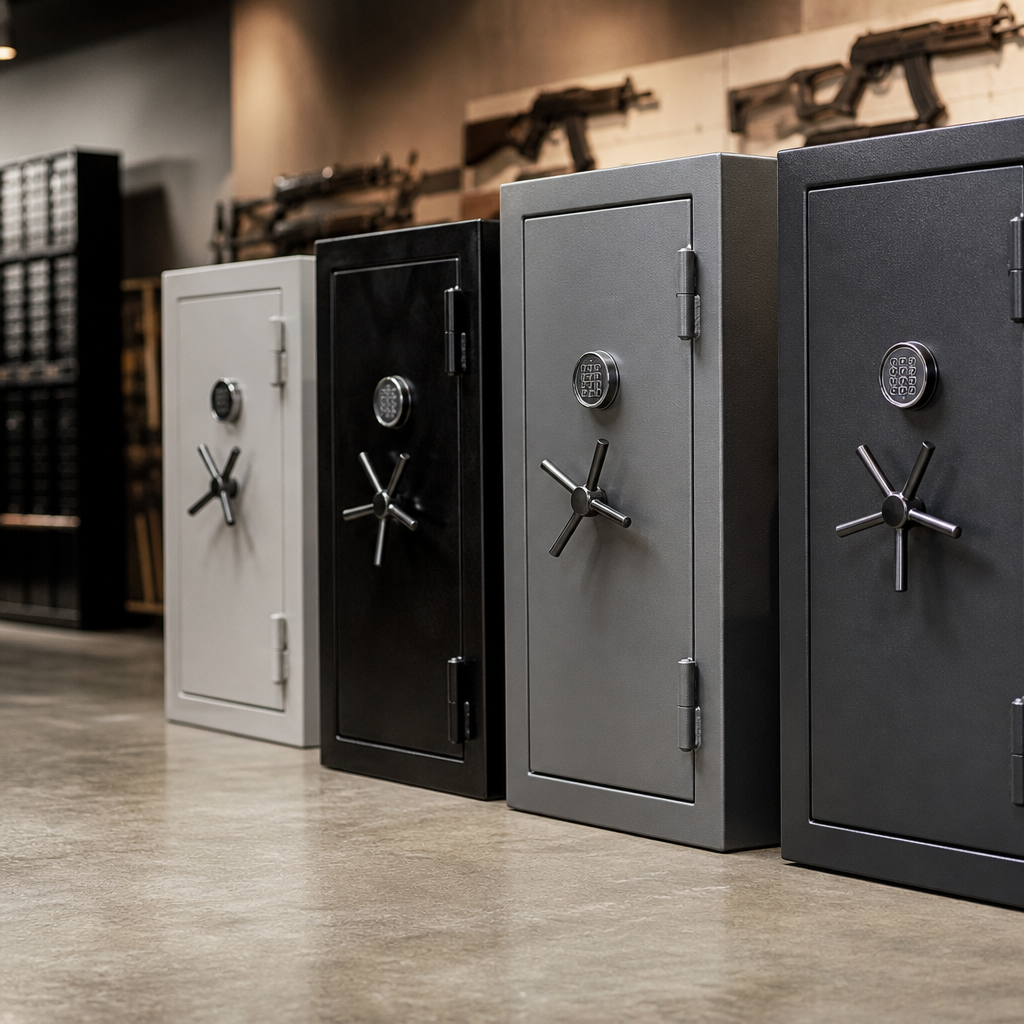
Do all fireproof gun safes offer the same level of protection? Absolutely not. In my work evaluating residential security products, I have seen safes marketed with nearly identical labels perform very differently once you examine construction, fire testing, locking systems, and installation details. “Fireproof” is also an imprecise term. A gun safe may resist heat for a stated time at a stated temperature, yet still fail to protect firearms, documents, optics, or ammunition under different conditions. Understanding the gap between marketing language and measurable performance is essential for any buyer comparing models.
This matters because gun safe myths and misconceptions routinely lead owners to overestimate protection. Many assume a heavier safe is always better, a longer fire rating guarantees survival in any house fire, or any steel box with a digital keypad delivers true burglary resistance. Those assumptions can be expensive. Fire can exceed the rating conditions printed on a brochure, humidity can damage blued steel long before flames arrive, and poor anchoring can turn a large safe into a target for pry attacks or theft by removal. A hub article on gun safe myths needs to connect these issues, because they influence every later buying decision.
Before comparing products, define the terms. A fireproof gun safe is usually a residential security container or gun cabinet designed to slow internal temperature rise during a fire. A burglary rating describes resistance to forced entry using tools for a specified period under defined test standards. Insulation may be gypsum board, proprietary concrete-like composite, ceramic wool, or layered materials. Intumescent seals expand under heat to limit smoke and hot gas intrusion. Gauge measures steel thickness, and lower gauge numbers indicate thicker steel. These are not minor details; they determine whether a safe protects only against casual threats or withstands a serious event.
For readers exploring gun safe myths and misconceptions, this page serves as the central reference point. It addresses the biggest misunderstandings about fire ratings, steel thickness, waterproof claims, lock reliability, placement, and real-world risk. It also helps you ask better questions when reading model-specific guides on long-gun capacity, dehumidification, burglary ratings, and safe installation. If you understand one principle from the start, make it this: protection is layered, and no single label on a door tells the whole story.
The biggest myth: “fireproof” means universal fire protection
The most common misconception is that all fireproof gun safes protect equally because they all advertise a fire rating. In practice, ratings vary by temperature, duration, and test method. One safe may be labeled 30 minutes at 1,200 degrees Fahrenheit, while another claims 90 minutes at 1,680 degrees. Those numbers are not interchangeable, and they do not automatically reflect the same testing protocol. Some manufacturers use independent laboratories such as UL or Intertek/ETL. Others rely on internal tests. That difference alone can separate meaningful performance data from a loosely defined marketing claim.
Even when a fire test is legitimate, it does not mean the contents will emerge unharmed in every scenario. Typical paper-document standards target internal temperatures below about 350 degrees Fahrenheit, because paper chars above that range. Firearms, however, introduce different concerns. Heat can damage optics, polymer stocks, adhesives, lubricants, and ammunition packaging at lower thresholds than a steel receiver would fail. I have opened safes after severe fires where the guns survived structurally but stocks cracked, scopes fogged, and corrosion started within days because steam and residue got trapped inside. A rating is useful, but only within its tested limits.
House fires are also dynamic. Temperatures can spike, roofs can collapse, and a second burn phase can expose a safe far longer than the label suggests. Placement matters. A safe on an upper floor may fall into a basement as joists fail, increasing thermal exposure. A safe in a garage may face different heat conditions than one in a climate-controlled interior room. This is why responsible manufacturers publish not just a headline rating but details about insulation thickness, seal design, and test assumptions. If those details are missing, the rating should be treated cautiously.
Fire ratings, insulation, and what the numbers really mean
Not all insulation systems perform the same way. Many entry-level gun safes use layers of fireboard, usually gypsum-based, in the walls and door. Gypsum contains chemically bound water, which releases as steam when heated and slows temperature rise temporarily. It is inexpensive and common, but it has limits. Higher-end safes often use poured composite insulation, denser barrier materials, or multi-layer constructions that combine heat resistance with better structural rigidity. In my experience, composite designs generally provide more consistent performance than thin steel shells lined with minimal board, especially around corners and door gaps.
The published number on a safe matters only if you know what was measured. Was the rating based on external temperature, internal temperature, or both? Did the test include a cool-down phase with the safe remaining closed, which is critical because internal temperatures can keep rising after flames subside? Was the safe heated on all sides? Were humidity and steam infiltration considered? Reputable fire testing describes the endpoint clearly. Vague claims like “tested in temperatures up to 1,400 degrees” tell you almost nothing about duration or internal survivability.
Door seals deserve more attention than they get. Intumescent gaskets expand during heat to reduce smoke and hot gas ingress, but they do not eliminate moisture risk. Steam generated by insulation can leave the interior damp, especially in safes with document liners or carpeting. That is one reason owners should inspect and dry contents after a fire event even if the safe appears intact. Fire protection is not just about surviving the blaze; it is about preventing delayed damage afterward.
| Feature | Entry-Level Fire Safe | Better-Engineered Fire Safe |
|---|---|---|
| Fire test source | Manufacturer claim only | Independent lab verification |
| Insulation type | Thin gypsum layers | Composite or multi-layer barrier |
| Door seal | Basic expansion gasket | Multi-point seal with tighter door fit |
| Rating detail | Headline temperature only | Time, temperature, and internal threshold stated |
| Likely weak point | Corners, door gap, cool-down phase | Higher weight, cost, and installation complexity |
Burglary protection is separate from fire protection
Another major gun safe myth is that better fire resistance automatically means better theft resistance. It does not. Fire insulation adds bulk and weight, but burglary protection depends heavily on steel thickness, door construction, bolt design, relockers, hinge-side reinforcement, and anchoring. Some consumer gun safes have respectable fire claims yet use 14-gauge or 12-gauge steel bodies that can be attacked with pry bars, abrasive wheels, or even concentrated hand-tool work faster than many buyers expect. A thick door skin does not compensate for a thin body.
This distinction is critical because the product category itself can be misleading. Many mass-market “gun safes” are technically residential security containers, not high-security burglary safes. UL’s Residential Security Container standard is designed to resist a limited five-minute attack using common hand tools on the door. That is useful, but it is not the same as a TL-rated commercial safe. If your risk includes targeted theft, expensive optics, suppressors, collectible firearms, or long periods away from home, burglary design matters as much as fire performance.
I often advise buyers to look at body steel first, then lock protection, then anchoring method. A quality lock behind a thin wall still leaves an obvious attack path. Likewise, a heavy safe that is not bolted down can be tipped to compromise the door or removed entirely. Marketing tends to spotlight paint, lighting, and organizer panels. Real protection is less glamorous: thicker plate, tighter tolerances, hard plates over the lock, relocking devices, and proper concrete anchoring.
Common misconceptions about steel gauge, weight, and size
Weight alone is not a reliable quality indicator. A safe can be heavy because it uses substantial fireboard, not because it has thick steel. Conversely, a compact plate-steel safe may provide better burglary resistance than a much larger, heavier cabinet with thin walls. Buyers should verify actual body and door thickness in inches or gauge, and they should check whether the manufacturer is quoting outer steel only or total composite thickness including insulation and interior panels. Those are very different measurements.
Capacity is another area where misconceptions thrive. A “36-gun safe” rarely stores 36 scoped rifles in practical use. Those capacity figures are typically based on tightly packed, unscoped long guns with no slings, bipods, or oversized bolt handles. Once owners add modern sporting rifles, shotguns with optics, handguns on door panels, documents, and ammunition, real capacity drops sharply. Overcrowding also restricts airflow and increases the chance of stock damage or metal-to-metal contact. That becomes more important in a fire event, where dense packing can trap heat and moisture.
Bigger is not always safer if placement is poor. Large safes installed on raised wood floors may exceed structural comfort without reinforcement. Basement installations can be excellent for theft resistance and thermal stability, but moisture control becomes essential. Garage placement offers convenience, yet it may expose the safe to temperature swings, visible delivery access, and slab-level water intrusion. Choosing size without considering the room is a classic buying mistake.
Waterproof claims, humidity control, and post-fire damage
Consumers often assume that a fireproof gun safe is also waterproof. Sometimes it is, often it is not, and the test conditions vary widely. A safe might survive shallow standing water for a set time because of door seals, yet fail under hose streams, flood pressure, or prolonged submersion. After firefighting, water enters homes from multiple directions, and a safe sitting directly on a slab can be vulnerable if the door seal is not designed for that exposure. Elevating the safe on a plinth or sealed platform can reduce this risk.
Humidity is an even more common threat than floodwater. Fire-resistant interiors can retain moisture, especially if the safe is placed in a basement or garage. Firearms are vulnerable to rust, pitting, stock swelling, and mold on slings or soft cases. I recommend active dehumidification for most gun safes: a low-wattage heater rod to create slight air circulation, desiccants for supplemental control, and a hygrometer to verify results. The target is generally around 45 to 50 percent relative humidity, though local climate and stored materials may justify adjustment.
Post-fire handling is also misunderstood. If a safe experiences heavy smoke or heat exposure, owners should open it only when conditions are safe, document contents for insurance, and begin corrosion prevention immediately. Fire residue can be acidic. Even guns that look fine may need full disassembly, cleaning, lubrication, and inspection by a qualified gunsmith. A safe did its job if it bought time and reduced loss, not only if everything inside looked untouched.
Locks, electronics, and the myth of one “best” locking system
Buyers regularly ask whether electronic locks are inferior to mechanical dial locks. The truthful answer is that each has advantages and failure modes. Quality electronic locks from established makers such as Sargent and Greenleaf, SecuRam, or La Gard provide fast access, multiple user codes, and audit features on some models. Mechanical dials offer proven longevity and no battery dependence, but they are slower to open and less convenient for households needing controlled shared access. The right choice depends on use case, maintenance discipline, and tolerance for lockout risk.
The myth is that lock type alone determines safe quality. In reality, lock protection and installation are more important. A premium keypad attached to weak boltwork or poor hard-plate coverage is not a security upgrade. Cheap electronic locks can fail from battery neglect, corrosion, or keypad wear, but poorly maintained mechanical locks can drift out of tolerance too. Whichever system you choose, change default codes immediately, replace batteries on schedule, and test access routines before an emergency occurs.
Biometric locks deserve extra caution. Some work well for quick access handgun safes, but fingerprint performance varies with skin condition, sensor quality, and enrollment practices. For a large gun safe intended for long-term storage, biometric convenience should not outrank proven reliability and robust boltwork. Marketing often emphasizes speed. Security planning should emphasize dependable entry, controlled access, and backup procedures.
How to evaluate a fireproof gun safe realistically
The best way to cut through gun safe myths and misconceptions is to evaluate safes as systems rather than labels. Start with your actual risk profile: apartment or rural home, monitored alarm or none, wildfire region or urban setting, high-value collection or basic household use. Then compare test-backed fire rating, body steel, door design, lock brand, anchoring provisions, interior humidity strategy, and delivery constraints. Ask who performed the fire test. Ask whether the rating includes cool-down. Ask what gauge the body uses and whether the unit is an RSC or something higher.
Also account for the total ownership picture. Delivery and placement by experienced movers reduce the chance of injury, floor damage, and bad installation. Anchoring hardware should match the substrate, especially concrete. Insurance may require documentation of safe type, serial number, and appraised firearm values. If you expect to add optics, NFA items, or documents, buy for realistic future capacity, not brochure capacity.
No, all fireproof gun safes do not offer the same level of protection, and believing they do is one of the costliest mistakes in the category. Smart buyers separate fire resistance from burglary resistance, verify test standards, and plan for humidity, placement, and maintenance. Use this hub as your starting point for every gun safe myth and misconception you want to unpack next. Compare specifications closely, ask direct questions, and choose a safe built for your risks rather than its advertising.
Frequently Asked Questions
Do all fireproof gun safes provide the same level of fire protection?
No, and that is one of the most important points buyers often miss. Two gun safes may both be advertised as “fireproof,” yet offer very different levels of real-world protection. Fire performance depends on several factors, including the thickness and type of insulation, door seal design, body and door construction, and the specific temperature and duration used during testing. A safe rated for 30 minutes at 1,200 degrees Fahrenheit is not equivalent to one rated for 90 minutes at 1,680 degrees, even if the marketing language makes them seem similar.
It is also important to understand that “fireproof” is not an absolute term. In practice, safes are better described as fire-resistant for a defined period under defined conditions. House fires vary widely in intensity and duration, and the safe’s location in the home can affect how much heat it experiences. A safe on a concrete slab in a first-floor corner may fare differently than one installed upstairs in a room that collapses into the center of the fire. That means the label alone is never enough. The meaningful question is not whether a safe is called fireproof, but how it was built, how it was tested, and whether its rating matches the risks in your environment.
What should I look for in a fire rating when comparing gun safes?
Start by looking beyond the headline claim and focusing on the specifics of the rating. A legitimate fire rating should tell you how long the safe is expected to withstand heat and at what temperature. For example, 60 minutes at 1,400 degrees Fahrenheit is a useful data point. Without both the time and temperature, the claim is incomplete. You should also try to find out whether the test was performed by an independent laboratory or by the manufacturer itself. Third-party testing generally carries more credibility because it follows a repeatable standard and is less influenced by marketing priorities.
Another critical detail is the target internal temperature during testing. Firearms may tolerate more heat than paper documents, but optics, polymers, lubricants, and electronic accessories can be damaged at lower temperatures than buyers expect. Some safes are designed to keep the interior below the point at which paper chars, while others may not provide the same margin for sensitive gear. It is also wise to ask whether the test included the door seams, expanding heat seals, and post-fire usability. A safe that technically survives a furnace test but allows excessive heat leakage around the door may not protect valuables as well as the rating suggests. In short, compare the testing method, not just the advertised number.
Does thicker steel make a gun safe more fire-resistant?
Thicker steel can improve overall durability and security, but by itself it does not guarantee better fire protection. Fire resistance usually comes more from the insulation system inside the walls and door than from the steel shell alone. In fact, steel conducts heat, so without an effective insulating barrier, a heavier steel box can still transfer damaging temperatures to the interior. That is why quality fire-resistant safes use layers of fireboard, composite barriers, insulation fill, and heat-activated door seals to slow heat penetration.
That said, construction quality still matters a great deal. Thicker steel can help the safe maintain structural integrity under extreme conditions, especially if the surrounding structure collapses or the safe is struck by debris during a fire. Better-built doors, tighter welds, reinforced corners, and more precise fitment can also reduce pathways for heat and smoke intrusion. So steel thickness should be viewed as one part of the equation, not the entire answer. The best safes combine meaningful burglary resistance with a well-designed fire insulation system, rather than relying on a single feature to do both jobs.
Can the way a gun safe is installed affect how well it protects its contents in a fire?
Yes, installation can make a real difference. Where and how a gun safe is placed in your home influences its fire exposure, stability, and even its ability to keep heat and moisture away from the contents. Safes installed on concrete generally have an advantage over those placed on upper wood-framed floors, because concrete does not burn and may help reduce heat transfer from below. By contrast, an upstairs safe can be subjected to more intense structural failure if the floor collapses during a severe fire. Placement near exterior walls, away from obvious fuel loads, can sometimes reduce exposure compared with installation in the center of a heavily furnished room, though every home layout is different.
Bolting the safe down is also important. Proper anchoring helps prevent the safe from tipping, shifting, or falling through weakened flooring. In addition, some manufacturers require specific installation methods to maintain the stated performance expectations. Owners should also think about moisture management after a fire response, since water, steam, and humidity can damage firearms and accessories even if direct flame does not. Elevating the safe slightly where appropriate, using dehumidification inside the safe, and avoiding damp locations can all improve long-term protection. A well-rated safe installed poorly may underperform, while a solid installation can help a quality safe deliver closer to its intended level of protection.
If a safe is labeled fireproof, does that mean my firearms, documents, optics, and ammunition are fully protected?
No, and this is where expectations need to be realistic. A fire-resistant gun safe may protect contents from heat for a limited time, but that does not mean every item inside is equally safe under all fire conditions. Firearms themselves may survive temperatures that would ruin documents, passports, cash, optics, hearing protection, batteries, or polymer components. Ammunition presents its own considerations as well, because heat exposure can degrade performance and create safety concerns even if it does not ignite in the way many people assume. The contents of the safe matter just as much as the safe’s label.
The best approach is to match the safe to what you are storing. If you are protecting paper records, you may need a more stringent internal-temperature standard than you would for storing only rifles and shotguns. If you keep suppressors, red-dot sights, scopes, thermal devices, or electronics in the safe, you should pay close attention to heat thresholds and moisture protection. Many owners also use separate document boxes, sealed pouches, desiccants, or specialized interior organizers to improve protection for sensitive items. In other words, a fire-resistant gun safe is an important layer of protection, but it is not a universal guarantee against every form of heat, smoke, steam, and post-fire damage. Understanding those limits is what leads to smarter buying decisions.