
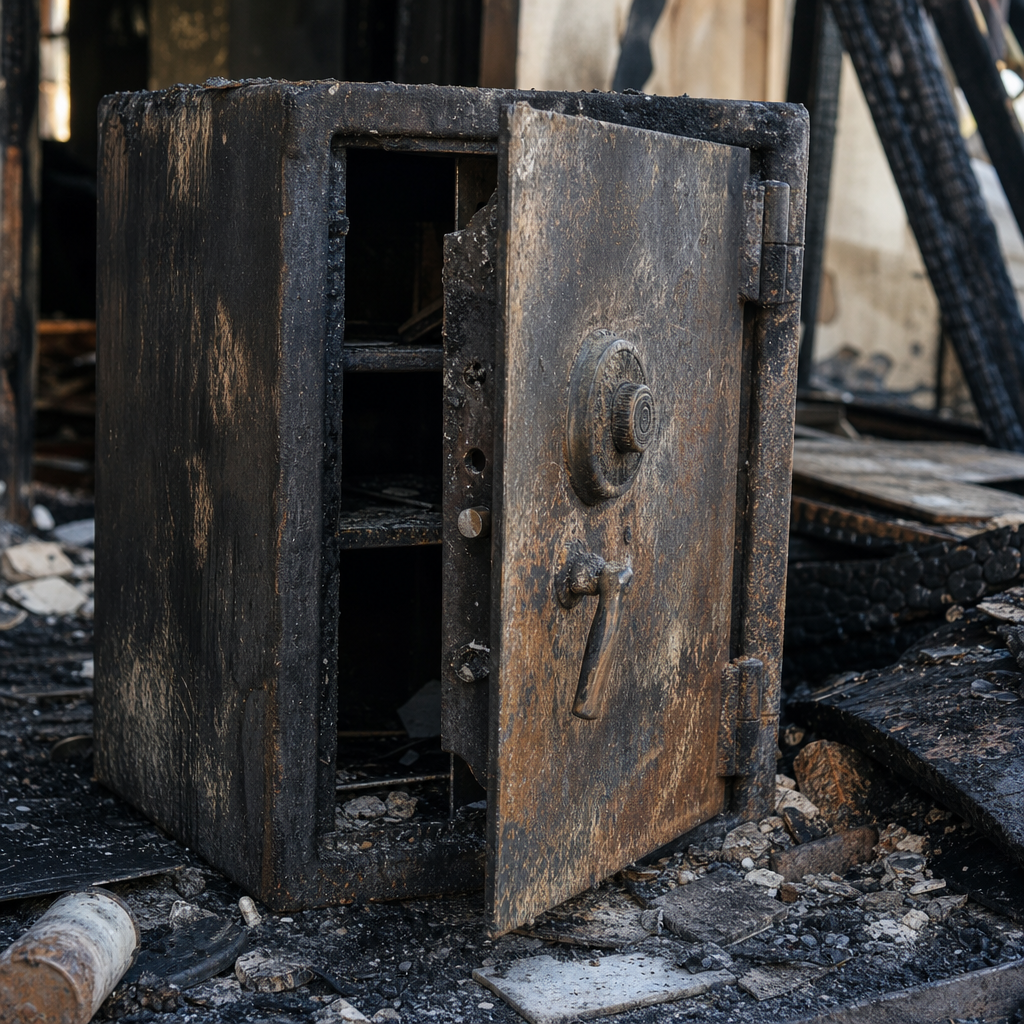
The myth that gun safes can withstand any fire persists because marketing language, dramatic product photos, and a basic misunderstanding of fire ratings make many buyers assume that a safe labeled “fireproof” will protect firearms under all conditions. In practice, no residential gun safe is invincible, and fire performance depends on test duration, peak temperature, seal design, insulation type, installation location, and what is stored inside. I have evaluated safes after house fires, reviewed test reports, and walked customers through insurance claims, and the same lesson appears every time: a fire rating is a limited performance claim, not a universal guarantee.
To understand why this matters, define the core terms clearly. A gun safe is a secure storage container designed to deter theft and restrict unauthorized access. A fire rating is a manufacturer or laboratory claim stating that the interior stayed below a specified temperature for a stated amount of time under defined test conditions. Fire resistance is not the same as “fireproof,” because all materials fail if heat exposure is severe enough or long enough. Misconceptions also arise because buyers blend burglary protection, fire protection, water resistance, and long-term humidity control into one expectation, even though these are separate engineering problems that often require different design choices.
This topic matters for obvious financial reasons, but the larger issue is risk management. Modern rifles, optics, handguns, suppressors, paper records, and family heirlooms can represent tens of thousands of dollars. Even more important, damaged firearms may become unsafe if heat alters temper, softens solder, cracks optics, degrades ammunition, or warps stocks. A safe that survives structurally may still expose contents to temperatures high enough to ruin them. As the hub for gun safe myths and misconceptions, this article explains what fire ratings really mean, where buyers are misled, how to compare models intelligently, and what practical steps actually improve survival odds when a house fire occurs.
Why the “fireproof gun safe” claim is misleading
The most common myth is simple: if a gun safe is advertised as fireproof, then the contents will survive any house fire. That is false. In the safe industry, “fireproof” is often informal sales language rather than a literal technical promise. What matters is the tested threshold, such as 30, 45, 60, 90, or 120 minutes at a stated external temperature, often around 1,200 to 1,400 degrees Fahrenheit in residential marketing. Those figures are not interchangeable. A safe rated for 30 minutes at 1,200 degrees Fahrenheit is making a meaningfully weaker claim than one independently tested for 90 minutes at 1,680 degrees Fahrenheit.
The second misunderstanding is assuming the test mirrors every real fire. Actual residential fires vary dramatically based on fuel load, ventilation, construction type, room location, sprinkler presence, and fire department response time. A garage with gasoline, paint, tires, and workshop materials can produce a very different heat profile than a bedroom closet. Multi-story collapse can expose a safe to longer burn periods, falling debris, or reheating after initial suppression. In my experience, buyers often focus on the duration number and ignore the test method, even though the method determines whether that number means much at all.
There is also confusion between protecting paper, electronics, and firearms. Paper chars at roughly 451 degrees Fahrenheit, but plastics, adhesives, lubricants, optics, and wood finishes can fail far earlier or in different ways. Gun safes may keep the interior below paper ignition temperature and still allow enough heat to damage scopes, red dots, polymer frames, magazines, sling hardware, or sealed ammunition packaging. The phrase “survived the fire” therefore needs precision. Did the door stay shut? Did the steel shell remain intact? Were the firearms cosmetically affected, mechanically altered, or totally destroyed? Those are different outcomes.
How fire ratings are tested, and why standards matter
Fire ratings only become useful when you know who tested the safe and under what protocol. Independent laboratories such as UL have historically provided more credible benchmarks than in-house testing because the procedures are documented, repeatable, and easier to compare. Some manufacturers use their own furnace tests and publish the result as a rating. That does not automatically make the claim false, but it means the buyer should ask tougher questions: What starting moisture content was in the insulation? Was the safe pre-heated or placed into a hot furnace? How many thermocouples were used? Was there a hose-stream test, impact test, or cool-down phase?
Cool-down is especially important. In a real fire, damage often continues after flames subside because trapped heat keeps migrating inward. A safe can pass a simple peak-exposure test and still bake its contents during the cooling cycle. Better test regimes account for this by measuring internal temperature not just during active heating but during the period after removal or extinguishment. I have seen cases where owners opened a safe too quickly after a fire, introducing oxygen and discovering that papers, stocks, and liners had been heat-soaked far more than expected. The label on the brochure did not prepare them for that reality.
Construction details also matter. Some gun safes rely on gypsum board layers, similar in principle to drywall, because chemically bound water in the material helps absorb heat. Others use proprietary poured insulation or ceramic-based barriers. Door seals may expand under heat to limit smoke ingress. Thicker steel improves burglary resistance and structural rigidity, but steel also conducts heat. A heavy shell without well-designed insulation is not automatically superior in a fire. Likewise, a lighter safe with a decent fire liner may outperform a thicker but poorly insulated competitor for a limited duration.
What buyers should compare before trusting a fire rating
When comparing gun safe fire ratings, look past the front-page badge and evaluate the full claim. Ask five direct questions: who performed the test, what temperature was used, how long exposure lasted, what maximum interior temperature was allowed, and whether the entire safe model or only a similar prototype was tested. If those answers are vague, treat the rating cautiously. Reputable sellers should be able to provide a spec sheet or at least a detailed explanation. If the answer is merely “it’s fireproof,” that is a red flag.
Installation context changes the odds more than many buyers realize. A safe placed on a concrete slab in a climate-controlled interior room generally faces less extreme fire exposure than a safe in an attached garage, upper story bonus room, or outbuilding. Anchoring also matters. In severe fires, floor systems can fail and drop a safe into a basement or lower level, sometimes increasing heat exposure, sometimes helping if the lower area burns less intensely. Surrounding combustibles matter too. Shelving, ammunition stockpiles, cardboard, solvents, and stored fabric can intensify the local fire environment around the safe.
| Factor | Why it affects fire survival | Practical buyer takeaway |
|---|---|---|
| Test source | Independent tests are more comparable than internal claims | Prefer documented third-party ratings when available |
| Duration and temperature | A higher number in one category does not offset weakness in the other | Compare both figures together, not separately |
| Interior temperature limit | Paper, optics, polymers, and finishes fail at different thresholds | Match the rating to what you actually store |
| Insulation system | Gypsum, poured fill, and ceramic barriers perform differently | Ask how the safe is built, not just how thick it is |
| Safe location | Garages and upper floors often experience harsher fire conditions | Install in a lower-risk interior area when possible |
Buyers should also think about the contents mix. If the safe holds passports, deeds, cash, hard drives, suppressor paperwork, and optics alongside firearms, one rating may not suit everything. Data media and electronics often require lower internal temperatures and lower humidity than ordinary paper documents. In many homes, the smarter setup is a gun safe for firearms plus a smaller document or media safe inside, or nearby, for heat-sensitive items. That layered approach is more realistic than expecting one large cabinet to solve every protection problem equally well.
Common gun safe myths that feed unrealistic fire expectations
The fireproof myth is reinforced by several related misconceptions. One is that heavier always means safer. Weight can indicate thicker steel, additional insulation, or both, but mass alone does not tell you how the safe was engineered. Another myth is that all 60-minute ratings are basically the same. They are not. Two safes with identical advertised durations may have been tested at different temperatures, under different pass criteria, or by entirely different methods. A third myth is that surviving a fire means the safe was worth the money. If the lock fails, the door warps, or the interior reaches temperatures that destroy optics and finishes, the headline claim can be technically true while the practical result is disappointing.
Another misconception is that a sealed safe protects against everything after a fire. Water from suppression efforts can enter through compromised seams, damaged door gaps, bolt holes, or drill points. Steam and humidity can linger inside long after the incident. That is why post-fire recovery requires care: document contents, involve insurance early, and have firearms inspected by a qualified gunsmith before firing. Heat can affect springs, heat treatment, sight adhesives, epoxy bedding, and optic seals in ways that are not obvious from a quick visual check.
I also hear buyers assume that premium branding guarantees premium fire protection. Sometimes it does, but not always. A reputable manufacturer may build excellent burglary-resistant safes with moderate fire performance, while another brand focuses more heavily on thermal protection. The right choice depends on your risk profile. Urban owners in apartments may prioritize unauthorized access prevention and a fast emergency response environment. Rural owners with long fire department response times may rationally place more weight on fire endurance. Good buying decisions come from matching the product to the threat model, not from repeating slogans.
Practical ways to improve firearm protection during a fire
The most effective response to the myth is not cynicism; it is better planning. Start by choosing a safe with a credible, documented fire rating that fits your budget and contents. Then improve the environment around it. Install the safe in a lower-risk area away from flammables, ideally on concrete. Add smoke detection, consider monitored alarms, and if feasible, integrate residential sprinklers or at least fire extinguishers nearby. Reducing fire severity and response time often protects contents more than paying extra for a loosely defined rating.
Manage interior conditions as well. Use a dehumidifier rod or desiccants for corrosion control, but remember that moisture management does not increase fire resistance. Store critical documents in a dedicated fire-rated insert. Keep optics, serialized paperwork, appraisals, and photographs inventoried off-site or in secure cloud storage. For high-value collections, insurance is essential. Standard homeowners coverage may impose sublimits on firearms, accessories, or collectibles, so review endorsements carefully. In claims work, the owners who fare best are usually the ones who documented serial numbers, receipts, and current replacement values before anything happened.
Finally, treat any fire-exposed firearm as potentially compromised until inspected. Surface discoloration can signal significant heat exposure, but absence of visible damage does not prove safety. Bluing, polymer accessories, ammunition, laminated stocks, night sights, and mounted electronics all react differently to heat. If a safe has been in a major fire, the prudent path is professional evaluation, not assumption. That mindset cuts through the central myth. A gun safe is one layer in a broader protection system involving placement, detection, suppression, documentation, maintenance, and realistic expectations about what any container can survive.
What this hub means for the wider “gun safe myths” topic
As a hub for gun safe myths and misconceptions, this article establishes the baseline principle that labels and assumptions are not enough. The same critical approach applies to other common claims: that any safe can stop expert thieves, that digital locks are always less reliable than mechanical dials, that thicker steel makes interior climate control unnecessary, or that a bargain cabinet offers the same protection as a true safe. Each myth starts with a partial truth and becomes dangerous when buyers stop asking specific questions.
The clearest takeaway is that no gun safe can withstand any fire. Some safes can withstand certain fires for certain periods under certain conditions, and that narrower statement is the honest one. Buyers who understand test standards, location risk, content sensitivity, and post-fire realities make better decisions and suffer fewer unpleasant surprises. If you are shopping now, compare documented ratings, inspect construction details, and review your installation plan before you buy. A realistic safe strategy will protect your firearms far better than the word “fireproof” ever will.
Frequently Asked Questions
Can a gun safe really survive any house fire if it is labeled “fireproof”?
No. That is the core misunderstanding behind this myth. A residential gun safe is not built to withstand every possible fire scenario, and the word “fireproof” is often used more loosely in marketing than it is in technical testing. In the real world, fire exposure varies dramatically from one incident to another. A short, contained fire in one room is very different from a fully involved structure fire that burns hot for a long time, collapses floors, and buries the safe under debris. Even if a safe has a stated fire rating, that rating usually reflects a specific test condition, such as a certain internal temperature limit maintained for a set amount of time under controlled circumstances. It does not mean the safe is invulnerable.
What matters is how the safe performs under actual conditions: how long the fire burns, how high temperatures rise, whether flames directly impinge on the safe, whether the safe is on an upper floor that collapses, and whether firefighters cool the area quickly or the structure smolders for hours. I have seen safes that protected contents reasonably well in moderate fires and others that failed badly when exposed to extended heat. Buyers should think of a fire-rated safe as offering limited, conditional protection, not absolute protection. That distinction is critical when you are storing firearms, optics, important documents, and other heat-sensitive items.
What does a gun safe fire rating actually mean?
A fire rating is supposed to describe how long a safe can keep its interior below a certain temperature when exposed to an external heat source. The problem is that not all ratings are created equally, and many consumers never see the details behind the number on the sales tag. For example, a safe advertised as having a “60-minute fire rating” may have been tested at one temperature, with one pass/fail standard, under one manufacturer’s internal protocol. Another safe with the same “60-minute” claim may have been evaluated under a completely different method. Without knowing the test standard, the peak external temperature, the maximum allowable internal temperature, and whether the rating came from an independent lab or from the manufacturer, the number alone tells only part of the story.
This matters because firearms and related items do not all fail at the same temperature. Paper chars at one threshold, plastics deform at another, optics adhesives and lubricants can break down earlier than many people expect, and ammunition packaging may deteriorate even if cartridges do not ignite in the Hollywood sense. A safe that keeps the interior below a document-protection threshold for a short test may still allow enough heat buildup to damage wood stocks, polymer frames, scopes, electronics, and finishes. In other words, a fire rating is useful, but only when you understand what was tested, how it was tested, and what kind of contents you expect it to protect.
Why do some gun safes fail in real fires even if they have insulation and expanding seals?
Because insulation and door seals help, but they are not magic. Most residential gun safes rely on layers of fireboard, gypsum-based materials, composite insulation, and heat-activated door seals to slow the transfer of heat and smoke into the interior. Those systems can work reasonably well within their design limits, but they can also be overwhelmed. If exterior temperatures stay high long enough, the safe’s body, door, seams, and hardware all absorb heat. Over time, that heat migrates inward. The seal may expand and reduce smoke intrusion, but it cannot stop a prolonged thermal assault indefinitely. Insulation can delay temperature rise, but once saturated with heat, interior temperatures can climb to damaging levels.
There are also practical failure points people overlook. Thin steel bodies can warp. Door gaps can open if the safe is stressed by heat or impact. The safe may tip over, get hit by falling debris, or fall through a weakened floor. Moisture generated by some insulation materials during heating can also affect contents. In post-fire evaluations, it is common to find that the safe shell remained standing, which makes owners assume the contents should be fine, but the inside tells a different story: scorched stocks, damaged optics, rust initiated by heat and humidity, melted accessories, and ruined documents. A safe surviving structurally is not the same thing as the contents surviving functionally.
Does where the gun safe is installed affect how well it performs during a fire?
Absolutely. Location is one of the most underrated factors in fire performance. A safe installed on a concrete slab in a lower-risk, ground-level area often has a better chance than one placed in a garage full of accelerants or on an upper floor that may collapse into a hotter burn zone. If a safe falls through burning floors or ends up buried under heavy, heat-retaining debris, the exposure can become far more severe than the original rating anticipated. Likewise, a safe positioned against an exterior wall may experience different heat conditions than one trapped in the center of a fully involved room.
Installation details matter too. Anchoring can prevent tipping, but it does not eliminate thermal exposure. Surrounding materials influence fire intensity. A closet packed with clothing, ammunition, cardboard boxes, solvents, or other combustibles can increase duration and heat around the safe. Even the difference between a finished basement, a first-floor interior room, and an attached garage can be significant. People often shop based on door thickness, lock type, and advertised minutes of protection, but they fail to think through the safe’s actual environment. Choosing a better location, reducing nearby fuel load, and avoiding structurally vulnerable spots can improve the odds of protection just as much as upgrading to a somewhat higher-rated model.
If no residential gun safe is invincible, how should buyers choose one and protect firearms more realistically?
The smart approach is to stop looking for an “indestructible” safe and start evaluating layered risk reduction. First, choose a safe from a manufacturer that provides clear, specific fire-rating information rather than vague claims. Look for details about test duration, external temperature, internal temperature threshold, and whether the testing was performed by an independent laboratory. Second, match the safe to what you are storing. If you have collectible firearms, expensive optics, suppressor paperwork, heirloom documents, or electronic accessories, remember that these items have different heat tolerances. A safe that may be acceptable for basic theft deterrence and modest fire resistance may not be enough for highly valuable or highly heat-sensitive contents.
Third, think beyond the safe itself. Install the safe in the most favorable location available, preferably on a concrete slab or in a lower-risk area with less surrounding fuel. Consider adding climate control or desiccants for day-to-day protection, and keep critical documents in containers specifically designed for document or media protection if needed. Maintain insurance coverage with accurate records, serial numbers, and photographs stored off-site or in the cloud. If certain firearms are exceptionally valuable, it may be worth discussing specialized storage options beyond standard residential gun safes. The realistic goal is not to guarantee survival in every fire, because no residential unit can do that. The goal is to improve your odds substantially while understanding the limits of the equipment you are buying.