
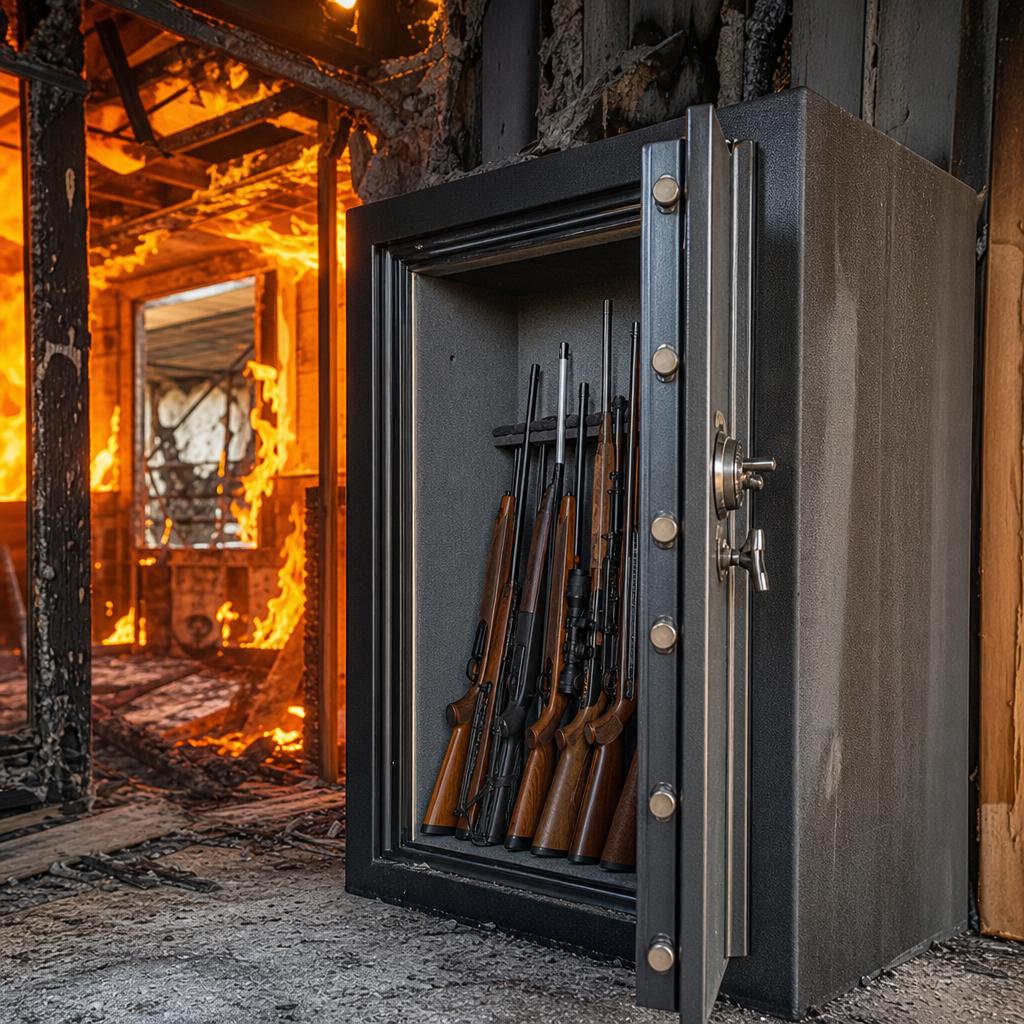
Fireproof gun safes protect firearms from extreme heat by combining insulated steel construction, heat-activated seals, and tested fire ratings that slow temperature rise long enough to preserve metal parts, wood stocks, optics, documents, and ammunition during a house fire. In the broader category of gun safes and safety, fireproof and disaster-resistant storage refers to secure containers designed not only to resist theft, but also to reduce damage from fire, smoke, water, impact, and structural collapse. That distinction matters because many owners still buy a cabinet for burglary deterrence and assume it offers meaningful fire protection when it does not. After helping buyers compare safes, inspect damaged units, and plan installations, I have seen the same pattern repeatedly: the people who understand fire ratings, seal design, and placement decisions recover usable firearms and records far more often than those who focus only on door thickness or lock style.
A residential fire can exceed 1,100 degrees Fahrenheit in minutes, and temperatures near the ceiling may climb much higher as flashover develops. Firearms exposed directly to that heat can lose lubricants, suffer stock charring, warp optics mounts, crack grips, and corrode quickly after suppression water and smoke residue settle in. Even if a gun remains mechanically intact, heat damage to sights, scopes, finishes, and stored paperwork can create costly replacement issues and legal headaches. That is why a true fireproof gun safe is best understood as part of a larger disaster-resistant storage strategy. The right safe buys time, slows heat transfer, limits smoke intrusion, and protects critical accessories while emergency crews work. This hub explains how fire protection works, what ratings really mean, how water resistance fits in, where to install a safe, and how to evaluate tradeoffs so you can choose storage that matches real risks rather than marketing labels.
How fireproof gun safes resist extreme heat
The core job of a fireproof gun safe is thermal delay. No safe makes contents immune to fire forever, and the term fireproof is shorthand for fire-resistant construction tested under specific conditions. Most quality models use a steel shell lined with gypsum-based fireboard, proprietary composite insulation, ceramic wool, or poured concrete-like materials that absorb and slow heat. Gypsum is common because it contains chemically bound water; as temperature rises, that moisture converts to steam and helps moderate the internal environment for a limited time. Heavier composite safes often perform better in prolonged fires because dense insulation slows heat transfer more effectively than thin layers of board, though they cost more and require stronger floors and more complex delivery.
Door design is just as important as wall construction. The weakest point in many lower-priced safes is not the body but the gaps around the door. Better fire-rated gun safes use expanding intumescent seals that swell when exposed to heat, closing seams to reduce smoke and flame penetration. Multi-step door jambs also create a longer path for heat to travel. In practice, these details matter because smoke damage often ruins optics, paper records, leather slings, and collectible finishes before direct flame reaches the interior. Shelving material matters too. Carpet-lined particle board can off-gas and hold moisture after a fire event, while steel shelving and adjustable interior racks tend to recover better if the safe survives.
Internal temperature thresholds determine whether contents remain usable. Paper begins to char around 350 degrees Fahrenheit, which is why many fire tests cite an internal maximum of 350 degrees for a stated period, such as 30, 60, or 90 minutes. Firearms themselves can tolerate higher temperatures than paper, but associated items often cannot. Scope adhesives, polymer frames, recoil pads, ammunition boxes, passports, tax records, and digital media all fail at different points. For that reason, a safe that protects a steel rifle may still destroy a hard drive or family documents unless you add a secondary media container. When evaluating a safe, ask what internal temperature was maintained, for how long, and under what test method. A vague “fireproof” sticker with no temperature threshold is not meaningful protection.
What fire ratings actually mean
Fire ratings are useful only when you understand who performed the test, what temperature curve was used, and whether the stated duration reflects realistic conditions. In the safe industry, some ratings come from independent laboratories such as UL, while others are manufacturer test claims based on internal or contracted protocols. Both can provide value, but they are not equal. A rating like “60 minutes at 1,200 degrees” should prompt several follow-up questions: Was the safe preheated or placed into a hot furnace from room temperature? Was a cool-down phase included? Was the safe tested empty or loaded? Was the maximum internal temperature measured throughout the cavity or at one point? These details change the outcome significantly.
Independent standards add credibility because they specify procedures and pass criteria. UL 72 is a recognized benchmark for record protection, though many residential gun safes are not fully certified to it due to cost. Some manufacturers instead publish furnace tests that simulate residential fire temperatures for a set duration. That does not automatically make the rating useless, but buyers should treat it as comparative information rather than a universal standard. I generally advise matching the rating to your structure and response times. In suburban areas with nearby hydrants and shorter fire department arrival times, a true 60-minute rating may be reasonable. In rural locations, wildfire zones, or homes with longer response windows, 90 minutes or more is a safer target, especially if the safe is placed in a garage or detached building.
| Feature | Entry-Level Fire Safe | Mid-Range Fire Safe | Premium Composite Safe |
|---|---|---|---|
| Typical fire claim | 30 minutes at 1,200°F | 60-90 minutes at 1,200-1,400°F | 90-120+ minutes with denser insulation |
| Insulation type | Thin fireboard | Multiple fireboard layers or hybrid fill | Composite or poured fill |
| Door seal | Basic expanding seal | Multi-seal system | Advanced seal with stepped jamb |
| Weight | Lower, easier to move | Moderate | High, often 1,000+ pounds |
| Best use | Budget burglary and limited fire exposure | Balanced home protection | Longer fires, high-value collections |
Another nuance is that external temperature alone does not tell the whole story. Duration, ventilation, fuel load, and collapse conditions all affect survival. A safe on an upper floor may fall into a basement fire, extending exposure beyond the stated rating. Conversely, a safe installed on a concrete slab in a climate-controlled room may face less severe conditions than the label assumes. Ratings should therefore be treated as one decision tool, not the decision. Build quality, seal quality, body thickness, and installation environment all influence real-world performance.
Protection beyond fire: water, smoke, impact, and collapse
Disaster-resistant storage is broader than heat resistance because many firearms are damaged after the flames are controlled. Water from sprinklers, burst pipes, and fire hoses can flood the interior of a compromised safe or saturate contents when the door is opened after a fire. Smoke deposits are acidic and can etch blued steel, optics coatings, and brass casings. In wildfire regions, fine ash can infiltrate weak door seams. In tornadoes, hurricanes, and earthquakes, the issue may be impact and overturning rather than heat. A well-built gun safe addresses several of these threats at once, but no single model is best at everything.
Water resistance is especially misunderstood. Some safes include gaskets and door designs intended to keep out standing water for a limited time, often measured in inches of water depth over 24 to 72 hours. That can help during a burst pipe or shallow flood, but it is not the same as a fully waterproof enclosure suitable for full submersion. If flood risk is high, elevate the safe above grade, avoid basement placement, and store critical documents or electronic media in sealed secondary containers inside the safe. Desiccants and rechargeable dehumidifiers should also be considered standard equipment, because fire insulation materials can retain moisture, and trapped humidity promotes rust long after the emergency ends.
Impact resistance depends on body design, weld quality, and anchoring. I have seen safes survive fire only to tip through weakened flooring or become inaccessible under debris because they were not bolted to concrete. Anchor bolts do two things: they improve burglary resistance and reduce movement during disasters. Placement against an interior wall, away from likely fuel sources, can also reduce fire severity. In homes with garages full of gasoline, paints, and tools, garage installation may be convenient but often increases hazard. A first-floor interior closet on a slab or reinforced section of floor is usually a better compromise between access, concealment, and survivability.
How to choose the right safe for your firearms and home
Start with a risk assessment, not a catalog. List what you are protecting: modern sporting rifles, heirloom shotguns, suppressors, handguns, tax stamps, optics, cash, and legal records all carry different replacement costs and sensitivities. Then evaluate where you live. Urban townhouse, rural farmhouse, wildfire corridor, coastal floodplain, and apartment building each present different threat profiles. A collector with six engraved rifles and irreplaceable paper provenance should prioritize longer fire duration, thicker insulation, and internal organization. A homeowner with a modest handgun collection in a low-fire-risk condo may reasonably choose a smaller safe with a shorter rating but stronger anti-theft features.
Capacity claims deserve skepticism. A “24-gun safe” rarely holds 24 scoped long guns in practical use. Fire-lined interiors reduce usable space, and accessories like door organizers, pistol racks, and dehumidifiers take up more room. Buy more capacity than you think you need. Lock type is a separate decision. Mechanical dial locks are proven, durable, and less sensitive to battery failure, while quality electronic locks offer faster access and audit features on some models. Either can work well if it comes from a respected lock manufacturer and the safe is serviced correctly. What matters more is the total package: tested fire performance, solid boltwork, good door fit, anchor capability, and enough interior flexibility to avoid crowding firearms against warm walls during an event.
Brand reputation helps, but materials and specifications matter more than marketing. Compare actual weight, steel gauge, insulation description, seal type, bolt size, and warranty terms. A strong warranty that covers fire and attempted break-in, plus freight for replacement, is a meaningful signal. So is transparent testing information. If a company cannot explain its fire methodology, that is a red flag. For buyers building out a complete gun safes and safety plan, this hub should connect naturally to deeper topics such as safe humidity control, gun safe installation, biometric versus mechanical locks, and home inventory documentation. The best purchase decision comes from seeing fire resistance as one layer in a complete protection system, not a stand-alone feature.
Installation, maintenance, and realistic expectations
Even the best fireproof gun safe underperforms if it is installed poorly or maintained casually. Delivery matters because heavy safes can rack slightly if moved incorrectly, affecting door alignment and seal compression. Once in place, the safe should be leveled, anchored according to manufacturer instructions, and checked for full door contact around the frame. Keep a dehumidifier inside, inspect the seal periodically, and avoid storing firearms in foam cases that trap moisture. If the safe experiences a minor smoke event or high humidity exposure, clean and re-oil firearms promptly. After a major fire, do not assume contents are fine because the exterior looks intact; open the safe carefully, document everything for insurance, and have affected firearms inspected by a qualified gunsmith before use.
It is also important to set realistic expectations. A residential gun safe is not a bank vault, and a fire rating is not a survival guarantee under every condition. Prolonged wildfire exposure, structural collapse, accelerants, or a fully involved detached garage can defeat even expensive models. Yet that limitation should not obscure the real benefit. In ordinary house fires, a well-chosen safe often makes the difference between total loss and recoverable property. It protects serial numbers, suppressor paperwork, family records, and firearms with sentimental value that cannot be replaced at any price. If you are evaluating options now, measure your space, define your risks, and choose a fire-resistant safe that is rated, anchored, and sized for the collection you actually own and the disasters most likely to occur where you live.
Frequently Asked Questions
How does a fireproof gun safe protect firearms during a house fire?
A fireproof gun safe protects firearms by slowing the transfer of extreme heat into the interior of the safe long enough to reduce damage during a fire. Most quality models use heavy steel walls combined with layers of fire-resistant insulation that absorb and delay heat penetration. This matters because firearms, optics, wood stocks, ammunition, and important paper records can all be damaged when internal temperatures rise too quickly. In many cases, the goal is not to make the contents completely immune to fire, but to keep the inside temperature below critical thresholds for as long as possible while the fire burns and emergency crews respond.
Another important component is the heat-activated door seal. As outside temperatures climb, this seal expands to close gaps around the door and help block smoke, hot gases, and embers from entering. That added barrier can make a major difference because smoke and superheated air often cause damage before direct flames ever reach the safe. A well-built fireproof gun safe also helps shield contents from secondary hazards commonly associated with house fires, including falling debris, impact, and water from sprinkler systems or fire hoses. Taken together, insulated steel construction, expanding seals, and tested fire ratings create a protected environment that gives firearms and valuables a much better chance of surviving extreme heat.
What does a fire rating on a gun safe actually mean?
A fire rating tells you how long a safe is designed or tested to keep its interior below a specified temperature when exposed to high external heat. For example, a safe might be rated for 30, 60, 90, or 120 minutes at a stated temperature such as 1200°F, 1400°F, or higher. The basic idea is that the insulation and door system should slow heat buildup enough to protect contents during that test period. This is important because many items stored in gun safes are heat-sensitive. Wood stocks can warp or crack, optics can fail, lubricants can degrade, documents can char, and certain materials can be damaged well before steel itself is affected.
It is also important to understand that not all fire ratings are equal. Some are based on independent testing, while others may come from manufacturer testing under controlled conditions. The details matter: how hot the test was, how long it lasted, whether the safe was tested from all sides, and whether there was a cool-down phase afterward. In a real fire, the safe may continue absorbing heat even after flames are knocked down, so the quality of the insulation system matters just as much as the advertised number. A fire rating should be viewed as a practical benchmark, not a guarantee of zero damage under every fire scenario. When choosing a safe, look beyond the headline rating and consider build quality, seal design, insulation type, and overall disaster resistance.
Can a fireproof gun safe also protect ammunition, documents, and optics?
Yes, a fireproof gun safe can help protect much more than the firearms themselves. In addition to rifles, shotguns, and handguns, many owners store ammunition, scopes, suppressor paperwork, passports, title documents, cash, digital media, and family records in the same safe. Fire-resistant insulation helps reduce rapid internal temperature spikes, which is especially valuable for delicate components like optics, electronic accessories, and paperwork. Heat-activated seals also limit smoke intrusion, which can stain, corrode, or contaminate stored items even if flames never reach them directly.
That said, different contents have different heat tolerances. Paper and electronic media are often more vulnerable than metal firearm parts, and adhesives, lens coatings, and polymer accessories may be damaged at lower temperatures than steel. For that reason, many owners use interior organizer pouches, document boxes, or dedicated fire-rated containers inside the gun safe for an extra layer of protection. If you plan to store irreplaceable records or sensitive devices alongside firearms, it is smart to choose a safe with a stronger fire rating and enough interior space to separate items properly. A good fireproof gun safe is not just a theft deterrent for weapons; it can also serve as a central disaster-resistant storage solution for valuable gear and important household documents.
Are fireproof gun safes also resistant to smoke, water, and structural damage?
Many are, at least to a meaningful degree. In real house fires, flame exposure is only one part of the threat. Smoke can penetrate small gaps and leave corrosive residue on firearms and accessories. Water from firefighting efforts can soak the safe exterior, seep into poorly sealed doors, and create interior humidity problems afterward. Structural collapse, falling beams, and impact from debris can also damage a lightly built cabinet. A well-designed fireproof gun safe addresses these risks by pairing fire insulation with reinforced steel construction, tight door tolerances, expanding seals, and a body strong enough to withstand rough conditions during and after a fire event.
This broader concept is often referred to as disaster-resistant storage. The best safes in the gun safes and safety category are designed not only to resist theft, but also to reduce damage from fire, smoke, water, impact, and partial structural failure. No residential safe is invincible, but stronger construction dramatically improves the odds that contents remain protected until recovery is possible. Features such as elevated interiors, sealed door edges, robust locking mechanisms, and anchored installation can all contribute to overall performance. After any fire or water exposure, the safe should be opened carefully, contents inspected, and firearms cleaned and re-lubricated promptly to prevent delayed corrosion.
What should you look for when choosing the best fireproof gun safe?
Start with the fire rating, but do not stop there. You want a safe that combines a credible fire duration and temperature rating with solid anti-theft construction. Pay attention to steel thickness, door design, locking bolts, hinge protection, and whether the safe includes a true expanding heat seal. Interior capacity is another major factor. Manufacturers often advertise space based on idealized firearm layouts, but real-world setups with scoped rifles, slings, handguns, shelves, and document storage usually require more room than expected. Choosing a slightly larger safe often improves both accessibility and protection by preventing overcrowding.
You should also consider where the safe will be installed. Placement on a ground floor, away from obvious fire load sources, and securely bolted to a solid surface can improve both safety and stability. If flood or hose water is a concern, a raised platform can help. Interior humidity control matters too, because even a fire-resistant safe should protect against long-term moisture issues that can rust firearms over time. Finally, buy from a reputable manufacturer that provides clear specifications rather than vague marketing claims. The best fireproof gun safe is one that balances fire protection, security, storage capacity, and real-world disaster resistance in a way that matches your home, your collection, and the level of risk you want to manage.