
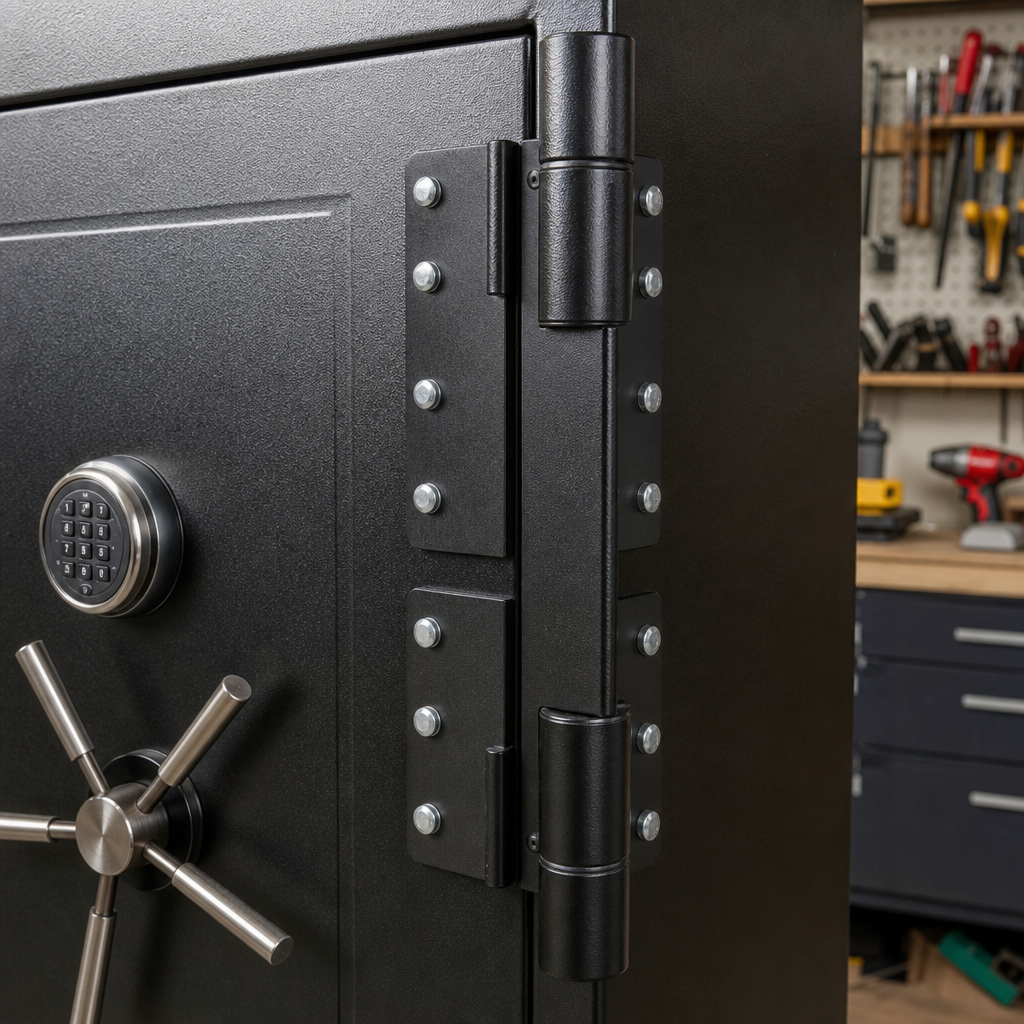
DIY reinforced hinges can make a gun safe significantly harder to pry open, but only when the modification is planned as part of a complete hardening strategy for custom and DIY gun safe modifications. In practical terms, reinforced hinges are upgraded hinge mounts, backing plates, weld-on tabs, security studs, and fastener systems that spread force and resist peeling, twisting, or pin removal during a forced-entry attempt. I have worked on older residential safes, imported cabinets marketed as safes, and utility gun lockers, and the pattern is consistent: attackers rarely defeat thick steel first; they exploit the weakest edge, the loosest tolerances, and the hardware that was never designed for leverage attacks.
That is why this topic matters for anyone building a safer storage setup at home. A gun safe is not just a box with a lock. Its real security comes from the interaction between body steel, door construction, frame overlap, hinge geometry, boltwork, anchoring, fire lining, and the way the unit is installed. If one of those elements is weak, especially around the door side, a pry bar can turn a “secure” container into a quick-entry target. Reinforcing hinges does not replace a quality safe, and it will not convert a thin steel cabinet into a commercial-grade burglary safe. What it can do is increase attack time, reduce hinge-side flex, and force an intruder to make more noise, use larger tools, or abandon the attempt.
As a hub page for custom and DIY gun safe modifications, this guide explains where hinge reinforcement fits, which upgrades actually improve resistance to forced entry, what materials and methods are realistic for home shops, and where the limits are. It also connects the broader subtopic: door gap reduction, relocker awareness, anchor upgrades, interior layout changes, humidity control, lighting, organization, and tamper monitoring all matter because real-world safe performance is holistic. The goal is not cosmetic modification. The goal is measurable security improvement using methods that respect tolerances, preserve lock function, and avoid creating new failure points.
How Forced Entry Happens at the Hinge Side
The hinge side is attacked in three common ways: prying the door edge away from the frame, knocking out exposed hinge pins, or deforming the outer hinge mount so the door skin peels from the body opening. On better safes, external hinges often do not carry the security load because fixed locking bolts, dead bars, or interlocking door lips retain the door even if the hinge is cut off. On many entry-level products, however, the hinge area still contributes heavily to alignment and resistance. If the door can flex enough at the hinge side, the locking bolts on the opposite side may disengage or the frame may distort enough to create a gap for tools.
When I inspect forced-entry damage, I look for three clues: elongated fastener holes, cracked welds around hinge leaves, and distortion where the hinge is attached to thin outer sheet rather than reinforced structure. Those failures tell you the original load path was weak. A pry attack creates torque, not just simple pull force. If that torque is concentrated at a small weld bead or a few undersized screws, steel begins to tear. Reinforcement works by increasing attachment area, tying the hinge into thicker structure, and adding secondary retention such as security studs or anti-pry tabs so the hinge is not the only thing keeping the door aligned under load.
It is also important to separate external appearance from actual security. Large decorative strap hinges on some safes contribute almost nothing to burglary resistance. Conversely, compact hinges backed by heavy internal plates can be very robust. Before modifying anything, confirm whether your safe relies on dead bolts or hinge geometry for retention. Remove interior panels if possible and inspect the frame. If your model already has fixed hinge-side locking bars, your best upgrade may be reducing door play and strengthening the frame edge rather than replacing the visible hinges.
Which DIY Reinforced Hinge Modifications Work Best
The best DIY reinforced hinge modifications are the ones that address real failure modes without interfering with door swing, seal compression, or boltwork travel. In most home installations, the most effective upgrades are backing plates, longer weld engagement, security studs, and gusseting around hinge mounts. Backing plates spread load over a larger section of the door or frame. Security studs, sometimes called dog bolts or hinge-side dead pins, project from the door into matching holes in the frame so the door remains captured even if the hinge is compromised. Gussets stiffen the hinge area by triangulating the mount and reducing flex.
For safes assembled with bolts rather than continuous welds, replacing soft or undersized hardware with graded fasteners can help, but only if the surrounding steel is thick enough to benefit. Grade 8 bolts, prevailing-torque lock nuts, and hardened washers are useful in retrofit work, yet stronger bolts in weak sheet metal can simply tear larger holes. That is why reinforcement should focus on the entire assembly, not just the fastener. A 3/16-inch or 1/4-inch steel backing plate often delivers more real-world value than a premium bolt alone because it changes how force is distributed.
Another highly effective modification is adding hinge-side anti-pry tabs. These are short steel projections welded or bolted so the door edge engages the frame at multiple points even before the lock bolts come into play. I prefer this approach on thin-bodied import safes because it supplements security without forcing a complete hinge redesign. For owners considering a full hinge replacement, be cautious. Swapping to larger weld-on barrel hinges looks substantial, but if the frame and door skins are not reinforced first, oversized hinges can create leverage points and heat distortion during welding. Bigger is not automatically stronger.
| Modification | Primary Benefit | Best Use Case | Main Limitation |
|---|---|---|---|
| Steel backing plates | Spreads pry loads across wider area | Thin door skins or frame walls | Requires interior access and careful hole alignment |
| Security studs/dog bolts | Keeps door captured if hinge fails | External hinge safes with hinge-side play | Needs precise drilling for clean engagement |
| Gussets at hinge mounts | Reduces twisting and weld fatigue | Weld-on hinge retrofits | Can affect door clearance if oversized |
| Upgraded fasteners | Improves clamp force and joint durability | Bolt-on hinges with adequate steel thickness | Does not fix weak surrounding metal |
| Anti-pry tabs | Adds secondary retention along hinge side | Budget safes and gun cabinets | Must not interfere with door closing or fire seal |
Materials, Tools, and Design Standards for Safe Hinge Reinforcement
For most DIY safe hinge reinforcement projects, mild steel plate in A36 or equivalent is appropriate, usually in 3/16-inch to 1/4-inch thickness depending on the original safe construction. Thicker is not always better because door weight, hinge geometry, and alignment matter. If you add too much mass at the outer edge, the door can sag and the lock bolts may bind. For security studs, hardened rod or shoulder bolts can work well, but use dimensions that match the frame depth and leave sensible clearance. Tight tolerances reduce rattle, but zero clearance is a mistake because paint thickness, thermal expansion, and minor frame movement can cause sticking.
Tool selection should match the safe and the installer’s skill. A drill press gives cleaner, square holes than a handheld drill, especially for dog bolt alignment. MIG welding is common for plate and gusset work, but heat management is critical around finished exteriors, insulation, and lock areas. If the safe contains gypsum-based fireboard, excessive heat can crack or detach it. If the lock body or relocker area is near the hinge line, shield it and confirm internal clearances before striking an arc. On some retrofits I avoid welding altogether and use through-bolted plates with hardened sleeves because the reduction in heat risk outweighs the aesthetic compromise.
Design standards from burglary-rated commercial safes are useful as a reference even when your home safe is not certified to those levels. The principle is straightforward: reinforce the frame opening, maintain bolt engagement, and create redundant retention points so defeating one component does not release the door. Good fabrication also follows cabinetmaking logic: keep reveals even, avoid introducing twist, and test door swing under full load. After reinforcement, the door should close smoothly, the handle should operate without added force, and the lock should not require “lifting” the door to engage. If it does, the modification is mechanically wrong regardless of how heavy it looks.
Step-by-Step Planning for a DIY Reinforced Hinge Project
Start by documenting the safe as it exists. Measure door thickness, body wall thickness, gap consistency, hinge leaf dimensions, pin diameter, and the amount of door sag or lateral play. Open the interior panel and photograph the lock, boltwork, and any existing dead bars before touching hardware. This step prevents expensive mistakes. I have seen owners drill directly into a relocker linkage path because they assumed the hinge cavity was empty. Once you know the internal layout, decide whether your goal is to strengthen the existing hinges, add hinge-side retention, or both.
Next, identify the weakest structural member in the load path. If the hinge is stout but welded to thin sheet, reinforce the sheet first. If the frame edge deforms when the door is pried, add anti-pry engagement points. If the door can shift when the hinge pins are removed, install security studs. Dry-fit all components with clamps or temporary bolts and cycle the door repeatedly. A safe door that swings free when empty may bind when shelves, organizers, or door panels add weight, so test under realistic conditions. Mark every hole with transfer punches and drill pilot holes before final sizing to reduce wander.
Once fabrication is complete, verify function in a disciplined sequence. Check hinge smoothness, then handle travel, then lock operation, then bolt projection, then seal compression. Finally, test resistance to movement with the door closed but unlocked by applying controlled hand pressure at the top and bottom corners. You are not trying to simulate a full pry attack; you are checking whether the retrofit reduced flex and slack. If possible, compare photos of the door gap before and after. Small visible changes often correspond to meaningful security gains. Finish exposed steel, touch up paint, and use corrosion protection inside drilled holes because rust around new hardware can compromise fit over time.
How Hinge Reinforcement Fits Into Custom and DIY Gun Safe Modifications
Hinge reinforcement is only one branch of custom and DIY gun safe modifications, and it is most effective when paired with complementary upgrades. The first companion upgrade is anchoring. A safe that can be tipped over gives an attacker better leverage against the door and hinge side. Anchoring into concrete with appropriate wedge anchors or adhesive anchors usually provides a larger security improvement than hinge work alone. The second companion upgrade is door-gap management. Shimmed frame liners, anti-pry lips, and improved striker-side engagement reduce the insertion space for pry bars and force the attack to become slower and louder.
Interior modifications also support security more than many owners realize. Organized long-gun racks, handgun shelves, and door panels reduce the temptation to leave firearms outside the safe because access is inconvenient. Better lighting and dehumidification keep the safe in daily use, and regular use means owners notice changes in alignment, humidity, and tampering sooner. Electronic monitoring matters too. A tilt sensor, door sensor, or vibration alarm linked to a home security system can interrupt an attack before physical reinforcement is fully tested. Physical and electronic layers work together; neither should be treated as a substitute for the other.
This hub topic also includes lock upgrades, handle replacement, interior power routing, modular storage, and corrosion control, but every modification should be screened for unintended consequences. Adding weight to a door may require hinge adjustment. Drilling for power access can create moisture paths or weaken a panel if placed poorly. Upholstered door organizers can interfere with rifles or press against boltwork covers. The right mindset is systems thinking. Ask how each change affects structure, fire resistance, humidity, usability, and maintenance. The best custom gun safe modifications are not random accessories; they are coordinated improvements that increase security while preserving reliability.
Limitations, Safety Concerns, and When to Call a Professional
DIY reinforced hinges improve resistance to forced entry, but they do not create a burglary rating, and they cannot overcome fundamentally thin steel or poor safe design. If your container uses 14-gauge or thinner body steel with large door gaps, hinge upgrades may help, yet the body itself can still be peeled or punctured with common tools. Fire performance can also be affected. Welding or cutting near fireboard, seals, or door liners may degrade fit and reduce heat protection. Manufacturers may void warranties when structural modifications are made, especially around lock areas and door assemblies.
There are also legal and practical responsibilities. Safe work should always begin with unloaded firearms removed from the unit. Sparks, grinding dust, and heat have no place around ammunition, solvents, or stored valuables. Wear proper eye protection, gloves, hearing protection, and respiratory protection when cutting or grinding coated steel. If your safe has an electronic lock, disconnect power and protect wiring before drilling. Most importantly, never modify components you do not fully understand. Relockers, glass plates, and bolt detent mechanisms can render a safe inoperable if disturbed.
Call a professional safe technician or qualified fabricator when the safe has a complex lock mechanism, when welding near finished surfaces would be difficult to control, when door alignment is already poor, or when the safe is high value enough that a failed DIY attempt would cost more than expert labor. In my experience, the best DIY projects are limited, well-measured, and reversible where possible. The best professional jobs are those where the owner knows exactly what problem needs solving. Reinforce the hinge side if it is weak, but treat the whole safe as a security system. Inspect your safe, prioritize the biggest vulnerability, and make the next upgrade count.
Frequently Asked Questions
What do reinforced hinges actually do for a gun safe, and can they really help prevent forced entry?
Reinforced hinges do not make a gun safe invincible, but they can make forced entry much more difficult when they are part of a broader safe-hardening plan. In a pry attack, the weak point is often not the hinge leaf by itself, but the surrounding metal, the weld area, the fasteners, and the way force concentrates at the edge of the door. A properly reinforced hinge system spreads that force over a larger area so the attacker has a harder time peeling the door skin, twisting the hinge side, shearing bolts, or knocking out hinge pins.
In practical DIY terms, reinforced hinges usually mean more than just swapping in a heavier hinge. The upgrade may include thicker hinge mounts, backing plates inside the door or body, weld-on tabs, security studs that engage when the door closes, improved fastener systems, and better load distribution across the frame. Those additions matter because many older residential safes and lighter imported gun cabinets use relatively thin steel around the hinge mount. If you only install a bigger hinge onto weak sheet metal, the surrounding structure can still tear under leverage.
It is also important to understand what reinforced hinges cannot do on their own. If the latch side is weak, the door gap is large, the frame flexes easily, or the safe is not anchored properly, an intruder may simply attack a different point. That is why hinge reinforcement works best as one layer in a complete forced-entry resistance strategy that also addresses pry resistance, relockers, door fit, anchoring, and body stiffness. Done correctly, reinforced hinges can absolutely improve resistance to common pry-and-twist attacks, especially on marginal factory designs, but they are most effective when the whole safe is treated as a system rather than a single upgraded component.
Are reinforced hinges better for all gun safes, or only for older and lighter models?
Reinforced hinges are most valuable on safes and security cabinets that have known weaknesses in hinge-side construction, but they are not automatically necessary for every safe. On a well-built safe with robust hinge supports, interlocking door geometry, internal dead bars, and a reinforced door frame, adding more metal around the hinge area may offer only modest gains. On the other hand, older residential safes, economy gun safes, and imported cabinets marketed as gun safes often benefit significantly because they frequently have thinner steel, smaller welds, minimal backing structure, and limited resistance to prying on the hinge side.
That distinction matters because the real question is not whether a hinge looks big from the outside, but whether the hinge area is structurally supported. Some safes use external hinges that look substantial yet are mounted to relatively light material. Others use internal hinges but still have weak door margins or thin frame sections. In both cases, an attack with a long pry bar can exploit flex, peel, or localized tearing. Reinforcement helps when it increases stiffness and force distribution, not merely when it adds visual bulk.
For DIY builders and modifiers, the smartest approach is to evaluate the safe first. Look at the door thickness, body thickness, hinge weld quality, number of attachment points, edge clearances, and whether the hinge side has active bolts or passive locking studs. If the hinge pins are removable, check whether the closed door still remains captured by the frame. If it does not, that is a major red flag. Reinforced hinges tend to be most worthwhile on safes where the factory design left obvious weaknesses, especially if the goal is to raise the amount of noise, time, and effort required for entry using basic hand tools.
What parts and design features should a DIY reinforced hinge upgrade include?
An effective DIY reinforced hinge upgrade usually combines several features rather than relying on a single hardware change. The strongest improvements typically start with backing plates or doubler plates added behind the hinge mounting area. These help spread the load into a larger section of the door shell or safe body so leverage is not concentrated at a few small welds or screws. If the safe is weldable and the steel is thick enough to support it, weld-on hinge tabs or gussets can further reduce flex and improve resistance to peeling forces.
Security studs are another important feature. These are fixed studs or interlocking pins that engage between the door and body when the door is closed. Their purpose is to keep the door captured even if the hinge pin is removed or the hinge itself is damaged. On many practical builds, security studs do more for actual forced-entry resistance than simply upgrading to a heavier hinge model. They create a second level of retention on the hinge side and reduce the value of attacking the hinge pins directly.
Fastener choice also matters. If a design uses bolts rather than full weld attachment, the fasteners should be high quality and sized appropriately for the loads involved, with large-area washers or backing plates to prevent pull-through. Thread engagement, lock nuts, and resistance to vibration loosening all deserve attention. In some cases, a combination of plug welds, fillet welds, and mechanical fastening offers the best balance of strength and serviceability. Finally, think about door alignment and clearances. An upgrade that causes binding, uneven gaps, or poor boltwork engagement can create new vulnerabilities. The best reinforced hinge design is one that increases stiffness, resists pin removal, preserves proper door operation, and works together with the frame, latch side, and anchoring system.
What are the biggest mistakes people make when reinforcing gun safe hinges themselves?
The most common mistake is treating the hinge as the only problem. Many DIYers focus on installing a thicker or heavier-looking hinge without strengthening the surrounding steel, improving the hinge-side capture, or checking how the latch side behaves under pry pressure. In real attacks, force does not politely stay at the hinge barrel. It travels into the frame, door edge, welds, and attachment points. If those areas remain weak, the safe may still fail even though the hinge itself survives.
Another major mistake is poor welding or heat management. Excessive heat can warp the door, distort the frame, damage internal fire lining, and ruin alignment. On thin-gauge bodies, aggressive welding can actually weaken the area by causing burn-through or heat-affected distortion. Poor weld placement can also create stress risers rather than reinforcing the structure. If welding is part of the plan, fit-up, material thickness, weld sequence, and cooling control all matter. This is one area where a structurally sound but modest reinforcement is better than an overbuilt, badly executed one.
People also underestimate the importance of security studs and anti-pry geometry. If a hinge pin can be removed and the door can then be lifted or peeled away, the design is incomplete. Likewise, if the safe has a wide door gap, weak frame return, or no internal reinforcement at the edge, an attacker may simply bypass the upgraded hinge area. Other avoidable errors include using low-grade hardware, relying on sheet metal screws in thin steel, failing to anchor the safe to a solid base, and not testing door swing and boltwork engagement after modification. A DIY hinge reinforcement project should end with careful functional checks and realistic force-path thinking, not just a visual inspection.
How should reinforced hinges fit into a complete hardening strategy for custom and DIY gun safe modifications?
Reinforced hinges should be viewed as one element in a layered forced-entry resistance plan. Their job is to make the hinge side more resistant to prying, twisting, pin attacks, and localized tearing, but a safe is only as strong as its easiest failure point. That means hinge reinforcement should be coordinated with door edge reinforcement, improved latch-side support, tighter pry-resistant door gaps, better frame stiffness, internal locking features, and secure anchoring to the floor or wall structure. If one side of the door becomes much stronger while another side remains easy to peel, the attack simply shifts.
A practical hardening strategy usually starts with assessment. Identify where the safe flexes, where the steel is thin, how the door is retained if hinge pins fail, and whether the body can rack under leverage. From there, plan modifications that complement each other. Reinforced hinges pair especially well with passive hinge-side locking studs, internal edge reinforcement, backing plates behind the lock and boltwork area, and anti-pry lips or returns that reduce tool access. Anchoring is critical too, because a freestanding safe or cabinet can be tipped, repositioned, or attacked from more favorable angles. Even an excellent hinge upgrade loses value if the entire unit can be laid on its back and pried more easily.
The best mindset is to increase time, noise, complexity, and uncertainty for the attacker. DIY reinforced hinges contribute to that by making common pry and pin-removal attacks less effective. But the highest-value upgrade is usually the one that closes the largest overall weakness in the design. For some safes, that will indeed be the hinge side. For others, it may be the latch side, body thickness, anchor method, or door-frame relationship. When reinforced hinges are planned as part of a complete hardening strategy rather than as a stand-alone fix, they can substantially improve real-world resistance to forced entry.