
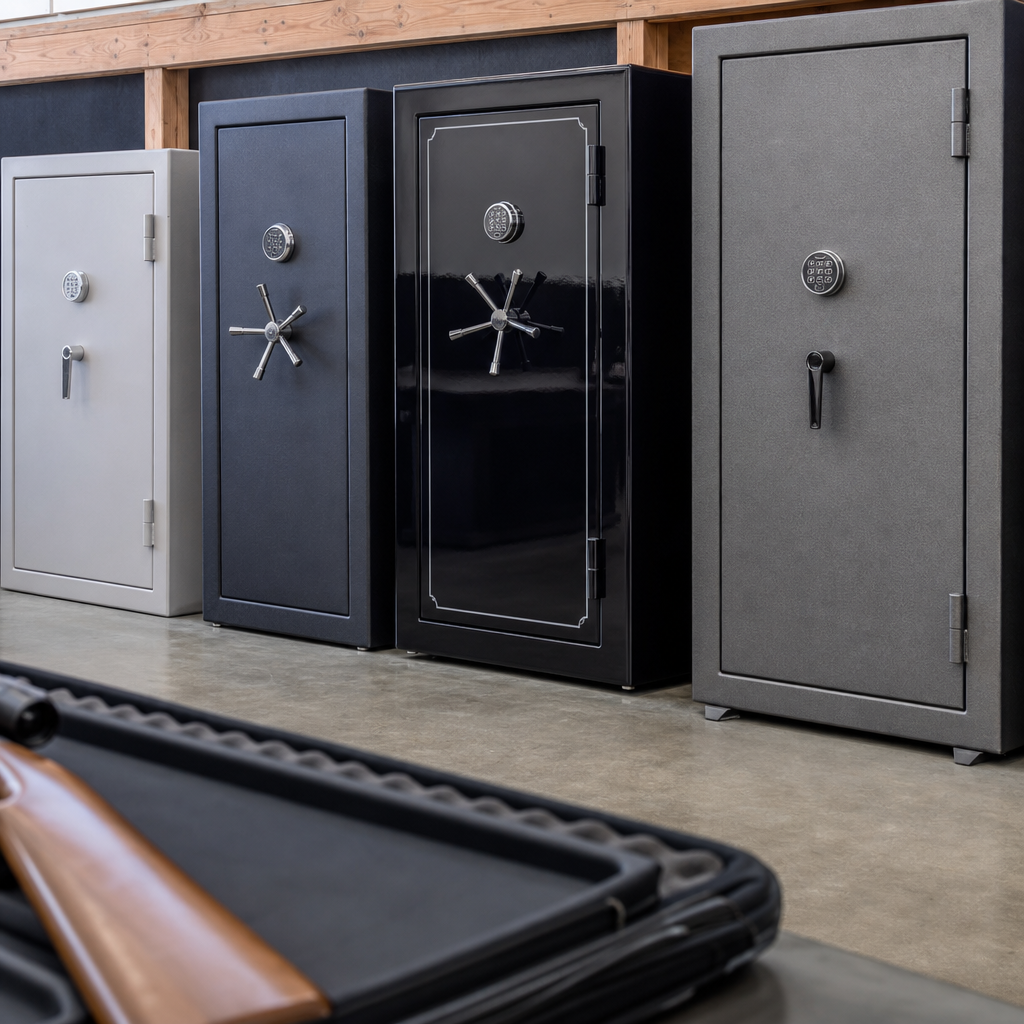
Do all gun safes come with the same level of security? Absolutely not. Gun safes vary widely in burglary resistance, fire protection, locking technology, construction quality, installation method, and certification. As someone who has evaluated safes in retail showrooms, reviewed manufacturer spec sheets, and helped owners choose storage for everything from one defensive handgun to a full long-gun collection, I can say the biggest mistake buyers make is assuming every steel box with a keypad offers equal protection. It does not, and that misunderstanding drives many of the most common gun safe myths.
In practical terms, gun safe security refers to how well a container resists unauthorized access, forced entry, tampering, prying, lock attacks, and environmental threats such as heat and smoke. The category itself is broad. Some products marketed as “gun safes” are better described as residential security containers, while others approach true safe construction with heavier steel, reinforced doors, active locking bolts, hard plates, relockers, and tested fire insulation. A cabinet, locker, RSC, and high-security safe may all hold firearms, but they should never be treated as interchangeable.
This matters for three reasons. First, firearm storage is a safety issue, not just a convenience purchase. Poor storage increases the risk of unauthorized access by children, visitors, or thieves. Second, the wrong safe can create false confidence; owners may believe their collection is protected when a thin-bodied unit can be breached quickly with common hand tools or a portable angle grinder. Third, matching a safe to the actual threat environment saves money. A suburban home, rural property, apartment, and dedicated gun room each call for different tradeoffs in size, anchoring, speed of access, and resistance ratings.
This hub article breaks down the myths and misconceptions that confuse buyers most often. It explains what security levels really mean, how to interpret marketing claims, which features matter, and where owners routinely overestimate protection. If you are comparing a basic stack-on cabinet, a big-box-store safe, and a premium burglary-rated model, the differences are not cosmetic. They affect delay time, survivability, usability, and the likelihood that your firearms remain secured when it counts.
Myth 1: A gun safe is a gun safe
The most persistent misconception is that every product sold in the category provides roughly the same protection. In reality, there is a hierarchy. At the low end are sheet-metal gun cabinets intended mainly to keep honest people honest and prevent casual handling. Above that are many residential security containers built for consumer use, often with thicker doors than bodies and moderate anti-pry features. Higher up are heavier safes with substantial plate steel, composite construction, hard plates, relockers, and more serious lock protection. At the top are burglary-rated safes tested against attack methods under established standards.
When I walk buyers through options, I start with steel thickness, door construction, and independent testing. A 14-gauge body is materially different from a 10-gauge or 7-gauge body. A formed door skin with decorative paneling is not equivalent to a solid plate door with reinforced boltwork. Marketing language often hides these differences behind broad claims like “solid steel construction” or “premium security.” Those phrases are meaningless without specifications. If a manufacturer does not clearly list body gauge, door thickness, lock type, fire method, and rating source, assume the product is built to a price point first.
Another source of confusion is the gap between product category and intended use. A cabinet may satisfy a legal storage requirement in one setting, while a true safe is necessary for theft resistance in another. Many first-time buyers think buying larger automatically means buying safer. Often the opposite is true at entry level: a bigger, lighter safe can be easier to attack, especially if it is not anchored. Security starts with construction, not with the word “safe” printed on the box.
Myth 2: Thicker doors and more bolts always mean better security
Visible features sell safes, but they do not tell the full story. Large chrome locking bolts look impressive in a showroom, yet bolt count alone is a weak measure of security. What matters is the entire door system: bolt diameter, bolt engagement, hinge-side protection, frame rigidity, lock placement, relockers, hard plate coverage, and resistance to prying or punching. I have seen safes advertised with a dozen locking bolts that still had vulnerable door gaps and relatively thin bodies. Conversely, some better-designed safes use fewer but stronger bolts with tighter tolerances and better reinforcement.
Door thickness can also be misleading. Brands often advertise total door thickness, which may include paneling, insulation, or air space rather than actual steel. A “five-inch door” sounds formidable, but the burglary-relevant figure is steel content and how it is arranged. Composite doors can be excellent if they combine steel with barrier materials, but you need specifics. Ask whether the door includes solid plate, what gauge the outer and inner layers are, and whether the lock is protected by a hard plate and relocker. Those details reveal real resistance.
Pry resistance is especially important because many residential break-ins are fast, noisy attacks using bars, wedges, or cutting tools. A robust frame, recessed door, and tightly engineered clearances can matter more than flashy external hardware. The safe that resists leverage and tool insertion usually outperforms the one designed mainly to look intimidating on a sales floor.
Myth 3: Fire ratings are standardized across all gun safes
Fire protection is one of the least understood parts of gun safe buying. Many owners assume a fire rating means the same thing across brands. It does not. Some manufacturers use independent laboratory testing, while others rely on proprietary tests conducted to internal protocols. Temperature, duration, humidity, sensor placement, and pass/fail criteria vary significantly. A label claiming 60 minutes at 1,400 degrees can represent very different real-world performance depending on who performed the test and how the safe was prepared.
Fire ratings also do not describe burglary resistance. A safe with excellent fire insulation may still use relatively light steel, and some fireboard-heavy designs prioritize heat delay over attack resistance. The internal threshold matters too. Paper chars at around 350 degrees Fahrenheit, but optics, polymer parts, documents, ammunition packaging, and electronic media may be affected at lower or different conditions. Fire seals can help with smoke and steam, yet they are not a guarantee against every moisture-related issue after suppression.
In actual buying decisions, I advise owners to treat fire and burglary as separate performance categories. Review the fire source, test method, and duration, but do not let a high fire number overshadow weak construction. Placement matters as well. A safe in a garage, near accelerants, or on an upper floor exposed to structural collapse faces different fire conditions than one anchored on a ground-floor concrete slab. The strongest decision combines realistic threat assessment with transparent test information.
Myth 4: Any lock type is fine if the safe is heavy
Lock choice affects both security and reliability. Mechanical dial locks, electronic keypad locks, biometric systems, and redundant locks each have strengths and limitations. Weight alone does not compensate for a poor lock or weak lock protection. A heavy safe with a low-quality electronic lock, minimal hard plate protection, or inconsistent bolt retraction can still become a liability. I have replaced failed consumer keypads and seen owners locked out because battery terminals corroded, membrane buttons wore out, or the lock body itself was not built for long service.
Mechanical dial locks remain respected for durability and low dependence on electronics, but they are slower under stress and less convenient for frequent access. Electronic locks offer speed and easy code changes, which is why many defensive firearm owners prefer them. Quality varies sharply, however. Locks from established safe lock makers such as Sargent and Greenleaf, SecuRam, and La Gard generally inspire more confidence than unbranded imports. Biometric locks can be useful for quick-access handgun safes, but fingerprint readers should never be judged solely by marketing claims. Enrollment quality, sensor cleanliness, and fallback access matter.
What matters most is the complete lock system: certified lock quality, hard plate protection, relockers, protected cable routing where applicable, and accessible service support. Choose the lock type that fits your use case, but do not confuse convenience with security. A reliable, well-protected lock on a properly anchored safe beats a feature-packed lock on a compromised enclosure every time.
Myth 5: Bigger and heavier always means more secure
Mass helps, but only within context. A heavier safe is generally harder to move and can indicate thicker materials, yet size and weight alone do not guarantee better protection. Many large consumer gun safes achieve weight partly through drywall-based fire lining, interior shelving, and cosmetic door structures rather than substantial steel. A compact safe with thicker plate construction can outperform a larger model with a thin shell. The attacker cares about weak points, not showroom dimensions.
Installation is the deciding factor. An unanchored safe, even a heavy one, can be tipped, moved with appliance dollies, or attacked from vulnerable sides in a garage or workshop. Bolting a safe into concrete drastically changes the theft equation by denying thieves the ability to remove the container for off-site opening. Location matters too. A safe placed in an exposed garage may be easier to attack with power tools than one installed in a closet, corner, or hardened room with limited working space around the door.
| Feature | Low Security Indicator | Higher Security Indicator |
|---|---|---|
| Body steel | 14–16 gauge sheet steel | 10 gauge or thicker, or composite construction |
| Door protection | Decorative thickness with limited steel detail | Solid plate or reinforced composite door with hard plate |
| Testing | Brand-only claims | Independent rating or transparent published standards |
| Installation | Freestanding and unanchored | Bolted to concrete in a restricted-access location |
| Lock system | Unbranded keypad, no relocker details | Recognized lock brand, hard plate, relocker protection |
The best buying question is not “How big is it?” but “How long will it delay the likely attack in my setting?” That question leads to better decisions about steel, anchoring, room placement, surveillance, and layered security.
Myth 6: A gun safe alone solves firearm security
A safe is the core of storage, but not the whole system. Effective firearm security is layered. In homes I have assessed, the strongest setups combine a quality safe with anchoring, controlled room access, alarm monitoring, cameras, exterior lighting, and discreet delivery or installation practices. If thieves know a collection exists and have time to work, even a decent safe can be pressured by environmental weakness around it. Conversely, a moderate safe inside a layered security plan often performs better in the real world than a premium safe sitting exposed and unmonitored.
Access management is part of the equation. Owners should control combinations, update keypad codes after household changes, secure backup keys, and limit discussion of safe contents. Interior organization matters more than many realize. Overpacked safes encourage owners to leave guns outside temporarily, defeating the purpose. Dehumidifiers, desiccants, and air circulation protect firearms from corrosion, especially in humid climates. For defensive access, many households benefit from a secondary quick-access handgun safe separate from the main long-gun safe.
This hub exists because misconceptions tend to stack. Buyers may believe a heavy safe with a glossy fire rating and many bolts is sufficient, then skip anchoring, buy from a vague brand, ignore lock quality, and place the unit in the easiest attack location on the property. Security fails at the weak link. Treat the safe as one layer in a broader plan built around delay, detection, and controlled access.
How to evaluate gun safe claims without falling for marketing
Start with written specifications, not brochure adjectives. Confirm body steel gauge, actual door steel content, external dimensions, weight, lock brand, relocker presence, hard plate protection, boltwork design, hinge type, and anchor hole layout. If a company advertises military-grade, commercial-grade, or high-security without defining those terms, move on. Ask who performed the fire test, what temperature curve was used, and what internal temperature threshold defined success. Reputable sellers should answer clearly.
Next, compare the safe to your threat model. For child access prevention and legal compliance, a basic but responsibly installed unit may be enough. For theft resistance against organized burglary, prioritize thicker steel, better lock protection, anchoring, and a constrained location. For high-value collections, consider stepping beyond mass-market gun safes toward burglary-rated products from established safe manufacturers. Insurance requirements may also shape the choice, and some insurers care about ratings, inventory documentation, and attachment methods.
Finally, inspect fit and finish with purpose. Check door gaps, weld quality, shelf stability, handle operation, keypad response, and interior flexibility. Read failure reports, warranty terms, and service access policies. The best gun safe is not the one with the loudest claim. It is the one whose construction, lock system, test data, and installation plan align with the real risks you need to manage.
Gun safe myths persist because the market mixes true safes, security containers, cabinets, and fast-access boxes under one broad label. They do not offer the same level of security, and assuming they do can leave firearms far more exposed than owners realize. The essentials are straightforward: verify steel thickness, understand what the ratings actually mean, choose a proven lock system, anchor the safe correctly, and build storage into a layered home security plan.
The main benefit of understanding these misconceptions is simple: you buy protection based on evidence instead of appearance. That leads to safer households, better theft resistance, and fewer expensive mistakes. If you are building out your firearm storage plan, use this page as your starting point, then compare individual safe types, lock options, fire claims, and installation strategies before you buy.
Frequently Asked Questions
Do all gun safes provide the same level of security?
No, and that is one of the most important things buyers need to understand before making a purchase. Gun safes can look similar from the outside, but the actual level of protection can be dramatically different. Security depends on several factors, including steel thickness, door design, locking mechanism, bolt work, pry resistance, weld quality, internal relockers, and whether the safe has been independently tested or certified. Some entry-level models are designed mainly to keep children, casual visitors, or opportunistic thieves away from firearms. Others are built to resist serious burglary attempts using pry bars, drills, grinders, and sustained force.
A common mistake is assuming that a large, heavy safe with a glossy finish and electronic keypad automatically offers high-end protection. In reality, some cabinets and lower-cost safes are essentially upgraded lockboxes, while others are true security containers engineered for real forced-entry resistance. Weight alone is not enough, and brand reputation is not always enough either. The difference often shows up in the details: thicker body steel, stronger door plates, better hinge protection, more robust locking bolts, and certification labels from recognized testing organizations. If you are comparing gun safes, it is much more useful to ask how the safe was built and tested than to rely on appearance or marketing language alone.
What features make one gun safe more secure than another?
The biggest factors are construction quality and resistance to forced entry. Start with the steel. A safe made from thicker steel is generally harder to pry open, cut, or punch through than one built with thinner sheet metal. Door construction matters just as much. Many stronger safes use reinforced doors, hard plates to protect the lock, and internal relockers that trigger if someone attempts a drill attack. The quality of the locking bolts, the strength of the bolt carrier system, and the way the door fits into the frame all affect how well the safe resists prying.
Lock type also plays a role, but not always in the way buyers think. Electronic locks can be fast and convenient, while mechanical dial locks have a long reputation for durability. Neither automatically makes a safe more secure unless the lock itself is a quality model and properly installed. Beyond the lock, look for anti-pry features, reinforced door edges, protected hinges, and solid anchor points for bolting the safe down. A safe that is not anchored can sometimes be tipped, moved, or attacked more easily. Interior capacity and organization may matter for storage, but they do not determine burglary resistance. What separates a stronger safe from a weaker one is the quality of the steel, the engineering of the door and frame, and whether the design can stand up to real-world attack methods.
Are fire ratings and burglary ratings the same thing?
No, and this is another area where buyers often get misled. Fire protection and burglary protection are separate performance categories. A gun safe may advertise impressive fire resistance, such as a certain temperature rating for 30, 60, or 90 minutes, but that does not mean it offers strong protection against theft. Likewise, a safe built with serious anti-burglary features may not provide the same level of heat insulation as a model specifically designed for fire endurance. Both matter, but they measure different threats.
Fire ratings themselves can also vary in credibility. Some are based on manufacturer testing, while others come from independent labs with recognized standards. The same is true for burglary ratings. If a safe has a certification such as a Residential Security Container designation or a more advanced burglary rating, that tells you more than vague phrases like “heavy-duty security” or “maximum protection.” Buyers should read the specifications carefully and understand that drywall-style fire lining, door seals, and insulation packages do not automatically translate into pry resistance or tool resistance. The best approach is to decide what risk matters most in your situation, then choose a safe that is strong in that category without ignoring the other. If you want balanced protection, look for a model that addresses both fire and burglary with clear, verifiable performance information.
How much does the lock type affect the overall security of a gun safe?
The lock matters, but it is only one part of the security picture. Many buyers focus heavily on whether a safe uses an electronic keypad, a mechanical dial, or a biometric reader, but the truth is that lock choice should be considered alongside the quality of the safe’s body and door construction. A premium lock installed on a lightly built safe will not turn that safe into a high-security unit. On the other hand, a well-built safe with a dependable lock and proper hard plate protection is usually a much better security investment.
Electronic locks are popular because they offer fast access and simple code changes. Mechanical dial locks are often valued for long-term reliability and the fact that they do not depend on batteries. Biometric locks can be convenient for quick entry, especially on handgun safes, but quality varies widely. In all cases, what matters is the quality of the lock manufacturer, the presence of drill-resistant protection, and whether the safe includes relockers or other anti-tamper features. It is also worth remembering that user behavior affects security too. Weak codes, poor battery maintenance, or leaving backup keys unsecured can undermine even a good system. A lock should be viewed as part of a complete security design, not as the sole measure of how protective a gun safe really is.
Is installation as important as the safe itself?
Yes, absolutely. Even a well-built gun safe can lose much of its practical security advantage if it is not installed properly. One of the most overlooked issues is anchoring. A thief who cannot open a safe on-site may try to tip it over, pry at it from a better angle, or remove it entirely and attack it later with more time and tools. Bolting the safe to a concrete floor or another solid structural surface can make a major difference in preventing that scenario. Placement matters too. A safe installed in a tight corner, closet, or other constrained area is generally harder to attack than one standing alone in the middle of a garage with easy access from all sides.
Environmental conditions also matter. Moisture, temperature swings, and poor flooring support can affect both the safe and its contents over time. A good installation plan includes not just anchoring, but also access control, concealment, and proper spacing for the door to open fully without creating leverage points for an attacker. In homes with children, installation should also support safe, consistent firearm storage habits. In short, the safe you buy is only part of the equation. The location, anchoring method, surrounding space, and overall setup have a direct impact on how secure that safe will actually be in the real world.