
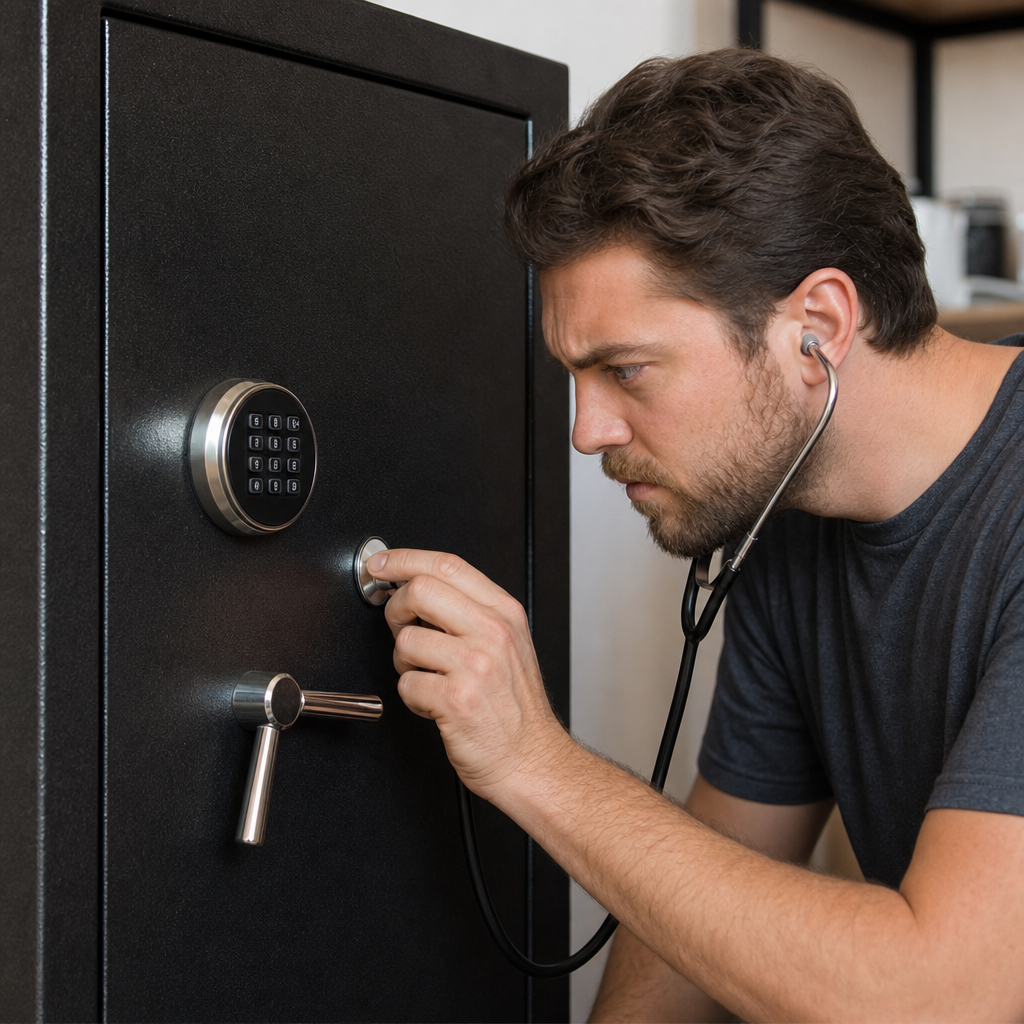
Movies made the stethoscope-and-safe trope feel plausible, but for modern gun safes the answer is usually no: in real conditions, opening a gun safe with a stethoscope is largely a myth. That short answer matters because many owners still make buying decisions based on outdated assumptions about manipulation, lock strength, and what burglars actually do during a break-in. In the gun safes and safety category, myths spread fast because they mix fragments of truth with dramatic examples from old bank vaults, antique mechanical locks, and internet demonstrations that leave out crucial details. A useful discussion has to separate classic safecracking techniques from the design of today’s gun safes, which range from lightweight residential security containers to heavy burglary-rated safes with sophisticated lock bodies, hardplates, relockers, and reinforced boltwork.
When people ask whether a gun safe can be opened with a stethoscope, they are really asking three different questions. First, can a lock be manipulated by listening to contact points inside a dial lock? Second, does that apply to the specific safe in a home, garage, or closet? Third, is manipulation even the attack method most owners should worry about? After years of evaluating safes, lock types, and forced-entry failures, I can say the third question matters most. Residential burglars overwhelmingly prefer speed, concealment, and tools that create access in minutes, not the patient lock manipulation associated with expert safe technicians or highly trained criminals. That distinction changes how you should assess risk and where you should spend money.
To answer the myth fairly, it helps to define terms. A stethoscope is an acoustic listening tool that, in theory, helps a manipulator hear subtle clicks or contact changes inside a mechanical combination lock. A mechanical dial lock uses wheels, a fence, a lever, and a drive cam that interact as the correct numbers are dialed. Manipulation is the non-destructive process of inferring the combination from feedback in the lock rather than cutting, drilling, prying, punching, or peeling the safe open. A gun safe, meanwhile, is a broad retail label, not a single security standard. Many products sold as gun safes are actually designed primarily for fire protection and unauthorized access resistance, not high-level burglary resistance. That is why broad claims about “all gun safes” are usually misleading.
This hub article covers the core myths and misconceptions that shape the entire topic. It explains why the stethoscope myth persists, which older locks were more vulnerable, how modern lock design reduces acoustic manipulation, why electronic locks changed the conversation, and what attacks are more common in the real world. It also frames the practical buying and setup decisions that improve security: anchoring, placement, lock selection, door construction, steel thickness, and realistic expectations about ratings. If you want the plain-language conclusion up front, here it is: a stethoscope is not a realistic bypass tool for most modern gun safes, but plenty of other weaknesses can still leave a poorly chosen or badly installed safe vulnerable.
Why the Stethoscope Myth Started and Why It Still Lingers
The myth has a historical basis, which is why it survives. Skilled manipulators did use auditory and tactile feedback on older safe locks, especially on locks with looser tolerances, less sophisticated wheel packs, and fewer anti-manipulation features. Popular culture froze that image in place. Old films, detective shows, and crime novels taught generations of viewers that a safecracker works in silence with a stethoscope, patience, and extraordinary hearing. In reality, successful manipulation depended less on magical listening and more on deep understanding of lock geometry, contact areas, wheel behavior, and consistent dialing technique. Even then, many locks could not simply be “heard open” in the casual way entertainment suggests.
Another reason the myth persists is that there are videos showing lock experts manipulating certain mechanical locks. Those demonstrations are not fake, but they are often misunderstood. The operator may be using touch, amplified contact points, known lock characteristics, ideal bench conditions, or a lock model with documented manipulation signatures. The safe may also be isolated from environmental noise and accessed without the stress of a real burglary. That scenario is very different from a thief kneeling on a concrete floor, under time pressure, in a house with alarms, dogs, cameras, neighbors, and the risk of occupants returning. Context matters. A method that is technically possible in a lab or workshop is not automatically probable in a home invasion or smash-and-grab burglary.
The misunderstanding gets worse because “possible” and “practical” are not the same thing. In security work, I always separate theoretical vulnerability from attack likelihood. A lock might be vulnerable to advanced manipulation by a trained specialist, yet still present negligible risk to a homeowner compared with attacks using pry bars, grinders, or simple theft of the whole safe. That is the central corrective to this myth. Owners often focus on a cinematic bypass method while ignoring the common failure points that actually lead to gun theft.
Can Any Gun Safe Be Opened With a Stethoscope? The Direct Answer
No, not in the broad way the myth claims. Some older mechanical combination locks can be manipulated non-destructively under the right conditions by a person with substantial training, specialized knowledge, and time. But most modern gun safes are not realistically defeated by simply placing a stethoscope on the door and listening for clicks. Mechanical lock design, manufacturing tolerances, anti-manipulation features, spindle arrangements, relockers, and hardplates all complicate the process. Electronic keypad locks change the attack surface entirely, because there is no wheel pack to listen to in the traditional sense. Biometrics, while not perfect, also do not present the classic acoustic manipulation problem.
There is also a category problem. Many consumer gun safes use Group 2 or equivalent style mechanical locks from established manufacturers such as Sargent and Greenleaf, La Gard, or SecuRam. These are not antique parlor-safe locks. They are designed with decades of attack knowledge behind them. Some are manipulation-resistant to a degree that makes stethoscope methods ineffective or impractical. On higher-security safes, lock protection is only one layer. Hardplates resist drilling at the lock area. Glass relockers or mechanical relockers can trigger additional locking if the safe is attacked. Robust boltwork and reinforced door frames further reduce the value of trying a delicate acoustic attack when a burglar would need far more time than most residential conditions allow.
That said, “no” should not become “never.” A neglected older safe with a basic dial lock, poor maintenance, and known characteristics may be more vulnerable than a new quality gun safe. Antique safes, cheap imported cabinets with weak lock systems, or improperly serviced locks can behave differently. The correct statement is precise: opening a modern gun safe with a stethoscope is not a realistic threat for most owners, but lock manipulation remains a real technical discipline under narrow conditions.
How Mechanical Gun Safe Locks Work and Where Manipulation Fits
To understand why the myth oversimplifies the issue, you need a basic picture of a mechanical lock. Turning the dial rotates a drive cam that picks up and positions a series of wheels. Each wheel contains a gate. When all wheel gates align under the fence, the lever can drop, the cam gate aligns, and the lock bolt retracts so the safe handle can throw the boltwork. During manipulation, the operator is not literally “hearing the numbers.” They are detecting subtle changes in contact points and resistance, often plotting data, narrowing gate locations, and using known tolerances to reduce the number of candidate combinations. That is a methodical process, not a movie trick.
In real service work, several variables interfere with clean feedback. Door pressure can alter feel. Installation can affect dialing comfort. Environmental vibration, room acoustics, and even the safe’s internal contents can change what is audible. Modern locks may include false gates, tighter tolerances, improved wheel design, or other features that muddy the signal. A stethoscope alone is not enough; expertise is the decisive factor. Even very experienced manipulators do not assume success, and on many locks destructive entry planning remains part of the job because manipulation can be too slow or uncertain.
| Myth | Reality | What Owners Should Do |
|---|---|---|
| A stethoscope can open most gun safes. | Only some older mechanical locks may be manipulable, and usually only by specialists. | Choose a quality lock and focus on overall safe construction. |
| Electronic locks are always less secure than dial locks. | Quality electronic locks resist classic acoustic manipulation but introduce battery and electronics issues. | Buy proven lock brands and follow maintenance guidance. |
| Heavy weight alone makes a gun safe secure. | Unanchored safes can be tipped, pried, or removed with appliances dollies and leverage. | Anchor the safe into concrete or structural framing. |
| Fire rating means burglary protection. | Fireboard and insulation do not equal thick steel or strong door construction. | Read steel specs, lock protection, and test standards separately. |
| Burglars crack locks like in movies. | Most residential thefts involve brute force, stolen tools, or carrying off smaller units. | Improve placement, surveillance, and delay time. |
Why Electronic and Biometric Gun Safes Changed the Conversation
Electronic keypad locks became common on gun safes because owners wanted faster access and simpler combination changes. From a stethoscope perspective, they largely break the old myth. There is no classic wheel-pack dialing sequence to decode acoustically. Instead, the relevant risks shift toward keypad wear, poor code hygiene, lockout behavior, battery failure, low-quality solenoids, and in rare cases defects in lock design. Reputable electronic locks from major brands are common in the industry because they balance convenience with reasonable security when properly installed.
Biometric safes add another layer of misunderstanding. Fingerprint readers are often marketed heavily, but quality varies widely. A good biometric quick-access safe can work well for bedside storage, especially when backed by a keypad or key override. A cheap biometric unit, however, may fail under dry skin, dirt, cold fingers, or inconsistent sensor quality. That does not mean biometric access is inherently bad. It means lock quality and intended use matter. For long-gun storage, many owners still prefer a robust full-size safe with either a proven dial lock or a commercial-grade electronic lock, and then supplement it with smaller quick-access storage for defensive firearms.
In practice, the electronic-versus-mechanical debate is not about which is universally “best.” Mechanical locks avoid battery dependence and can last decades, but they are slower to open and combination changes usually require a locksmith or specific change key procedures. Electronic locks offer speed and easier code management, but they depend on power and component quality. For the myth at hand, the key point is simple: if you own an electronic-lock gun safe, the stethoscope scenario is generally irrelevant.
The Real Threats to Gun Safes in Homes, Garages, and Closets
When gun safes fail in the real world, the cause is usually not masterful lock manipulation. It is inadequate installation, thin steel, bad placement, or unrealistic expectations about what an entry-level safe can resist. I have seen burglars attack exposed safes in garages with pry bars, wedges, long-handled tools, and battery-powered angle grinders. Smaller safes are often stolen intact and opened elsewhere. Closet placement can help concealment, but if the safe is not anchored and the door swing gives attackers room to work, concealment only delays discovery.
Prying remains one of the most common threats for lighter gun safes. Wide door gaps, weak frames, and limited active bolts can allow attackers to create separation near the top corner or side edge. Thin body steel can also be peeled or cut. Even a good lock cannot save a safe with weak structural design. This is why steel thickness, door construction, continuous weld quality, and anti-pry features matter more for most buyers than hypothetical manipulation attacks. A solid lock on a flimsy box is still a flimsy box.
Garage environments introduce additional problems: visibility to contractors or visitors, easier tool access, and often more space to attack. Humidity and temperature swings can also affect firearms unless dehumidification is managed. Basements can be better for concealment and mass, but water risk becomes a consideration. Upstairs placement may limit safe weight due to structural loading concerns. Security is always a system, not a product sitting alone in a corner.
How to Buy a Gun Safe Without Falling for Common Myths
Start by matching the safe to your threat model. If your main concern is keeping children and visitors away from firearms, many quality residential gun safes and quick-access devices can meet the need when used correctly. If you want stronger burglary resistance, look beyond branding and read the specifications carefully. Check body steel gauge, door plate thickness, lock type, hardplate protection, relockers, hinge design, boltwork, and anchoring points. Distinguish between a residential security container listing and a true burglary rating. They are not interchangeable.
Ask practical questions. Can the safe be anchored into concrete? Will the location restrict pry attacks on the sides? Does the interior layout actually fit scoped rifles, documents, and accessories, or are advertised capacities inflated? Is the fire rating independently explained or just loosely marketed? What service network supports the lock if you get locked out? These questions are more important than fear about someone listening through the door with a stethoscope.
Brand reputation matters, but so does model-specific construction. Companies may offer both entry-level and premium lines. Features worth prioritizing include thicker steel, reinforced door edges, quality lock brands, internal hinge-side dead bars where relevant, and anchoring hardware appropriate to the floor. If access speed is important, a reputable electronic lock can be a sensible choice. If long-term simplicity matters more, a mechanical dial remains viable. Either way, installation quality is part of the purchase, not an afterthought.
Best Practices That Matter More Than the Stethoscope Question
Anchor the safe. That is the single most overlooked step. A six-hundred-pound safe sounds immovable until two people, a dolly, and leverage prove otherwise. Bolting into concrete substantially improves resistance to tipping and removal. Next, place the safe where at least one side is constrained by framing or masonry if possible, reducing pry access. Keep it out of obvious sight lines from open garage doors or delivery paths. Layer alarms, cameras, reinforced exterior doors, and lighting so the safe is not your only line of defense.
Maintain the lock according to manufacturer guidance. Replace batteries on a schedule for electronic locks, not after they die. Store override keys, combinations, and serial information securely and separately. Limit who knows the code. For mechanical locks, if dialing feels rough or inconsistent, have the safe inspected by a qualified safe technician rather than forcing it. Also remember internal safety: use dehumidifiers, organize long guns to avoid damage, and store ammunition according to your broader household safety plan and local legal requirements.
The takeaway for this subtopic hub is straightforward. The stethoscope myth contains a sliver of historical truth, but it badly misrepresents the risk profile of modern gun safes. The better question is not whether a movie-style expert can theoretically manipulate some locks. It is whether your safe, as purchased and installed, can delay the attacks that actually happen in homes. Focus on construction, lock quality, anchoring, placement, and layered security. If you are reviewing your setup today, start with those fundamentals and upgrade the weakest point first.
Frequently Asked Questions
Can you really open a gun safe with a stethoscope?
In most real-world cases, no. The idea that someone can walk up to a modern gun safe, place a stethoscope against the door, and quickly “listen” the lock open is mostly a movie-driven myth. That trope came from older mechanical combination locks on certain traditional safes, where highly skilled manipulation was sometimes possible under controlled conditions. Even then, it required experience, patience, a quiet environment, and a lock that gave usable feedback. Modern gun safes often use lock designs, relockers, hard plates, tighter tolerances, and electronic systems that make stethoscope-based opening impractical or irrelevant. On top of that, many gun safes are not built like old-fashioned bank safes, so the weak points a burglar targets usually have nothing to do with careful lock manipulation.
What matters for buyers is that burglary behavior in the real world does not match the Hollywood version. Thieves typically want speed, privacy, and low effort. They are far more likely to attack a safe with prying tools, grinders, drills, or by trying to remove the entire safe than to spend long periods attempting a delicate, highly technical listening attack. So while there is a small historical basis for the myth, the practical answer for today’s gun safe owners is that a stethoscope is not a realistic threat model for most modern gun safes.
Why do people still believe the stethoscope myth if it usually does not work on modern gun safes?
People believe it because the myth contains just enough truth to sound credible. Older mechanical safe locks could sometimes be manipulated by experts who understood how contact points, wheel packs, and tolerances behaved. Popular culture took that narrow possibility and turned it into a dramatic shortcut: the expert thief with a stethoscope who opens any safe in minutes. That image stuck, even as lock technology, safe construction, and burglary patterns changed. Once a myth is repeated in movies, television, online forums, and casual conversations, it starts to feel like common knowledge even when it no longer reflects reality.
Another reason the myth survives is that consumers often mix up different types of safes, locks, and attack methods. A high-end commercial safe with a specific older mechanical lock is not the same thing as a residential gun safe with a modern lock package. Likewise, “hearing a lock” is not the same as successfully manipulating it open. Many people also underestimate how much skill genuine lock manipulation takes and overestimate how much useful sound a stethoscope can provide through modern materials and designs. In short, the myth lasts because it is memorable, simple, and cinematic, while the truth is more technical: safe security depends much more on construction quality, lock design, anchoring, placement, and resistance to brute-force attack than on whether someone owns a stethoscope.
Are mechanical combination locks more vulnerable to manipulation than electronic gun safe locks?
Mechanical combination locks can, in some cases, be more susceptible to traditional manipulation than electronic locks, but that does not automatically mean they are easy to defeat. A quality mechanical lock from a reputable manufacturer can still provide strong security, especially when paired with a well-built safe body and door. The key issue is that mechanical locks operate through physical wheel alignment, which is the basis for classic manipulation techniques. Under the right conditions, a trained specialist may be able to read subtle feedback from the lock. However, that is very different from saying an average burglar can do it with a stethoscope during a rushed break-in.
Electronic locks change the attack surface. They generally eliminate classic listening-based manipulation because there is no rotating wheel pack to decode in the same way. But electronic locks introduce other considerations, such as keypad durability, battery maintenance, electronics quality, and resistance to tampering. Neither type is automatically “best” in every situation. For many buyers, the better question is not whether one lock makes a stethoscope attack possible, but whether the overall safe is well made, uses reliable components, has anti-drill features, includes relockers, and fits the owner’s use habits. A poor safe with a good lock is still a poor safe, and a strong lock does not compensate for thin steel, weak boltwork, or bad installation. Choosing between mechanical and electronic should be based on reliability, convenience, maintenance preferences, and the quality of the specific lock model rather than fear of a Hollywood-style listening attack.
If burglars are not opening gun safes with stethoscopes, how do they usually attack them?
Most burglars favor fast, noisy, force-based methods over slow, technical manipulation. In residential break-ins, time is the enemy of the intruder. They want to get in, grab valuables, and leave before being detected. That is why common attacks include prying at the door edge, targeting exposed hinges if the safe is poorly designed, using grinders or cutting tools, drilling vulnerable areas, smashing weak lock housings, or tipping and removing the entire safe to attack it elsewhere. In some cases, thieves simply steal the guns if they are not secured at all, which is why even a basic locked safe is better than unsecured storage.
This is also why installation matters so much. A decent gun safe that is properly anchored to concrete, placed in a tight location that limits pry-bar access, and hidden from casual view can be significantly harder to attack than a more expensive safe that is left freestanding in an easy-to-reach area. Buyers should think in layers: lock quality, steel thickness, door fit, anti-pry features, hard plates, relockers, fire protection, anchoring, and room placement. Alarm systems, cameras, and limited public knowledge about your gun collection also add valuable protection. In practical home security terms, the biggest risk is usually not a patient lock manipulator with a stethoscope. It is the burglar who uses force, speed, and opportunity.
What should you look for in a gun safe if manipulation myths are not the main issue?
Focus on real security features and realistic threats. Start with steel thickness in the body and door, because thin metal is easier to bend, pry, or cut. Look for solid boltwork, a reinforced door frame, anti-pry design features, drill-resistant hard plates, and relockers that activate if the lock is attacked. Check whether the safe can be anchored securely and whether the manufacturer provides clear installation guidance. If fire protection matters to you, examine how the fire rating is tested and whether the company explains the standard honestly. Also pay attention to lock quality rather than just lock type. A reputable mechanical or electronic lock from a trusted brand is usually a better bet than a flashy but poorly supported option.
It is also smart to match the safe to your actual use. If you need quick defensive access, that may point you toward a high-quality electronic lock or a dedicated quick-access handgun safe. If your priority is long-term storage of multiple rifles, optics, and documents, capacity, interior layout, dehumidification options, and anchoring may matter more. Think about where the safe will sit, how much tool access that location allows, and whether a thief could easily remove it. In other words, buy based on construction, installation, and your threat model, not on outdated fears that someone will crack it open with a stethoscope. The best buying decision comes from understanding how modern safes are actually attacked and how to make your own safe a harder, less attractive target.