
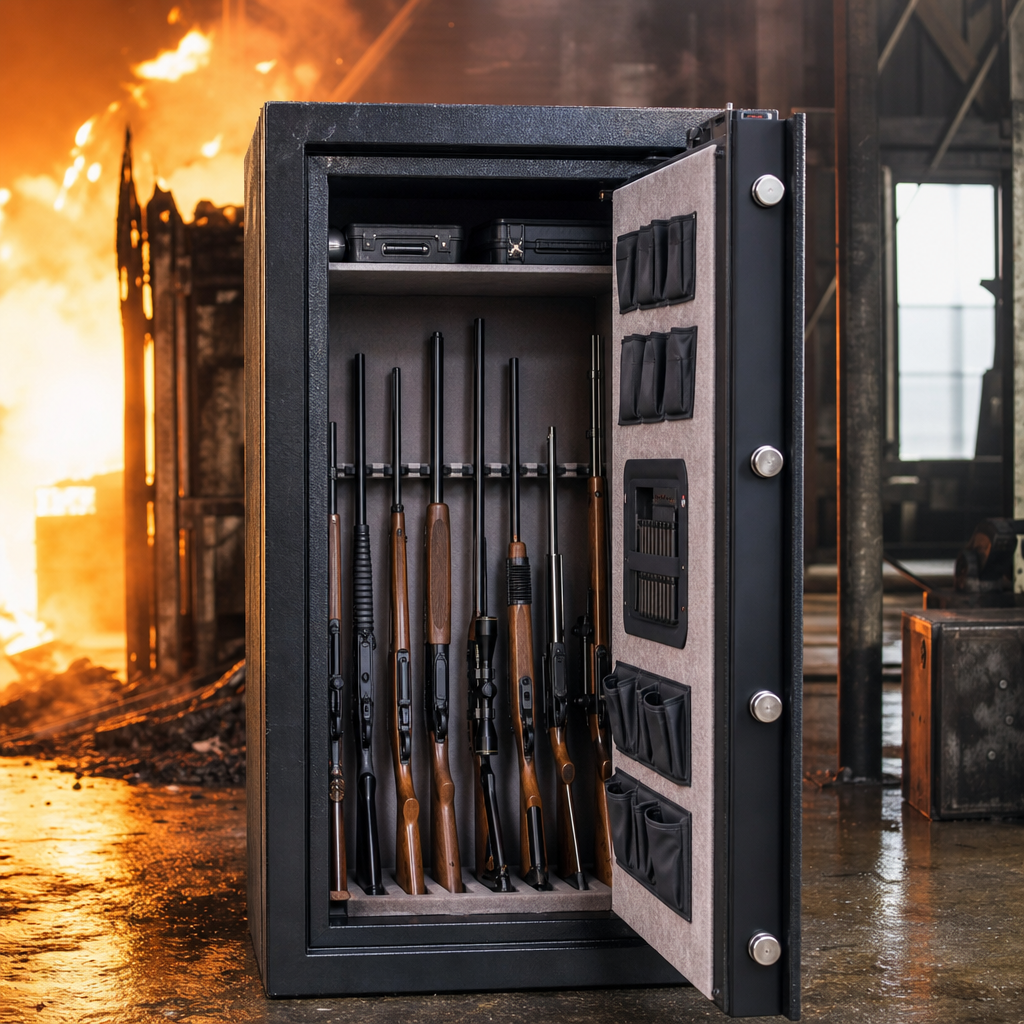
Fireproof gun safe technology combines heat resistance, structural engineering, moisture control, and secure locking design to protect firearms, documents, and valuables during house fires and other disasters. In practical terms, a fireproof gun safe is a reinforced enclosure built to keep internal temperatures below damage thresholds for a rated period, even while exterior temperatures climb high enough to destroy surrounding materials. That distinction matters because “fire resistant” is usually more accurate than “fireproof.” No safe is invincible. Instead, performance depends on tested time, temperature exposure, seal quality, wall construction, and how the safe is installed.
As someone who has evaluated safes, reviewed burn test data, and seen the aftermath of residential fires, I can say the gap between marketing language and real protection is wide. A basic steel cabinet may deter casual theft, yet it will often fail quickly in a serious structure fire. A properly engineered fire-rated gun safe uses layered barriers such as gypsum-based fireboard, poured composite insulation, expanding door seals, and multi-point locking systems to slow heat transfer and block smoke and water intrusion. For firearm owners, that protection is not just about preserving property value. Heat can ruin optics, warp stocks, damage ammunition, and corrode metal long after flames are extinguished.
This hub explains the science behind fireproof gun safe technology and the broader category of fireproof and disaster-resistant storage. It covers how fire ratings work, what materials actually protect contents, how safes perform against smoke, steam, floodwater, and impact, and what buyers should verify before trusting a label. It also serves as a foundation for deeper articles on safe placement, humidity control, waterproof models, insurance documentation, and long-term firearm storage. If you want a single starting point for understanding what makes a gun safe truly protective, this is it.
How fire ratings actually work
Fire ratings are the first claim most buyers see, and they are often the most misunderstood. A typical label might promise 30, 60, 90, or 120 minutes at a stated temperature such as 1,200°F or 1,400°F. That does not mean the contents remain untouched by heat. It means the safe is intended to keep its interior below a target threshold for that duration under specific test conditions. Common internal targets are around 350°F for paper documents, 150°F for digital media, and lower still for magnetic storage. Firearms have different vulnerabilities: lubricants break down, wood stocks dry and crack, polymers deform, optics fail, and ammunition becomes unsafe before steel receivers necessarily lose structural integrity.
In the United States, independent verification has traditionally come from organizations such as Underwriters Laboratories. UL 72 is the best-known record protection standard, though many residential gun safes do not carry a full UL fire endurance label because testing is expensive. Instead, manufacturers may use factory tests or third-party labs with less comprehensive protocols. That is why a “60-minute fire rating” can mean very different things from one brand to another. Some tests place thermocouples inside an empty safe in a furnace. Better tests include cool-down periods because contents are often damaged during the slow bake after the flames drop. The most credible ratings disclose furnace temperature, duration, pass criteria, and who performed the test.
Real house fires are uneven, ventilation-driven events, not laboratory abstractions. According to data from the National Fire Protection Association, room temperatures during flashover can exceed 1,100°F, and localized conditions can rise much higher. A safe in a garage may face a different burn profile than one on an upper floor that collapses into a basement fire. Understanding ratings as comparative indicators rather than absolute guarantees is essential. Higher-quality safes are designed around this reality, using thermal mass and layered insulation to buy time until fire crews suppress the blaze or fuel is exhausted.
Materials and design features that resist heat
The core science of a fireproof gun safe is heat transfer management. Heat moves by conduction, convection, and radiation, and safe builders try to slow all three. Steel alone is a poor fire barrier because it conducts heat rapidly. That is why a thin steel shell without insulation can become an oven. Effective safes add insulating layers inside the body and door. Entry-level models often use gypsum board, similar in chemistry to drywall. Gypsum contains chemically bound water that releases as steam when heated, absorbing energy in an endothermic reaction. This delays temperature rise, which is why multi-layer fireboard remains common in residential safes.
More advanced designs use proprietary poured insulation or composite fills. These materials may include cementitious blends, vermiculite, perlite, or ceramic components engineered to create air pockets and thermal mass. In my experience, poured composite safes tend to provide more uniform protection around seams, corners, and doors, where many cheaper units fail first. Door construction is especially important because gaps and thinner panels become hot spots. Better safes use stepped door profiles, thicker plates, and intumescent seals that expand under heat to block smoke and slow heat infiltration.
Locking mechanisms also influence fire performance. Traditional mechanical dial locks generally tolerate heat better than many electronic keypads, though high-quality electronic locks certified to UL Type 1 standards can still perform reliably when properly shielded. Relockers, hard plates, and multiple live locking bolts primarily address burglary resistance, but they also help maintain door alignment if the safe is jarred by collapse. Interior materials matter too. Upholstery, adhesives, and shelving should not off-gas excessively or trap moisture after an event. Some manufacturers now use ceramic wool barriers and Palusol-style door seals borrowed from commercial fire door technology, a useful sign that the design is grounded in proven fire-control principles.
| Feature | What it does | Why it matters in a fire or disaster |
|---|---|---|
| Gypsum fireboard | Releases bound water as steam when heated | Slows internal temperature rise in budget and midrange safes |
| Poured composite insulation | Adds thermal mass and reduces hot spots | Improves consistency around walls, seams, and doors |
| Intumescent door seal | Expands under heat to close gaps | Helps block smoke, heat, and embers |
| Multi-point locking bolts | Keeps the door tightly engaged with the frame | Maintains alignment during impact or structural shift |
| Dehumidifier or desiccant system | Controls internal moisture after exposure | Reduces corrosion from steam, humidity, and firefighting water |
Why disaster resistance means more than fire protection
Consumers often search for the best fireproof gun safe, but disaster-resistant storage includes more than flames. Smoke, steam, water, impact, and corrosion are frequent causes of loss after a fire. When firefighters extinguish a structure fire, thousands of gallons of water may enter the building. If a safe has a poor door seal or sits directly on a slab where water pools, contents can survive the burn but suffer rust days later. That is why many premium safes advertise waterproof or water-resistant ratings, usually expressed as a depth and time limit such as 24 hours in 8 inches of water. Those claims should be read carefully because they may depend on intact seals and upright positioning.
Impact resistance is another neglected factor. Some standards include a drop test to simulate floor collapse. A safe that falls through a burning structure may land on a corner, distort the door opening, or crack internal insulation. Composite construction usually handles this better than loosely fitted board layers. Anchoring also matters. A bolted safe is less likely to tip, shift, or land in a worse burn zone. In wildfire regions, external radiant heat and ember intrusion become major concerns, while in hurricane and flood regions, elevation and waterproofing can matter more than extra fireboard.
Moisture management deserves special attention for firearms. Even if a safe survives perfectly, residual humidity trapped inside after an event can trigger oxidation on blued steel, pitting on stainless surfaces, and mildew on slings or cases. GoldenRod-style convection heaters, rechargeable desiccants, and sealed document boxes inside the safe all help. I recommend owners think in layers: the safe protects the collection, and then internal organizers, silicone-treated socks, and watertight document pouches protect especially sensitive items. Disaster resistance is strongest when the storage system accounts for what happens before, during, and after the emergency.
How to evaluate a gun safe beyond the marketing label
To judge a fireproof gun safe properly, start with independent evidence. Ask who tested the safe, what standard was used, what the furnace temperature reached, whether the test included the cool-down phase, and what internal maximum temperature was allowed. If the seller cannot answer those questions, treat the rating as a marketing estimate. Next, inspect construction details. Steel thickness should be stated clearly in gauge or inches, not hidden behind phrases like “solid steel body.” Door gaps should be tight and even. Hinges should not compromise seal continuity. Boltwork should engage smoothly without forcing the handle.
Weight is a useful clue, though not a guarantee. A heavier safe usually contains more steel, more insulation, or both. For example, a 60-inch gun safe weighing 700 pounds is built very differently from one of the same size weighing 1,200 pounds. Interior flexibility matters too because crowding rifles against one another traps moisture and increases the chance of stock and optic damage during movement. Verify that the stated gun capacity is realistic; many brands count slim, unscoped long guns placed unrealistically close together.
Placement inside the home directly affects fire survival. Basements can offer thermal protection but may collect water. Garages are convenient yet often present higher fire loads from fuel, paint, and tools. Exterior walls may collapse sooner than central load-bearing areas. In many homes, a ground-floor interior corner on a concrete slab offers a good balance, especially if the safe is anchored and slightly elevated on a moisture-resistant platform. Also review warranty terms and post-fire replacement policies. Reputable brands often provide clearer documentation, replacement support, and locksmith access after a disaster. When this hub links deeper into installation, humidity control, and safe size selection, those pages should be your next step before buying.
Choosing the right level of protection for your risk profile
The right safe is not the one with the highest advertised number; it is the one matched to your firearms, home, and regional hazards. If you store a few hunting rifles in a suburban home with modern smoke alarms and a monitored security system, a quality midrange safe with a credible 60-minute rating, expanding seals, and active dehumidification may be enough. If you own collectible firearms, suppressors, important documents, and optics worth tens of thousands of dollars, moving into a heavier composite safe or a true high-security safe room is justified. The replacement cost of contents should drive the budget, not just the purchase price of the cabinet.
There are tradeoffs. More insulation often means less usable interior space. Heavier steel and composite fills increase delivery complexity and may require floor assessment. Electronic locks are convenient for frequent access but need quality components and battery discipline. Mechanical locks are slower but extremely durable. No gun safe eliminates the need for insurance, inventory records, and serial number documentation stored off-site or in encrypted cloud storage. In claims work, owners who can produce model numbers, receipts, and photographs recover faster and with fewer disputes.
The main takeaway is simple: effective fireproof and disaster-resistant gun storage is engineered, not assumed. Good safes control heat transfer, limit smoke and water intrusion, preserve door integrity under stress, and support long-term moisture management after the event. Use this hub as your foundation, then compare verified ratings, construction methods, and installation plans before making a decision. A careful purchase now can protect firearms, family records, and irreplaceable history when a fire or disaster turns minutes into consequences. Review your current storage, identify the weak points, and upgrade deliberately.
Frequently Asked Questions
What does “fireproof” really mean in a gun safe, and how is it different from “fire resistant”?
In the gun safe industry, “fireproof” is commonly used as a practical marketing term, but the more technically accurate phrase is “fire resistant.” No safe is literally immune to fire under every possible condition. Instead, a fire-resistant gun safe is engineered to keep its interior below critical temperature thresholds for a specific amount of time while the exterior is exposed to intense heat. That time-and-temperature relationship is the core of a fire rating. For example, a safe may be rated to withstand a certain external temperature for 30, 60, 90, or 120 minutes while maintaining interior conditions low enough to reduce the risk of damage to firearms, paper documents, optics, electronics, and other valuables.
This distinction matters because the goal is not to prevent the outside of the safe from getting hot. The goal is to slow heat transfer so the contents inside remain protected long enough for the fire to burn down or for firefighters to intervene. Fire resistance is achieved through a combination of thick steel construction, insulating layers such as gypsum-based fireboard or poured composite materials, expanding door seals, and careful control of seams and weak points. A high-quality safe is essentially designed as a thermal barrier system, not just a locked metal box. So when consumers hear “fireproof gun safe,” the scientific reality behind that term is a tested, engineered level of fire resistance with measurable performance limits.
How do fireproof gun safes keep internal temperatures low during a house fire?
Fireproof gun safes work by slowing the three main methods of heat transfer: conduction, convection, and radiation. The steel body provides structure and security, but steel alone is actually a poor fire barrier because it readily transfers heat. That is why manufacturers add insulating materials inside the walls, door, and ceiling of the safe. In many models, layers of fireboard release chemically bound water vapor when heated, which helps absorb thermal energy and delay temperature rise inside the enclosure. More advanced safes may use poured or proprietary composite insulation that creates a denser and often more uniform barrier against extreme heat.
The door system is another critical part of the science. Heat often penetrates through gaps first, so quality fireproof gun safes use expanding intumescent seals around the door frame. As temperatures rise, these seals swell and help close off seams where hot gases and smoke could otherwise enter. This is important because smoke and superheated gases can damage contents long before direct flame reaches them. The shape of the door, the number and placement of locking bolts, and the precision of the frame all influence how well the safe maintains a tight barrier under fire conditions. In short, the safe stays cooler inside not because it blocks heat completely, but because it delays heat penetration long enough to preserve the contents within its tested rating window.
What fire ratings should you look for when choosing a gun safe?
The most important thing to look for is a clear fire rating that specifies both temperature exposure and duration. A meaningful rating answers two questions: how hot the outside environment became and how long the safe maintained survivable internal conditions. For many homeowners, ratings such as 30 minutes at 1200°F, 60 minutes at 1400°F, or 90 minutes at 1680°F provide a useful comparison point, though higher numbers do not automatically mean better protection in every real-world situation. The quality of the test, the design of the safe, and the type of items stored all matter too.
It is also wise to pay attention to whether the rating comes from internal manufacturer testing or an independent third-party laboratory. Independent testing generally inspires more confidence because it reduces the chance of inconsistent or overly favorable standards. Beyond the published rating, consider the safe’s intended use. Firearms, paper records, passports, photos, optics, and digital media all have different heat sensitivities. Paper can tolerate more heat than electronic storage devices, and gun finishes, lubricants, and wood stocks may respond differently under elevated temperatures and humidity. A buyer should therefore match the fire rating not only to the likely severity of a residential fire, but also to the vulnerability of the specific contents being protected. The best choice is usually a safe with a credible rating, quality insulation design, and enough thermal endurance to exceed the most likely fire exposure in the home’s location and construction type.
Can moisture and humidity inside a fireproof gun safe damage firearms during or after a fire?
Yes, moisture is a major but often overlooked part of fire protection science. Many fire-resistant safes rely on insulation materials that contain bound water or release water vapor as temperatures rise. That moisture can help absorb heat during a fire, which is beneficial for thermal protection, but it also creates a humid internal environment that may affect firearms, documents, and electronics. Even under normal conditions, safes placed in garages, basements, or other variable environments can trap humidity if they are not properly managed. Over time, that can lead to corrosion, mildew, damaged finishes, and degraded ammunition components.
That is why moisture control should be considered part of the overall protective system, not an afterthought. Owners often use dehumidifier rods, rechargeable desiccants, or climate-control accessories to keep humidity at safe levels inside the enclosure. After a fire event, the issue becomes even more important because the interior may contain residual moisture from insulation, steam, firefighting efforts, or environmental exposure if the structure was compromised. Firearms should be removed, inspected, dried, and cleaned as soon as it is safe to do so. In practical terms, the best fireproof gun safe technology balances thermal resistance with moisture management. A safe that survives a fire but allows rust or secondary damage afterward is not delivering full protection. Good long-term performance depends on understanding both heat shielding and humidity control.
Are locking mechanisms and overall construction just as important as the fireproof materials?
Absolutely. Fireproof materials are only one part of the safe’s protective performance. A gun safe must function as a complete engineered enclosure, which means the locking system, door alignment, body construction, weld integrity, and hinge design all influence how well it performs in a disaster. During a severe fire, metal components expand, structural stress increases, and impacts from collapsing debris may occur. If the door warps, the frame distorts, or the locking bolts lose alignment, gaps can open and compromise both fire resistance and security. That is why strong structural engineering matters just as much as insulation.
The lock itself also plays a role. Mechanical dial locks and electronic keypad locks can both be reliable, but they must be designed to withstand elevated temperatures and remain protected behind the safe’s insulated barrier. Some high-quality safes include relockers, hard plates, reinforced bolt work, and robust door systems that maintain closure even under heat stress. From a scientific standpoint, the best fireproof gun safe is not simply one with the most layers of insulation. It is one where all systems work together: steel for strength, insulation for thermal delay, seals for smoke exclusion, and locks and bolts for secure door retention. That integrated design is what gives a safe the ability to protect firearms, documents, and valuables not only from theft, but also from the complex thermal and structural challenges of a real house fire.