
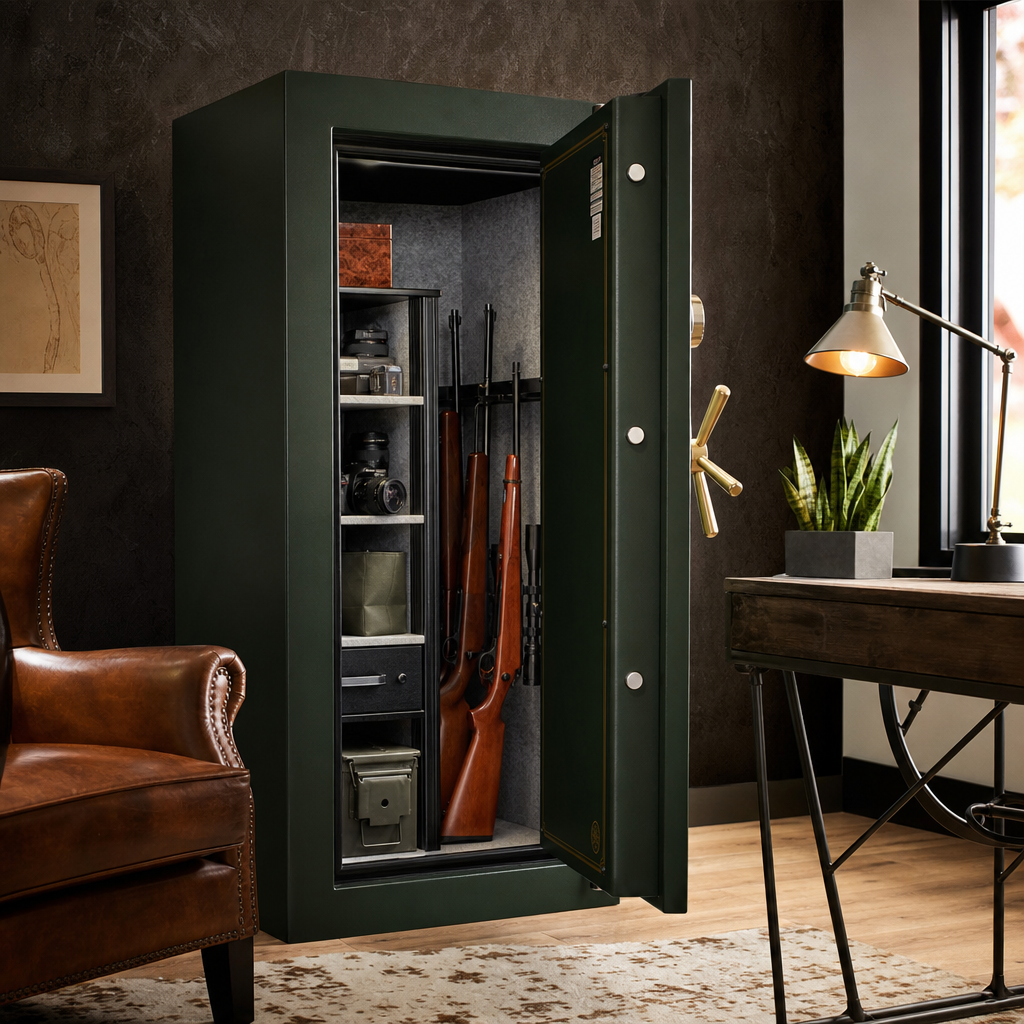
Liberty Safes sit near the top of most gun safe shopping lists because the brand promises strong steel construction, fire protection, organized storage, and a broad dealer network, but price is the question that stops many buyers. A fair Liberty Safes review has to look beyond marketing and ask what buyers actually get for the money, where the brand clearly excels, and where competing gun safes may offer better value. For shoppers researching gun safe comparisons and brand spotlights, Liberty is important because it occupies the middle and upper tiers of the residential safe market, where features, security ratings, interior capacity, and long-term reliability matter more than simple sticker price.
In practical terms, a gun safe is a reinforced storage cabinet designed to resist unauthorized access, delay forced entry, and protect firearms from fire, moisture, and careless handling. Price reflects more than just size. It reflects steel gauge, door construction, locking system, relocker design, bolt coverage, fireboard layers, seal technology, fit and finish, warranty support, and delivery requirements. I have evaluated safes in dealer showrooms, measured usable interiors against claimed capacities, and compared lock options, and the same lesson comes up every time: the cheapest safe is rarely the best value if it is frustrating to organize, easy to pry, or too lightly built for the risk profile of the home.
Liberty matters in this category because it has recognizable product lines, widespread availability, and enough model variety to match different budgets. A first-time handgun owner, a family storing hunting rifles, and a serious collector can all find a Liberty model aimed at them. That breadth also creates confusion. Buyers see names such as Centurion, USA, Colonial, Franklin, and Presidential and assume the jump in price is only cosmetic. In reality, each step usually changes steel thickness, fire duration, interior configuration, lock options, and finish quality. The real question is not whether Liberty makes good safes. It is whether a specific Liberty safe delivers enough protection and convenience to justify its premium over lower-cost imports or over similarly priced competitors such as Browning, Cannon, Fort Knox, Rhino, Sports Afield, Winchester, and AMSEC.
This hub article breaks down Liberty safes as a brand, explains how to compare their major lines, and gives you a practical framework for deciding whether they are worth the price for your collection, your household risk, and your budget.
What Liberty Safes are known for
Liberty has built its reputation on three strengths: broad model coverage, solid dealer support, and a feature set that is usually stronger than entry-level big-box alternatives. The company is especially well known for made-in-USA positioning on many models, upgraded interiors, and a strong focus on residential gun owners rather than only commercial safe buyers. That matters because homeowners typically care about a balance of burglary resistance, fire protection, appearance, and ease of daily use.
Across the lineup, Liberty emphasizes reinforced doors, multiple locking bolts, door panel storage, and electronic or mechanical lock choices. Higher models add thicker steel bodies, more sophisticated hard plates and relockers, better fit and finish, and longer fire ratings. In real use, one of the brand’s biggest advantages is dealer installation. A heavy safe is only secure if it is properly placed, anchored, and leveled. Liberty dealers often provide site inspection, stair assessment, and bolt-down service, which can make a major difference in both security and customer satisfaction.
Another strength is accessories. Liberty offers dehumidifiers, lighting kits, handgun hangers, jewelry drawers, document storage, and modular shelving. That may sound secondary, but interior usability heavily affects value. A safe that technically holds twenty-four long guns but becomes a tangled mess after twelve is not delivering real capacity. Liberty’s better interiors generally manage optics, slings, and mixed firearm lengths more effectively than low-cost alternatives.
How Liberty compares across its major product lines
Not every Liberty safe is priced or built the same, and that is where many reviews miss the mark. The budget Centurion line is designed to get buyers into the brand at a lower cost, while Colonial and Franklin move into stronger steel, longer fire protection, and better interiors. Premium lines such as Presidential are aimed at owners with larger collections, more expensive firearms, and a stronger need for finish quality and theft resistance. If you compare a base Centurion against a Franklin, you are not comparing small feature upgrades. You are comparing two different risk-management tools.
| Line | Best For | Main Strength | Main Limitation |
|---|---|---|---|
| Centurion | Entry-level buyers | Lower price and basic protection | Less steel and fewer premium features |
| USA | Value-focused households | Better balance of security and price | Still not ideal for high-value collections |
| Colonial | Growing collections | Stronger build and interior flexibility | Noticeable jump in cost |
| Franklin | Serious gun owners | Higher fire ratings and upgraded security | Heavy and expensive for casual users |
| Presidential | Collectors and premium buyers | Top-tier finish, steel, and features | Price places it beyond most households |
For most homeowners, the center of the Liberty lineup is where the value argument becomes strongest. Entry-level models answer the need for basic locking storage, especially where local law or household safety concerns are the primary driver. Mid-range models are usually the sweet spot because they add the construction improvements that actually matter in a burglary attempt, not just cosmetic upgrades. Premium models make sense when the contents justify them. A collector with custom rifles, NFA items, optics, and important documents should evaluate the safe as protection for the combined asset value, not as a furniture purchase.
Security, steel thickness, and burglary resistance
If you want a short answer to whether Liberty safes are worth the price, start with steel thickness and burglary delay. This is the area where better safes justify more money fastest. Many inexpensive residential security containers rely on thinner steel bodies that can be attacked with pry bars, grinders, or wedges more quickly than buyers expect. Liberty’s higher lines improve body thickness, door strength, bolt design, and relocker systems, and those differences matter.
However, buyers should stay realistic. Most gun safes sold for home use are not true high-security commercial burglary safes. Many are designed to meet residential security container standards or internal manufacturer specifications rather than TL-rated commercial testing. That does not make them bad products. It means they are delay tools, not impenetrable vaults. In a smash-and-grab burglary, a heavy, anchored Liberty safe with a reinforced door and relocker is a major obstacle. Against a determined crew with time, power tools, and privacy, no mainstream gun safe should be treated as unbeatable.
What I consistently advise buyers to check is body steel gauge, door edge design, hinge exposure, hard plate protection for the lock, relocker count, and anchor hole placement. Liberty generally performs well in these categories, especially as you move up the range. The price premium is often paying for more attack resistance in the first ten minutes, and that is often the most important window in a residential burglary.
Fire protection claims and what they really mean
Fire ratings are one of the most misunderstood parts of any Liberty Safes review. Manufacturers often use their own testing protocols, and the published number does not always translate neatly into real house-fire performance. Liberty does offer meaningful fire protection upgrades across the lineup, including layered fireboard and expanding seals that help block smoke and heat. Higher-end models generally provide longer rated durations and better overall thermal resistance.
Still, buyers should interpret fire ratings carefully. A ninety-minute rating at a stated temperature is useful, but it is not a guarantee that every item inside survives every fire. Actual outcomes depend on fire intensity, burn duration, water exposure, safe placement, and whether the safe sits on a concrete slab or an upper floor. Paper documents, wood stocks, polymers, and optics all respond differently to heat. Ammunition can also degrade under high temperature.
Liberty’s fire protection is better than what you get from many thin, lightly insulated cabinets, but if fire is your dominant concern, ask how the rating was developed, how many layers of fireboard are used, and whether door gaps and seals are engineered well. A safe in an attached garage may face a different heat profile than one in a climate-controlled interior room. Placement is part of fire planning, not just security planning.
Interior layout, capacity, and day-to-day usability
One reason buyers stay loyal to Liberty is usability. On paper, many brands advertise similar capacities, but practical storage varies dramatically. Scoped rifles, pistol grips, bipods, slings, and AR-style platforms consume far more space than traditional long guns. Liberty’s better shelving systems, door organizers, and accessory options help turn listed capacity into usable capacity. That matters if you plan to store documents, magazines, suppressor accessories, and handguns in the same unit.
In hands-on comparisons, claimed capacities often feel inflated across the entire industry, not just with Liberty. A safe labeled for thirty guns may comfortably hold eighteen to twenty-two modern firearms if optics are mounted. Liberty is not immune to that marketing habit, but its interiors are usually better thought out than lower-cost competitors. Door panel storage, in particular, makes a visible difference because it frees shelf space and keeps frequently accessed items organized.
Usability also includes lighting, lock responsiveness, handle feel, shelf adjustability, and door swing clearance. These are easy to dismiss in a showroom, yet they strongly affect satisfaction after six months of ownership. If you open the safe daily for carry pistols or documents, convenience matters. Premium pricing makes more sense when the safe is a dependable part of routine storage rather than a neglected box in the corner.
Where Liberty justifies its price and where it does not
Liberty safes are worth the price when buyers choose a model that matches the value of the contents and the likely threats. For a household storing several hunting rifles, a defensive shotgun, pistols, family records, and some jewelry, a mid-range Liberty often hits the best balance of burglary resistance, fire protection, interior quality, and after-sale support. You are paying for stronger materials, better organization, known warranty backing, and a product that is easier to live with over time.
They are less compelling when buyers stretch into the brand solely for the name while ignoring actual specifications. A lower-tier Liberty may still cost more than a competitor with similar steel and fire performance. In that case, dealer support, finish, and accessories may be the differentiators, not a dramatic security advantage. Shoppers on a strict budget should compare AMSEC, Winchester, Cannon, Browning, and Rhino model by model rather than assuming Liberty always leads on value.
Another limitation is weight and installation cost. Better safes are heavy, and heavy safes create delivery challenges. Tight staircases, older floors, and second-story placement can add hundreds of dollars. That extra cost is part of the real purchase price. There is also no universal best brand. A buyer prioritizing thick steel over polished interior finish may prefer another manufacturer at the same budget level. Price only makes sense when tied to your actual priorities.
How to use this hub for gun safe comparisons and brand spotlights
As a hub for gun safe comparisons and brand spotlights, this page should help you narrow your next question instead of pretending one article can settle every purchase. If you are deciding between Liberty and a specific competitor, the next step is a side-by-side comparison of steel gauge, lock options, fire rating method, interior dimensions, warranty language, and dealer delivery terms. If you are still defining your needs, start with collection value, number of firearms, child-access risk, local theft patterns, and installation constraints.
Use this framework when evaluating any brand: buy more steel than you think you need, treat published capacity as optimistic, anchor the safe, plan humidity control, and do not overpay for decorative upgrades before you secure core protection. Liberty performs well enough that it should remain on any serious shortlist, especially in the mid-range and premium tiers. The brand’s strongest case is not hype. It is consistency, broad dealer support, and a lineup with genuinely meaningful step-ups in protection and usability.
The bottom line is simple: Liberty safes are often worth the price, but not automatically. They are worth it when the model you choose delivers measurable gains in security, fire protection, organization, and service over cheaper alternatives. Compare specifications carefully, inspect interiors in person if possible, and match the safe to the value of what you are protecting. If you are building a safer home gun storage plan, use this hub as your starting point, then move to detailed brand and model comparisons before you buy.
Frequently Asked Questions
Are Liberty Safes really worth the price compared with other gun safe brands?
Liberty Safes can be worth the price, but the answer depends on what kind of buyer you are and what you expect from the safe over the long term. Liberty has built its reputation on strong brand recognition, solid overall construction, reliable fire protection options, organized interiors, and a large dealer network that makes it easier to see models in person and get support after the sale. For many shoppers, that combination carries real value because buying a gun safe is not just about steel thickness or shelf count on a spec sheet. It is also about confidence in the brand, availability of replacement parts, warranty support, delivery options, and the ability to compare multiple sizes and configurations locally.
That said, Liberty is often priced at a premium, and this is where careful comparison matters. In some model ranges, competing brands may offer heavier steel, higher stated fire ratings, or more interior capacity at a similar or lower price point. So if your main goal is to maximize raw specifications per dollar, Liberty may not always be the obvious value leader. On the other hand, if you want a well-known brand with broad availability, attractive fit and finish, strong dealer backing, and a long track record in the gun safe market, Liberty often justifies its pricing better than cheaper no-name alternatives. In short, Liberty is usually worth the money for buyers who value balanced performance, convenience, and brand trust, but the best value still depends on comparing specific models rather than assuming every Liberty safe is automatically the best deal.
What do buyers actually get for the money with a Liberty Safe?
When you pay Liberty prices, you are generally paying for a complete package rather than one standout feature. That package typically includes respectable steel construction, multiple locking options, fire protection built into the body and door, reinforced door systems, adjustable shelving, interior door storage on many models, and a finish that tends to look better and feel more refined than entry-level safes. Liberty also tends to do a good job with practical usability. The interiors are often designed to help owners store rifles, handguns, documents, and valuables in a more organized way, which matters more in daily use than many first-time buyers realize.
You are also paying for accessibility and support. Liberty’s wide dealer network is a major advantage because it allows shoppers to physically inspect a safe before buying, ask questions about setup, and often arrange professional delivery and installation. That local presence can reduce the risk of buying a safe sight unseen and discovering later that the door swing, shelving layout, or exterior dimensions do not work for your space. In addition, many buyers place real value on Liberty’s warranty reputation and replacement support, especially for an item meant to last decades.
However, what you get can vary significantly depending on whether you are looking at an entry-level Liberty model or a more premium series. The higher you go in Liberty’s lineup, the more likely you are to see meaningful upgrades in steel, security features, interior finish, and fire protection. That is why smart buyers should evaluate each model on its own merits. Liberty usually delivers a polished, dependable ownership experience, but whether that experience is worth the premium depends on how much you care about service, fit and finish, and long-term peace of mind versus simply chasing the strongest numbers for the lowest price.
How does Liberty compare to competing gun safes in steel construction and security?
Liberty generally performs well in this category, but it is important to separate good security from perfect security. Like most residential gun safes, Liberty models are designed to provide meaningful protection against smash-and-grab theft, unauthorized access, and moderate attack attempts, not to function like true commercial vaults. The brand is known for solid door construction, multi-point locking systems, and security features intended to resist basic pry attacks and forced entry. For many households, that level of protection is entirely appropriate, especially when the safe is properly anchored and installed in a low-visibility location.
Where Liberty can become more difficult to evaluate is in direct side-by-side comparisons with other brands at the same price. Some competitors may offer thicker steel bodies or more aggressive security specs for less money, at least on paper. If your priority is purely getting the heaviest steel and strongest anti-pry design within a fixed budget, there are cases where another brand may look more appealing. This is especially true for buyers who are very specification-focused and are willing to accept a less refined finish, fewer dealer options, or less brand familiarity in exchange for stronger raw construction.
Still, Liberty’s strength is consistency. Buyers often choose Liberty because the company has an established reputation, broad availability, and a product line that feels more proven than many budget-oriented alternatives. Security is not just about thickness numbers. Lock quality, boltwork design, hinge-side reinforcement, fit of the door, anchoring, and proper placement all matter. In real-world terms, a well-installed Liberty safe can provide very strong residential protection. The key is to avoid assuming the brand name alone guarantees the best security for the price. Compare the exact gauge, locking system, and overall build against rival models before deciding.
Is Liberty’s fire protection good enough to justify the extra cost?
Liberty’s fire protection is one of the brand’s main selling points, and for many buyers it is a legitimate reason to pay more. Most shoppers are not only storing firearms; they are also protecting important papers, heirlooms, cash, optics, electronics, and other valuables that could be damaged by heat and smoke. Liberty has long emphasized fire ratings and protective materials in its marketing, and in practical terms, many of its safes do offer a reassuring level of fire resistance for typical residential use. That can be especially important for homeowners who live in rural areas, in places with longer fire department response times, or in homes where the safe may be exposed to a more severe fire event.
At the same time, fire ratings should always be interpreted carefully, regardless of brand. Testing standards are not always uniform across the gun safe industry, and advertised fire numbers do not always make apples-to-apples comparisons easy. A higher stated rating sounds impressive, but buyers should also consider how the safe is built, how the seal system works, where the safe will be located in the home, and whether they are storing especially heat-sensitive items. In some cases, competing brands may advertise similar or better fire ratings at a lower price, so Liberty is not automatically the best fire value in every category.
If fire protection is one of your top concerns, Liberty deserves serious consideration, but it should not be judged on marketing alone. Think about your risk profile and what you are trying to protect. For many buyers, Liberty offers a strong combination of security and fire resistance that feels more complete than bargain-brand safes. If that extra confidence matters to you, the premium may be justified. If you mainly need theft deterrence and basic storage, a less expensive competitor could deliver enough protection without the added cost.
Who should buy a Liberty Safe, and who might be better off with another option?
Liberty is a strong fit for buyers who want a recognizable brand, a broad selection of sizes and trim levels, dependable dealer access, and a gun safe that balances security, fire protection, and interior organization. It is especially appealing for first-time buyers who want reassurance that they are purchasing from a company with a long history in the market. Liberty also makes sense for homeowners who value being able to see a safe in person, ask questions at a local dealer, and arrange professional delivery instead of taking a chance on an online-only purchase. If you care about long-term ownership experience as much as raw specifications, Liberty often feels like a safe, low-regret choice.
On the other hand, shoppers focused on maximum value per dollar may want to compare alternatives very carefully. If you are comfortable researching specs, buying from less familiar brands, and prioritizing steel thickness or larger capacity over polish and dealer convenience, another brand may give you more for the same money. The same is true if you need a very specific use case, such as a heavier-built safe for a high-risk environment, a modular design for difficult installation spaces, or a lower-cost safe strictly for basic firearm storage and child access prevention.
The bottom line is that Liberty is rarely a bad choice, but it is not automatically the best choice for every buyer. If you want a trusted, well-supported safe with a strong reputation and balanced features, Liberty often earns its place near the top of shopping lists. If your goal is to squeeze every possible ounce of steel, fire rating, or storage capacity out of your budget, you may find better value elsewhere. The smartest approach is to define your priorities first, then compare Liberty against direct competitors in the same price range rather than shopping by brand name alone.