
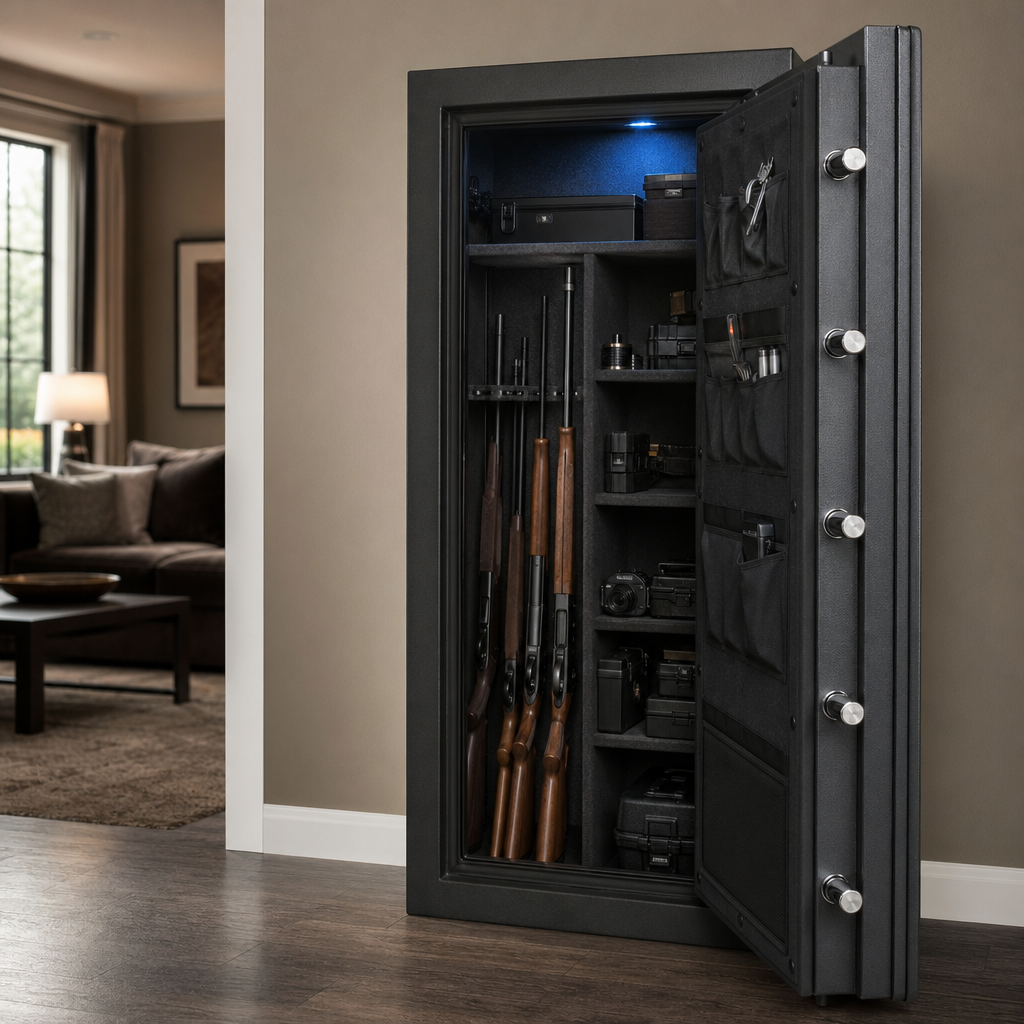
The best gun safes with tamper detection alerts combine physical burglary resistance with electronic awareness, giving owners a way to know not only that firearms are secured, but also when someone is trying to access them. In practical terms, tamper detection means the safe can sense events such as vibration, door movement, repeated failed keypad entries, tilt, or forced entry attempts and then trigger an alert through an onboard alarm, a mobile app, a monitoring hub, or all three. For gun owners, that matters because a safe is no longer just a steel box sitting silently in a closet or garage; it becomes part of a broader firearm safety system designed to prevent unauthorized access, reduce theft risk, and support responsible storage.
In my experience evaluating residential security products, the biggest mistake buyers make is assuming thick steel alone solves the problem. It does not. A criminal can attack a safe with pry tools, move it to another location, or exploit weak placement. A curious teenager, houseguest, contractor, or family member may not break in at all, but may test codes, pull on the door, or attempt to relocate the unit. Tamper detection alerts address that gap by turning suspicious activity into a visible or audible signal before a full compromise occurs. That is especially important for handgun safes staged in bedrooms, biometric safes used for quick access, and modular long-gun safes installed in less controlled areas such as basements or garages.
As a buying guide hub, this article covers what tamper detection alerts are, which safe types benefit most, how to compare alert systems, and what tradeoffs separate a smart feature from a meaningful security upgrade. It also points readers toward the wider Gun Safes & Safety topic by framing the subtopics that matter most: burglary ratings, fire protection, biometric reliability, installation, child-access prevention, and app-based monitoring. If you are choosing between a traditional gun safe and a connected model, the right question is not simply “Which safe is best?” but “Which safe gives me the right mix of physical protection, access speed, power resilience, and verified tamper awareness for my home?”
What tamper detection alerts actually do in a gun safe
Tamper detection alerts identify behavior associated with unauthorized handling and communicate it quickly enough for the owner to respond. The most useful systems detect one or more of five event categories: door disturbance, impact or vibration, tilt or movement, repeated access failures, and environmental disruption such as power loss or sensor disconnection. In better designs, these events are logged with timestamps and sent through Wi-Fi, Bluetooth-to-hub, cellular modules, or local sirens. A basic alert may simply beep when the wrong code is entered too many times. A more advanced implementation can push a phone notification that reads, for example, “Safe moved at 2:14 p.m.” and pair that with a 95-decibel alarm.
Not every alert is equal. Some products advertise “tamper alert” when they really mean keypad lockout after several bad entries. That can slow brute-force guessing, but it does not tell the owner someone touched the safe. More robust systems use accelerometers, magnetic contact sensors, or anti-tamper switches built into the door and enclosure. Commercial intrusion devices often follow UL 639 concepts for alarm units, while gun safes themselves may align with broader burglary or residential security container expectations rather than full commercial vault standards. For consumers, the takeaway is simple: ask what event triggers the alert, how the alert is delivered, whether it works when internet service drops, and whether the safe stores a local event history.
This category is growing because connected home security has matured. Buyers now expect app visibility from products like Ring Alarm, SimpliSafe, Abode, and smart locks from Yale or Schlage. Gun safe makers have responded with integrated connectivity or accessory sensors. Some long-gun cabinets now support aftermarket vibration sensors tied into a home alarm panel, while premium handgun safes include native Bluetooth or Wi-Fi apps. The best products are not those with the longest feature list. They are the ones where detection is specific, communication is reliable, and alerts fit how the owner actually lives.
Which types of gun safes benefit most from tamper alerts
Tamper detection is most valuable on quick-access handgun safes, bedside biometric safes, modular rifle safes, and any unit placed outside a hardened safe room. A bedside pistol safe has a higher chance of casual contact by children, guests, or cleaners, so failed biometric reads, keypad probing, and door movement alerts have real value. I have seen small rapid-access safes that were physically decent but electronically weak; they opened fast for the owner, yet provided no record when someone spent ten minutes experimenting with the keypad. In that situation, even a simple app alert materially improves oversight.
For long-gun storage, tamper alerts become essential when the safe is installed in a garage, workshop, mudroom, vacation property, or secondary residence. These spaces are more exposed to theft, less frequently monitored, and often entered by service personnel. A thief may try to tip a safe onto a dolly, attack hinge points, or remove anchor bolts. Tilt and vibration detection can reveal that activity before the unit disappears. By contrast, a very heavy, professionally installed high-security safe in an occupied interior room may benefit less from app features and more from superior steel thickness, relockers, hardplates, and anchoring.
Vehicle gun safes and travel lock boxes are another case where movement alerts can help, though buyers should be realistic. In a car, vibration is constant, connectivity can be spotty, and battery management is harder. A portable lock box with an internal cable and Bluetooth alert may deter opportunistic access, but it is not a substitute for a full residential security container. The best use cases are homes where the owner wants immediate awareness if the safe is touched, opened, or relocated, especially when firearms are staged for legitimate defensive access and therefore not hidden deep inside a large vault.
How to compare the best gun safes with tamper detection alerts
When comparing models, start with construction and certification before looking at software. Steel thickness, door design, locking bolt engagement, pry resistance, anchoring points, and lock quality still determine whether the safe can withstand attack. Many consumer gun safes are marketed aggressively, but a Residential Security Container rating or California DOJ compliance does not mean the same thing as a TL-rated burglary safe. For most households, an honest combination of 12-gauge or thicker steel, internal hinges or protected external hinges, solid boltwork, and proper floor anchoring is a more reliable baseline than marketing language about “military-grade” anything.
Then evaluate the alert system with the same discipline you would use for a home alarm device. Ask four direct questions: What is detected? How fast is the alert delivered? What happens if power or internet fails? Can the owner review event history? The strongest products offer local alarm plus remote notification, backup battery support, and a clear app interface with named event types. If a manufacturer cannot explain whether the device detects vibration, movement, or only incorrect PIN attempts, treat the feature as limited.
| Feature | What to look for | Why it matters |
|---|---|---|
| Sensor type | Vibration, tilt, door contact, failed-entry detection | Different attack methods require different triggers |
| Alert path | Local siren, mobile app, hub, SMS, or cellular option | Redundancy improves the chance you actually receive notice |
| Power backup | Internal battery or replaceable backup cells | Alerts must survive outages and unplugging attempts |
| Event log | Timestamped history in app or onboard memory | Helps verify access attempts and troubleshoot false alarms |
| Access method | UL-listed electronic lock, mechanical override, quality biometric reader | Fast access is useless if reliability is poor |
| Anchoring | Factory anchor holes and concrete-compatible hardware | A moving safe is easier to attack than a fixed one |
Finally, consider ecosystem fit. A standalone app may be enough for one owner, but households with existing alarm systems may prefer sensor outputs or integrations that feed a central platform. The more your safe can participate in your broader security plan without creating complexity, the better the purchase will age.
Top buying criteria beyond the alert feature
A smart gun safe that sends alerts but opens unreliably or lacks physical strength is not a best buy. Access control comes first. For rapid-access handgun storage, the most dependable setups usually combine a quality electronic keypad or RFID method with a mechanical backup. Biometric readers have improved, particularly capacitive fingerprint sensors used in newer Vaultek and Hornady RAPiD lines, but they still vary based on finger condition, enrollment quality, and maintenance. In testing, the best practice is to store multiple prints per authorized user and verify opening speed under realistic conditions such as darkness, cold hands, or stress.
Size and interior layout also matter more than many buyers expect. A compact safe rated for one pistol often becomes overcrowded once you add a spare magazine, light-bearing handgun, passport pouch, or suppressor-ready setup. For long-gun storage, manufacturer capacity numbers are routinely optimistic because they assume unscoped rifles packed tightly. If you own AR-pattern rifles with optics, slings, or larger handguards, subtract the advertised count. Better safes provide adjustable shelving, barrel rests, and door organizers that preserve access while preventing scratches and snag points.
Fire protection should be assessed carefully. Fire ratings on consumer gun safes are inconsistent because testing methods differ widely. Some brands cite internal factory tests; others reference independent verification. Heat-expanding door seals and layered gypsum-style insulation can buy time, but fire protection often adds weight without helping burglary resistance. Buyers storing irreplaceable documents should consider a dedicated UL-classified document safe inside the gun safe rather than relying on a generalized fire claim. Humidity control is another practical need, especially in basements and humid climates. A dehumidifier rod, rechargeable desiccants, and proper airflow reduce rust risk far more effectively than wishful thinking.
Leading brands, technologies, and real-world use cases
Several brands stand out in this space for different reasons. Vaultek has pushed connected handgun and compact long-gun safes further than most consumer competitors, with Bluetooth or Wi-Fi monitoring, activity logs, anti-impact latches on some models, and app-based tamper notifications. Hornady has focused on RFID and rapid access, and some users pair those safes with external contact or vibration sensors through a home alarm platform. Liberty Safe, Cannon, Fort Knox, and Rhino operate more heavily in the full-size safe market, where native tamper alerts are less universal, but aftermarket integration is often practical if the owner wants movement or door alerts.
A useful real-world example is the parent who keeps one defensive handgun in a bedside quick-access safe and a separate anchored long-gun safe in a closet. The bedside unit benefits most from instant app notifications for failed entry attempts and door openings because it sits in a lived-in space where accidental or curious contact is plausible. The closet safe, by contrast, may need tilt and vibration detection because a burglar is more likely to attack it physically. Another example is a rural homeowner with a detached workshop. There, a safe with local siren, cellular-capable alarm support, and heavy anchoring is preferable to a Bluetooth-only model that depends on nearby phone proximity.
Buyers should also distinguish between native smart safes and traditional safes enhanced with external sensors. Native designs offer cleaner apps and integrated logs, but external sensors tied into Alarm.com, Ring, or a professionally monitored system may be more robust, easier to replace, and less vulnerable to a manufacturer abandoning app support. I have seen both approaches work well. The deciding factor is usually whether the safe itself is already the right physical product. Electronics can extend a strong safe; they rarely rescue a weak one.
Common mistakes, limitations, and how this hub guides your next step
The most common buying mistake is prioritizing notifications over construction. The second is confusing convenience with security. A lightweight biometric box with a slick app may be fine for supervised quick access, but it is not a theft-resistant long-term storage solution for a firearm collection. Another mistake is ignoring installation. Even a very good safe loses much of its burglary resistance if it is not anchored to concrete or structurally sound framing. Poor placement can also degrade alerts: a safe on a shaky platform may generate nuisance vibration events, while a safe hidden behind dense walls may lose Wi-Fi connectivity.
There are real limitations to connected safes. Apps can fail, batteries die, cloud services change, and wireless signals drop. False positives happen, especially with aggressive vibration sensitivity. Privacy is another consideration. Owners should review what data the manufacturer stores, whether access logs are cloud-based, and how firmware updates are delivered. For many households, the best answer is a layered setup: strong physical safe, local alarm, remote alert, backup power, and periodic manual checks. That approach reduces dependence on any single failure point.
As the hub page for Buying Guides under Gun Safes & Safety, this article is the starting point for narrower decisions. From here, the smartest path is to compare safe sizes, lock types, fire ratings, child-access prevention features, installation methods, and monitoring options based on your firearms, home layout, and daily routine. The main benefit of the best gun safes with tamper detection alerts is simple: they shorten the gap between attempted access and owner awareness while preserving responsible storage. Use that standard to evaluate every model, and choose a safe that protects both the guns you own and the people around them.
Frequently Asked Questions
What is a gun safe with tamper detection alerts, and how does it work?
A gun safe with tamper detection alerts is a firearm storage unit that does more than simply lock your guns behind steel. In addition to physical security features such as reinforced doors, hardened bolts, pry-resistant construction, and secure locking systems, these safes use sensors and connected electronics to detect suspicious activity. Depending on the model, the safe may monitor vibration, impact, door movement, tilt, changes in orientation, repeated incorrect keypad entries, or attempts to disable the lock. When one of those events is detected, the safe can respond in several ways: it may sound an onboard siren, send a notification to a mobile app, trigger a message through a smart home hub, or report to a monitoring system.
In practical use, this means the owner is not relying solely on discovering a problem after the fact. A traditional gun safe protects by resisting attack. A tamper-alert safe adds awareness by notifying the owner while something is happening or shortly after. That can be especially valuable if the safe is located in a garage, basement, closet, workshop, vacation property, or any area that is not constantly visible. For many owners, the biggest advantage is peace of mind: they know firearms are secured, and they also know if someone is trying to access them without permission.
It is important to understand that tamper detection is not identical across all products. Some safes offer very basic local alerts only, while others include Wi-Fi or Bluetooth connectivity, event logs, user-specific access histories, and integration with security ecosystems. The best models combine dependable burglary protection, reliable electronics, meaningful alert settings, and enough backup power or battery support to keep security features active during outages or attempted interference.
Which tamper alert features are most important when choosing the best gun safe?
The most important tamper alert features are the ones that provide useful warning without overwhelming the owner with false alarms. At the top of the list are vibration and impact sensors, because they can detect drilling, hammering, prying, or attempts to move the safe. Door-position monitoring is also critical, since it can alert you if the safe is opened, left ajar, or opened at an unexpected time. Failed entry tracking is another valuable feature, especially on keypad-equipped safes, because multiple incorrect PIN attempts can be an early sign of unauthorized access. Tilt or motion detection matters as well, particularly for smaller safes that could be carried off or repositioned.
Beyond the sensors themselves, the delivery method of the alert is just as important. An onboard siren can scare off an intruder or draw attention inside the home, but it has limited value if no one is nearby. Mobile app notifications are often more useful, since they allow the owner to respond quickly even when away. Some premium safes also support monitoring hubs, text or email alerts, and audit logs showing when the safe was accessed and by whom. If multiple people are authorized to use the safe, user-level access records can be especially helpful for accountability and household safety management.
You should also pay attention to reliability features. Look for backup battery support, low-battery warnings, tamper-resistant control panels, and secure app authentication. A sophisticated alert system is only valuable if it continues working under stress. Finally, the best safe is one that balances smart features with core protective strength. Tamper alerts are an enhancement, not a substitute for heavy steel construction, strong boltwork, secure anchoring capability, and a proven lock system.
Are tamper detection alerts enough, or do I still need to focus on physical security and fire protection?
Tamper detection alerts are an excellent upgrade, but they should never be treated as a replacement for physical security and fire protection. A notification can tell you that someone is trying to break into the safe, but the safe still needs enough structural strength to resist that attack long enough to matter. That means paying close attention to steel thickness, door design, locking bolt coverage, anti-pry features, quality of hinges, relocker mechanisms, and whether the safe can be securely bolted to the floor or wall structure. If a safe is easy to pry open or remove from the premises, an alert alone does not solve the core security problem.
Fire protection is also a major part of the buying decision for many gun owners. Fire ratings vary widely across the market, and not all safes advertised for firearm storage offer the same level of heat resistance. If you are storing valuable rifles, handguns, optics, important documents, or ammunition-related records, a tested fire rating can add another important layer of protection. For households concerned about disaster readiness, smoke and heat exposure can be just as damaging as theft.
The strongest overall choice is a safe that performs well in all three areas: burglary resistance, environmental protection, and alert capability. Think of tamper detection as an early-warning system built into a serious safe, not as the primary line of defense. The best gun safes with tamper detection alerts stand out because they combine real physical protection with the ability to keep owners informed in real time.
Do tamper alert gun safes require Wi-Fi or a smartphone to be useful?
No, but connected features dramatically increase their usefulness. A tamper alert gun safe can still provide value without Wi-Fi or a smartphone if it has local security responses such as a siren, flashing indicator, keypad lockout after repeated failed attempts, or internal logging. Those features can deter casual tampering and make it harder for unauthorized users to continue trying. For some owners, especially those who prefer simpler systems or want to avoid app-based products, a local-only alert model may be enough.
That said, remote notifications are what make these safes especially powerful. If a safe sends a mobile alert when the door opens unexpectedly, when vibration is detected, or when multiple bad PIN entries occur, the owner can react quickly rather than discovering the issue hours later. In some cases, integration with a home security system or monitoring hub can create a broader protective response, such as activating cameras, triggering alarms, or notifying another responsible household member.
When evaluating connected models, it is smart to consider how they handle outages and connectivity problems. A safe that depends entirely on internet access may lose some of its alert functionality during a network disruption, so good designs include local alarms and onboard event storage as backups. Also look for strong app security, encrypted communication if available, and clear settings for managing who receives notifications. In short, Wi-Fi is not mandatory for usefulness, but it is often essential if your goal is immediate awareness wherever you are.
Who benefits most from a gun safe with tamper detection alerts?
These safes are especially valuable for gun owners who want a more proactive level of control over firearm security. Families with children often benefit because tamper alerts add another layer of awareness if someone tries to access the safe without permission. Owners who travel frequently, maintain irregular work hours, or keep firearms in secondary residences also gain a lot from remote notifications. In those situations, the safe is not just protecting against theft; it is helping the owner stay informed when they cannot physically check on it themselves.
Tamper detection can also be highly useful for collectors and enthusiasts storing multiple firearms, accessories, optics, or important records. The more valuable the contents, the more worthwhile it becomes to know about suspicious activity immediately. In shared households, access tracking may help determine whether the safe was opened by an authorized user or whether a code was entered incorrectly several times. That accountability can be helpful for training, household rules, and overall responsible ownership.
Ultimately, the people who benefit most are those who understand that firearm storage is about both prevention and visibility. A quality safe reduces unauthorized access. Tamper detection alerts improve situational awareness. Together, those features create a much stronger security strategy for responsible gun owners who want to protect their firearms, comply with safe storage expectations, and respond quickly if someone attempts to interfere with the safe.