
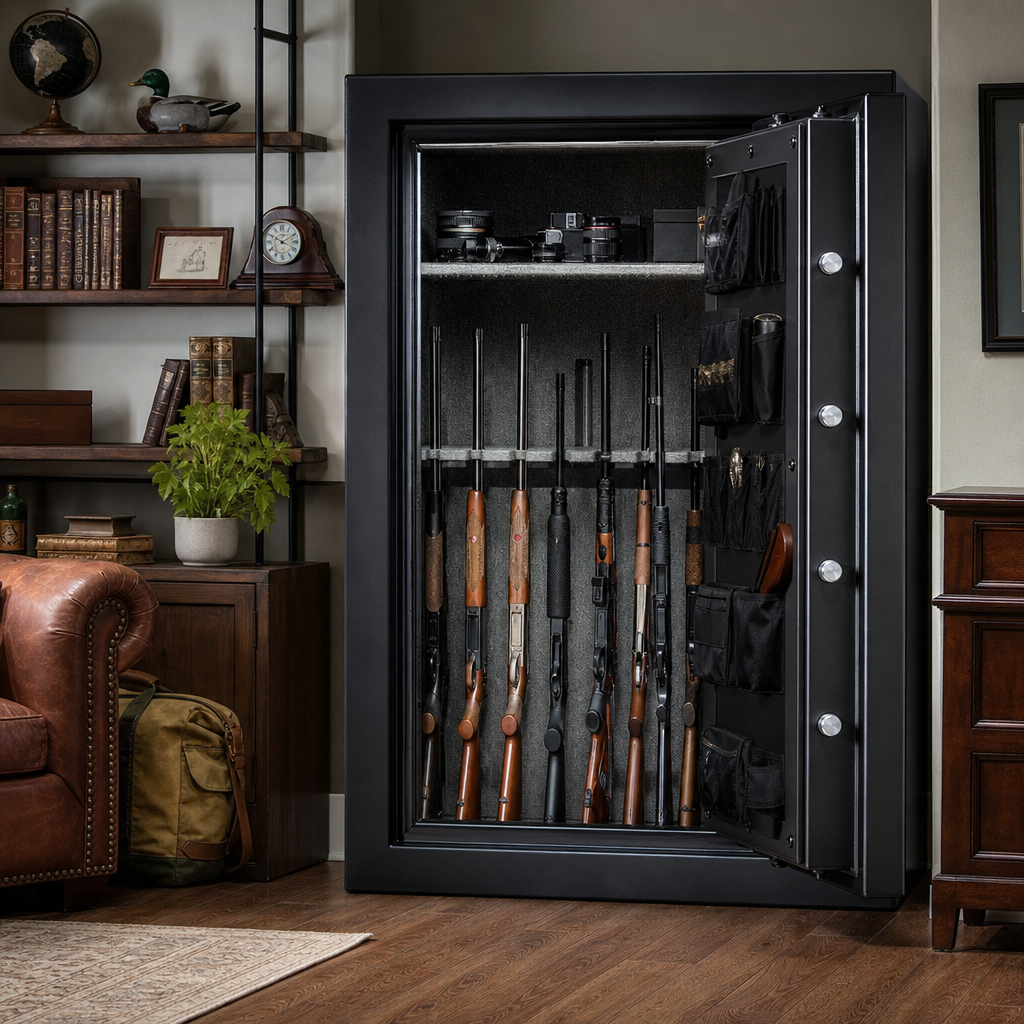
The strongest gun safe brands for theft protection combine heavy steel construction, credible lock systems, pry-resistant door designs, and real-world support after purchase. In the gun safes and safety market, buyers often focus on fire ratings or interior capacity first, but burglary resistance is the feature that determines whether a safe still contains firearms after a targeted break-in. A gun safe built for theft protection is designed to slow or stop forced entry using thick plate or formed steel, reinforced door edges, active locking bolts, hard plates that shield the lock, relockers that trigger under attack, and anchor provisions that prevent thieves from tipping or removing the safe.
I have evaluated safes in dealer showrooms, reviewed construction specs line by line, and seen the difference between marketing language and features that actually matter. The strongest brands do not rely on glossy paint, oversized bolt counts, or broad claims like “military grade.” They publish steel thickness, explain lock options, identify UL-listed components, and build bodies and doors that resist pry bars, grinders, and smash-and-grab attacks. That matters because most residential gun safe thefts are opportunistic and fast. Criminals attack weak doors, exposed hinges, thin sidewalls, and unanchored cabinets. A safe that buys ten to fifteen extra minutes can be the difference between loss and failure.
This hub covers gun safe comparisons and brand spotlights from the perspective of theft protection first. It defines the key terms shoppers need to understand, highlights the strongest gun safe brands, and explains how to compare entry-level, mid-tier, and premium models without getting distracted by sticker claims. If you are deciding between American Security, Fort Knox, Liberty, Browning, Rhino, Hollon, Vaultek, or Zanotti, the right answer depends on your threat level, firearm value, installation constraints, and budget. The best gun safe brand is not the one with the loudest advertising. It is the one whose construction matches the attack methods your safe is most likely to face in your home, garage, or shop.
What Makes a Gun Safe Strong Against Theft
A theft-resistant gun safe is judged by construction, not appearance. Start with steel thickness. Many mass-market gun safes use 14-gauge or 12-gauge bodies, which are acceptable for basic deterrence but vulnerable to aggressive prying and power tools. Stronger safes move into 10-gauge, 7-gauge, or heavier bodies, or use composite construction with additional steel and concrete-like barrier materials. Door design is equally important. A thick door skin backed by internal reinforcement and a tight door gap resists pry attacks far better than decorative external bolts on a thin frame.
Lock quality also separates serious brands from commodity products. The most trusted mechanical dial locks and electronic locks are usually UL-listed, commonly from Sargent and Greenleaf or SecuRam. Hard plates protect the lock from drilling, and relockers secure the boltwork if the lock is punched or attacked. Internal hinges can improve pry resistance, although external hinges are not automatically weak if the door has fixed dead bars on the hinge side. Anchor holes matter because even a heavy safe can be tipped to make prying easier, or removed entirely if not secured to concrete.
Burglary ratings provide useful context, though many residential gun safes are not formally rated beyond their lock components. A UL Residential Security Container rating indicates a baseline level of attack resistance, but premium safe buyers often look beyond that to thicker steel and commercial-grade features. In practice, you want a body that resists cutting, a door that resists prying, a lock area that resists drilling, and installation that denies leverage. Those fundamentals outweigh cosmetic extras every time.
Best Gun Safe Brands for Theft Protection
American Security, usually called AMSEC, remains one of the strongest names for buyers who want serious burglary protection. The company spans broad price ranges, but its BF series is especially important because it blends a substantial steel body with a poured composite barrier and a stout door design. For buyers stepping up further, AMSEC’s BFX and high-security lines move into territory that starts to resemble commercial burglary safes more than decorative gun storage. AMSEC has earned its reputation by publishing meaningful specifications and offering models that are visibly harder to pry and drill than typical big-box alternatives.
Fort Knox has long appealed to buyers who want thicker steel and customization. The brand’s upper-tier models are built around heavy bodies, reinforced doors, robust boltwork, and extensive configuration options. In my experience, Fort Knox stands out when a customer wants to choose body thickness intentionally rather than accept a fixed mainstream spec. That matters because theft protection improves dramatically when you move from common 12-gauge construction into heavier steel. Fort Knox safes are not inexpensive, but they are a credible answer for collections that justify higher burglary resistance.
Liberty is one of the most recognized consumer brands and covers a wide market range. Its entry and mid-tier lines are popular because they are widely available, but theft protection varies significantly by series. Higher Liberty lines with stronger bodies, better door construction, and upgraded locking systems are much more compelling than the lower-end models buyers often compare only by capacity. Browning follows a similar pattern. Browning safes often emphasize organization and interior features, but selected upper-end models offer meaningful security upgrades. Rhino has built a solid following by combining attractive fit and finish with respectable steel and anti-pry features, especially in certain heavy-body models.
Hollon deserves attention for buyers who want a more security-driven product line, including models that bridge residential gun safes and true burglary safes. Zanotti fills a different niche with modular safes that can be assembled where a welded safe cannot fit, useful in basements, apartments, or upper floors. Vaultek is best known for handgun safes and modern access systems rather than large long-gun safes, but in the quick-access category it is a major brand worth comparing. For theft protection, every one of these brands must be judged model by model, not by logo alone.
How Leading Brands Compare on Theft-Resistance Features
Shoppers need a simple way to compare brands beyond marketing language. The most useful lens is steel thickness, door construction, lock protection, anchor capability, and rating transparency. The table below summarizes how major brands are typically positioned. Individual models vary, so always verify current specifications before buying.
| Brand | Typical Strengths | Best Fit Buyer | Main Caution |
|---|---|---|---|
| AMSEC | Composite construction, strong doors, quality lock protection, commercial influence | Owners prioritizing burglary resistance over cosmetics | Higher-security lines get expensive quickly |
| Fort Knox | Heavy steel options, strong customization, reinforced anti-pry designs | Collectors wanting thicker body steel by choice | Price and lead time can be substantial |
| Liberty | Wide dealer network, strong upper-tier options, familiar service ecosystem | Mainstream buyers moving into premium residential safes | Lower series can be mistaken for equivalent security |
| Browning | Useful interiors, respectable premium models, broad availability | Owners balancing organization and moderate theft resistance | Interior features can overshadow steel comparisons |
| Rhino | Good anti-pry features, appealing finishes, solid heavier models | Buyers wanting security with upscale presentation | Specifications must be checked closely by model |
| Hollon | Security-first orientation, some true burglary-safe options | Owners with elevated theft concerns | Less showroom exposure in some regions |
| Zanotti | Modular delivery, practical theft resistance when space is limited | Installations impossible for welded safes | Not the first choice for maximum mass and rigidity |
| Vaultek | Strong handgun safe lineup, modern access control, travel-friendly options | Quick-access pistol storage users | Not a substitute for a full-size heavy gun safe |
Choosing by Risk Level, Location, and Firearm Value
The strongest gun safe brand for one household may be the wrong choice for another because risk is situational. A suburban owner with two hunting rifles and a monitored alarm can often be well served by a strong mid-tier safe anchored in a closet on a concrete slab. A collector with transferable machine guns, premium optics, and a detached garage faces a different threat model entirely. In that case, heavier steel, composite protection, a dedicated safe room, and possibly a commercial burglary-rated unit are justified. Brand comparisons only make sense after defining the likely attack: quick pry attack, extended tool attack, or complete safe removal.
Location changes the equation. Garages expose safes to more privacy for thieves, wider temperature swings, and easier use of long pry bars or cordless grinders. Upper floors may limit safe weight and force buyers toward modular brands such as Zanotti. Basements can be excellent for concealment and climate stability if moisture is controlled. I routinely advise buyers to spend less on interior accessories and more on body thickness if the safe will sit in an exposed garage. No velvet-lined barrel rack will compensate for thin steel and poor anchoring.
Firearm value should guide budget discipline. If the collection includes custom 1911s, thermal optics, vintage Winchesters, or NFA items, the safe should be treated as a security asset, not a furniture purchase. Spending more upfront on a brand with better burglary engineering usually costs less than replacing stolen firearms, filing insurance claims, and facing permanent loss of irreplaceable pieces.
Common Buying Mistakes in Gun Safe Comparisons
The most common mistake is comparing safes by advertised gun count. Capacity numbers are notoriously optimistic and say nothing about theft resistance. A “36-gun” safe with thin walls and a weak door is not stronger than a “24-gun” safe with heavier steel. The second mistake is focusing on bolt count. More locking bolts look impressive on a sales tag, but bolt diameter and quantity matter less than door fit, frame strength, and how well the boltwork is protected. A mediocre safe with many exposed chrome bolts is still mediocre.
Another mistake is assuming weight alone equals security. Weight helps, but some mass comes from fireboard, interior materials, or oversized dimensions rather than thicker burglary-resistant steel. Buyers also overlook lock serviceability. A respected electronic lock can be excellent, but only if the brand supports replacement parts and qualified technicians. Finally, many shoppers underestimate installation. A premium AMSEC or Fort Knox model that is not anchored properly can still be attacked more easily than a lesser safe installed well. The strongest brand cannot compensate for poor placement and loose anchoring.
How This Hub Supports Deeper Brand Spotlights and Comparisons
This page works as the central guide for gun safe comparisons and brand spotlights because buyers rarely decide in one step. Most start with a broad question: what are the strongest gun safe brands for theft protection? From there, they narrow the field by budget, size, fire rating, lock type, country of manufacture, or use case such as garage installation or quick-access storage. The practical next step is to compare individual lineups within each brand, especially the gap between entry-level and premium models, since that gap often determines whether a safe is merely a deterrent or a meaningful barrier.
Use this hub to frame those follow-up decisions. If burglary resistance is your top priority, begin with AMSEC, Fort Knox, Hollon, and stronger lines from Liberty or Rhino. If installation access is the limiting factor, research Zanotti. If your immediate need is bedside or vehicle handgun security, compare Vaultek with other dedicated quick-access options. Every deeper article under this subtopic should return to the same core standards: verified steel thickness, robust door construction, quality lock components, credible anti-drill and anti-pry measures, and proper anchoring strategy.
The key takeaway is simple: the strongest gun safe brands for theft protection earn that status through construction details you can verify. Prioritize steel, door design, lock protection, and installation over flashy features and inflated capacity claims. When you compare brands this way, the market becomes much easier to navigate, and expensive mistakes become less likely. Use this hub as your starting point, then move on to detailed brand spotlights and side-by-side model comparisons before you buy your next gun safe.
Frequently Asked Questions
What makes a gun safe brand truly strong for theft protection?
A strong gun safe brand earns its reputation by focusing on burglary resistance first, not just marketing claims. The most theft-resistant models typically use heavier steel in the body and door, reinforced door frames, hard plates that protect the lock, and internal or tightly fitted hinges that make pry attacks more difficult. The best brands also pay close attention to door design, because many break-ins are successful at the gap between the door and frame rather than through the middle of the safe. A pry-resistant door edge, solid bolt engagement, and a rigid structure matter just as much as raw steel thickness.
Lock quality is another major factor. Credible theft-protection brands use proven mechanical or electronic locks from established lock manufacturers, not bargain components with inconsistent reliability. Beyond that, stronger brands often include relockers, drill-resistant barriers, and boltwork systems designed to stay engaged during an attack. In practical terms, the strongest gun safe brands build products that take more time, more noise, and more tools to breach. That delay is what often stops a burglary, because most thieves want fast access and will abandon a safe that resists entry long enough to increase their risk of being caught.
Are thicker steel and heavier safes always better for burglary protection?
In general, thicker steel and more total weight are strong indicators of better theft protection, but they are not the only things that matter. A heavier safe usually means more steel, stronger construction, and greater resistance to tipping or removal. That said, two safes with similar weight can perform very differently if one has a weak door frame, poor welds, or low-quality boltwork. Thickness in the door can be especially important, but the body, corners, and lock area also need to be engineered to resist common attack methods such as prying, drilling, and blunt-force abuse.
Weight also works best when paired with proper installation. Even a heavy safe can be compromised if it is not anchored and can be tipped into a position that gives a thief better leverage. A well-built gun safe from a reputable brand should combine solid steel construction with intelligent design features, including reinforced lock protection, anti-pry tabs, and strong anchoring capability. So yes, thicker steel and more mass are beneficial, but the strongest gun safe brands stand out because they combine those advantages with better engineering throughout the entire safe.
Which lock type is better for theft protection: mechanical or electronic?
Both mechanical and electronic locks can provide strong theft protection when they come from reputable manufacturers and are installed on a well-built safe. Mechanical dial locks are valued for long-term durability, simple operation without batteries, and a long history of dependable performance. Many buyers prefer them because they are seen as less vulnerable to electronic failure. For owners who do not need rapid access, a high-quality mechanical lock is still an excellent choice for a theft-focused gun safe.
Electronic locks offer speed and convenience, which can be important for some households, but quality matters a great deal. A strong gun safe brand will not cut corners here. Better electronic systems are designed with tamper resistance, secure lock bodies, and dependable internal components. In real burglary scenarios, the lock type alone is rarely the deciding factor. The overall lock protection package matters more, including hard plates, relockers, anti-drill features, and the strength of the surrounding door structure. In other words, a premium electronic lock on a burglary-resistant safe is usually a better theft-protection choice than a mechanical lock installed on a lightly built cabinet. Buyers should focus on the full security design, not just the keypad versus dial debate.
Do fire ratings tell me anything important about theft protection?
Fire ratings and theft protection are related only in a limited sense. A gun safe can have an impressive fire rating and still offer moderate burglary resistance if the manufacturer emphasized insulation and interior protection more than steel thickness and anti-pry construction. This is why many shoppers are surprised to learn that a safe marketed heavily for fire endurance may not be the strongest option against a determined thief with tools. Fire protection is important, especially for preserving firearms, documents, and valuables, but it should not be used as a shortcut for judging burglary strength.
When evaluating the strongest gun safe brands for theft protection, you should look separately at the burglary-focused features: body steel gauge or plate thickness, door construction, lock reinforcement, boltwork design, anchoring provisions, and whether the brand has a reputation for robust real-world performance. The best brands may deliver both good fire resistance and strong anti-theft design, but those are distinct strengths. If stopping forced entry is the priority, pay closest attention to how the safe is built to resist attack, not just how long it may withstand heat.
How important are installation and after-sale support when choosing a theft-resistant gun safe brand?
They are extremely important, and they are often overlooked. Even the strongest gun safe can lose much of its theft-protection advantage if it is installed poorly. Proper placement in a low-visibility area, tight fit against surrounding walls where possible, and secure anchoring to concrete or a structurally sound floor can dramatically reduce the chance of successful removal or pry access. Installation affects how much leverage a thief can get, whether the safe can be tipped over, and how easily power tools can be used around it. A serious theft-protection strategy includes both buying a strong safe and making sure it is professionally or carefully installed for maximum resistance.
After-sale support matters because ownership does not end at delivery. Strong gun safe brands typically offer better warranty service, replacement parts access, lock support, and clearer guidance if there is a mechanical problem or attempted break-in. If a safe is damaged during a burglary attempt, responsive manufacturer support can make a major difference in restoring security quickly. Reputable brands also tend to have more consistent quality control and dealer networks that understand setup, anchoring, and maintenance. For buyers focused on theft protection, brand strength is not just about steel and locks on day one. It is also about whether the company stands behind the product when security matters most.