
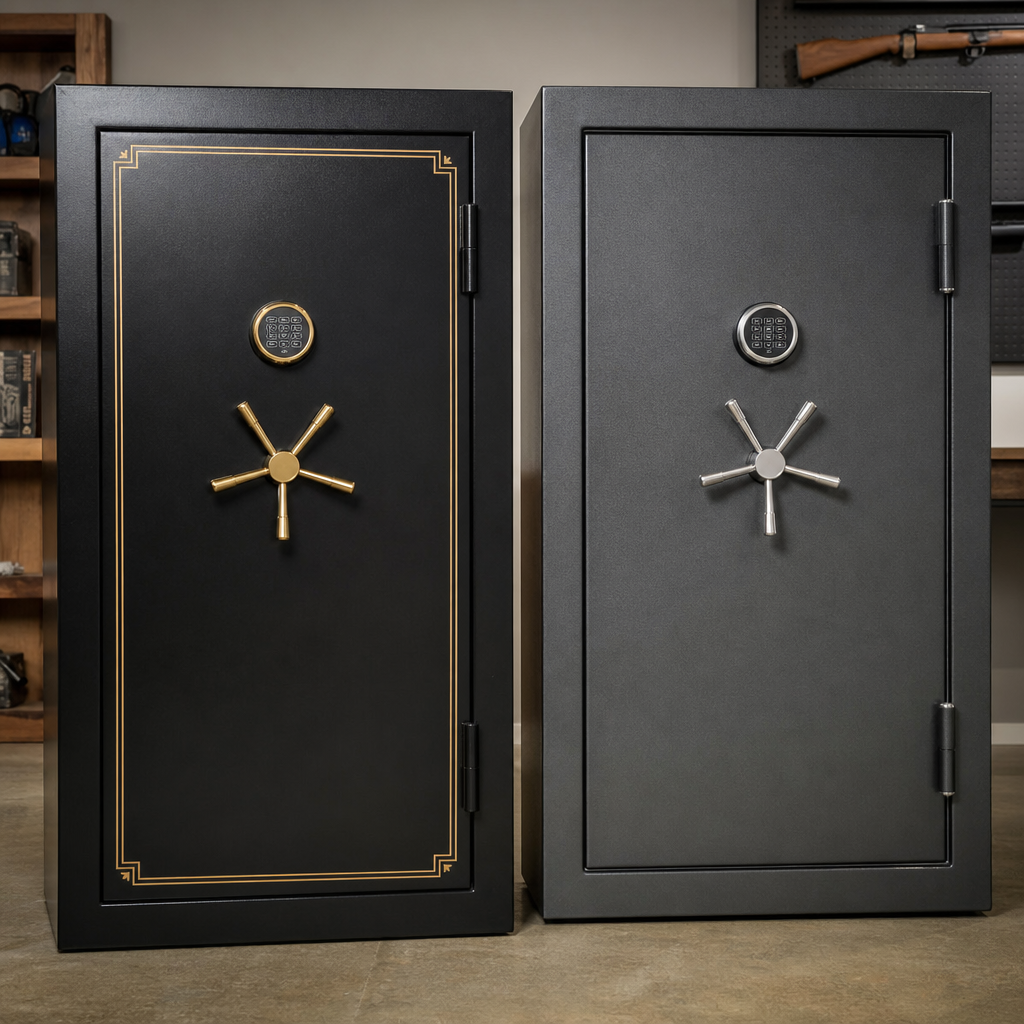
Choosing between Champion and Superior gun safes comes down to a practical question: which brand gives you more security, storage, and long-term reliability for the money you spend. In the gun safe market, “value” does not simply mean the lowest sticker price. It means the total package of steel thickness, fire protection, locking system quality, interior flexibility, warranty strength, delivery realities, and how well the safe fits your collection over the next ten or twenty years. I have helped buyers compare safe specifications line by line, and the same pattern appears repeatedly: two safes can look similar in a showroom while delivering very different real-world protection.
Champion and Superior are both recognized names among firearm owners shopping for residential security containers and heavier gun safes. Each brand offers multiple series aimed at different budgets, from entry-level models intended for basic theft deterrence to upgraded units with thicker steel, refined interiors, and stronger fire ratings. Because these brands often appear side by side at local safe dealers, shoppers frequently ask which one is better. The more accurate question is which one is better for a specific use case. A hunter storing six long guns in a climate-controlled room has different needs than a collector protecting thirty rifles, suppressors, documents, and heirlooms in a garage.
This comparison serves as a hub for gun safe comparisons and brand spotlights within the broader gun safes and safety category. It explains the specifications that matter, shows where Champion or Superior may hold an advantage, and highlights the tradeoffs many buyers miss. If you want a direct answer, here it is: Champion often stands out for fit, finish, dealer support, and balanced construction across price tiers, while Superior can deliver strong feature value and practical storage at competitive price points. The right choice depends on steel, lock options, capacity honesty, installation conditions, and the level of burglary and fire resistance you actually need.
How to Compare Gun Safe Brands the Right Way
The fastest way to misjudge a gun safe is to compare only the outside dimensions, the paint, or the advertised gun count. Meaningful comparison starts with construction details. Look first at body steel gauge or plate thickness. In general, lower gauge numbers indicate thicker steel, and thicker steel slows pry attacks, cutting attempts, and body deformation. Then examine door construction. A safe with a stronger door and weak body can still be vulnerable if the sidewalls are thin enough to peel or puncture. Next, review the locking mechanism: boltwork design, relocker presence, hard plate protection, and whether the lock is a UL-listed mechanical dial or electronic lock.
Fire protection requires the same discipline. Brands often advertise fire numbers based on internal testing methods that are not directly comparable. One manufacturer may state ninety minutes at 1,500 degrees, while another states sixty minutes at 1,200 degrees, but those claims may reflect different test procedures, heat curves, or pass thresholds. The practical lesson is simple: use fire ratings as a relative indicator within a brand lineup, not as an absolute guarantee across all brands. Also inspect door seals, body insulation materials, and the likely environment. A safe in an attached garage may face different heat, humidity, and rescue timing than one inside a conditioned interior room.
Capacity and usability matter just as much as protection. In my experience, buyers routinely overestimate how many guns they can fit once scopes, slings, bipods, shelves, handguns, and paperwork enter the picture. A “36-gun safe” may realistically hold twenty to twenty-four scoped long guns with comfortable access. Interior adjustability, door organizers, lighting provisions, and power outlets add real value because they reduce clutter and make the safe more usable every day. This is where brand comparisons become more than spec-sheet exercises: a safe that is easier to organize often ends up more secure because owners are more likely to keep valuables inside rather than stacked elsewhere.
Champion Gun Safes: Where the Brand Typically Excels
Champion has built a strong reputation among buyers who want a traditional gun safe with solid construction options, attractive interiors, and a dealer-oriented purchasing experience. Across many Champion lines, the brand tends to emphasize refined fit and finish, practical shelving systems, and broad model variety. For many shoppers, that matters because a gun safe is both a security product and a permanent piece of household equipment. Doors that swing smoothly, interiors that accommodate mixed storage, and hardware that feels substantial contribute to value in ways that become obvious after years of use rather than on day one in a showroom.
One area where Champion often earns favorable comparisons is lineup depth. Instead of forcing every buyer into one formula, the brand offers several tiers that scale in steel thickness, fire protection, and interior amenities. That gives dealers room to match a safe to a customer’s threat profile and budget. A first-time owner may start with a mid-tier model for burglary deterrence and document protection, while a collector can move into a heavier series with upgraded body construction and enhanced fire lining. In practical terms, this means Champion can be easier to shop if you already know your priorities and want to stay within one brand family.
Champion also tends to appeal to buyers who care about presentation and configurability. Shelving layouts, door panel storage, fabric-lined interiors, and accessory support can make the safe feel more finished than stripped-down competitors at similar sizes. That is not a trivial benefit. Better interior organization protects optics from dings, keeps paperwork accessible, and makes it possible to store handguns, ammunition, jewelry, and passports in one controlled environment. If you are building a long-term storage plan rather than simply parking a few rifles behind a locked door, these features can justify a higher purchase price because they reduce the need for separate lockboxes and cabinets.
Superior Gun Safes: Where the Brand Typically Wins on Practical Value
Superior has long attracted buyers who want a recognizable safe brand without automatically moving into the highest price bracket. The company’s appeal usually centers on straightforward value: useful features, respectable security specifications in many models, and broad availability through regional safe dealers. When customers ask me why Superior remains popular, the answer is rarely marketing alone. It is because many models offer a sensible mix of capacity, fire protection claims, and interior convenience for buyers who want a serious upgrade from a big-box cabinet but are not prepared to pay premium pricing for every cosmetic or structural enhancement available.
In many side-by-side comparisons, Superior’s value proposition becomes strongest in midrange models. Buyers often find attractive storage capacity, organized interiors, and feature sets that include door storage and electronic lock options without needing to jump several pricing tiers. That can be especially appealing for households storing a combination of long guns, handguns, and important documents. For example, a family needing one safe for hunting rifles, tax records, and emergency cash may prioritize usable space and simple daily access over incremental steel upgrades that are harder to appreciate unless you have studied burglary attack methods closely.
Superior can also be a strong option when dealer inventory and local service matter. Safe buying is not like ordering a commodity appliance. Delivery routes, stair carries, concrete anchoring, and warranty coordination all depend on the dealer network. In some regions, Superior has enough presence that customers can inspect multiple sizes in person and get a better installed price than a technically similar competitor. That affects value directly. A safe that costs less on paper but arrives with higher freight charges, weaker setup service, or limited support may not be the better deal once all ownership costs are included.
Side-by-Side Value Factors That Matter Most
When comparing Champion vs. Superior gun safes, focus on the factors below before making a brand decision. The best value almost always comes from the model that aligns with your risk level, not the one with the longest brochure. This framework is the same one I use when reviewing safes in a dealership or for a home installation plan.
| Factor | Champion | Superior | Why It Matters |
|---|---|---|---|
| Construction options | Often broad range across tiers | Competitive in practical midrange offerings | Steel thickness and door build determine burglary resistance |
| Interior finish | Commonly refined and configurable | Usually functional and value-oriented | Better organization improves usable capacity and protects gear |
| Fire protection | Varies by line, often marketed strongly | Varies by line, often competitive for price | Ratings must be read carefully because tests differ by brand |
| Dealer experience | Often strong specialty-safe presence | Can be excellent depending on region | Delivery, installation, and service affect total value |
| Price positioning | Can run higher when upgraded | Often attractive in mid-tier budgets | Feature-to-price balance is where many buyers decide |
The largest mistake shoppers make is treating all listed features as equal. A door organizer and a glossy finish are useful, but they do not compensate for thinner steel if burglary resistance is your top concern. On the other hand, many buyers overspend on raw construction and ignore access, shelving, and size planning, then end up with a safe that is frustrating to use. True value sits in the middle: enough steel and lock protection for credible defense, enough capacity for growth, and enough convenience that the safe becomes your default storage location for firearms and valuables.
Security, Fire Ratings, and Real-World Ownership Costs
Security starts before the lock turns. Placement, anchoring, and concealment can matter as much as brand. A Champion or Superior safe bolted to concrete in a low-visibility interior location is significantly harder to defeat than the same safe left unanchored in a garage corner with clear attack access. This is why experienced dealers insist on discussing installation conditions. Even an impressive safe can be tipped, pried, or removed if it is not anchored correctly. Ask about anchor hole placement, recommended fasteners, and whether the safe will sit on wood framing or slab. Those details influence the actual protection you receive.
Lock choice deserves careful attention. Mechanical dial locks have a long reputation for durability and are not dependent on batteries, while modern electronic locks offer speed, user-code management, and easier access in low light. Neither is universally superior. I generally advise buyers who open the safe frequently to consider a quality electronic lock from a recognized manufacturer, provided they understand battery maintenance and lockout procedures. For infrequent access and maximum simplicity, a mechanical dial remains a reliable choice. With either brand, confirm the lock pedigree, relocker design, and hard plate protection rather than assuming all keypad safes are equivalent.
Ownership cost extends beyond the invoice price. Delivery for a 700- to 1,200-pound safe can add substantial expense, especially for stair work, tight turns, or upper-floor placement. Humidity control accessories, dehumidifier rods, lighting kits, and custom shelving also raise the real cost. Then there is future expansion. I have watched many owners outgrow a safe within three years because they bought to current inventory instead of projected inventory. If Champion offers a better interior for growth at a moderate premium, it may deliver more value over a decade. If Superior provides enough room and protection now without stretching the budget, that can be the smarter buy today.
Which Brand Is Better for Different Buyers?
Champion is often the stronger fit for buyers who want a polished ownership experience, broad model selection, and a safe that feels like a long-term investment rather than a basic storage solution. If you care about upgraded interiors, better presentation, and the ability to move through a lineup from midrange to premium without changing brands, Champion frequently delivers that continuity. It is also a sensible option for collectors who expect their storage needs to evolve and who are willing to pay somewhat more for construction and finish that feel more substantial over time.
Superior is often the better choice for buyers focused on practical value, especially in the mid-market. If your goal is to secure a moderate firearm collection, important records, and a few household valuables without chasing every premium upgrade, Superior can make a lot of sense. The brand’s best value shows up when a local dealer has strong inventory, competitive delivery pricing, and models that meet your baseline requirements for steel, fire lining, and organized storage. In that scenario, Superior may provide most of what an average household needs while leaving room in the budget for anchoring, dehumidification, and insurance improvements.
For this subtopic hub, the most useful takeaway is that gun safe comparisons should never stop at brand reputation. Compare exact model lines, verify steel and fire specifications, inspect interior layout, and include installation in the decision. Champion vs. Superior is not a contest with one universal winner. It is a case study in how to judge gun safe value correctly. Start with your threat level, growth plans, and budget. Then visit a qualified dealer, open both brands, ask hard questions about construction and service, and choose the safe you will still trust years from now.
Frequently Asked Questions
1. When comparing Champion vs. Superior gun safes, what does “value” really mean?
Value is much broader than the advertised sale price. When buyers compare Champion and Superior gun safes, the real question is how much protection, usable storage, and long-term dependability they get for every dollar spent. A lower-priced safe can look attractive at first, but if it uses lighter steel, offers less effective fire insulation, has a more basic locking setup, or lacks interior flexibility, it may not be the better value over time. On the other hand, a safe with a higher initial cost may prove to be the smarter buy if it delivers stronger burglary resistance, better organization, and a warranty that gives you confidence for years.
In practical terms, value includes body and door steel thickness, bolt work design, hinge quality, lock reliability, fire rating credibility, and how efficiently the interior supports firearms, optics, documents, and other valuables. It also includes factors many shoppers overlook, such as whether the safe’s listed capacity is realistic, how difficult it is to move into your home, what delivery and installation cost, and how well the safe can adapt as your collection grows. A buyer who thinks in ten- or twenty-year terms usually ends up making a different decision than someone focused only on the sticker price. That is why the better value between Champion and Superior often depends less on who is “cheaper” and more on which brand gives you the best combination of security, features, and durability for your specific needs.
2. Which brand usually offers better security features: Champion or Superior?
Security should always be the first comparison point, and the answer depends on the specific model lines being evaluated rather than the brand name alone. Both Champion and Superior offer safes intended for different budgets, so the more accurate approach is to compare steel thickness, door construction, locking bolts, relockers, hard plate protection, and overall fit and finish within the same price category. In general, a safe with a thicker body, a more robust door edge, stronger bolt work, and better lock protection will provide more meaningful security than one relying mostly on cosmetic features or an aggressive capacity rating.
Buyers should pay close attention to the details that matter during an attempted break-in. These include how the lock is protected from drilling, whether the safe uses active and dead bolts, the strength of the door frame, the quality of welds, and whether the safe can be properly anchored. A safe that is difficult to pry open and difficult to tip, drag, or attack with basic tools offers more real-world protection than one with a flashy paint job and extra accessories. If one brand provides a stronger steel package or better anti-pry design at the same price point, that brand is likely delivering better security value. The key takeaway is that shoppers should compare actual specifications and construction features side by side, because “brand reputation” alone should never replace a close review of how the safe is built.
3. How important are fire ratings when choosing between Champion and Superior gun safes?
Fire protection is extremely important, but it is also one of the most misunderstood parts of gun safe shopping. Many buyers see a time-and-temperature number and assume all fire ratings are measured the same way, but that is not always true. When comparing Champion and Superior, it is smart to look beyond the headline rating and ask how that rating was determined, what kind of insulation is used, how the door seal is designed, and whether the safe’s construction supports the claim. A longer fire rating may sound impressive, but if the testing standards are unclear or the safe’s design is more entry-level, that number should be viewed carefully.
For most households, fire protection matters because a safe is often expected to defend not only firearms, but also important documents, family records, electronics, jewelry, and other irreplaceable items. A safe with solid insulation, good door seals, and credible fire-resistance engineering can add meaningful peace of mind. That said, fire ratings should never be considered in isolation. The best value usually comes from balancing fire resistance with burglary protection, since a safe that is excellent in one category but weak in the other may not be ideal. If Champion offers better fire features in a given model while Superior offers stronger steel at the same budget, the right choice depends on your priorities, your home environment, and the type of risk you are most concerned about.
4. How do storage capacity and interior layout affect which brand is the better buy?
Storage is one of the biggest reasons buyers either love or regret a gun safe purchase. The listed gun count on many safes is often optimistic, especially if your collection includes scoped rifles, modern sporting rifles, pistols, suppressors, optics, magazines, or other bulky accessories. When comparing Champion and Superior, it is important to evaluate not just the exterior size of the safe, but also how usable the interior actually is. A well-designed interior with adjustable shelving, door storage, flexible rack systems, and room for non-firearm valuables can create far more practical value than a safe that advertises a high capacity but feels cramped from day one.
This is where long-term planning matters. If your collection is likely to expand, buying a safe that only fits your current inventory can be a costly mistake. A better-value safe is one that gives you room to grow and allows you to reorganize the interior as your needs change. Buyers should think about rifle length, scope width, shelf adjustability, document storage, handgun organization, and whether the layout still works if they add ammunition or valuables later. In many cases, the brand that delivers better value is the one that makes daily use easier, not just the one that offers the lowest cost per cubic foot. A practical interior can make ownership more efficient, more secure, and much less frustrating over time.
5. What other factors should buyers consider before deciding whether Champion or Superior delivers more value?
Several often-overlooked factors can strongly influence overall value. Warranty coverage is one of the biggest. A strong warranty can signal confidence in the product and reduce risk for the buyer, especially when it includes fire damage, attempted break-in coverage, or lock-related issues. Delivery and installation are also critical. A safe may seem competitively priced online, but the true cost can change quickly once freight, in-home delivery, stair carries, placement, and anchoring are added. Since gun safes are heavy, complex products, professional installation can make a major difference in both convenience and security.
Beyond that, buyers should consider lock type preferences, dealer support, service availability, finish quality, and overall fit for the home. Some people strongly prefer a mechanical dial for long-term simplicity, while others want the speed of an electronic lock. Some safes are better suited for garages, while others are a cleaner fit for climate-controlled interiors. It is also wise to consider resale confidence and whether the brand has a solid reputation for consistent construction. In the end, the better value between Champion and Superior usually comes from matching the safe to your actual priorities: security level, fire concerns, storage needs, budget, and future growth. The smartest buyers do not ask only which brand is better; they ask which specific model gives them the most complete package for the way they live and what they need to protect.