
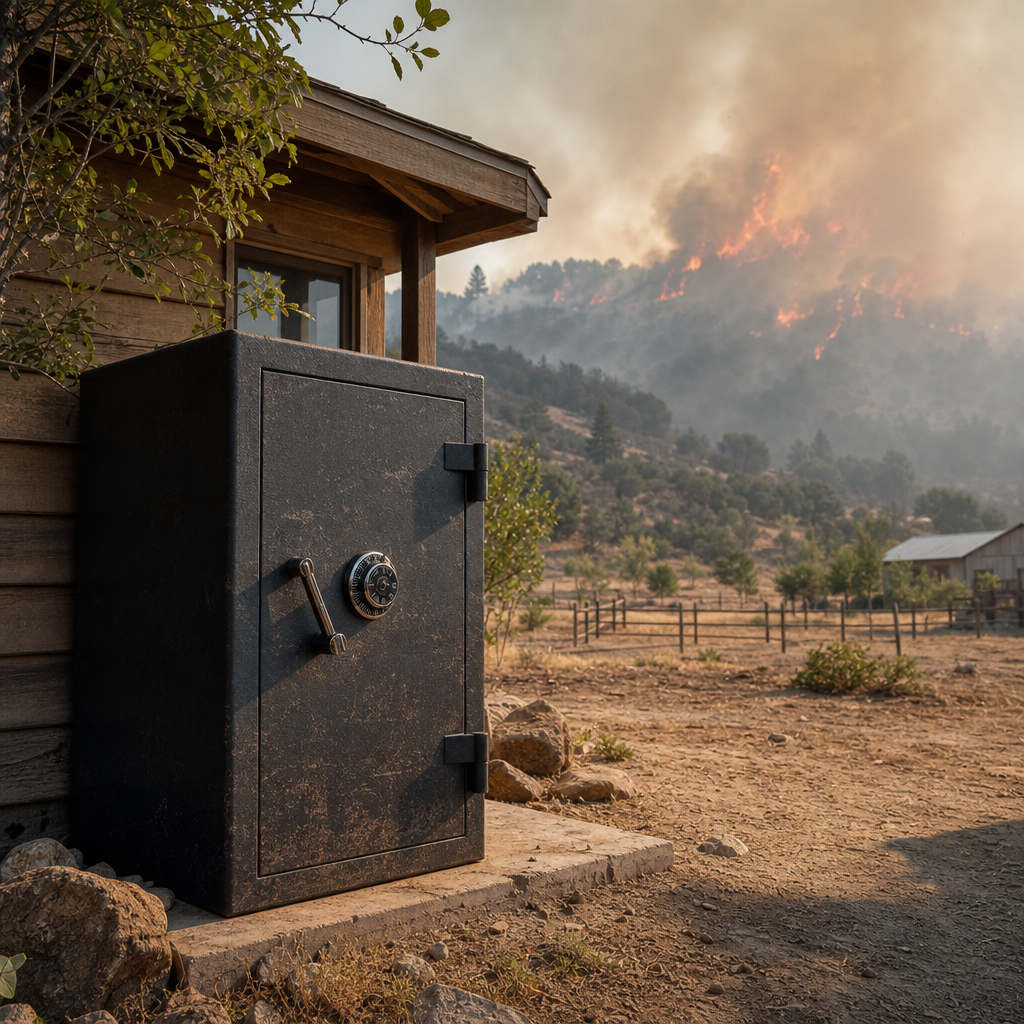
Choosing the best fireproof safe for rural and wildfire-prone areas starts with understanding a hard truth: no safe is literally fireproof forever, and in severe wildland fire conditions, the wrong model can fail long before help arrives. For homeowners, ranchers, and gun owners outside dense urban service areas, that distinction matters. Response times are often longer, structures may rely on wells or propane, and a fast-moving ember storm can ignite buildings hours before firefighters can defend them. A safe in this context is not just a lockbox for valuables. It is part of a broader disaster-resistant storage strategy designed to protect firearms, documents, cash, digital media, heirlooms, and regulated items during heat, smoke, impact, and collapse.
When people search for a fireproof safe, they usually mean a safe that can maintain an internal temperature below a failure threshold for a stated period under test conditions. Paper chars at roughly 350 degrees Fahrenheit, while many electronic media products fail at much lower temperatures, often around 125 to 150 degrees. That is why fire ratings differ. A document safe that protects deeds and passports may not adequately protect backup drives, optics, or heat-sensitive components. In rural and wildfire-prone areas, the best choice is usually a true fire-rated safe with burglary resistance, substantial steel construction, expanding door seals, and enough mass to stay in place if the structure collapses or a crew needs to move around it during suppression and cleanup.
This topic matters because wildfire exposure is different from a typical house fire. In many home fires, contents are threatened by intense interior heat for a limited period before suppression begins. In a wildfire, a property may face radiant heat, repeated ember intrusion, secondary structure ignition, and prolonged burning with little intervention. I have helped buyers evaluate safes after actual fire losses, and the pattern is consistent: lightweight cabinets marketed with vague “fireproof” language disappoint, while independently tested safes placed carefully inside the home perform markedly better. For a sub-pillar hub on fireproof and disaster-resistant storage, the key is to define how ratings work, which construction details matter, where to place the safe, and how this choice fits into the larger Gun Safes & Safety plan for long-term protection.
How wildfire conditions change safe selection
The best fireproof safe for wildfire-prone areas is usually heavier, better insulated, and more conservatively rated than what works in a suburban office or apartment. Rural fires often involve longer heat exposure because emergency access is slower and water supply can be limited. A safe that survives 30 minutes in a marketing demonstration may not survive a fully involved outbuilding or residence that burns unchecked. Buyers should prioritize safes with verified fire ratings from recognized testing bodies such as UL, ETL, Intertek, or manufacturer tests that clearly state duration and temperature rather than using generic wording like “fire resistant” without specifics.
Wildfire also creates hazards beyond direct flame. Wind-driven embers can enter vents, attics, and garages, igniting a structure in multiple places. That means the safe may be exposed to asymmetric heat, heavy smoke, and debris impact from roof collapse. In my experience, composite safes with poured or layered fire insulation between steel walls usually outperform thin-gauge gun cabinets lined with gypsum board. The added mass slows heat transfer. Door construction matters too. Continuous locking bolts are useful for burglary resistance, but a high-quality intumescent seal around the door frame is just as important because it expands when heated and helps block smoke and hot gases from entering the interior.
Rural properties also tend to store more than paper. A single safe may hold passports, hard drives, NFA paperwork, jewelry, handguns, optics, and family records. That mixed-content use argues for careful compromise. If the priority is paper documents and firearms, a quality gun safe or home safe with a strong fire rating may be enough. If digital media is essential, add a smaller media-rated chest inside the larger safe. This layered approach is one of the most reliable disaster-resistant storage methods because it addresses different temperature thresholds without requiring separate large safes.
What fire ratings actually mean
A fire rating is only useful if you know the test standard, temperature, and duration. For paper protection, many buyers look for 60, 90, or 120 minutes of fire resistance at temperatures ranging from roughly 1200 to 1850 degrees Fahrenheit depending on the test. A longer rating generally offers more margin in wildfire conditions, although construction quality and seal integrity still matter. Ratings from established labs carry more weight than self-certified claims because they describe repeatable conditions and pass criteria.
The common mistake is assuming every “fireproof safe” protects all contents equally. That is false. Paper survives at higher temperatures than digital media. Photos, USB drives, SSDs, and backup disks can be destroyed in a safe that still leaves paper intact. The same applies to some firearm accessories, adhesives, and optics components. If your safe serves as the central point for disaster-resistant storage, match the rating to the most vulnerable item you cannot easily replace. For many households, that means wills, tax records, trust documents, title paperwork, encrypted backups, and serialized firearm records.
Humidity is another overlooked issue. Fire-insulated safes often retain moisture, especially in variable rural climates. If guns are stored inside, use a dehumidifier rod or desiccant system and inspect regularly. A safe that saves contents from fire but allows corrosion over several seasons is not doing its full job. This is where fire protection and gun safe safety overlap directly: long-term firearm storage requires stable humidity, sensible organization, and protection from unauthorized access as much as from disaster.
Best safe types for rural properties and outlying homes
For most rural homeowners, the best option is a heavy fire-rated gun safe or residential security container from a reputable manufacturer, anchored to a concrete slab and placed inside the conditioned part of the home. Brands vary by region, but the best models share similar characteristics: thick steel bodies or composite construction, robust boltwork, quality relockers, tested fire seals, and detailed published ratings. A true safe built for both burglary resistance and fire endurance is preferable to a big-box cabinet that emphasizes capacity over structure.
If your main goal is documents and valuables rather than long guns, a UL-classified fire safe or insulated home safe may be better than a gun safe. These units often provide superior interior fit for records, cash, passports, and small electronics. For households with mixed needs, I often recommend a primary gun safe for firearms and a secondary media-rated document chest inside or beside it. This hub approach to fireproof and disaster-resistant storage reflects real use patterns better than forcing every item into one compartment.
For detached shops, barns, and garages, caution is warranted. These structures often ignite faster and burn hotter because they contain fuel, vehicles, solvents, hay, or tools. Putting your only safe in an outbuilding increases risk substantially. If no indoor option exists, choose the highest fire rating you can afford, elevate the safe above potential water intrusion, anchor it securely, and understand the compromise. In wildfire country, the safest location is usually inside the main residence, away from exterior walls and away from rooms with high fuel loads.
| Safe type | Best use | Strengths | Limitations |
|---|---|---|---|
| Fire-rated gun safe | Firearms, paper records, valuables | Good capacity, burglary resistance, broad utility | Media protection usually limited without inner chest |
| Document fire safe | Passports, deeds, legal files, cash | Optimized interior layout, strong paper protection | Less suitable for long guns and bulky gear |
| Media-rated safe or chest | Drives, photos, digital backups | Lower internal temperature limits | Smaller capacity, often needs pairing with larger safe |
| Lightweight cabinet with fire lining | Budget storage | Lower cost, easier delivery | Weaker burglary and fire performance in severe events |
Construction features that matter most
Steel thickness is important, but by itself it does not make a safe fire resistant. Fire endurance comes from insulation design, door fit, and total mass. Composite safes may use proprietary concrete-like fills or multi-layer systems that absorb heat more effectively than thin steel shells. Heavier safes generally perform better in real fires because they take longer to heat through, though weight also affects installation and floor loading. On slab foundations common in rural builds, that is often manageable; on raised floors, confirm structural support.
Look closely at the door. The gap between the door and body is a common failure point. Quality safes use intumescent seals that expand under heat, helping block smoke and flame. Multiple active bolts on the opening side and dead bars on the hinge side improve security after a collapse or attempted pry attack. Hard plates, relockers, and protected lock bodies are meaningful burglary features, especially for remote properties where thieves may have more time and privacy. An electronic lock can be convenient, but in dust, smoke, and temperature swings, many rural owners still prefer a mechanical dial or at least a proven commercial-grade keypad with an external battery option.
Interior layout also matters more than buyers expect. Crowding rifles tightly together increases handling damage and discourages proper organization. Shelves for documents, ammunition separation where lawful and prudent, and dedicated spaces for handguns or optics improve day-to-day use. Better organization means the safe stays closed, locked, and useful rather than becoming a cluttered last-minute dump point before evacuation. That practical usability is a serious part of safety planning.
Where to install a fireproof safe in wildfire country
The ideal safe location is low in the structure, on concrete if possible, away from exterior walls, windows, and obvious fuel sources. Interior corners of first-floor rooms often work well. Basements can be excellent for fire protection, but in some rural regions they increase moisture or flood exposure, so conditions matter. Garages are usually poor choices because they have large doors, frequent temperature swings, fuel sources, and higher odds of early ignition. Utility rooms can also be problematic if they contain water heaters, electrical panels, or combustible storage.
Anchoring is nonnegotiable. A heavy safe can still be tipped, moved with equipment, or shifted during structural failure. Proper anchors into concrete improve both theft resistance and fire survivability by helping the safe stay upright with the door sealed. Maintain clearance to fully open the door and to inspect seals annually. If the home is in a designated wildfire interface zone, think beyond the safe itself: ember-resistant vents, Class A roofing, defensible space, noncombustible landscaping near the structure, and hardened eaves all increase the odds that the safe will only have to withstand limited interior fire rather than total building loss.
Building a complete disaster-resistant storage plan
The right safe is the center of the system, not the entire system. For comprehensive fireproof and disaster-resistant storage, combine physical protection with redundancy. Store originals of critical documents in the safe, keep encrypted digital copies in a secure cloud service, and maintain a second backup offsite. Photograph serial numbers for firearms and high-value tools, and update the inventory after every major purchase. If evacuation becomes necessary, having accessible copies of identification, insurance records, and prescriptions can save days of recovery time.
Review insurance as part of safe selection. Standard homeowners policies may impose sublimits on firearms, cash, jewelry, or collectibles. A safe reduces risk, but it does not replace adequate coverage. In remote areas, I also advise clients to think about water and impact. Post-fire suppression, burst plumbing, and roof collapse can destroy contents that survived initial heat. Waterproof document pouches, elevated shelving inside the safe, and sealed media containers add low-cost resilience. The best fireproof safe for rural and wildfire-prone areas is therefore the one integrated into a larger plan: strong rating, smart placement, controlled humidity, anchored installation, documented contents, and backups beyond the home.
In rural and wildfire-prone areas, the best fireproof safe is usually not the cheapest, the lightest, or the one with the biggest advertised capacity. It is the model that combines a verified fire rating, strong burglary resistance, substantial mass, quality seals, and placement inside the most protected part of the home. For most households, that means a heavy fire-rated gun safe or document safe from a reputable maker, anchored to concrete, supplemented by a media-rated chest if digital backups matter. That combination addresses the realities of longer response times, ember-driven fire spread, and mixed storage needs better than marketing claims ever will.
The main benefit is simple: a well-chosen safe buys time when time is exactly what a wildfire takes away. It protects irreplaceable records, supports responsible firearm storage, reduces theft risk, and gives you a more orderly recovery if disaster strikes. As the hub for fireproof and disaster-resistant storage within Gun Safes & Safety, this topic connects directly to related decisions about safe placement, humidity control, inventory management, backup strategy, and insurance limits. Each of those choices reinforces the others.
If you are evaluating safes now, start by listing what must survive, then compare independent fire ratings, construction details, and installation locations before you buy. Choose for the fire you could actually face, not the sales tag you wish were true.
Frequently Asked Questions
What type of fireproof safe is best for rural and wildfire-prone areas?
The best choice is usually a true fire-rated safe built for extended heat exposure, not a lightweight lockbox or a basic “fire-resistant” document chest. In rural and wildfire-prone areas, the biggest issue is duration. A house fire in town may be attacked quickly, but a wildfire can burn through a structure, leave it exposed to radiant heat, and delay suppression for a long time. That means you want a safe with a verified fire rating from a recognized testing standard, thick body construction, substantial door seals, and enough mass to resist rapid internal temperature rise. Models with longer ratings at higher temperatures generally offer better real-world protection when emergency response is delayed.
For many homeowners, the most practical option is a heavy fire safe designed for both document and valuables protection, ideally with a fire rating that gives meaningful protection beyond the minimum consumer standard. For gun owners, a gun safe with genuine fire insulation and a credible tested rating is often better than a thin steel cabinet marketed as a “safe.” In wildfire country, weight and insulation matter because they slow heat transfer. If the safe will hold critical papers, digital media, firearms, heirlooms, or cash, look for a model sized appropriately so contents are not packed tightly against the walls, since interior edges can heat faster than the center. In short, the best safe is a heavy, independently tested, properly installed fire-rated model chosen for longer-duration exposure rather than just a low price or a marketing label.
Are all fireproof safes really fireproof in a severe wildfire?
No. “Fireproof” is a convenient term, but it is not literally accurate in the way many buyers assume. No safe can guarantee indefinite protection under every condition, especially in a severe wildland-urban interface fire where temperatures, burn time, collapsing debris, and repeated reignition can all exceed normal residential fire assumptions. What matters is how long the safe can keep its internal temperature below the damage threshold for the items inside. Paper documents, hard drives, electronics, photographs, and ammunition all tolerate heat differently, so the safe’s rating has to match what you are actually protecting.
This is especially important in rural settings. A safe that performs well in a short-duration house fire may still fail if the building burns unchecked, the roof collapses onto it, or it sits in a smoldering debris field for hours. That does not mean fire-rated safes are useless; it means buyers should have realistic expectations. The safer approach is to think in layers: choose a genuinely fire-rated safe, place it strategically inside the structure, reduce surrounding fuel hazards, and avoid storing irreplaceable items in ways that assume the safe alone will solve every wildfire risk. A quality fire-rated safe is a critical part of a protection plan, but it is not magic, and understanding that difference helps you make a much smarter purchase.
What fire rating should I look for if I live far from fire services?
If you live where fire response may be delayed, it makes sense to prioritize safes with longer and more credible fire endurance ratings rather than the cheapest entry-level options. In practical terms, that means looking beyond simple advertising phrases and studying the actual test information: temperature, duration, and who performed the testing. A safe rated to withstand a higher external temperature for 60, 90, or 120 minutes will generally provide more confidence than a model with a minimal short-duration rating, especially in isolated areas where a structure may burn longer before anyone can intervene.
You should also match the rating to the contents. Paper can survive internal temperatures that would still destroy digital media, external hard drives, backup drives, photos, and some firearm accessories. If you plan to store electronic records, optical media, flash drives, or sensitive devices, you may need additional internal protective containers or a media-rated solution, because many standard fire safes are designed mainly for paper preservation. Buyers in wildfire-prone areas should also pay attention to whether the safe’s rating comes from independent testing or only from the manufacturer’s internal claims. A longer fire rating from a reputable source is generally worth paying for when your property is remote and exposure may last much longer than a typical suburban incident.
Where should a fireproof safe be installed in a rural home to improve wildfire survival?
Placement matters more than many people realize. In wildfire-prone areas, a safe should ideally be installed in the lowest, most protected part of the home, away from exterior walls, large windows, garages with fuel loads, and rooms where fire is likely to intensify quickly. Interior locations on a concrete slab are often preferred because they reduce exposure to direct flame, falling debris, and extreme radiant heat from outside. A garage may seem convenient, but in rural properties it often contains gasoline, tools, vehicles, ammunition, feed, or combustible storage that can dramatically increase fire severity. Bedrooms on exterior walls are also less ideal than centrally located interior spaces.
Bolting the safe down is important for both theft resistance and stability during structural collapse, but installation should also account for moisture, accessibility, and weight-bearing capacity. In homes with raised foundations, basements, utility rooms with concrete floors, or protected interior closets may offer better performance than upstairs installations. The goal is to place the safe where it is least likely to be engulfed early or buried under the most intense burning materials. Rural owners should think beyond convenience and ask where in the structure heat exposure is likely to be lowest and longest-delayed. A good safe in a poor location can underperform, while a well-placed safe may gain valuable extra time during a wildfire event.
Is a gun safe a good option for protecting documents, valuables, and firearms in wildfire country?
It can be, but only if it is a real safe with meaningful fire protection rather than a thin metal cabinet dressed up with security features. Many gun safes are purchased for burglary deterrence and storage capacity, yet their fire claims vary widely. In wildfire country, that distinction is important because a safe that keeps children or thieves out may still offer limited protection once the structure is fully involved. If you want one safe to protect firearms, paperwork, family records, jewelry, cash, and other valuables, choose a model with substantial fire insulation, a tested fire rating, quality door seals, and enough interior space to organize contents without putting sensitive items directly against the walls.
That said, a gun safe is not automatically the best environment for every type of item. Documents and digital backups often benefit from added internal organization, sealed pouches, or secondary document boxes to reduce moisture and heat transfer. Firearms also introduce considerations like humidity control, rust prevention, and ammunition storage practices. For many rural property owners, the best setup is a well-built fire-rated gun safe for firearms and durable valuables, combined with a smaller internal document or media container for especially sensitive records. This layered approach recognizes the realities of wildfire exposure while still meeting everyday security needs. In other words, a quality gun safe can be a very good solution, but only when it is selected for true fire performance, not just capacity or appearance.