
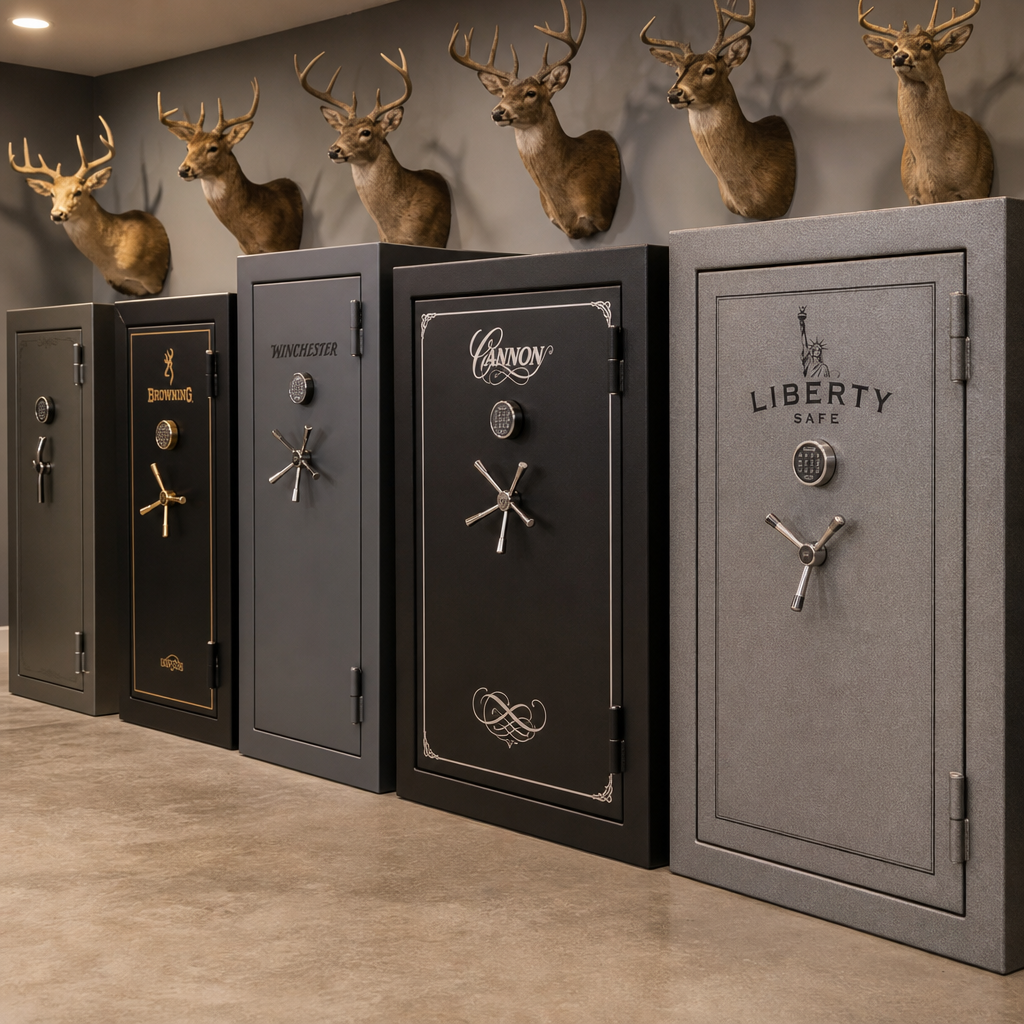
Gun safe ratings look simple on product pages, but they vary sharply in meaning, testing rigor, and real-world protection from one brand to another. In my experience comparing safes for homeowners, collectors, and small businesses, the biggest mistake buyers make is assuming that a thicker steel body, a longer fire number, or a recognizable logo automatically means better security. A safe rating is a shorthand label tied to burglary resistance, fire endurance, lock reliability, or storage standards, and each category matters for different reasons. Understanding how safe ratings differ among popular gun safe brands helps you separate marketing claims from independently verified protection. That matters because a gun safe is not just furniture; it is a security control that affects theft prevention, child access prevention, insurance documentation, and in some states legal compliance. This hub article explains the major rating systems, how leading gun safe brands approach them, where common specifications can mislead shoppers, and how to compare brands with confidence before you drill anchor holes or move seven hundred pounds of steel into your home.
What Gun Safe Ratings Actually Measure
Gun safe ratings usually refer to one of four things: burglary resistance, fire resistance, lock certification, and sometimes California Department of Justice compliance for firearm safety devices. Those categories are not interchangeable. A burglary rating evaluates how difficult the safe is to force open using tools and attack methods defined by a testing standard. A fire rating measures whether the interior stays below a specified temperature for a set period during a controlled burn. A lock rating addresses manipulation resistance, forced entry resistance, and reliability of the lock itself rather than the entire safe body. Compliance listings confirm that a product meets a state standard, but they do not make it the strongest option in every category.
The most widely respected burglary benchmarks in the broader safe industry come from UL, especially Residential Security Container and TL classifications. An RSC label means the container resisted a limited attack by one person using common hand tools for five minutes of net working time. That is better than no independent rating, but it is still an entry-level benchmark. By contrast, TL-15 and TL-30 safes are built and tested to withstand much more serious attacks on the door, and in some cases the body, using a larger tool list. Very few mainstream gun safes qualify for true TL ratings because those designs are heavier, costlier, and often smaller inside due to thicker composite construction.
Fire ratings vary even more because many gun safe brands rely on in-house testing rather than an external laboratory protocol. One brand may advertise ninety minutes at 1,400 degrees, while another claims sixty minutes at 1,680 degrees, yet those numbers may come from different furnace curves, pass criteria, and cooling phases. In practical terms, that means side-by-side comparisons can be misleading unless the test method is disclosed. Brands that publish more detail about the testing environment, sensor placement, and post-fire inspection deserve more trust than brands offering only a sticker and a round number.
Lock ratings are often easier to verify. UL Type 1 electronic locks and UL-listed mechanical locks indicate a recognized baseline for lock quality. Popular lock manufacturers such as Sargent and Greenleaf, SecuRam, and La Gard are common across major gun safe brands. When two safes use similar lock hardware, the real difference often comes from boltwork, relockers, hard plates, door construction, and how well the lock is integrated into the overall security design.
Why Popular Gun Safe Brands Use Ratings Differently
Popular gun safe brands target different buyers, and that shapes which ratings they emphasize. Entry-level brands sold through sporting goods chains and warehouse clubs often focus on capacity, cosmetics, and accessible pricing. Their product pages usually highlight steel gauge, locking bolt count, and a long fire number because those details are easy to market. Mid-tier brands aim at enthusiasts who want thicker bodies, upgraded interiors, better weld quality, and stronger doors without entering commercial safe pricing. Premium brands lean harder on independent certifications, custom options, thicker plate steel, and domestic manufacturing details because their customers are more likely to ask about body construction, door gaps, relockers, and actual certification labels.
That is why two popular safes with similar exterior dimensions can perform very differently. A lower-priced model may use formed sheet steel, drywall-based fire lining, a door organizer, and numerous small locking bolts. A higher-end model may use fewer but stronger bolts, a thicker plate door, a reinforced frame, a better hard plate, and superior fit around the door edge. The second safe may have fewer flashy numbers on the brochure while delivering significantly better resistance to pry attacks. In field comparisons, I have repeatedly found that hinge-side reinforcement, door frame geometry, anchor provisions, and body thickness matter more than oversized claims about gun count or decorative hardware.
Brand reputation also affects consistency. Established manufacturers with stable dealer networks usually have fewer unexplained specification changes and better parts support. That matters because lock failures, dehumidifier wiring issues, and door alignment problems do occur over time. A rating on paper is useful only if the brand can support the safe ten years later with replacement lock options, warranty service, and knowledgeable technicians.
How Major Brands Commonly Compare on Security and Fire Claims
Several mainstream names dominate gun safe comparisons, including Liberty, Cannon, Browning, Winchester, Rhino, Sports Afield, Hollon, AMSEC, and Fort Knox. Their lineups are broad, so no single statement covers every model, but clear patterns exist. Liberty has long been strong in the mass-premium category, with broad dealer distribution, recognizable branding, and good feature packaging. Many Liberty models are RSC-rated, and upper lines add thicker steel and better fire packages, but shoppers still need to compare exact body gauge and door construction because the lineup ranges from value-oriented to substantially upgraded.
Cannon and Winchester often compete heavily in big-box retail, where advertised capacity and fire duration drive sales. Some models offer attractive interiors and broad feature sets for the money, but independent burglary ratings and steel thickness can vary significantly by series. Browning safes are known for interior organization and branding appeal, and some lines deliver solid practical value, yet comparisons should still center on the exact shell thickness and certification details rather than accessory packages. Sports Afield generally serves budget-conscious buyers looking for first safes, and while that can be appropriate for light risk environments, shoppers should keep expectations aligned with the price point.
AMSEC, Hollon, and Fort Knox are often discussed more seriously by buyers who prioritize security over showroom styling. AMSEC in particular spans from standard gun safes to true high-security safes, making it one of the few brands where a customer can move from an RSC-level product into TL-rated options under the same manufacturer umbrella. Hollon has earned attention for offering heavier steel and stronger specifications in certain models than many comparably priced competitors. Fort Knox emphasizes customization, domestic manufacturing, and heavier build options, which appeals to buyers who want to configure steel thickness, lock type, and interior layout more precisely.
| Brand | Typical Market Position | Common Rating Emphasis | Main Buying Caution |
|---|---|---|---|
| Liberty | Mass-premium residential | RSC, fire duration, dealer support | Compare exact series because construction varies widely |
| Cannon | Big-box to mid-tier | Fire claims, capacity, feature value | Do not assume all lines have equal steel strength |
| Browning | Mid-tier brand-focused buyer | Interior organization, fire claims, styling | Accessory appeal can distract from shell specifications |
| Winchester | Retail-driven value segment | Capacity, price, familiar brand name | Model-specific security details matter more than logo |
| Sports Afield | Entry-level residential | Affordability, basic fire and lock features | Best for lower-risk use cases, not severe attack resistance |
| AMSEC | Security-focused mid-tier to premium | Independent ratings, steel options, commercial crossover | Higher-end protection usually means higher weight and cost |
| Hollon | Value-heavy steel buyer | Thicker steel in some lines, practical security specs | Need to verify dealer service and model availability locally |
| Fort Knox | Premium customizable safe buyer | Build options, steel upgrades, fit and finish | Configured price can rise quickly with upgrades |
Burglary Ratings: The Biggest Difference Between Brands
If you compare gun safe brands seriously, burglary resistance is the category where differences become most meaningful. Many residential gun safes are unrated or carry only an RSC label, which is acceptable for many homes but should not be confused with commercial-grade protection. An RSC can deter opportunistic burglars and slow down smash-and-grab theft, especially if it is properly anchored and placed in a constrained location such as a closet corner or basement alcove. It is less reassuring against a crew with pry bars, grinders, and privacy to work.
The specification most buyers should check first is body steel thickness expressed in gauge or inches. Because gauge numbers run backward, 12-gauge steel is thicker than 14-gauge, and 10-gauge is thicker still. Many retail gun safes use 14- to 12-gauge bodies, while stronger residential models may move toward 10-gauge or thicker. Door construction also matters. Some brands use composite doors that look massive but rely on folded metal and internal layers rather than a true solid plate front. There is nothing inherently wrong with composite construction, but it must be evaluated honestly. A thick-looking door does not equal thick plate steel at the attack surface.
Pry resistance depends on the interaction between the door edge, frame design, bolt engagement, and gap tolerances. I have seen safes with impressive bolt counts lose practical advantage because the frame allowed too much access for pry tools. Conversely, a safe with fewer active bolts and a better interlocking door profile can be much tougher to peel open. This is one reason AMSEC, Fort Knox, and some heavier Hollon models often stand out in direct comparisons with lighter retail brands. The engineering tends to focus less on brochure-friendly bolt counts and more on actual resistance pathways.
Fire Ratings: Useful, but Often the Most Misunderstood
Fire ratings influence many gun safe purchases because house fire is a familiar fear, but this is also where brand claims diverge the most. Most gun safes use gypsum-based insulation layers that release steam under heat, slowing temperature rise inside the safe. This method can work, but results depend on insulation thickness, door seals, seam quality, and test protocol. A stated fire rating is not meaningless, yet it is often less comparable across brands than buyers assume.
Look for details beyond the headline number. Was the safe tested to keep the interior below 350 degrees Fahrenheit, a common threshold for protecting paper? Were sensors placed near the top, where heat accumulates? Did the test include a cool-down period in the furnace, which can be critical because safes continue absorbing heat after peak flames? Was the rating verified by UL or Intertek, or was it based on proprietary testing? Brands that disclose these details show greater confidence in their claims.
For firearms specifically, fire protection is not just about wood stocks and optics. Ammunition, documents, passports, suppressor paperwork, hard drives, and family records often share the same interior. That means the best choice may be a stronger burglary safe paired with document protection inside, such as a smaller UL-classified media or document box for irreplaceable papers. In practice, that layered approach often beats choosing a lighter safe solely because it advertises a longer burn number.
What This Means for Hub-Level Gun Safe Brand Comparisons
As a hub for gun safe comparisons and brand spotlights, the most important takeaway is that brand-level generalizations are only a starting point. Every comparison should drill into specific series, exact model numbers, steel thickness, certification labels, lock brand, anchor design, warranty terms, and dealer support. A Liberty entry model should not be compared casually with a Fort Knox custom build, just as a Sports Afield cabinet-level safe should not be measured by the same expectations as an AMSEC BF or a TL-rated security container.
Use brand reputation to narrow the field, then verify the facts that actually determine protection. Ask for the UL label, not just the catalog copy. Confirm body thickness in inches or gauge, and ask whether the door face is plate steel or a layered assembly. Check whether the lock is UL-listed and whether the safe includes relockers and drill-resistant hard plates. Evaluate the fire claim with skepticism unless the test method is clear. Finally, plan installation as part of the rating discussion, because anchoring, room placement, humidity control, and concealment can raise real-world security more than a small difference in brochure numbers.
The best gun safe brand for one buyer may be the wrong choice for another. A first-time owner in a suburban home may do well with a properly anchored RSC from a reputable mass-market brand. A collector with high-value optics, NFA items, and a predictable travel schedule may need heavier steel, better anti-pry geometry, and possibly a true high-security safe. Compare ratings with that risk profile in mind, and you will make a far better decision than if you shop by logo, paint finish, or advertised gun count alone. Start with the ratings, verify the construction, and then explore the individual brand spotlights and model comparisons that branch out from this hub.
Frequently Asked Questions
What do gun safe ratings actually measure, and why do they differ so much between brands?
Gun safe ratings can refer to several very different things, which is exactly why they create so much confusion for buyers. One brand may highlight a burglary rating, another may emphasize a fire endurance claim, and another may focus on California DOJ compliance or internal locking standards. Those labels are not interchangeable. A burglary-related rating is meant to reflect resistance to forced entry using specific tools and time limits. A fire rating is intended to estimate how long the interior may stay below a certain temperature during heat exposure. A storage compliance label may only indicate that the safe meets a minimum standard for firearm containment, not that it offers high-end burglary protection.
The reason ratings differ so much from brand to brand is that not all manufacturers use the same testing body, the same test conditions, or even the same definitions. Some safes are evaluated by independent third-party labs such as UL, while others rely on proprietary in-house testing. That does not automatically mean an in-house claim is false, but it does mean buyers should treat it differently. A “90-minute fire rating” from one company may be based on a very different furnace profile, maximum temperature, or pass/fail threshold than a similar claim from another. Likewise, a thick steel door on a product page may look impressive, but if the body steel is thin and there is no meaningful burglary certification, the overall protection may still be limited.
In practice, the safest way to compare brands is to separate ratings into categories: burglary resistance, fire performance, lock quality, and legal storage compliance. Once you do that, the differences become clearer. A brand known for attractive marketing may not have the same testing rigor as one that publishes third-party certifications. So the rating itself is not enough; what matters is who issued it, what was tested, how it was tested, and whether that result matches your actual risk profile at home, in a collection room, or in a small business setting.
Is a higher fire rating always better, or can fire numbers be misleading when comparing gun safe brands?
Higher fire numbers can be helpful, but they are often one of the most misleading specs on a gun safe product page. The first issue is that fire ratings are not always generated under identical conditions. One brand may advertise 60 minutes at 1,200 degrees, another may claim 90 minutes at 1,400 degrees, and a third may publish a number without clearly explaining the test method at all. If you do not know the furnace temperature, the interior temperature threshold, whether the safe was preheated, and whether the test included a cool-down period, you are not making a true apples-to-apples comparison.
Another important point is that real house fires do not behave like controlled lab tests. Fire duration, temperature peaks, structural collapse, water exposure from suppression efforts, and where the safe is placed in the home all affect performance. A safe with a longer advertised fire time may not protect contents better in a real event if its seals, insulation, or door gaps are inferior. Conversely, a conservatively rated safe from a more transparent manufacturer may outperform a competitor with a larger marketing number. This is why experienced buyers look past the headline figure and ask how the test was conducted and whether it was independently verified.
For most gun owners, the practical takeaway is this: use fire ratings as one comparison tool, not the deciding factor by itself. If you are storing documents, optics, ammunition records, or heirloom firearms with wood stocks and sensitive finishes, consistent fire protection matters. But so do seal quality, insulation design, door construction, and placement within the structure. A well-built safe with a credible fire claim and solid burglary resistance is usually a smarter buy than one with an impressive fire number and weak overall construction.
How important is third-party testing like UL compared with a manufacturer’s own rating claims?
Third-party testing is extremely important because it introduces a level of consistency and accountability that manufacturer-only claims often lack. When a safe or lock carries a UL classification, for example, it tells you that an outside organization tested that component or product against a defined standard. That does not guarantee the safe is perfect, but it gives the rating more credibility than a marketing statement with no independent backing. For buyers comparing popular gun safe brands, this is one of the clearest ways to tell whether a rating reflects a recognized benchmark or simply a brand’s internal interpretation of performance.
That said, not every worthwhile safe will carry a high-level third-party burglary classification, especially in the residential gun safe category. Many consumer gun safes are built to price points that make full commercial-style certification less common. In those cases, buyers should not automatically dismiss the product, but they should ask better questions. Was the lock independently rated? Are there published steel thickness details for both the door and body? Does the manufacturer explain the fire test protocol? Are there anti-pry features, relockers, hard plates, or anchor provisions? The more transparent the company is, the more confidence you can have in what the ratings mean.
In short, third-party testing should carry more weight whenever it is available. It is especially valuable if you are protecting a sizable firearm collection, expensive optics, NFA items, or inventory in a small business. If a brand offers only internal ratings, the burden shifts to the buyer to verify what those claims represent. A recognizable brand name alone should never substitute for real testing details.
Does thicker steel automatically mean a safer gun safe, or are there other rating factors that matter more?
Thicker steel is important, but it does not automatically make one gun safe better than another. Steel thickness is only one part of burglary resistance, and in many cases buyers focus on it too narrowly. A safe with a thicker door but a much thinner body may still have vulnerable attack points. Likewise, a safe can use respectable steel but lose ground through weak door gaps, poor bolt engagement, lightly built hinges, or inadequate anchoring options. Criminals do not attack a safe based on marketing specs; they attack whichever area gives them the easiest leverage, cutting access, or tipping advantage.
Construction quality matters just as much as raw thickness. Weld integrity, frame design, anti-pry reinforcements, boltwork design, hard plate protection for the lock area, and relocking mechanisms all affect how a safe performs under attack. Even the best body steel can be undermined by a low-quality lock or a door structure that flexes under force. This is why published gauge numbers should be interpreted in context. A lower-gauge steel body is generally stronger than a higher-gauge one, but what really matters is how the entire safe is engineered.
Ratings also need to align with your use case. A homeowner trying to prevent smash-and-grab theft may prioritize anchored installation, decent steel, and a reliable lock. A collector storing higher-value firearms may need stronger burglary features and verified testing. A small business with more frequent access may care about lock durability and audit-friendly access control in addition to physical strength. The best comparison is never just “which safe has thicker steel,” but rather “which safe combines credible ratings, sound construction, and the right level of protection for the actual risk.”
What should buyers look for when comparing popular gun safe brands beyond the advertised rating labels?
The smartest buyers treat rating labels as the starting point, not the conclusion. First, identify what kind of protection you truly need. If the main concern is unauthorized access by children or guests, a compliant locking container with solid basic construction may be sufficient. If you are guarding against determined theft, then you need to examine burglary resistance much more closely. If wildfire or residential fire is a major concern in your area, then fire performance deserves more weight. Once your priorities are clear, you can compare brands based on the details behind the labels instead of getting pulled in by oversized logos and simplified numbers.
Look closely at steel thickness for both the body and door, lock type and lock certification, boltwork design, internal hinges versus external hinges, relocker features, hard plates, and anchor hole provisions. Ask whether the fire seal expands under heat, what insulation system is used, and whether the fire claim was independently tested. Check whether the brand clearly discloses dimensions, usable interior space, and true weight. Heavier is not automatically better, but weight can reflect more material and often gives some insight into overall build. Also pay attention to fit and finish details that reveal manufacturing discipline, such as consistent welds, tight door tolerances, and sturdy shelving that supports realistic firearm storage rather than inflated capacity claims.
Brand reputation should still matter, but in a practical sense. Good indicators include responsive warranty support, available replacement parts, locksmith service compatibility, transparent documentation, and a history of honoring fire or lock-related claims. Reviews can be helpful, but they should be filtered carefully because many focus on delivery experience rather than long-term protection. Ultimately, the best brand is the one that provides clearly explained ratings, honest construction details, and a level of protection that matches your budget and risk. The buyers who make the best decisions are usually the ones who dig one layer deeper than the rating badge on the product page.