
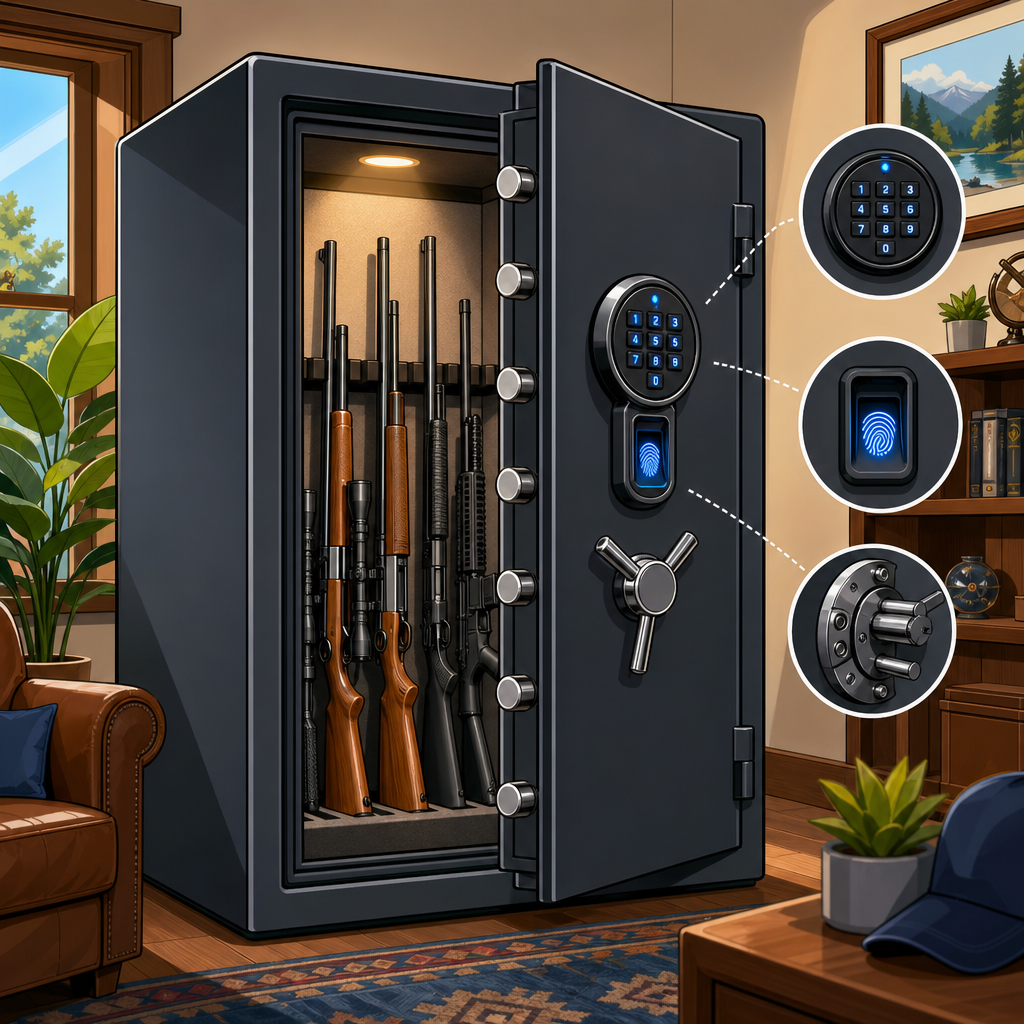
Choosing the best gun safes that provide advanced locking mechanisms starts with understanding that a safe is not just a steel box; it is a layered security system designed to prevent unauthorized access, delay theft, protect firearms from fire and humidity, and support responsible ownership. In buying guides for gun safes, “advanced locking mechanisms” refers to lock systems that go beyond basic key entry, including electronic keypad locks, biometric fingerprint readers, mechanical dial combinations with relockers, dual-entry systems, smart monitoring features, hard plate drill protection, and bolt-work engineered to resist prying and punching attacks. I have evaluated safes in showrooms, at dealer warehouses, and during home installations, and the most important lesson is consistent: the lock is only one part of the equation, but it is the first part that fails a buyer when chosen poorly. A fast biometric reader sounds impressive until it struggles with dry fingers, and a low-cost electronic keypad may feel modern while using bargain components with uneven reliability.
This topic matters because a gun safe sits at the intersection of safety, legal risk, theft prevention, and daily usability. A safe that is too slow to open may frustrate the owner into unsafe storage habits. A safe that is easy to attack defeats its purpose during a burglary. A lock with weak programming controls can expose access codes to family members or guests who should never have entry. For many households, the right safe must balance quick access for defensive firearms with deep storage security for rifles, optics, ammunition, documents, and valuables. That is why a strong buying guide should compare lock types, construction standards, installation requirements, and the tradeoffs between convenience and resilience. The best models are built by established manufacturers such as Fort Knox, Liberty Safe, AMSEC, Browning, Rhino Metals, Vaultek, and Hornady, but even within those brands, performance varies widely by line, lock package, and intended use.
As a sub-pillar hub for gun safe buying guides, this article covers the core questions shoppers ask before purchasing: which lock type is most secure, which safe style fits different firearm collections, what construction features matter most, how to compare leading options, and what mistakes to avoid before spending serious money. If you are comparing long-gun safes, home-defense quick-access vaults, modular safes, or fire-rated cabinets, the same principle applies: buy for your threat model, not the marketing label. A secure gun safe should match the firearms you own, the speed of access you need, the burglary risk in your area, and the installation conditions inside your home.
What Advanced Locking Mechanisms Really Mean in a Gun Safe
Advanced locking mechanisms in gun safes combine lock technology, anti-tamper engineering, and access control. The main lock categories are mechanical combination, electronic keypad, biometric, and redundant systems that offer two or more entry methods. Mechanical locks from recognized makers such as Sargent and Greenleaf or La Gard remain respected because they do not depend on batteries, software, or sensors. They are slower, but in my experience they are still the reliability benchmark for long-term ownership. Electronic keypad locks are popular because they open faster, support code changes without a locksmith, and often integrate lockout features after repeated failed attempts. Better units also include EMP-resistant backup options, though claims in this area should always be verified rather than assumed.
Biometric locks use fingerprint matching and are common on pistol safes and bedside vaults. The advantage is speed: some quality units open in under one second. The limitation is that biometric performance depends on sensor quality, enrollment accuracy, finger condition, and firmware tuning. Cheap biometric safes are notoriously inconsistent. Better examples, including models from Vaultek and Hornady, allow multiple stored prints, backup keypad entry, and app-based audit logs. Dual-lock or redundant-entry systems are often the most practical advanced option because they maintain quick access while preserving a fallback method if one system fails. Beyond entry mode, look for relockers, hardened steel plates around the lock body, anti-drill ball bearings, protected hinges, and multi-directional bolt work. Those features determine whether the lock survives a real attack instead of just looking impressive in product photos.
How to Choose the Right Gun Safe for Your Firearms, Home, and Access Needs
The best gun safe is the one that matches use case first. For a bedside handgun, a compact quick-access safe with a biometric reader and illuminated keypad makes sense. For a growing rifle collection, a full-size long-gun safe with a proven electronic or mechanical lock, at least 10-gauge to 12-gauge steel in the body, reinforced door edges, and anchored installation is usually the better answer. For collectors storing optics, suppressors, and important documents, interior flexibility matters almost as much as lock quality. Adjustable shelving, barrel supports, dehumidifier ports, and power outlets for lighting or monitoring systems turn a static cabinet into an organized security system.
Placement changes the buying decision. A safe installed in a climate-controlled main-floor closet faces different risks than one located in a humid garage or basement. In damp environments, corrosion control matters: use a goldenrod-style dehumidifier, desiccant packs, and interior materials that do not trap moisture. Weight and floor loading matter too. A large safe can exceed 700 pounds before firearms are added, so stairways, slab strength, and bolt-down capability must be considered before purchase day. Fire rating should also be read carefully. Manufacturers may advertise 60 or 90 minutes, but the meaningful questions are test temperature, seal design, and whether the rating comes from an independent standard such as UL rather than internal factory testing alone. Fire protection is valuable, but burglary resistance and proper anchoring still deserve more attention for many buyers because most gun safe losses happen during theft, not total structural fire.
Key Features That Separate a Serious Safe from a Light Security Cabinet
Many shoppers overfocus on lock type and underweight construction. That is a mistake. A premium electronic lock on thin steel does not create real security. Start with body thickness, door construction, and bolt engagement. A true safe generally uses heavier steel, stronger frames, and better door geometry than a simple cabinet. Pry resistance depends on how tightly the door fits the frame, how the bolt work engages, and whether the corners are reinforced. Continuous welds are preferable to light stitch welding. Interior hinges can help reduce attack points, but well-built external hinge safes are also secure when the door has full dead-bar support on the hinge side.
Lock protection features deserve close inspection. Hard plates protect the lock from drill attacks. Relockers trigger if the lock is punched or tampered with, blocking the bolt mechanism. Ball-bearing drill plates can ruin drill bits and slow common burglary methods. Better safes also use gear-driven or rack-and-pinion bolt systems that feel smoother and more robust than loose cam arrangements found in lower-tier units. Door seals matter for fire resistance, but they should not be mistaken for burglary protection. Interior layout is another differentiator. Claimed gun capacity is often inflated; a “36-gun” safe may realistically fit half that number once scoped rifles are involved. When I help buyers size a safe, I usually suggest buying at least 30 percent larger than today’s collection because accessories, paperwork, and future purchases fill space quickly.
| Feature | Why It Matters | What to Look For |
|---|---|---|
| Lock Type | Determines speed, reliability, and user convenience | Mechanical from S&G or La Gard, quality keypad, or redundant biometric/keypad |
| Steel Thickness | Improves resistance to prying and cutting | Heavier body steel, reinforced door, solid frame construction |
| Relockers/Hard Plate | Protects against punching and drill attacks | Internal relocker, hardened drill plate, anti-drill bearings |
| Bolt Work | Keeps door secured under attack | Multi-side locking bolts, dead bars, smooth gear-driven action |
| Fire Protection | Protects firearms and documents during heat exposure | Verified ratings, expanding seals, layered insulation |
| Anchoring | Prevents thieves from removing the whole safe | Factory anchor holes, concrete or structural floor installation |
Best Gun Safe Types and Brand Categories to Compare
For full-size home storage, premium traditional gun safes from Fort Knox, AMSEC, Liberty Safe, Browning, and Rhino Metals dominate the conversation because they offer stronger steel, broader lock choices, and more configurable interiors than discount-store alternatives. AMSEC’s BF series is frequently recommended because it balances residential use, meaningful steel construction, and solid fire protection. Fort Knox is known for customization, heavier builds, and higher-end lock packages. Browning often stands out for interior organization, especially for scoped rifles and mixed-use storage. Liberty has broad dealer availability and varied pricing tiers, though buyers should compare specific series rather than rely on brand reputation alone.
For quick-access handgun storage, Vaultek, Hornady, and some SecureIt products lead due to faster lock systems and better practical ergonomics. Vaultek has built a strong reputation around biometric and smart-safe features, including Bluetooth management, tamper alerts, and rechargeable power systems. Hornady RAPiD safes are popular because RFID access can be extremely fast and simple under stress, though users should still maintain a backup method and train regularly. SecureIt takes a slightly different approach by emphasizing organized firearm access and modularity rather than relying exclusively on traditional bulky safe design. For buyers who prioritize theft delay over immediate home-defense access, a heavier mechanical-lock safe often remains the better main storage choice, paired with a separate quick-access handgun vault near the bed.
Modular safes and cabinets also deserve attention in buying guides. For apartments, upper floors, or homes with difficult stair access, modular systems can be carried in pieces and assembled in place. They are not always as robust as welded heavy safes, but some provide a smart compromise when delivery constraints would otherwise leave firearms unsecured. If you are deciding between one large safe and two smaller units, two safes can improve organization and reduce the chance of all firearms being exposed if one lock or location is compromised.
Common Buying Mistakes and How to Avoid Them
The first mistake is buying on interior capacity claims alone. Safe capacities are marketing numbers based on tightly packed, unscoped firearms. Real collections include slings, bipods, pistol grips, lights, suppressors, and optics that consume space fast. The second mistake is treating any digital lock as an upgrade. Quality varies widely. A dependable electronic lock from a recognized lock manufacturer is different from a no-name keypad installed on thin imported metal. The third mistake is ignoring installation. Even a heavy safe should be anchored. Thieves routinely use dollies and leverage to move unbolted safes, especially from garages.
Another major error is confusing fire rating with comprehensive protection. Fireboard and door seals help in heat events, but many low-cost models with bold fire claims still have weak pry resistance. Buyers also forget ongoing use. If a safe is difficult to reach, poorly lit, or frustrating to organize, owners start leaving firearms outside the safe. That turns a decent purchase into a failed safety plan. Finally, many shoppers skip code management and maintenance. Change default codes immediately, replace batteries on schedule, test backup entry methods, and cycle the locking mechanism periodically. Mechanical locks need occasional service, and biometric sensors must be kept clean. Responsible storage is not a one-time purchase; it is a routine.
How to Build a Smart Buying Guide Shortlist Before You Purchase
The fastest way to narrow the market is to build a shortlist around five filters: firearm type, required access speed, burglary risk, installation location, and total budget including delivery and anchoring. Start with what will be stored now and within the next five years. Then decide whether the safe is for primary security, rapid defensive access, or both. If both are required, plan on a two-safe strategy. Next, research local dealer support. A safe from a strong manufacturer is better when parts, warranty help, and locksmith service are available nearby. Read independent owner feedback carefully, especially on lock reliability, finish durability, and customer service after delivery damage.
When possible, operate display models in person. Listen for keypad feedback, test handle smoothness, inspect door gaps, and ask who makes the lock body. Ask whether the fire rating is independently verified, whether the safe includes a relocker, and what gauge steel is used in the body and door. If a seller cannot answer basic construction questions, move on. The best gun safes that provide advanced locking mechanisms are the ones that pair dependable access control with honest construction, realistic capacity, and installation that matches your home. For most buyers, that means avoiding the cheapest end of the market, buying larger than current needs, and choosing proven brands with real lock engineering rather than flashy features alone. Start your shortlist now, compare lock systems carefully, and invest in a safe you will trust every day.
Frequently Asked Questions
What are considered advanced locking mechanisms in modern gun safes?
Advanced locking mechanisms in modern gun safes generally include electronic keypad locks, biometric fingerprint readers, mechanical dial combinations with upgraded relocking features, and dual-lock systems that combine two forms of access for added security. These systems go beyond a simple keyed lock by making unauthorized entry more difficult and by offering faster, more controlled access for the owner. In many cases, the lock itself is only one part of the overall security design, working alongside hardened steel doors, anti-pry construction, internal relockers, and tamper-resistant bolt systems.
Electronic keypad locks are popular because they allow quick entry with a programmable code and often include lockout modes after repeated failed attempts. Biometric locks appeal to buyers who want rapid access without remembering a code, especially for defensive firearms, though performance can vary depending on fingerprint quality, sensor design, and environmental conditions. Mechanical dial locks remain highly respected for durability and reliability because they do not rely on batteries or electronics, and they are often preferred by buyers who prioritize long-term dependability over speed. Some premium gun safes also use redundant entry systems, such as a biometric reader paired with a keypad, so that access is still possible if one method fails.
When evaluating what counts as “advanced,” it is important to look beyond marketing language. A truly advanced locking mechanism should offer a balance of security, consistency, ease of use, and resistance to tampering. The best systems are supported by strong internal components, quality control from a reputable manufacturer, and practical features like low-battery alerts, audit trails, secondary override options, and relocking protection if the safe is attacked. In short, an advanced locking mechanism is one that improves both security and real-world usability rather than simply adding technical complexity.
Are biometric gun safes more secure than electronic keypad or mechanical dial models?
Biometric gun safes can be very secure, but they are not automatically better than electronic keypad or mechanical dial models in every situation. Their biggest advantage is speed and convenience. A well-made biometric safe can allow authorized access in seconds without requiring the user to enter a code under stress. That can be especially appealing for handgun safes intended for home defense. However, the overall security of a biometric safe depends heavily on the quality of the fingerprint sensor, the software behind the reader, the safe’s internal lock construction, and whether the unit includes backup access methods.
Electronic keypad safes are often the most balanced option for many buyers because they combine relatively fast access with proven reliability. A good keypad lock can be easy to use, simple to reprogram, and more consistent than lower-end biometric readers. Mechanical dial locks, on the other hand, are often viewed as the benchmark for long-term dependability. They are slower to open, but they do not depend on batteries, circuit boards, or sensors that may degrade over time. For buyers focused on maximum reliability in long-term storage, a mechanical lock is still a strong contender.
The better question is not which lock type is universally “most secure,” but which one best fits the safe’s intended use. For quick-access bedside storage, a high-quality biometric or keypad model may make the most sense. For larger long-gun safes used for collection storage, a mechanical dial or a premium electronic lock may be preferable. Buyers should also remember that the lock is only one part of the equation. Steel thickness, door design, locking bolt coverage, anti-drill plates, pry resistance, fire protection, and anchor capability all influence real security. A strong safe with a dependable keypad or dial may offer better protection than a poorly built biometric safe with flashy features.
How important is a backup entry method on a gun safe with an advanced lock?
A backup entry method is extremely important, especially on any gun safe that relies on electronics or biometrics. Even high-quality electronic systems can be affected by dead batteries, keypad failure, sensor issues, power interruption, or simple user error. A safe should never leave its owner effectively locked out because a battery died at the wrong time or a fingerprint reader struggled to recognize a finger that was wet, dirty, or injured. That is why many well-designed gun safes include backup options such as an override key, an external battery connection, a secondary keypad entry, or dual-access systems that combine biometric and code-based unlocking.
That said, not all backup methods are equally desirable. A simple override key can be convenient, but it may also introduce a potential weakness if the key cylinder is not well protected or if the key is stored insecurely. External battery terminals can be a smart solution because they preserve the security of the safe while allowing temporary power to the lock when internal batteries fail. In higher-end models, redundant locking systems are often the best approach because they provide multiple secure ways to gain entry without relying on a low-security emergency bypass.
For buyers comparing gun safes, it is worth asking exactly how the backup system works and whether it compromises the main purpose of the safe. A good backup method should support access reliability without creating an obvious vulnerability. The ideal setup is one where backup access is available to the owner but remains difficult for unauthorized users to exploit. In practical terms, a gun safe with an advanced lock should not only be hard to break into, but also dependable enough that the rightful owner can access it when needed.
What features should I look for besides the lock itself when choosing a gun safe?
While the locking mechanism is a major part of the decision, it should never be the only factor. A gun safe is a complete protective system, and the best models pair advanced locks with strong physical construction and environmental protection. Start with the body and door. Look for heavy-gauge steel, reinforced door edges, robust locking bolts, anti-pry features, and internal hinges or protected external hinges. These design elements matter because even the best lock offers limited value if the surrounding structure is vulnerable to brute force attack.
Fire protection is another critical consideration. Many buyers want a safe that can do more than prevent unauthorized access; they also want protection for firearms, optics, documents, and valuables during a fire. Pay attention to the fire rating, how long the safe is designed to withstand heat, and whether the manufacturer clearly explains the testing standard behind its claims. Interior humidity control is equally important, especially for long-term firearm storage. Features such as door seals, dehumidifier compatibility, and enough internal airflow can help reduce rust and corrosion.
Storage layout, anchoring options, and day-to-day usability also deserve attention. Adjustable shelving, barrel racks, door organizers, interior lighting, and adequate space for accessories can make a significant difference over time. Just as important, the safe should be capable of being securely bolted down to prevent thieves from removing the entire unit. In many theft scenarios, criminals target the safe itself and attempt to open it later off-site. A properly anchored safe adds another major layer of protection. Ultimately, the best gun safe is one that combines a dependable advanced locking mechanism with solid construction, fire and moisture protection, and a layout that fits your firearm collection responsibly and securely.
How do I choose the best gun safe for both security and responsible firearm ownership?
Choosing the best gun safe for both security and responsible firearm ownership begins with being honest about your needs. Consider what you are storing, how many firearms you own now, how your collection may grow, whether you need quick access for defensive use, and where the safe will be placed. A bedside handgun safe for immediate access has different priorities than a full-size rifle safe in a garage or dedicated gun room. In both cases, the goal is the same: prevent unauthorized access, reduce theft risk, protect the contents from environmental damage, and support safe handling practices in the home.
From a security standpoint, prioritize a reputable manufacturer with a strong record for lock quality, construction standards, and customer support. Look for meaningful details such as hard plates, relockers, reinforced bolt work, solid steel construction, and secure anchoring capability. Then choose the lock type that best matches your use case. If speed matters most, a quality biometric or keypad model can be a good fit. If long-term reliability is your top concern, a mechanical dial may be the better choice. If your budget allows, a dual-access system can offer an excellent blend of convenience and redundancy.
Responsible ownership also means thinking beyond theft prevention. A good gun safe helps keep firearms away from children, guests, and anyone not authorized to handle them. It also encourages organized storage of ammunition, documents, and accessories. To get the most from your safe, maintain the lock according to the manufacturer’s instructions, replace batteries on schedule if applicable, control humidity inside the safe, and periodically review who has access. The best gun safe is not simply the one with the most features; it is the one that reliably fits your home, your security priorities, and your commitment to safe, responsible firearm storage.