
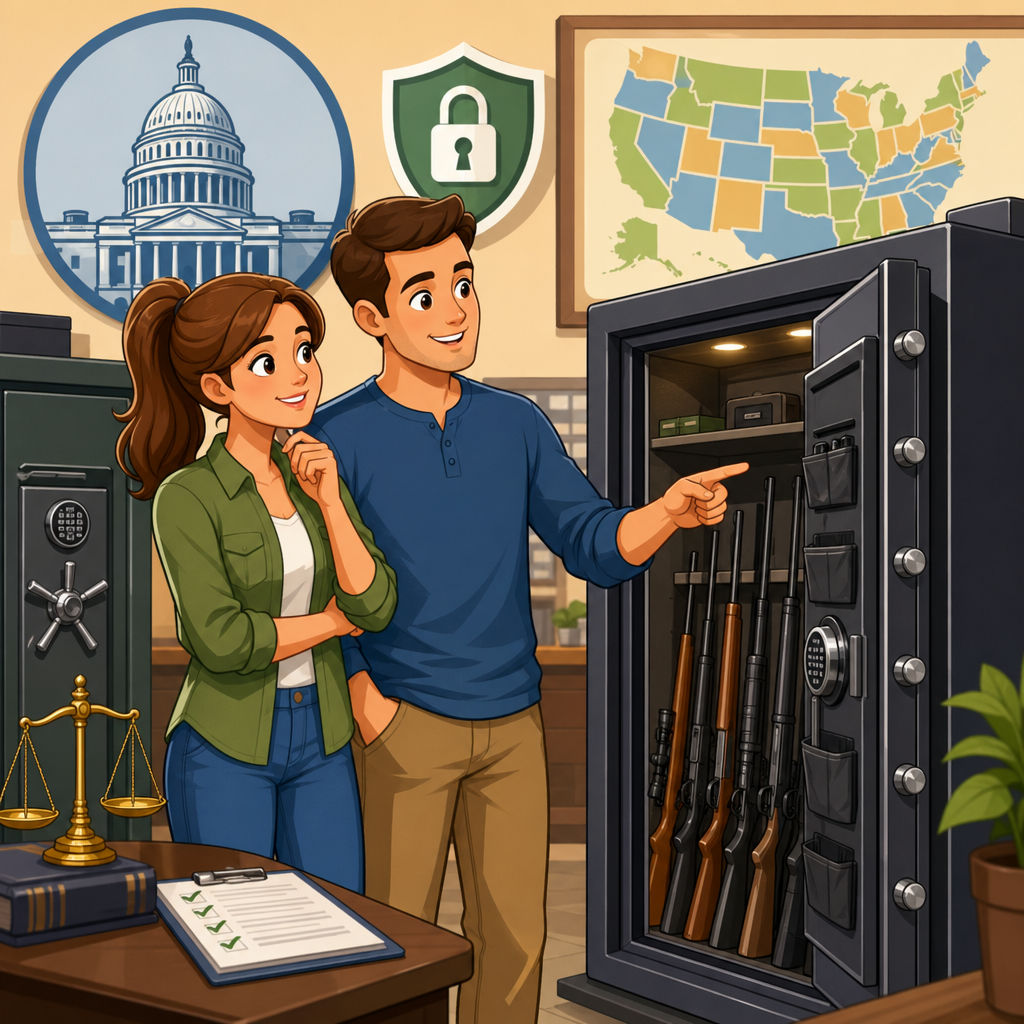
Choosing a gun safe that meets federal and state regulations starts with understanding a simple truth: there is no single nationwide rulebook for civilian gun storage, yet the right safe can help you comply with multiple laws, reduce liability, and protect firearms from theft, misuse, and damage. In practice, buyers are not just comparing steel boxes. They are evaluating legal standards, construction quality, locking systems, fire protection, installation methods, and household risk factors. I have helped firearm owners compare safes for homes, ranch properties, and small retail spaces, and the most common mistake is buying for appearance or advertised capacity instead of buying for compliance and real-world performance. A compliant gun safe is best defined as secure storage that limits unauthorized access, especially by minors and prohibited persons, and aligns with the laws that apply where you live and travel. That may mean a full-size residential security container, a true burglary-rated safe, a handgun vault for vehicle storage, or a modular cabinet supplemented with trigger locks. Why it matters is straightforward. Storage failures can lead to criminal access, accidental injury, denied insurance claims, and legal exposure after a theft or negligent access incident. Regulations also change. Some states impose child access prevention rules, some require firearms to be stored with a locking device under certain conditions, and some jurisdictions set standards for dealers or specific firearm types. A smart buying process therefore begins with the law, then moves to your use case, then narrows by tested features rather than marketing claims.
Start with the laws that actually apply to your firearms and household
Federal law generally does not impose a universal safe mandate for every privately owned firearm in every home, but several federal rules shape what responsible storage looks like. The Bureau of Alcohol, Tobacco, Firearms and Explosives requires licensed dealers to make secure gun storage or safety devices available with handgun transfers under the Brady Act framework, and specific federal storage requirements apply in certain settings, including some dealer operations and circumstances involving minors. Just as important, federal law bars possession by prohibited persons, so preventing unauthorized access is more than a best practice. It is part of reducing foreseeable transfer risk. State law is where storage rules become more concrete for consumers. Massachusetts requires firearms not under the owner’s direct control to be secured in a locked container or equipped with a tamper-resistant mechanical lock or other safety device. California has detailed child access prevention standards and recognizes qualifying gun safes and lock boxes under state criteria. Connecticut, New York, Oregon, and several other states have enacted storage laws tied to minors, prohibited persons, or circumstances where unauthorized access is likely. Some local ordinances add another layer. The safest approach is to read your state police, attorney general, or public safety guidance, then confirm whether your city or county has stricter requirements. If children live in or visit the home, assume your standard should be higher than the minimum. If you travel across state lines, use a portable lock box and keep documentation for the storage device. Compliance starts with matching the safe to the legal duty you actually carry.
Know the difference between a security cabinet, an RSC, and a true safe
One of the biggest sources of confusion in gun safe buying is terminology. Manufacturers call many products “safes,” but the security level can vary dramatically. A thin-gauge steel cabinet with a key lock may be useful for basic organization and out-of-sight storage, yet it is not equivalent to a tested burglary-resistant safe. For most homeowners shopping in the mainstream market, the key benchmark is the UL Residential Security Container classification. An RSC is designed to resist a limited attack by one person using common hand tools for a short test period. That does not make it impenetrable, but it creates a meaningful baseline beyond simple cabinets. Above that level are burglary safes with UL tool-resistant ratings such as TL-15 or TL-30, which are common in jewelry, cash, or commercial environments and are sometimes appropriate for high-value firearm collections. Weight, steel thickness, hard plate protection, bolt design, and relocking mechanisms all matter. In my experience, many buyers overpay for decorative doors and interior lighting while accepting weak body steel. For regulatory and practical purposes, construction matters more than brochure language. If state guidance refers to a locked container or approved safety device, a tested lock box or compliant safe may satisfy the law. If your risk includes targeted theft, a true burglary-resistant product is the better answer. Ask for the exact classification, not just the word safe, and verify the listing with the manufacturer and testing laboratory.
Choose features that match legal compliance and real household risks
The right gun safe balances statutory requirements with how firearms are actually stored, accessed, and transported in daily life. Capacity should be realistic. A “24-gun safe” often holds far fewer long guns once optics, slings, and modern sporting rifle profiles are considered. Lock type deserves careful thought. Mechanical dial locks are proven, durable, and avoid battery dependence, but they are slower. Electronic keypad locks are fast and common, though quality varies and battery maintenance matters. Biometric locks can work well for quick-access handgun vaults when they use a high-quality sensor and retain keypad backup, but low-end biometric units are inconsistent. Fire protection claims also need scrutiny. Some brands advertise high temperatures without explaining test duration, seal design, or whether the rating comes from independent verification. For documents, optics, and suppressor paperwork, interior temperature matters as much as outside flame exposure. Placement is another compliance issue. A safe in a garage may face humidity swings and easier removal; a closet installation on a concrete slab may be more secure but harder for delivery. Anchor points are essential because many thefts involve tipping or removing the entire container. Consider dehumidification, interior power, shelving flexibility, and separate lockable compartments for ammunition or high-value handguns if your state rules or family situation demand extra segregation. Buy for the actual threat model: children, teen visitors, smash-and-grab burglary, organized theft, flood risk, or vehicle transport.
| Safe type | Best use | Typical compliance value | Main limitation |
|---|---|---|---|
| Locking steel cabinet | Basic long-gun storage in low-risk settings | May satisfy some locked-container rules | Limited burglary resistance |
| Handgun lock box | Nightstand, closet, or vehicle storage | Useful for child access prevention and travel | Small capacity, often lighter construction |
| UL RSC gun safe | Most homes with multiple firearms | Strong fit for responsible home storage | Not equivalent to commercial burglary safes |
| TL-rated burglary safe | High-value collections or retail settings | Exceeds most consumer storage expectations | High cost and substantial weight |
Evaluate certifications, materials, and installation before you buy
A gun safe should be judged by tested attributes, not by paint finish, patriotic branding, or oversized capacity claims. Start with independent listings. UL lock listings matter because a strong body with a weak lock is a poor security system. If the unit is marketed as an RSC, confirm that classification. Review steel thickness in both the door and body, and pay attention to whether the stated gauge reflects reinforced sections rather than the whole shell. Composite doors, hard plates, and internal hinges can improve attack resistance. Active bolts on all sides look impressive, but bolt count alone does not determine strength; door fit, frame design, and relockers matter more. For fire performance, look for specific test protocols, duration, and internal temperature thresholds suitable for paper documents and heat-sensitive items. If you need to secure NFA paperwork, passports, or digital media, use a protected document pouch or a separate media-rated container because standard fire liners may not protect data. Installation is where many purchases succeed or fail. A 700-pound safe is still vulnerable if unanchored and located near an exterior door. Professional delivery crews should use manufacturer-approved anchoring hardware matched to concrete or structural wood. Concealment adds time against thieves, so closets, utility rooms, and finished basements often outperform prominent garage placement. In humid regions, install a dehumidifier rod or desiccant system immediately. Document the serial number, receipt, and installation photos for insurance. Good buying decisions combine verified ratings, sound placement, and proper anchoring into one system.
Match the safe to special situations: children, collections, vehicles, and insurance
Different households need different solutions, and the safest purchase is often a layered system instead of one oversized box. If children are present, prioritize prevention of unauthorized access over display value or rapid expansion plans. A full-size anchored safe for long guns plus a quick-access handgun vault for a defensive firearm is a common and effective arrangement. If teenage guests or extended family members visit often, use stricter access controls and avoid leaving combinations where they can be discovered. Collectors should think beyond count and consider replacement value. Firearms with custom optics, historic significance, or serialized suppressor components may justify a higher-grade safe, a rider on the homeowners policy, and a room security plan including alarms and cameras. Vehicle storage is a separate category. A console lock box may be convenient, but a cabled portable safe secured to the frame or seat structure is usually a better temporary option for lawful transport stops. Do not assume a vehicle counts as secure storage under every state rule. For apartment dwellers, floor loading, lease terms, and delivery path can narrow choices; modular safes from brands such as Zanotti or SnapSafe can solve stairwell and elevator limits. Insurance carriers may ask whether firearms were stored in a locked safe, and claims become easier when you can show model information, photos, and receipts. Retail buyers, gunsmiths, and home-based FFL holders should review ATF guidance, insurer requirements, and local zoning because storage expectations can be stricter in commercial contexts than in ordinary homes.
Use a buying checklist and plan for future legal changes
The best way to choose a gun safe that meets federal and state regulations is to use a written checklist and treat the purchase as part of a broader firearm safety system. First, identify every jurisdiction that matters: home state, local ordinances, and any state where the firearms may be transported or temporarily stored. Second, define who must be denied access, including minors, visitors, household members, employees, or prohibited persons. Third, choose the appropriate category: handgun vault, cabinet, RSC, or burglary-rated safe. Fourth, verify lock and construction listings rather than relying on a retailer summary page. Fifth, plan the installation location, anchoring method, humidity control, and emergency access procedure before delivery day. Sixth, document your inventory and storage setup for insurance and law enforcement recovery. Seventh, review the setup annually because your legal obligations can change when a child reaches a different age, a family member moves in, or state law is amended. I recommend following updates from your state police or public safety office and checking major legal summaries from recognized firearm rights and safety organizations, but always confirm with the current statutory text. A gun safe is not a one-time compliance badge. It is an active risk-control tool that should evolve with your collection and household. If you are building out a complete buying strategy under the Gun Safes & Safety category, use this hub as your starting point, then compare lock types, fire ratings, installation methods, and quick-access options in the related guides before you buy.
The right gun safe does more than store firearms neatly. It helps you meet legal duties, prevent unauthorized access, strengthen insurance protection, and reduce the chance that theft or negligence turns into tragedy. The core decision is not simply size or price. It is whether the safe’s tested security, lock quality, fire resistance, and installation plan match the laws in your state and the risks in your home. Federal rules establish part of the landscape, but state and local requirements often determine what responsible storage must look like in practice. That is why careful buyers verify current statutes, confirm product classifications, and avoid relying on broad marketing terms. A locking cabinet may be enough for one situation, while an anchored RSC or TL-rated burglary safe may be the right answer for another. Households with children need stricter controls. Collectors and frequent travelers need layered storage. Apartment residents and vehicle owners face distinct constraints that should shape the purchase. If you remember one principle, make it this: buy the safe that satisfies the strictest realistic requirement you face, not the loosest one you can find. That approach gives you a margin of safety when laws change, when family circumstances shift, or when a criminal targets your property. Review your local requirements, measure your space, list your firearms and accessories, and compare tested models using this guide as your hub. Then move on to the supporting buying guides and choose a safe you can trust for years.
Frequently Asked Questions
Is there a federal law that tells civilians exactly what type of gun safe they must buy?
No, there is not one universal federal law that tells every civilian gun owner exactly what safe to purchase, what gauge of steel to choose, or which lock type is mandatory in every household. That is one of the most important starting points when shopping for compliant firearm storage. Federal law generally focuses on specific situations, such as preventing unauthorized access in certain contexts, regulating licensed dealers, and addressing prohibited possession, but it does not create a single nationwide consumer checklist for private gun safes. That means compliance often depends heavily on where you live, who lives in your home, how your firearms are stored, and whether your state has child access prevention laws, negligent storage laws, or specific requirements tied to transportation, loaded firearms, or households with minors.
For buyers, the practical takeaway is that you should not shop based on marketing phrases like “federal compliant” unless you verify what that actually means. A better approach is to look for a safe that helps you satisfy the broad legal and safety goals most laws are aimed at: restricting unauthorized access, securing firearms against children and prohibited users, reducing theft risk, and storing guns in a manner that shows reasonable care. In many cases, a true gun safe with solid steel construction, a reliable locking mechanism, internal organization, and anchoring capability will put you in a stronger legal and practical position than a lightweight cabinet or lockbox that is technically lockable but easier to breach. The safest buying strategy is to review your state statutes, any local rules, and household-specific risks before deciding on a model.
What gun safe features matter most if I want to meet state storage laws and reduce legal liability?
The most important features are the ones that directly support secure, controlled access and show that you took reasonable steps to prevent unauthorized use. In legal and liability terms, that usually means choosing a safe with robust construction, a dependable lock, pry resistance, and the ability to be permanently anchored. Thick steel body panels and a reinforced door help resist forced entry. A high-quality locking system, whether mechanical, electronic, or biometric with backup access, helps ensure only authorized users can open the safe. Anti-pry door design, solid locking bolts, and protected hinges matter because many theft attempts target weak door seams rather than trying to cut through the body of the safe.
Anchoring is another major factor that buyers often underestimate. A safe that can be tipped over, removed, or carried off may not provide the level of security expected under some state standards or in a liability dispute after a theft or unauthorized access incident. Bolting the safe to a concrete floor or structural framing can dramatically improve real-world security. Inside the safe, separate compartments for ammunition, documents, or especially sensitive firearms can also help demonstrate responsible storage practices. For households with children, teenagers, caregivers, roommates, frequent visitors, or anyone legally prohibited from accessing firearms, it is especially wise to choose a safe that limits accidental or casual access rather than relying on a simple key lock or hidden placement alone.
It is also smart to consider audit-related features such as backup keys, lockout protection, tamper alerts, and documented product specifications. If a problem ever arises, being able to show that you selected a purpose-built firearm safe with defined security features may help demonstrate responsible ownership. While no feature can guarantee legal compliance in every jurisdiction, a safe that is secure, difficult to defeat, properly installed, and appropriate for your household offers the strongest combination of compliance support and liability reduction.
Are biometric, electronic, and mechanical locks all legal, or is one type better for compliance?
In most cases, all three lock types can be legal, but the better choice depends on reliability, household needs, and how your state’s storage expectations apply to your situation. The law usually cares less about whether the lock is biometric, electronic keypad, or mechanical dial and more about whether the firearm is actually secured from unauthorized access. That said, not all locking systems perform equally well in daily use. A mechanical dial lock is often valued for durability, long-term reliability, and independence from batteries or electronics. It can be an excellent choice for a primary safe used for longer-term storage. The tradeoff is slower access, which may matter to owners balancing security with emergency retrieval.
Electronic keypad locks are popular because they offer quick access and easy code changes. They are often a strong middle-ground option for many homes, especially if the owner wants both security and convenience. The key is to choose a reputable lock from a trusted manufacturer, maintain fresh batteries, and understand the override or backup entry method. Cheap electronic locks can fail prematurely, which creates frustration and may lead owners to leave firearms unsecured, defeating the entire purpose of the safe. Biometric locks can be useful for rapid access, but quality varies widely. A high-end biometric safe with a fast, accurate fingerprint reader and backup entry can be very effective, while a low-quality biometric lock may struggle with inconsistent recognition, dirty fingers, moisture, or sensor wear.
For compliance purposes, the best lock is the one that reliably keeps unauthorized people out while allowing the lawful owner consistent control. If children are present, if more than one adult needs access, or if the safe may be opened under stress, usability matters just as much as lock category. Many buyers do well with a main gun safe that uses a mechanical or quality electronic lock and, if needed, a separate quick-access safe for defensive firearms. The most important thing is not to assume that a lock is “legal enough” simply because it locks. Reliability, tamper resistance, backup access, and proper daily use are what make a locking system truly effective.
Does a fire rating or burglary rating have anything to do with legal compliance?
Usually, fire ratings and burglary ratings are not the direct focus of firearm storage laws for private owners, but they still matter a great deal when choosing a safe that supports responsible ownership. A legal requirement may say little or nothing about surviving a house fire or resisting a prolonged burglary attack, yet those threats are central to why people buy gun safes in the first place. Fire protection helps preserve firearms, optics, documents, and valuables from heat and smoke damage. Burglary resistance helps prevent theft, which can reduce the risk of criminal misuse and may also affect liability, insurance claims, and your ability to show that you took meaningful security precautions.
Fire ratings should be read carefully because they are not always measured under identical testing conditions. Pay attention to temperature thresholds, duration claims, whether the rating is from the manufacturer or an independent laboratory, and what exactly the safe is designed to protect. Firearms themselves may survive conditions that would destroy paper records, but optics, ammunition packaging, and important legal documents stored alongside them may not. Burglary ratings are even more nuanced. Many consumer gun safes are strong deterrents but are not the same as high-security commercial burglary safes tested to strict standards. That does not make them useless. It simply means buyers should understand the difference between marketing language and independently verified performance.
From a compliance standpoint, these ratings can strengthen your overall storage strategy even if they are not explicitly required by statute. A heavier, better-built safe with stronger locking components and real fire protection may better support the argument that you stored firearms responsibly. If your goal is to satisfy state storage expectations while also protecting your investment, look for a balance of security construction, credible fire performance, and proper installation. Legal compliance is the floor, not the ceiling. A safe that only barely qualifies as lockable may do far less for your household than a model designed to withstand realistic theft and fire scenarios.
How do I make sure the safe I choose actually fits my state law, my home, and my family situation?
The best way is to treat gun safe selection as both a legal review and a risk assessment. Start by reading your current state laws on firearm storage, child access prevention, negligent storage, transportation, and loaded firearms in the home. If your city or county has additional rules, include those as well. Then consider the facts of your household. Do children live in or visit the home? Are there teenagers, roommates, domestic workers, caregivers, or relatives who may have unsupervised access? Is anyone in the home legally prohibited from possessing firearms? Do you need rapid access to one firearm while keeping others in deeper storage? These questions help determine not only what kind of safe you need, but also where it should be installed and how access should be managed.
Next, match the safe to your inventory and future needs. Buyers often underestimate capacity, especially once scopes, slings, handguns, magazines, documents, and ammunition are included. A safe advertised for a certain number of guns may hold far fewer in a practical layout. Choose a model with room to grow, interior flexibility, and a lock system that fits your real usage pattern. Also think about installation. A large safe placed in a garage, closet, or basement may need humidity control, floor support evaluation, and professional delivery. Anchoring is strongly recommended because placement alone is not enough. A hidden but unanchored safe can still be stolen.
Finally, document your decision-making. Keep product specifications, receipts, installation records, serial numbers, photos, and any manufacturer certifications. This can help with insurance, law enforcement reports, and showing responsible conduct if your storage practices are ever questioned. If your state law is unclear or your situation involves unusual risks, consulting a qualified attorney in your jurisdiction is