
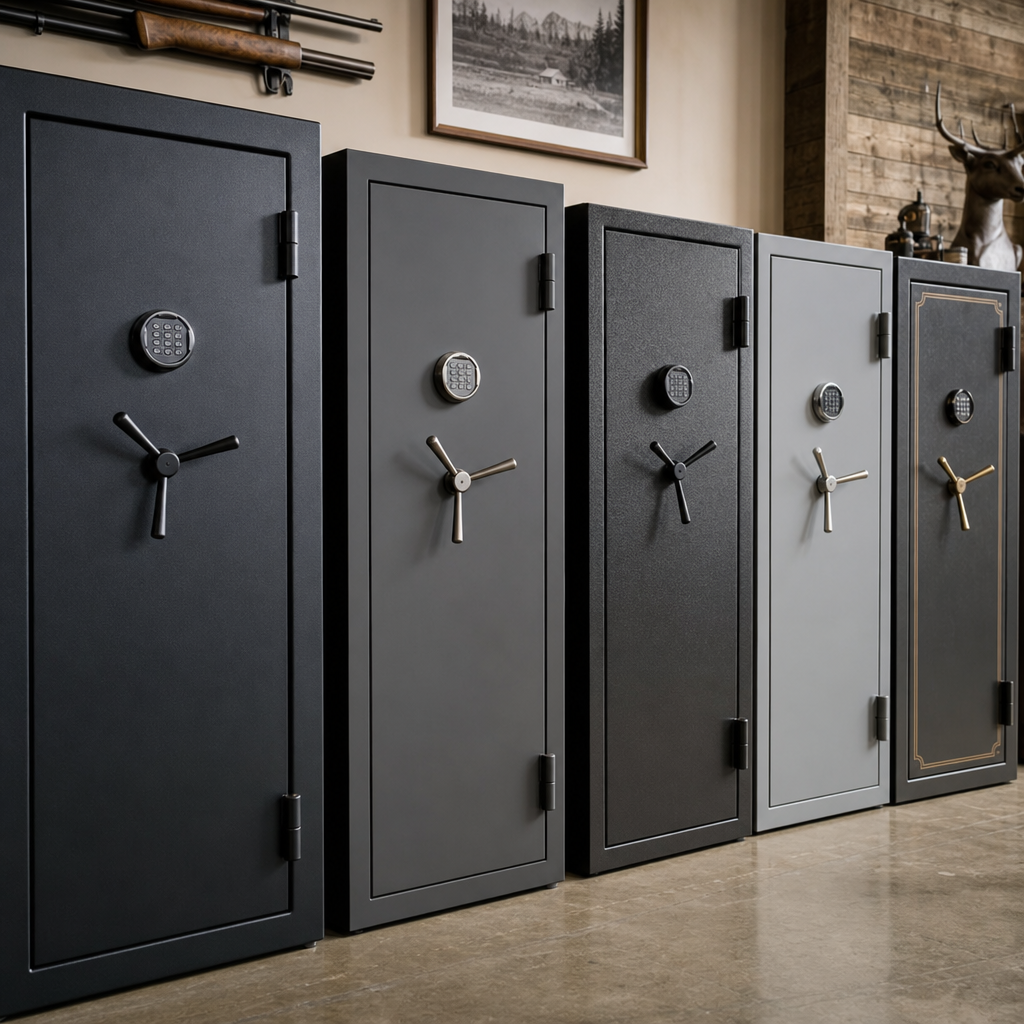
Comparing gun safe brands that offer EMP-resistant locks matters because the lock is the single component most likely to fail when owners need rapid access after a storm, grid disruption, or power surge. In the gun safes and safety category, an EMP-resistant lock refers to a locking system designed to keep functioning after electromagnetic interference, electrical transients, or battery-related failures that can disable standard electronic keypads. That usually means a mechanical dial lock, a redundant electronic lock with hardened circuitry, or a hybrid system that gives the owner a non-electronic override. When shoppers ask which gun safe brands are best for EMP protection, they are really asking three things at once: which locks are least vulnerable, which manufacturers integrate them well, and which brands stand behind the design with credible testing and service.
I have evaluated safes in dealer showrooms, at trade events, and during home installations, and the practical lesson is straightforward: the brand name on the door matters less than the lock architecture, boltwork quality, and service network behind it. A glossy keypad and thick steel body do not help if a surge event leaves the lock dead and there is no accessible override. At the same time, not every owner needs the same solution. A competitive shooter who opens a safe daily may prioritize speed and redundancy, while a collector storing long guns for years may accept slower access in exchange for a mechanical Group 2 dial from Sargent and Greenleaf or La Gard.
This hub article covers gun safe comparisons and brand spotlights with a specific focus on EMP-resistant locks. It explains what to look for, compares major brands, and gives plain-language guidance on where each option fits. You will also see the tradeoffs. Mechanical locks are generally the strongest answer for EMP resilience, but they can be slower and less convenient. Electronic locks can be secure and reliable, especially when sourced from respected lock makers and protected from surges, but they introduce more points of failure. The goal is not fear-based buying. The goal is to match your safe, lock, and risk level so your firearms remain secure and accessible when conditions are less than ideal.
What makes a gun safe lock EMP-resistant
An electromagnetic pulse can induce damaging voltage in electronics. In a residential setting, the more common threats are lightning-related surges, utility anomalies, and localized electrical events rather than a cinematic nationwide pulse, but the effect on a vulnerable keypad can still be the same: lock failure. A truly EMP-resistant gun safe lock does not depend solely on sensitive electronics to retract the blocking mechanism. The safest designs use one of three approaches. First, a traditional mechanical dial with no electronic circuit to damage. Second, a hybrid lock with both electronic entry and a mechanical backup. Third, an electronic lock with hardened design, transient protection, and isolated circuitry, though this still does not equal the intrinsic resilience of a mechanical dial.
Buyers should separate marketing language from engineering details. Some brands use terms such as EMP proof, military grade, or fail-safe without publishing test standards. Those terms are not enough. Ask what lock model is installed, whether it is UL listed, whether a key override exists, whether the keypad is the only point of failure, and how the safe behaves after total power loss. UL 768 is the relevant standard for combination locks, and many quality safe locks are UL listed even if the safe body itself is marketed more heavily than the lock. A lock from Sargent and Greenleaf, SecuRam, or La Gard gives you a traceable component history that generic house-brand keypads often do not.
How to compare gun safe brands intelligently
Start with the lock, then move outward. Too many comparisons begin with steel gauge and ignore the lock that actually controls access. When I compare brands for clients, I score five factors: lock type, lock manufacturer reputation, override method, after-sales service, and how the lock is mounted and protected inside the door. A strong relocker, hardplate, and good internal cable management can improve survivability after impact or attempted tampering. Fire rating, body steel, and interior layout still matter, but they are secondary if the owner specifically wants EMP resilience.
The second rule is to compare within product tiers. Entry-level gun safes from big-box stores should not be measured by the same standards as premium American-made safes. Liberty, Browning, Fort Knox, AMSEC, Rhino Metals, Sports Afield, and Cannon each have multiple lines with different lock options, steel thicknesses, and dealer support models. One brand may look superior online simply because its marketing page mentions EMP resistance, while another brand quietly offers a better mechanical option through dealers. This is why a hub page on gun safe comparisons is useful: the best choice often depends on configuration, not logo.
| Brand | Best EMP-Resistant Option | Common Strength | Main Tradeoff |
|---|---|---|---|
| AMSEC | Mechanical dial or redundant lock options on higher lines | Strong lock credibility and broad dealer network | Best configurations often cost significantly more |
| Liberty | Mechanical dial option on many models | Wide availability and familiar lineup | Features vary notably by series |
| Fort Knox | Customizable lock packages including mechanical | High customization and heavy construction | Premium pricing and longer lead times |
| Browning | Mechanical lock upgrades on selected models | Useful interiors and strong dealer presence | Lineup complexity can confuse first-time buyers |
| Rhino Metals | Mechanical and redundant options in select lines | Distinctive features and solid fit and finish | Dealer availability depends on region |
| Cannon | Mechanical options on some safes | Accessible pricing and broad distribution | Fewer premium lock configurations at lower tiers |
Brand spotlight: AMSEC and Fort Knox
AMSEC is one of the easiest brands to recommend when buyers want an EMP-resistant lock because the company has long credibility in the broader safe industry, not just the residential gun safe niche. On many models, especially as you move up the BF and RF lines, you can configure a mechanical dial or select a lock from recognized makers. AMSEC dealers usually understand lock substitutions, and that matters. I have seen customers save themselves future frustration simply by ordering the mechanical dial at purchase rather than trying to retrofit later. AMSEC also benefits from deep locksmith familiarity, so service is usually easier to obtain than with niche import brands.
Fort Knox competes at the higher end and is attractive for buyers who want customization. If your priority is a thick body, upgraded door steel, and a mechanical lock from day one, Fort Knox is often a strong candidate. The company’s flexibility is a practical advantage because buyers can align the safe to their threat model instead of accepting a one-size-fits-all package. The downside is cost. Once you add a premium paint finish, interior package, and upgraded lock, the price can rise quickly. For a serious collector or preparedness-minded owner, that may be justified. For a first safe in a spare bedroom, it may be unnecessary overkill.
Brand spotlight: Liberty, Browning, and Rhino Metals
Liberty remains one of the most recognized names in gun safes, and that familiarity helps with shopping, resale, and finding local service. The key with Liberty is to compare specific series rather than assume uniform construction across the catalog. Many Liberty models can be ordered with a mechanical dial, and for EMP-conscious buyers that is usually the cleanest choice. I often tell shoppers that Liberty’s real advantage is availability: they can physically inspect one, work the handle, and discuss lock options with a dealer before buying. That reduces the risk of ordering a safe based only on website photos and broad claims.
Browning is similar in that the company offers a wide spread of features across price points, often with well-designed interiors that appeal to hunters and multi-gun households. Browning safes are worth comparing if capacity organization matters as much as lock resilience. A mechanical lock upgrade can make a Browning model a practical middle-ground option. The caution is that buyers can get distracted by shelving, lighting, and door accessories and overlook steel thickness or lock pedigree. When comparing gun safe brands, always bring the discussion back to the lock model and override strategy.
Rhino Metals, including lines such as Ironworks and Kodiak, has built a following by blending distinctive styling with useful features. In some configurations, Rhino offers mechanical or redundant locking approaches that are attractive for owners who want both visual appeal and practical resilience. The fit and finish are often strong, and I have found that owners who care about placement in a visible room appreciate the furniture-like presentation. The limitation is regional dealer coverage. In some markets, it is easy to compare Rhino against Liberty or AMSEC in person; in others, you may be buying sight unseen.
Value brands, imported safes, and what buyers miss
Cannon, Sports Afield, Winchester-branded safes made by third parties, and other value-oriented lines dominate many retail floors because they hit popular price points. That does not make them poor choices, but it does change the evaluation. In lower and mid-tier safes, the lock package is often less configurable, and electronic keypads are more common than robust redundant systems. If a value safe offers a mechanical dial option, it deserves serious consideration from anyone specifically concerned about EMP-related lock failure. Spending slightly more for the dial is usually smarter than spending the same amount on cosmetic accessories.
What many buyers miss is the downstream service question. If an electronic lock fails on a budget import safe, who opens it, who provides replacement parts, and how long will that model remain supported? Established lock brands matter here because locksmiths know them, stock parts, and trust their behavior. Generic keypad assemblies can work fine for years, but if they fail after a surge event, the cost and inconvenience of drilling the safe can erase the original savings. That is why the best gun safe comparisons consider lifetime ownership, not just day-one price.
Best use cases and buying recommendations
If you want the most dependable EMP-resistant solution, choose a reputable gun safe brand configured with a mechanical dial lock. That is the default recommendation for long-term storage, rural properties, and owners who are more concerned with guaranteed access after disruption than with fast daily entry. AMSEC and Fort Knox are especially strong in this role, with Liberty close behind because of its broad availability. If you want convenience but still care about resilience, look for a hybrid or redundant lock from a known manufacturer and verify how the backup works before buying.
For households balancing quick access and preparedness, consider splitting roles. Use a dedicated quick-access handgun safe near the bed for immediate defensive needs and a larger long-gun safe with a mechanical lock for primary storage. That setup often solves the speed-versus-resilience conflict better than trying to force one safe to do everything. Also plan the installation correctly. A high-quality lock means little if the safe is not bolted down, protected from obvious moisture exposure, and located where service access is possible.
The clearest takeaway from comparing gun safe brands that offer EMP-resistant locks is that mechanical simplicity still wins for pure resilience. Brands such as AMSEC, Fort Knox, Liberty, Browning, Rhino Metals, and Cannon should be judged by the exact lock configuration, not by broad marketing promises. A respected lock maker, a credible dealer, and a serviceable design are more important than dramatic claims about being EMP proof. In practice, the best safe is the one that keeps firearms secure, remains accessible when electronics fail, and fits your real storage habits.
Use this hub as your starting point for deeper gun safe comparisons and brand spotlights. From here, narrow your search by budget, steel thickness, fire rating, interior layout, and lock type. Then confirm the exact lock model before you buy. If possible, work the lock in person and ask the dealer how the safe would be opened after a dead keypad or surge event. That one conversation will often tell you more than hours of online browsing. Choose the lock first, choose the brand second, and you will make a safer long-term decision.
Frequently Asked Questions
What does an EMP-resistant lock actually mean when comparing gun safe brands?
An EMP-resistant lock is a lock system designed to keep working even if the safe is exposed to electromagnetic interference, voltage spikes, battery failure, or other electrical disruptions that can disable a standard electronic keypad. In practical terms, this usually means the safe relies on a mechanical dial lock, a redundant lock design, or an electronic lock with a true manual override rather than depending entirely on circuit boards and battery-powered inputs. When comparing brands, this distinction matters because the lock is the component most likely to fail during a storm, grid outage, or power-related event, and reliable access is often the entire reason the safe was purchased in the first place.
It is also important to understand that “EMP-resistant” is not always a formal, universally certified label in the residential gun safe market. Some brands use the term loosely to describe a safe that has a mechanical backup, while others build their product around a fully mechanical lock that is inherently less vulnerable to electronic failure. The best way to compare brands is to look beyond marketing language and confirm exactly how the lock functions, whether it can be opened without electronics, what components are exposed to surge-related damage, and whether the manufacturer clearly explains post-outage access procedures. A brand that provides detailed lock specifications and transparent failure-mode information is usually a safer choice than one that relies on vague preparedness claims.
Are mechanical dial locks better than electronic locks for EMP resistance?
For pure EMP resistance, mechanical dial locks are generally the strongest option because they do not depend on batteries, keypads, circuit boards, or internal programming to operate. A traditional dial lock uses physical components such as wheels, a spindle, and a lever system, so there is far less that can be affected by an electrical surge or electromagnetic event. That makes mechanical locks especially appealing to buyers who prioritize certainty, long-term reliability, and access during emergencies where power stability cannot be assumed. If your main concern is whether the lock will function after a severe electrical disturbance, a mechanical dial is usually the benchmark against which other options are judged.
That said, “better” depends on your priorities. Electronic locks are often faster to open, easier to use in low light, and more convenient for households that need frequent access. Some gun safe brands address the vulnerability of electronic systems by offering hybrid solutions, such as an electronic keypad paired with a manual override key or an independent mechanical backup. Those designs can offer a practical middle ground, but the quality of the redundancy matters. A cheap override key system is not the same as a robust secondary mechanical lock. When comparing brands, the real question is not simply mechanical versus electronic, but whether the lock design preserves dependable access under stress while still fitting how you plan to use the safe every day.
Which features should I look for when comparing gun safe brands that advertise EMP-resistant locks?
Start with the lock architecture itself. Find out whether the safe uses a fully mechanical dial, a commercial-grade lock body, a redundant locking system, or an electronic lock with a tested manual override. Ask whether the override is truly independent of the electronic system or whether it still relies on internal powered components. Then look at the brand’s reputation for lock quality: who manufactures the lock, whether replacement parts are available, what warranty coverage applies to lock failure, and whether the company has a strong service network if the lock malfunctions. A safe can have a thick body and solid fire rating, but if the locking system is weak or unsupported, it may still be the wrong choice for preparedness-focused buyers.
You should also compare broader construction details because lock reliability is only one part of security. Look at boltwork strength, relocker design, hard plate protection, door fit, pry resistance, and internal hinge protection. Review whether the brand integrates the lock into a reinforced door structure or simply mounts a basic keypad on an otherwise heavy cabinet. It is also smart to consider long-term usability: how easy the lock is to operate under stress, whether the combination can be changed, how the brand handles lockouts, and whether the safe can still be serviced locally years from now. The best brands do not just offer an “EMP-resistant” claim; they combine resilient lock design with durable safe construction and realistic support for emergency ownership scenarios.
How can I verify whether a gun safe brand’s EMP-resistant lock claim is credible?
The most reliable approach is to ask for specifics rather than accepting broad preparedness language. A credible brand should be able to explain what type of lock is installed, why it is considered resistant to EMP or electrical disruption, and what exact access method remains available if the electronics fail completely. If the answer is a mechanical dial, that is straightforward. If the answer is a hybrid lock, ask whether the backup is mechanical, whether it is independent, and whether there are any failure points shared between the electronic and manual systems. You should also review product manuals, lock model numbers, and manufacturer support documents instead of relying only on retailer descriptions.
It is also helpful to look at the brand’s track record in the field. Read owner reviews that mention long-term lock performance, battery-related failures, post-storm access, and service response times. Check whether locksmiths, safe technicians, or preparedness-focused reviewers have discussed the brand’s lock system in detail. A trustworthy brand usually has consistent documentation, a known lock supplier, and clear instructions for maintenance and emergency access. If the company avoids technical details, cannot identify the lock type, or uses “EMP-proof” as a blanket sales phrase without explaining how the lock survives electrical disruption, that is a warning sign. Credibility comes from transparency, not just labels.
Is it worth paying more for a gun safe brand with an EMP-resistant or redundant lock system?
For many buyers, yes. Paying more for an EMP-resistant or redundant lock system can be worthwhile because the value of a gun safe is tied directly to dependable access and dependable denial of access. In an emergency, a lower-priced safe with a vulnerable electronic lock may become frustrating or unusable at the exact moment speed and reliability matter most. A more expensive safe that uses a proven mechanical lock or a well-designed redundant system can reduce the risk of lockout after a storm, power surge, dead battery, or control board failure. That added cost often buys more than just a different opening method; it may also reflect better lock components, stronger support, and more thoughtful engineering overall.
However, the premium only makes sense if the brand delivers real functional advantages. Some safes are priced higher mainly because of branding or cosmetic features, not because the lock system is meaningfully more resilient. The best buying decision is to compare how the additional money improves access reliability, serviceability, and security. If one brand offers a genuine mechanical lock, established lock hardware, good warranty support, and stronger door construction for a modest increase in cost, that is usually money well spent. If another brand charges more for a basic electronic keypad plus vague preparedness messaging, the premium may not be justified. In short, it is worth paying more when the extra cost clearly buys a lock system that remains trustworthy when electrical conditions are not.