
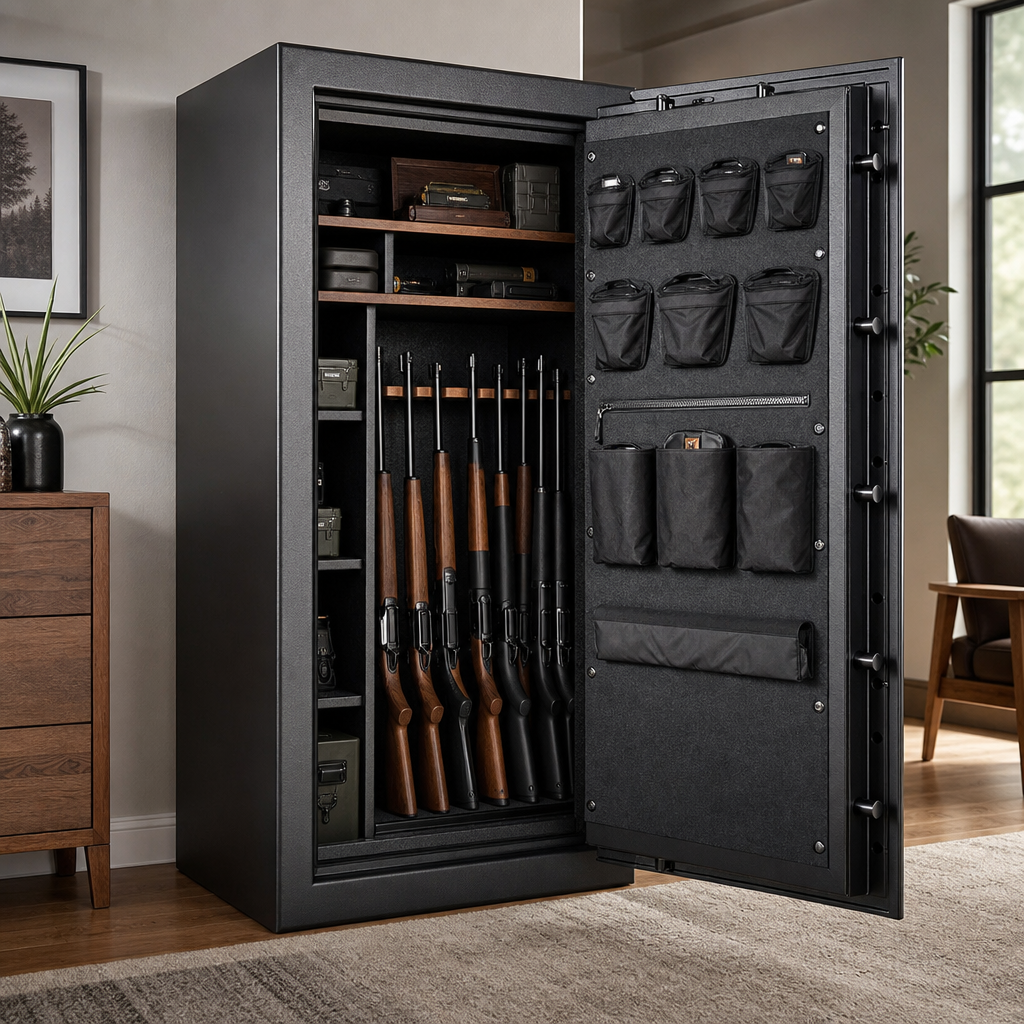
Choosing among gun safe brands is not really about paint color, logo prestige, or how many long guns fit on a brochure chart. It is about theft prevention: the combination of steel construction, lock reliability, bolt coverage, anchoring, pry resistance, fire-tested design, and practical day-to-day use that determines whether a safe delays, deters, or defeats an actual burglar. For owners building a responsible storage plan, this hub article covers the gun safe brands that provide the best theft prevention features and explains how to compare them with confidence.
In my experience evaluating safes for homeowners, collectors, and small business owners, the biggest mistake is assuming all “gun safes” deliver similar security. They do not. The market ranges from lightweight residential security containers with basic protection to heavy plate-steel units designed to withstand aggressive tool attacks for much longer. Terms matter here. Gauge refers to steel thickness, with lower numbers indicating thicker steel. A relocker is a secondary mechanism that secures the lock if it is punched or attacked. Hardplate is hardened steel placed around the lock area to resist drilling. Composite door construction combines multiple materials to improve resistance against prying, drilling, or torching.
This matters because most residential gun safe thefts are fast, opportunistic attacks. Burglars rarely spend hours in a house. They exploit weak placement, poor anchoring, thin steel, and vulnerable doors. A safe that cannot be tipped, pried open at the corner, or quickly attacked at the lock can dramatically improve the odds that the criminal leaves empty-handed. That is why brand reputation should always be filtered through specific theft prevention features, independent certifications, and installation quality. As a hub for gun safe comparisons and brand spotlights, this guide will help you identify what top brands do differently, where each fits, and what tradeoffs you should understand before buying.
What theft prevention features matter most in a gun safe
Theft prevention starts with the body and door, not the marketing label. The most important baseline is steel thickness. Many entry-level gun safes use 14-gauge or 12-gauge steel bodies, which can slow casual theft but are more vulnerable to pry attacks and cutting than 10-gauge, 7-gauge, or heavier plate steel. A thicker door helps too, but buyers often overlook body thickness even though side attacks are common when thieves gain leverage. Interior size is useful, yet security usually improves as safe weight and steel mass increase.
Lock systems are the next priority. Reliable mechanical dial locks from Sargent and Greenleaf or La Gard have long service records and no batteries to fail, while quality electronic locks can provide faster access and audit functionality. The best theft-focused brands pair the lock with hardplate, spring-loaded relockers, and protected boltwork. More locking bolts do not automatically mean better security; bolt depth, door fit, and anti-pry design matter more than a huge bolt count printed on a sticker.
Anchoring is non-negotiable. Even a good safe can be defeated if it is not bolted to concrete or installed in a tight location that limits pry-bar access. I routinely tell buyers that a 700-pound safe can still be tipped with leverage and a dolly. Theft prevention improves when the safe is anchored, recessed into a closet corner, and placed so door-side gaps are hard to attack. Fire lining, door organizers, and interior lighting are useful, but they should never distract from anti-theft fundamentals.
American Security stands out for layered anti-theft engineering
American Security, widely known as AMSEC, consistently ranks near the top when the goal is serious burglary resistance in the residential market. The reason is not one headline feature but a layered design philosophy. AMSEC offers everything from the TF and NF series to the BF and RF lines, giving buyers multiple security tiers. For theft prevention, the BF series is especially notable because it uses a thick steel body with a formed door and a proprietary dry-light insulation barrier, creating a more robust structure than many big-box competitors at similar capacities.
What I have always respected about AMSEC is how often the company integrates true security components buyers can verify: UL-listed locks, hardplate, multiple relockers on some models, reinforced door edges, and strong boltwork. At the higher end, AMSEC also sells safes carrying recognized burglary ratings, including TL classifications on commercial models. That matters because a standardized burglary rating means the safe has been tested against concentrated tool attacks under defined laboratory conditions, which is a stronger benchmark than generic phrases like “military style locking bars.”
For homeowners, AMSEC is often the best choice when they want to step above entry-level construction without immediately moving into very expensive custom territory. The tradeoff is price and weight. Better steel and better doors cost more, and delivery planning becomes more important. Still, if theft prevention is the main buying criterion, AMSEC is one of the safest brand shortlists to start with.
Fort Knox, Graffunder, and Sturdy Safe excel when steel thickness is the priority
Some brands build their reputation on heavier steel and straightforward anti-pry strength. Fort Knox is well known for customization, but its real security appeal lies in options for thicker bodies, reinforced doors, and upgraded lock protection. Buyers who are willing to configure a safe carefully can create a much stronger theft-resistant package than what they would get from a standard retail floor model. Fort Knox also has good fit-and-finish, which matters because door alignment and build consistency affect long-term lockup integrity.
Graffunder occupies a more premium niche and is respected for very robust construction. These safes are often chosen by collectors who prioritize burglary resistance over flashy interiors. Heavier plate steel, substantial door construction, and serious mass make them difficult to move and difficult to attack quickly. They are not impulse purchases, but they are among the strongest residential-style options available.
Sturdy Safe takes a different approach, emphasizing simple, heavy construction and practical security upgrades. Sturdy models are often compared favorably by experienced buyers because the company publishes meaningful construction details instead of leaning on decorative marketing. In real theft prevention terms, thick steel, solid welds, and optional liner upgrades matter more than chrome spokes or fabric panels. These three brands appeal most to buyers who understand that steel thickness is one of the clearest predictors of how well a safe resists brute-force entry.
Liberty Safe, Browning, and Winchester offer broad availability with mixed security tiers
Liberty Safe is one of the most recognized names in the category, and that visibility gives it an important place in any gun safe brand comparison. Liberty offers a wide range, from entry-level residential security containers to stronger premium models with thicker steel, upgraded locking systems, and better anti-pry features. The advantage is accessibility: many buyers can see Liberty safes locally, compare interiors, and choose among many sizes. The caution is that the brand name alone does not tell you the security level. A lower-tier Liberty model and a higher-tier Liberty model can differ substantially in steel and door strength.
Browning and Winchester occupy a similar broad-market position. Both can make sense for owners who need organized interiors, dealer support, and recognizable warranties. However, buyers should compare the exact body gauge, door construction, and lock package rather than relying on listed gun capacity or decorative appeal. In many showroom visits, I have seen customers focus on shelving and overlook a major difference in steel thickness between models that look similar from the front.
| Brand | Theft prevention strength | Best fit buyer | Main caution |
|---|---|---|---|
| AMSEC | Layered lock protection, strong construction, rated options | Buyer prioritizing proven security engineering | Higher cost and weight |
| Fort Knox | Customizable steel and anti-pry upgrades | Buyer wanting tailored security features | Must compare options carefully |
| Graffunder | Very heavy construction and premium burglary resistance | Collector seeking top-tier residential protection | Premium pricing |
| Sturdy Safe | Thick steel and straightforward build quality | Practical buyer focused on structure over appearance | Less polished interior presentation |
| Liberty | Good options in upper tiers, wide dealer network | Buyer wanting local availability and model choice | Security varies sharply by series |
These mainstream brands are not equal across all series, but they are useful comparison anchors. For a sub-pillar hub, they help readers understand that “best” depends on exact model specifications, not only manufacturer reputation.
Vaultek and Hornady fill a different role: fast-access security for targeted risks
Not every theft prevention need involves a large long-gun safe. Vaultek and Hornady are especially relevant for handgun safes, bedside vaults, and vehicle-oriented storage. Their best value is controlled access and smash-and-grab resistance for smaller firearms. Vaultek has built a strong profile around biometric access, app-enabled controls on certain models, anti-impact latches, and compact designs that can be tethered or bolted down. For apartment dwellers or owners needing quick access in a bedroom, that combination can be practical.
Hornady RAPiD safes focus heavily on quick-entry systems such as RFID, keypad, or combination access. These products solve a different problem than a full-size gun safe: preventing unauthorized access while slowing a thief who finds a handgun in a predictable location. They are not substitutes for heavy burglary-rated safes, and buyers should not treat them as equal in attack resistance. A small handgun safe can be stolen whole if it is not secured to structure.
The lesson from these brands is simple. Match the safe type to the threat model. If the main concern is children, visitors, or quick-access defense, fast-entry handgun safes are useful. If the concern is a residential burglary crew with pry tools, they are only one layer of a larger security plan.
How to compare brands objectively and avoid weak marketing claims
The safest way to compare gun safe brands is to build a short checklist and force every model through it. First, confirm body steel thickness and door construction in plain numbers. Second, verify the lock brand and whether the lock is UL listed. Third, look for hardplate, relockers, reinforced hinges or dead bars, and drill-resistant design around the lock area. Fourth, ask about net weight, because weight often reveals how much actual material is present. Fifth, determine whether the safe has a recognized burglary or residential security certification rather than only internal company language.
Be cautious with common marketing shortcuts. “Holds 72 guns” often means tightly packed, unscoped rifles, not realistic daily use. “Fire rated” may be based on nonstandard testing unless a recognized lab performed the test. “Ten locking bolts” sounds impressive, but thin steel around those bolts can still be pried. I have seen buyers pay for glossy door panels, electrical outlets, and tactical décor while skipping an upgrade from 12-gauge to 10-gauge steel, even though the steel upgrade would have done more for actual theft prevention.
Also compare service reputation. Replacement parts, lock support, delivery standards, and installer competence matter after purchase. A good brand paired with a poor installer can leave anchoring undone or place the safe where pry attacks are easier. Objective comparison means looking beyond the catalog photo and into the mechanics of resistance.
Installation, room placement, and layered security often matter as much as brand choice
A gun safe brand can only do so much if the installation undermines it. The best theft prevention setup uses layered security. Start by placing the safe on a concrete slab when possible and anchor it with appropriate expansion or wedge anchors according to the manufacturer’s hole pattern and local conditions. If the safe sits on a raised wood floor, reinforce the subfloor and joists as needed. Position the safe in a corner or alcove so the sides and rear are less accessible to pry bars and cutting tools.
Next, reduce discovery and attack time. Alarm systems, monitored contacts, glass-break sensors, cameras, and good exterior lighting all improve the chances that a burglar abandons the attempt. A closet build-out or concealed room entrance can add delay. Humidity control, desiccants, and dehumidifier rods preserve firearms, but from a theft standpoint the bigger win is making the safe hard to reach and hard to manipulate. In many real homes, moving a safe from an open garage wall to an anchored interior corner materially increases resistance to theft.
As this hub expands, readers should use brand spotlights and model-specific comparisons to narrow choices by budget, firearm count, access speed, and threat level. The core principle stays constant: buy the most steel, lock protection, and installation quality you can reasonably support. A reputable brand helps, but theft prevention is ultimately the result of construction plus placement plus anchoring plus realistic expectations. Start your comparison with those fundamentals, then choose the brand whose proven features best match your risk.
Frequently Asked Questions
What features matter most when comparing gun safe brands for theft prevention?
The most important theft-prevention features are the ones that slow down forced entry, resist prying, and make the safe difficult to remove from the home. Start with steel thickness in the body and especially the door, because heavier steel generally provides better resistance to cutting, peeling, and prying than thinner cabinet-style construction. Look closely at the door design as well. A safe with a reinforced door edge, solid internal frame, and minimal pry gaps will usually perform better against attack than a model that simply advertises a high bolt count. Lock quality also matters. A dependable UL-rated electronic or mechanical lock from a reputable manufacturer is more important than flashy keypad features, because lock failure can create both security and access problems.
Beyond steel and locks, pay attention to bolt coverage, relockers, hard plates, and hinge-side security. Active locking bolts on multiple sides of the door can help resist prying, but they only matter if the surrounding structure is strong enough to support them. Hard plates help protect the lock area from drilling, while relockers can trigger additional protection if the lock is attacked. The safe should also be anchor-ready, because even a heavy safe can be tipped, dragged, or loaded onto a dolly if it is not bolted down properly. Finally, theft prevention is tied to practical daily use. If shelves, door clearance, interior access, or lock operation are frustrating, owners may leave the safe unlocked or avoid using it consistently. The best gun safe brands combine real anti-theft engineering with dependable everyday function, not just marketing claims and oversized capacity ratings.
Are expensive gun safe brands always better at preventing theft?
Not always. Higher price can reflect better steel, stronger door construction, improved welds, better locking systems, and more serious anti-pry design, but it can also reflect cosmetic upgrades, branding, interiors, lighting packages, or imported styling details that do little to improve security. A more expensive safe is only a better theft-prevention choice if the extra cost goes toward meaningful structural features. That means thicker steel, a better lock and hard plate setup, stronger boltwork, better fitment around the door, and a body that can stand up to common burglary tools longer than entry-level alternatives.
In practice, some mid-tier brands offer stronger theft value than larger, more heavily advertised models with glossy finishes and inflated gun-capacity numbers. Buyers should compare specifications carefully instead of assuming price alone equals protection. Ask what gauge the body uses, how the door is built, whether the lock is from a recognized lock maker, whether there are relockers, and how the unit is designed to be anchored. Also consider where the safe will be placed and how long it may need to resist attack. For many households, a well-chosen mid-range safe installed correctly in a discreet location can provide better real-world theft prevention than a more expensive but poorly anchored or weakly constructed model. The best brand for theft prevention is the one that delivers genuine resistance where it counts, not simply the highest sticker price.
How important is anchoring, and can even a top gun safe brand fail without it?
Anchoring is critical, and yes, even an excellent gun safe can be compromised more easily if it is not secured to the structure. One of the most overlooked realities of burglary is that thieves often prefer to attack a safe on their own terms. If they can tip it over, move it away from a wall, or haul it out entirely, they gain better access to pry points and more time to work. A safe that is not anchored can become dramatically more vulnerable, especially if it is placed in a garage, closet, or open basement where tools and movement are easier. Bolting the safe to a concrete slab or to a properly reinforced floor system reduces the chance of removal and can also improve resistance to prying by limiting how the safe shifts during attack.
Good brands typically include anchor holes and specify approved mounting methods, but installation quality matters as much as brand reputation. Use the right hardware for the floor type, follow the manufacturer’s guidance, and place the safe where walls or surrounding structures restrict access to the sides and back. Corner placement can be especially helpful because it reduces pry angles. If possible, avoid obvious locations visible to guests or service workers. Theft prevention is always a system, not just a product. Strong steel, good lock protection, and solid boltwork are valuable, but if the safe can be wheeled out in minutes, those features may never get the chance to do their job. Proper anchoring turns a heavy container into a much more effective security barrier.
Do locking bolts and digital keypads tell you enough about how secure a gun safe brand really is?
No. Bolt count and keypad style are two of the most misunderstood parts of gun safe marketing. A long list of locking bolts may sound impressive, but the number alone does not tell you whether the door frame is reinforced, whether the bolts are supported by strong internal components, or whether the body steel can resist distortion during a pry attack. In many cases, fewer well-designed bolts in a strong door system are better than many bolts attached to weaker construction. Similarly, a digital keypad can be secure and reliable if it uses a quality lock body from a trusted manufacturer, but a flashy electronic interface does not automatically mean better protection.
What matters more is the full lock and door system. Buyers should look for drill-resistant hard plates, relockers, protected linkages, and a door design that minimizes attack points. It is also smart to ask whether the lock is UL rated and whether the safe brand has a good track record for service and replacement support if electronic components fail. Mechanical locks remain a strong option for buyers who prioritize simplicity and long-term dependability, while electronic locks can offer faster access if they come from reputable suppliers. The real question is not whether a safe has a keypad or a lot of bolts. It is whether the brand has invested in structural anti-theft engineering throughout the safe. Strong overall design beats isolated spec-sheet highlights every time.
Which type of gun safe brand is best for someone building a complete theft-prevention storage plan at home?
The best choice is usually a brand that balances proven construction, dependable lock components, realistic sizing, and installation flexibility rather than one that focuses on luxury appearance or oversized capacity claims. For a home theft-prevention plan, buyers should favor brands known for solid steel bodies, reinforced doors, anti-drill lock protection, reliable boltwork, and practical anchor options. It is also wise to choose a size that fits current needs without forcing overcrowding. A safe packed too tightly is harder to use properly, and poor usability often leads to bad habits such as temporary unsecured storage. Real security includes making sure the safe is used consistently and correctly every day.
A complete plan should also account for the room where the safe will live, who needs access, how quickly access may be needed, and what other layers support the safe. Alarm systems, cameras, motion lighting, discreet placement, and limited discussion of firearm storage all strengthen the safe’s effectiveness. Some households benefit from pairing a larger main gun safe with a smaller quick-access safe for defensive firearms, reducing the temptation to leave guns unsecured. The strongest gun safe brands fit into that layered approach by offering a product that is hard to pry, hard to drill, hard to move, and realistic to live with over time. In the end, the best brand is not just the one with the loudest claims. It is the one that meaningfully improves delay, deterrence, and day-to-day responsible storage in your specific home environment.