
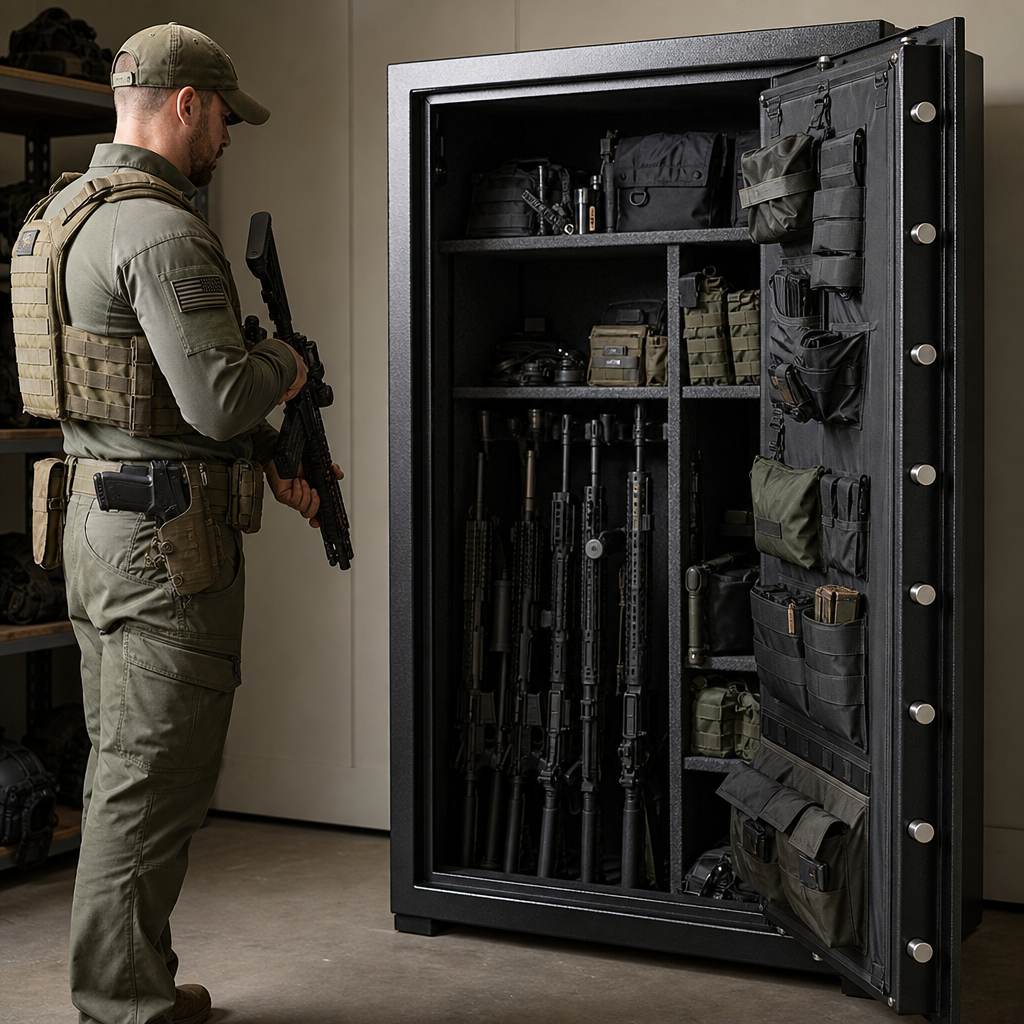
The best gun safe brands for law enforcement and military use combine certified burglary resistance, rapid access under stress, flexible weapon organization, and the durability to survive years of daily duty. For officers, armorers, investigators, special response teams, and service members, a gun safe is not just a storage box. It is a controlled-access security system that protects duty weapons, patrol rifles, optics, suppressors where lawful, sensitive documents, and ammunition while reducing unauthorized access and helping agencies meet policy requirements. In practical terms, the right safe must balance three priorities that often conflict: security, speed, and capacity.
When I evaluate gun safe brands for professional users, I look beyond marketing labels like “tactical” or “military grade.” The details that matter are measurable: steel thickness, lock type, hardplate protection, relocker design, fire ratings, bolt coverage, hinge construction, interior modularity, anchoring options, and independent certifications such as UL ratings for locks or Residential Security Container classifications. I also pay attention to serviceability. In real deployments and armory rooms, a safe that is difficult to reconfigure, prone to lockout, or poorly supported by the manufacturer quickly becomes a liability.
This hub article covers the leading gun safe brands used most often in serious civilian, law enforcement, and military-adjacent environments, and it explains how to compare them intelligently. Some brands excel in true heavy steel construction and custom builds. Others are stronger in value, interior layout, or dealer support. There is no universal winner for every department or individual operator. A patrol officer in a small apartment, a rural deputy storing long guns and evidence-related paperwork, and a military unit managing shared access all need different solutions. The goal here is to give you a reliable framework for comparing brands so you can choose a safe that fits your mission, your threat model, and your budget.
What law enforcement and military users need from a gun safe
Professional users need more than basic home firearm storage. A duty-oriented safe should resist pry attacks, cutting attempts, and lock manipulation long enough to force noise, time, and visibility onto an intruder. In the field, I have seen the biggest buying mistakes come from focusing on advertised gun count or decorative finishes instead of structure. A “36-gun safe” often stores far fewer rifles once optics, weapon lights, side folders, plate carriers, or document bins are added. Interior capacity is routinely overstated across the industry.
Fast access matters because duty use is time-sensitive. For a bedside handgun safe, simplex mechanical locks and high-quality electronic locks from UL-listed platforms can be appropriate. For full-size rifle safes, electronic locks are common because they allow quick opening and easy code changes, though mechanical dial locks still appeal to users who prioritize long-term reliability and reduced dependence on batteries. Neither system is perfect. Electronic locks can fail from neglect, poor components, or dead batteries. Mechanical dials are slower and require more deliberate operation under stress.
Fire protection also matters, but buyers should read fire ratings carefully. Many brands publish proprietary ratings based on internal testing rather than identical third-party methods. A safe advertised at 60 or 90 minutes may perform very differently from another with the same claim. For most professional buyers, burglary resistance should be the first priority, because many residential firearm losses involve theft rather than catastrophic house fire. Fireboard, door seals, and layered insulation help, but they should not distract from steel quality and locking architecture.
How to compare gun safe brands objectively
The fastest way to compare gun safe brands is to evaluate six categories: body steel, door construction, lock quality, boltwork, interior usability, and after-sale support. Body steel is foundational. Many mass-market safes use 14-gauge or 12-gauge bodies, which are better than thin cabinets but still vulnerable to aggressive pry and cut attacks. Premium brands frequently move into 10-gauge, 7-gauge, or even quarter-inch plate territory, dramatically increasing resistance. Door thickness can be misleading because manufacturers may combine thin outer steel with layers of drywall and call the total stack “thick.” What matters is actual steel, not padded dimensions.
Lock quality should be verified, not assumed. A UL-listed Type 1 electronic lock or UL-listed mechanical lock is a meaningful baseline. Hardplates, spring-loaded relockers, and protected linkage are signs of serious construction. Boltwork should be distributed sensibly, but more bolts do not automatically mean more security. Continuous dead bars on the hinge side, a robust door frame, and reduced pry gaps often matter more than marketing-heavy bolt counts.
Interior usability is crucial for professional storage. Adjustable shelving, barrel racks that accommodate optics, and modular door panels save time during shift changes and range preparation. Finally, support matters. If a lock fails, parts are delayed, or a mover damages the safe, a responsive manufacturer or dealer network can determine whether downtime lasts days or months.
| Brand | Best Known For | Typical Strengths | Best Fit |
|---|---|---|---|
| AMSEC | Broad lineup from RSC to high-security | Strong lock options, good dealer network, premium BF and RF models | Officers wanting balanced security and availability |
| Fort Knox | Customization and heavy build options | Thicker steel upgrades, interior flexibility, made-to-order features | Buyers with specific storage and security requirements |
| Liberty | Mainstream market presence | Wide distribution, varied sizes, familiar user features | General duty users comparing value and accessibility |
| Browning | Interior organization | Practical long-gun layout, door storage, useful shelving systems | Users storing many scoped rifles and gear |
| Rhino | Tactical styling and modular interiors | Swing-out racks on some models, convenient access layouts | Users prioritizing organization and fast retrieval |
| Graffunder | True heavy-security construction | Very thick steel, high-end craftsmanship, serious burglary resistance | High-risk users and premium installations |
| Sturdy Safe | Steel-first design philosophy | Heavy bodies, simpler interiors, emphasis on anti-pry strength | Buyers focused on structure over cosmetics |
Top gun safe brands worth serious consideration
AMSEC, short for American Security, is one of the most credible starting points for law enforcement buyers because its catalog spans practical entry-level gun safes to commercial-grade security products. The BF series is especially respected because it combines a substantial steel body with a poured or layered fire barrier and strong lock protection. In many real-world comparisons, AMSEC stands out because it offers better-than-average construction without forcing every buyer into ultra-premium pricing. If you want one brand that lets you scale from home duty storage to more hardened options, AMSEC is usually on the shortlist.
Fort Knox has earned its reputation through customization. Agencies and individual professionals who want upgraded steel, reinforced doors, specific color schemes, interior racks, and accessory layouts often prefer Fort Knox because the company allows a more tailored configuration than many big-box competitors. That flexibility is valuable when the safe must store patrol carbines with optics, breaching tools, binders, and handguns in one controlled setup. The tradeoff is price. A well-optioned Fort Knox safe can become expensive quickly, but buyers who know exactly what they need often find the cost justified.
Liberty is one of the most widely recognized names in the category. Its strength is market availability, broad model selection, and a familiar ownership experience. For some buyers, that makes Liberty easy to compare and easy to purchase locally. The caution is that the brand spans multiple tiers, so you need to compare models carefully rather than assume the badge guarantees the same security level across the lineup. A heavier Liberty model may serve a professional user well, while a lighter one may be better suited to lower-risk residential storage.
Premium and niche brands for higher-threat environments
Graffunder occupies the premium end of the market and is frequently discussed whenever true heavy-gauge or plate-steel gun safes come up. These safes are built for buyers who are less concerned with decorative extras and more focused on defeating serious burglary attempts. They are expensive, heavy, and not ideal for every home, but in high-risk environments they offer a level of confidence that thinner consumer safes cannot match. Moving and installing one requires planning, floor-load consideration, and usually professional delivery.
Sturdy Safe appeals to buyers who appreciate a steel-first approach. The company has long been known for emphasizing body strength, straightforward design, and practical anti-pry characteristics rather than luxury interiors. For law enforcement officers who care more about how a safe resists attack than how glossy the finish looks in a spare room, Sturdy often deserves attention. It is not the only brand in this lane, but it is one of the clearest examples of a manufacturer prioritizing core structure over presentation.
Rhino and Browning both deserve mention because organization matters in professional use. Browning’s interior systems are often friendlier for scoped rifles than many traditional rack layouts, which can waste space or create interference between firearms. Rhino has pushed modular and swing-out concepts on selected models, making retrieval simpler for users who need to access specific rifles quickly. These strengths do not automatically make them the most secure in every price class, but for some users, organization and efficiency are operational advantages, not cosmetic extras.
Choosing the right safe by role, location, and threat model
The best gun safe brand depends on where the safe will live and what threats you actually face. A patrol officer in a suburban home may need a full-size safe anchored in a closet or basement, with enough room for two or three long guns, duty pistols, armor, and documents. In that case, a mid-to-upper AMSEC, Liberty, Browning, or Fort Knox model may be entirely appropriate, provided the steel and lock package are strong enough. A narcotics investigator or rural officer with a larger collection and higher theft concern may be better served by thicker steel from Fort Knox, Sturdy, or a premium AMSEC line.
Military users can have different requirements. Barracks living may limit full-size safe options, making smaller handgun safes or compact long-gun security containers more realistic, subject to installation rules and command policy. Off-base housing opens more flexibility, but frequent relocation becomes a serious factor. A massive plate-steel safe offers excellent protection, yet repeated moves can be costly and logistically difficult. In those cases, a slightly lighter but still credible safe from a mainstream premium brand may be the smarter long-term choice.
Think in layers. A gun safe performs best when combined with alarm monitoring, discreet placement, solid anchoring into concrete where possible, humidity control, and limited public visibility. Even the best brand can be compromised by poor installation. I have seen strong safes weakened by being left unbolted in garages, exposed for easy tool access, or placed where a pry bar could be used with maximum leverage. Brand matters, but setup matters nearly as much.
Common buying mistakes and the smartest next steps
The most common mistake is buying by advertised gun count. Cut claimed capacity by at least a third if you own modern rifles with optics, slings, bipods, or larger magazines. The second mistake is overvaluing fire ratings while undervaluing steel thickness and door design. The third is ignoring dimensions of hallways, stairwells, and final placement. More than once, I have seen buyers choose an excellent safe that physically could not be installed where they intended without extra cost or risky maneuvering.
Another mistake is treating all brand lineups as equal. Every major manufacturer has stronger and weaker models. Compare the exact series, not just the logo. Read specifications, confirm lock listings, ask about steel gauge in the body and door, and verify whether the safe includes relockers, hardplates, and anchor holes. If possible, inspect one in person. Open the door, remove a shelf, look at weld quality, and test how the interior handles your actual rifle dimensions.
The key takeaway is simple: the best gun safe brands for law enforcement and military use are the ones that deliver real structural security, dependable access, and practical storage for your mission. AMSEC and Fort Knox are strong all-around leaders, Graffunder and Sturdy excel when steel and burglary resistance come first, and Liberty, Browning, and Rhino each offer compelling strengths in the right context. Use this hub as your starting point for deeper brand comparisons and model spotlights, then match the safe to your risk level, space, and duty gear. Measure carefully, compare honestly, and invest in the strongest safe your situation allows.
Frequently Asked Questions
What should law enforcement officers and military personnel look for in the best gun safe brands?
The best gun safe brands for law enforcement and military use should be evaluated as security platforms, not just storage cabinets. First, look for verified burglary resistance rather than marketing language alone. Safe brands that use thicker steel, reinforced doors, hard plates to protect the lock, relockers, robust bolt work, and credible third-party testing generally provide a much higher level of protection than entry-level residential containers. For duty use, construction quality matters because the safe may be opened multiple times per day, loaded with heavy rifles, and expected to stand up to years of hard use without sagging doors, weak hinges, or unreliable locking systems.
Rapid access is also critical. Officers, armorers, and military users often need a safe that can secure weapons while still allowing efficient access under stress, during shift changes, deployments, callouts, or emergency response. That means paying close attention to lock type, keypad reliability, biometric performance if offered, backup entry options, and how quickly the interior can be organized for intuitive retrieval. A well-designed interior with adjustable shelving, rifle racks, door organizers, and room for optics, magazines, body armor, and supporting gear can significantly improve readiness.
Another major factor is fit for mission. A patrol officer storing a duty handgun and patrol rifle has different needs than an armory manager securing multiple long guns, NFA-regulated accessories where lawful, ammunition, and case files. The best brands usually offer multiple sizes, interior configurations, and upgrade paths. Fire protection, while often discussed, should be considered alongside burglary resistance rather than instead of it. For professional users, a safe that survives heat but fails easily against forced entry is not an ideal choice. In short, the strongest brands combine real security, dependable access, flexible storage, and long-term durability.
Are biometric gun safes a good choice for law enforcement and military applications?
Biometric gun safes can be useful, but they should be chosen carefully and usually work best in specific roles rather than as a blanket solution for every application. Their biggest advantage is speed. In a high-stress situation, a well-made biometric safe can provide faster access than a traditional dial lock and may be more intuitive than entering a code in darkness or while wearing down fine motor control. This can make biometric handgun safes attractive for quick-access use in a bedroom, office, barracks room, or plainclothes vehicle setup, especially when a duty pistol must remain secured from unauthorized access but still be available quickly.
That said, biometric systems are not all equal. Fingerprint readers can be affected by dirt, moisture, glove use, cuts, worn fingerprints, and inconsistent sensor quality. For military and law enforcement users who operate in field conditions, reliability is more important than novelty. The best practice is to treat biometrics as one access method among several, not the only layer of entry. High-quality units should include a keypad or mechanical override and should allow multiple enrolled users if a shared-access environment is expected. Testing the safe under realistic conditions is essential, including low light, elevated stress, wet hands, and repeated daily use.
For larger rifle safes and duty-grade storage, many professionals still prefer commercial-grade electronic locks or proven mechanical systems because they are generally more established over the long term. Biometric access may be excellent for a supplemental quick-access safe, but for primary storage of multiple duty weapons, agencies and service members often prioritize lock durability, serviceability, and resistance to tampering. In other words, biometrics can be a smart feature, but only when paired with quality construction and a dependable backup access method.
How important are burglary ratings and steel thickness when comparing gun safe brands?
They are extremely important, especially for law enforcement and military users who may store more than a single firearm and often have equipment that is both expensive and operationally sensitive. Many buyers focus on brand reputation, appearance, or interior features first, but actual resistance to forced entry is what separates a serious safe from a basic residential security container. Burglary ratings, when issued by credible testing organizations, help establish whether a safe has demonstrated meaningful resistance against tools and attack methods. While not every good safe carries the same certification level, brands that are transparent about steel thickness, door construction, lock protection, relockers, and test standards generally inspire more confidence than brands that rely on vague claims like “heavy-duty” or “pry-resistant.”
Steel thickness matters because it directly affects how difficult the body and door are to cut, peel, bend, or pry open. Thin steel may look substantial once drywall-style fire lining and interior fabric are added, but the real security value comes from the metal structure and the locking design. A thicker body, stronger door edge, reinforced frame, and properly engineered bolt system can dramatically increase the time, noise, and effort required for a break-in. That time factor is crucial. Most thieves want fast access. A safe that slows them down, especially when bolted to concrete and placed intelligently within a structure, is far more likely to protect weapons and gear.
For professional use, these factors become even more significant because the contents may include patrol rifles, optics, serialized components, sensitive documents, evidence-related materials, and ammunition. Choosing a safe with stronger steel and credible burglary resistance is not just about asset protection. It is about reducing the risk of stolen duty weapons entering the criminal market and maintaining control over mission-essential equipment. The best gun safe brands stand out because they invest in real structural protection, not just cosmetic features.
What size and interior layout work best for duty weapons, rifles, optics, and related gear?
The best size depends on both current inventory and future growth, but most law enforcement and military users benefit from buying larger than they initially think they need. Manufacturer firearm counts are often optimistic and based on tightly packed rifles without optics, weapon lights, slings, bipods, or oversized accessories. In real-world duty use, a “24-gun safe” may hold far fewer long guns once patrol rifles, precision rifles, shotguns, and carbines with mounted optics are arranged in a practical, accessible way. If you need room for body armor, ammunition, medical kits, documents, hard drives, or sidearms, usable capacity drops further.
Interior layout is just as important as raw size. Adjustable shelving, modular rifle racks, barrel supports, door-mounted storage, and compartmentalized spaces make it much easier to organize weapons by role and retrieve them quickly without disturbing everything else. For example, an officer may want immediate visibility of a patrol rifle and duty shotgun, while an armorer may need grouped storage for spare optics, magazines, cleaning gear, serialized parts, and maintenance records. Soft-lined interiors help protect finishes and optics, but layout efficiency matters more than decorative trim. The safe should support operational access, not just maximize advertised capacity.
If the safe will be used by multiple people, consider clear organization and dedicated zones for handguns, long guns, ammunition, and documents. Also think about vertical clearance for scoped rifles and whether shelves can be reconfigured later. Many premium brands offer flexible interiors specifically because duty users evolve over time. New weapons, changing assignments, additional optics, suppressors where lawful, and mission-specific gear can all alter storage needs. A safe that is slightly oversized today often becomes appropriately sized much sooner than expected.
Which features matter most for long-term durability and dependable daily use?
For law enforcement and military use, long-term durability starts with build quality. A safe that will be opened constantly, loaded heavily, and relied on under pressure needs solid welds, a rigid body, a door that stays aligned, and hardware that does not loosen or wear prematurely. Heavy-duty hinges, smooth bolt work, and a lock system with a strong service history are more important over time than flashy accessories. Reputable brands tend to distinguish themselves by consistency in manufacturing, better fit and finish, and hardware that continues to function properly after years of repeated use.
Dependable daily use also depends on the lock. Electronic locks can be excellent when sourced from proven manufacturers and maintained properly, but they should have a track record for reliability and straightforward battery changes. Mechanical locks remain attractive to some users because of their durability and simplicity, though they are slower. The right choice depends on the mission. In either case, the lock should be protected by drill-resistant features and supported by a brand with accessible customer service, replacement parts, and qualified technicians if service is ever needed.
Other features that improve real-world durability include corrosion-resistant finishes, anchored installation capability, quality interior materials that will not collapse under load, and sufficient ventilation or dehumidification options for long-term weapons storage. If the safe will be installed in a garage, armory room, climate-variable building, or humid region, moisture control becomes a major part of preserving firearms, optics, and documents. Ultimately, the best gun safe brands earn their reputation by delivering not just strong security on day one, but consistent performance year after year in demanding environments.