
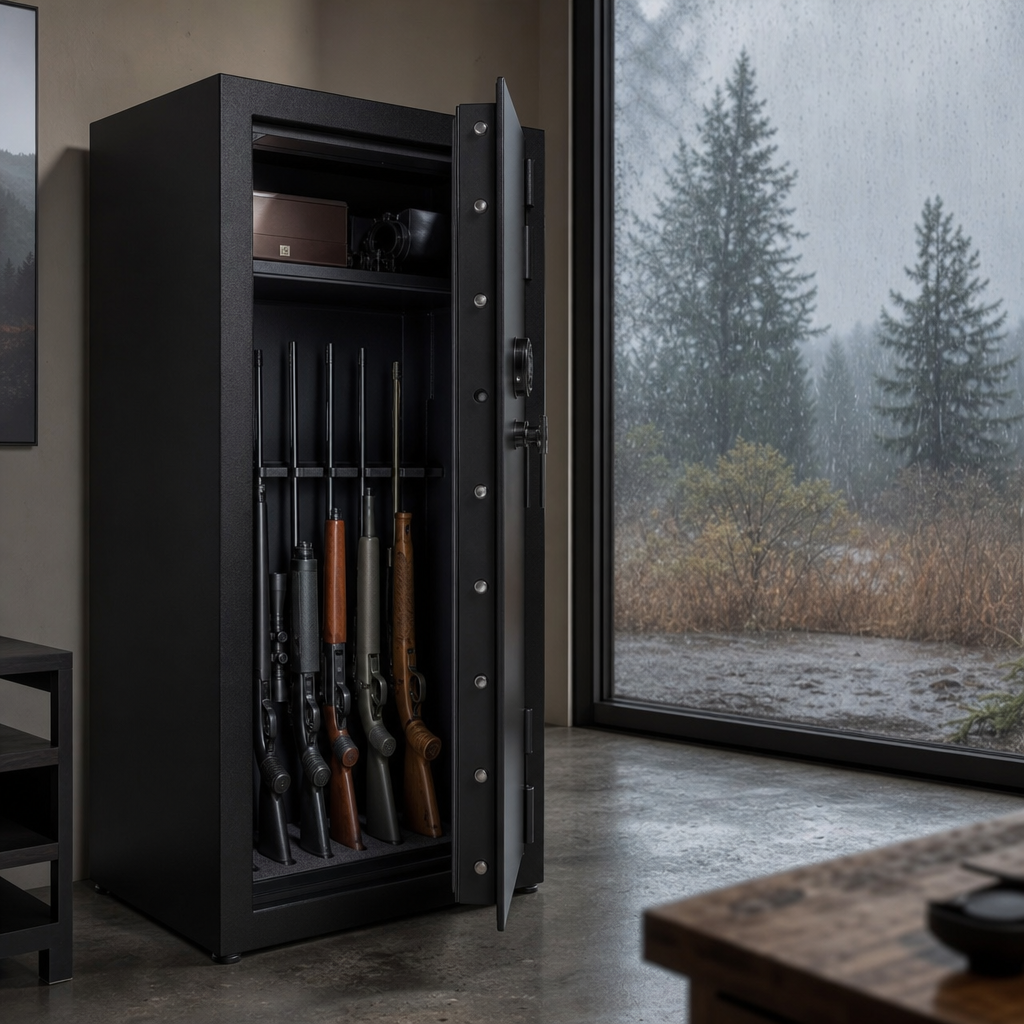
Climate and humidity affect fireproof gun safe performance in ways many owners underestimate, because a safe is not just a steel box with a lock; it is a controlled storage environment exposed to temperature swings, moisture load, seal fatigue, and the chemistry of its own fire-resistant materials. In practical terms, a fireproof gun safe is designed to slow heat transfer during a fire for a rated period, while disaster-resistant storage extends that protection to water, smoke, corrosion, structural impact, and long-term environmental stress. I have seen well-rated safes protect firearms during house fires yet still leave owners with rusted barrels, swollen wood stocks, and damaged optics because the surrounding climate was ignored before the emergency ever happened.
This matters because firearms, ammunition, documents, and electronics all react differently to moisture and heat. Relative humidity above roughly 50 percent can support corrosion on blued steel, while very low humidity can dry out wood grips and stocks. In coastal regions, salt-laden air accelerates oxidation. In basements, condensation forms when warm humid air meets a cooler safe body. In wildfire areas, heat and smoke matter most; in hurricane zones, flood depth and door seal integrity are just as important. If you are building a complete storage plan under the broader Gun Safes & Safety category, understanding climate and humidity is the foundation of choosing, placing, and maintaining a fireproof gun safe that actually performs when tested by real-world conditions.
What Fireproof Gun Safe Ratings Really Mean in Different Climates
A fireproof gun safe rating tells you how long the interior should stay below a stated temperature under laboratory conditions, commonly 30, 60, 90, or 120 minutes. The details matter. UL 72 is the recognized standard for record protection classes, while many residential security containers marketed for firearms use manufacturer testing rather than full third-party certification. In the field, I treat advertised ratings as a starting point, not a guarantee, because installation conditions change outcomes. A safe on a concrete slab may absorb moisture from below. A safe in an attached garage may face wider temperature swings than a safe in a conditioned interior room. Both scenarios influence seals, interior humidity, and post-fire recovery.
Fire insulation itself can be moisture sensitive. Many gun safes use gypsum-based board because chemically bound water in gypsum helps absorb heat during a fire. That same material can release moisture slowly into the safe interior over time, especially when the safe is new or stored in humid conditions. Some premium safes use poured composite insulation or proprietary barrier systems that are denser and often more stable, but these designs raise cost and weight. The key point is simple: a fire rating measures heat resistance during a controlled burn, not ongoing humidity management. Buyers who assume a longer fire rating automatically means better year-round protection often miss the fact that internal moisture control must be handled separately.
Climate also affects intumescent door seals, the heat-activated strips that expand during a fire to block smoke and hot gases. Repeated high heat, freezing conditions, or prolonged humidity can age adhesives and reduce flexibility. This does not mean seals suddenly fail in normal service, but it does mean a safe in an unconditioned shed or damp garage deserves more inspection than one inside a stable hallway closet. For disaster-resistant storage, fire rating, seal condition, body construction, and placement work together. A safe with a modest fire rating in a cool interior room may outperform a higher-rated safe exposed to years of moisture cycling and poor installation.
How Humidity Damages Firearms and Safe Interiors
Humidity harms firearms through corrosion, finish degradation, stock movement, optic damage, and ammunition deterioration. Steel rust is the most obvious risk, but it is not the only one. Leather slings can mildew. Brass cases can tarnish or corrode. Scope internals can fog if seals are compromised. Wood stocks absorb and release moisture as relative humidity changes, which can affect fit, bedding pressure, and surface finish. I have opened safes in damp basements where the exterior looked perfect, but the interior showed orange flash rust on screws, magazine bodies, and sling swivels after one wet season.
The most common mistake is focusing on ambient weather reports instead of the microclimate inside the safe. A home may average acceptable indoor humidity, yet the safe interior can stay wetter because heavy steel cools slowly and the interior has limited airflow. When warm humid air enters during a brief door opening and then contacts cooler surfaces, condensation can develop. This is especially common in spring and summer when air conditioning lowers room temperature but outdoor moisture remains high. The risk increases if the safe is placed against an exterior wall, on bare concrete, or in a basement utility area near laundry equipment, water heaters, or sump systems.
There is also a less discussed issue: trapped moisture from items stored inside. Soft cases, foam-lined boxes, cardboard ammunition cartons, and recently handled firearms all carry water vapor. Foam is particularly problematic for long-term storage because it can retain moisture against metal. For that reason, disaster-resistant storage should include not just a strong safe but disciplined loading practices. Firearms should be wiped down with a corrosion-inhibiting protectant, fabrics should be dry, and accessories that trap moisture should be minimized. The safe interior must be treated as a managed environment, not dead space.
Best Humidity Range, Monitoring Tools, and Control Methods
For most firearm collections, the practical target inside a safe is 40 to 50 percent relative humidity, with stable temperature preferred over dramatic swings. Below about 35 percent, wood components may dry excessively over time. Above 50 percent, corrosion risk rises, especially on blued steel and in salty air. The correct solution depends on the environment, safe size, and electrical access.
| Control method | Best use case | Strengths | Limitations |
|---|---|---|---|
| Rechargeable desiccant packs | Small safes, seasonal humidity spikes | Low cost, no power needed, easy to replace | Saturate quickly in humid regions, require regular recharging |
| GoldenRod-style dehumidifier rod | Medium to large safes with outlet access | Raises interior temperature slightly to reduce condensation, low maintenance | Does not remove moisture directly, depends on adequate sealing and room conditions |
| Wireless hygrometer | Any safe where monitoring matters | Provides real-time humidity data, helps verify performance | Battery maintenance required, cheap units can drift |
| Eva-Dry or similar mini dehumidifier | Closets, cabinets, compact safes | Simple and portable | Limited capacity in high humidity areas |
In my experience, the most reliable setup for a full-size gun safe is a powered warming rod plus a calibrated digital hygrometer, backed by desiccant during the wettest months. Brands like Hornady, Liberty Safe, Browning, and Vaultek all support accessory ecosystems, but the principle is universal: monitor first, then adjust. If you do not measure relative humidity, you are guessing. Place the hygrometer at mid-height, not directly beside a heating rod or door gap, and verify it periodically with a salt test or a known reference unit.
Avoid overcorrecting. Some owners pack in excessive desiccant and drive humidity too low, then wonder why wood furniture shrinks or old leather cracks. Climate control should be steady, not aggressive. If the room itself stays above 60 percent relative humidity for long periods, fix the room before expecting the safe to do all the work. A basement dehumidifier, vapor barrier, air sealing, or relocating the safe may produce better results than adding more packets inside the door.
Climate-Specific Risks: Coastal, Basement, Garage, and Flood Zones
Different climates create different failure points. Coastal homes face salt aerosol exposure, which accelerates corrosion even when indoor humidity appears moderate. In these locations, stainless components resist rust better than blued steel, but no finish is immune. Safe exteriors, lock bolts, and door edges should be inspected more often, and protective oils such as Eezox, CorrosionX, or Break-Free Collector become more important. Rubber door seals also age faster in hot, salty air, so annual inspection is sensible.
Basements are the most common bad location for a fireproof gun safe because they combine cool surfaces, concrete moisture, and limited airflow. Concrete wicks moisture unless isolated. A simple riser system, polymer shims, or pressure-treated blocking under the safe can reduce direct moisture transfer and buy valuable protection during minor flooding. If a basement is the only viable location, use a room dehumidifier, keep the safe off exterior walls, and verify that your sump pump, drainage, and grading are reliable. I have seen more rust start from basement placement than from any brand difference between safes.
Garages introduce another set of problems: daily temperature swings, vehicle exhaust contamination, and weak thermal buffering. A garage safe can work in dry climates, but in humid regions it often becomes a condensation trap. Electronic locks also experience more stress from heat extremes, which can shorten battery life. If installation in a garage is unavoidable, place the safe on an insulated riser, away from the door, and use active humidity control. In flood-prone regions, elevate the safe above expected water level if possible and pay close attention to the manufacturer’s water resistance claims. A true flood-resistant safe should specify tested water depth and duration, not just use vague language like waterproof seal.
For wildfire, tornado, and hurricane zones, think in layers. Fire protection addresses heat, but post-event water from fire suppression, broken pipes, storm surge, or roof failure can be equally destructive. Disaster-resistant storage means combining fire rating, water resistance, anchoring, and interior packaging. Sensitive documents, suppressor paperwork, passports, and digital backups should go in sealed document pouches or a dedicated UL-rated media container inside the main safe. One layer is rarely enough.
Installation, Maintenance, and Long-Term Disaster-Resistant Storage Strategy
Safe performance depends heavily on installation. The best placement is typically a conditioned interior space on a structurally sound floor, away from exterior walls, plumbing lines, and direct sunlight. Anchoring matters for security and stability, but use appropriate hardware and consider moisture pathways. On concrete, install a moisture break beneath the safe. On wood floors, confirm load capacity; large composite fire safes can exceed 1,000 pounds before contents. If you are planning internal links across a Gun Safes & Safety resource center, this page should connect naturally to buying guides on safe size, safe placement, dehumidifier setup, flood-resistant document storage, and annual firearm maintenance.
Maintenance should follow a schedule, not guesswork. Monthly, check the hygrometer reading and inspect visible metal for early corrosion. Quarterly, recharge or replace desiccant, test electronic lock batteries, and wipe firearms with a protectant suitable for long-term storage. Annually, inspect door seals, anchor points, hinge-side gaps, and any interior fabric or drywall odor that suggests moisture retention. After any house flood, roof leak, or fire department response, assume the safe interior environment changed even if the exterior appears fine. Open, document, dry, and reassess immediately.
Long-term disaster-resistant storage also means matching contents to container type. A residential gun safe is ideal for firearms and some documents, but it is not the perfect answer for every asset. Photos, hard drives, and backup media are more heat sensitive than paper and may require specialized media protection. Black powder, primers, and large ammunition quantities raise separate safety and legal considerations, so review local code and manufacturer guidance rather than storing everything together by habit. The strongest strategy is a layered one: conditioned room, properly installed safe, monitored humidity, protective firearm finishes, and separate protection for documents and digital media.
Climate and humidity do not make a fireproof gun safe useless, but they absolutely determine whether it delivers full protection over the years between purchase and disaster. Choose a safe with credible fire and water specifications, place it in the most stable part of the home, monitor humidity instead of assuming, and maintain both the safe and the contents on a schedule. When owners treat disaster-resistant storage as an ongoing system rather than a one-time product purchase, they preserve firearms better, reduce loss after emergencies, and avoid the hidden corrosion that ruins value long before a fire ever starts. Review your current safe location, check the humidity inside it this week, and upgrade the weak points before climate does the damage for you.
Frequently Asked Questions
How does humidity inside and around a fireproof gun safe affect firearms and the safe itself?
Humidity is one of the most important and most overlooked factors in long-term gun safe performance. Firearms are made from steel, blued finishes, springs, optics, and in many cases wood or polymer components, all of which respond differently to excess moisture. When relative humidity stays too high inside a safe, metal surfaces can begin developing corrosion, light surface oxidation, or full rust, especially on barrels, actions, screws, magazines, and hidden contact points where air circulation is limited. Wood stocks can also absorb moisture and swell, while optics and electronic accessories may suffer from internal fogging or gradual deterioration.
Humidity does not only threaten the contents. It can also affect the safe itself over time. Interior carpeting, fabric liners, adhesives, door seals, and fire-resistant insulation materials can absorb moisture from ambient air, especially in basements, garages, coastal regions, or homes without climate control. That trapped moisture can create a damp microclimate inside the safe, even when the exterior room feels only mildly humid. If this pattern continues for months or years, the result may be musty odors, corrosion on shelving hardware, reduced effectiveness of some protective finishes, and premature aging of internal components. In short, a fireproof gun safe performs best when it is treated as a controlled storage environment, not simply as a locked steel container.
Can climate conditions reduce the fire protection performance of a fireproof gun safe?
Yes, climate conditions can influence how well a fireproof gun safe performs over time, even though they do not necessarily change its original fire rating overnight. Fireproof safes rely on a combination of steel construction, expanding seals, insulation layers, and fire-resistant board or composite materials that are engineered to slow heat transfer during a fire. In humid, coastal, or highly variable climates, these materials may experience gradual wear caused by moisture absorption, temperature cycling, and repeated expansion and contraction. Over the years, this can contribute to seal fatigue, minor warping, adhesive breakdown, or deterioration in fit and finish around the door opening.
That matters because fire protection depends heavily on the safe remaining structurally tight during extreme heat. If seals no longer seat properly, if gaps develop, or if internal fire-lining materials degrade due to environmental exposure, the safe may become less effective at resisting smoke, steam, and heat infiltration. The safe may still offer meaningful protection, but owners should understand that real-world performance depends on condition, placement, and maintenance, not just the label on the door. A safe kept in a damp garage with seasonal temperature swings may age very differently from the same model kept in a dry, climate-controlled interior room. For that reason, climate management is part of preserving fire resistance, not separate from it.
What are the best ways to control moisture in a fireproof gun safe in humid or changing climates?
The best approach is layered moisture control. Start with placement: a fireproof gun safe should ideally be installed in a climate-controlled part of the home rather than in a garage, shed, or damp basement. When location options are limited, reducing direct contact with concrete floors, improving room ventilation, and avoiding areas prone to condensation can make a major difference. Concrete can transmit moisture upward, so using manufacturer-approved risers or barriers beneath the safe may help reduce long-term humidity exposure.
Inside the safe, use active and passive humidity control together. Rechargeable desiccants can absorb excess moisture and work well in smaller enclosed spaces, while electric dehumidifier rods help maintain air circulation and keep interior temperatures slightly above ambient dew point conditions, reducing condensation risk. Many owners benefit from using both. A digital hygrometer is also essential because it gives you actual humidity readings instead of guesswork. That allows you to adjust your setup seasonally and keep relative humidity in a safer range for firearms and accessories. Beyond that, regular inspection matters: wipe down guns with appropriate protective oils, check hidden metal surfaces, rotate stored items so air can circulate, and periodically inspect the safe’s corners, shelves, and door channels for signs of dampness. Consistent monitoring is far more effective than reacting only after rust appears.
Why do temperature swings and condensation pose a special risk to fireproof gun safes?
Temperature swings are dangerous because they create the perfect conditions for condensation, especially when a safe is placed in a non-climate-controlled area. A safe’s heavy steel body tends to warm and cool more slowly than the surrounding air. When warm, moisture-laden air meets a cooler safe surface, water can condense on exterior or interior metal surfaces. That is especially common in garages, outbuildings, and basements during seasonal changes, humid mornings, or sudden weather shifts. Even small amounts of repeated condensation can accumulate into a serious corrosion issue over time.
Condensation is particularly problematic because it often forms in hidden areas owners do not inspect often: under foam rests, behind long guns, in corners, around door edges, beneath shelf supports, and inside cases stored within the safe. It can also affect sensitive items such as optics, suppressor accessories, ammunition packaging, and important documents. From the safe’s perspective, repeated moisture cycling can stress coatings, encourage rust at seams or weld points, and contribute to wear on seals and interior materials. The practical takeaway is simple: temperature stability matters almost as much as fire rating. A safe that lives in a stable indoor environment generally maintains both its protective structure and its interior storage quality much better than one exposed to daily or seasonal thermal swings.
How can you tell if climate or humidity is already affecting your fireproof gun safe’s performance?
There are several warning signs, and many appear gradually. The most obvious are rust spots on firearms, tarnish on metal hardware, musty odors, damp-feeling interior fabric, or visible discoloration on shelves and lining materials. You may also notice that door seals look flattened, brittle, cracked, or unevenly compressed, which can indicate aging accelerated by environmental exposure. If the safe becomes harder to open smoothly, shows signs of exterior rust near the bottom edges, or develops condensation during certain times of year, those are strong indicators that climate conditions are influencing its performance.
Less obvious signs can be just as important. A hygrometer reading that regularly stays too high, recurring moisture inside stored cases, fogging on optics, sticky paperwork, or corrosion on seldom-handled parts such as sling swivels and screws all suggest the interior environment is not properly controlled. At that point, the solution is not just cleaning the firearms. You should reassess the safe’s location, inspect seals and interior materials, improve dehumidification, and consider whether the safe is being used in conditions beyond what it can comfortably handle long term. A fireproof gun safe is designed to protect valuable contents during extreme events, but its day-to-day storage environment determines how well it continues to perform when that protection is needed most.