
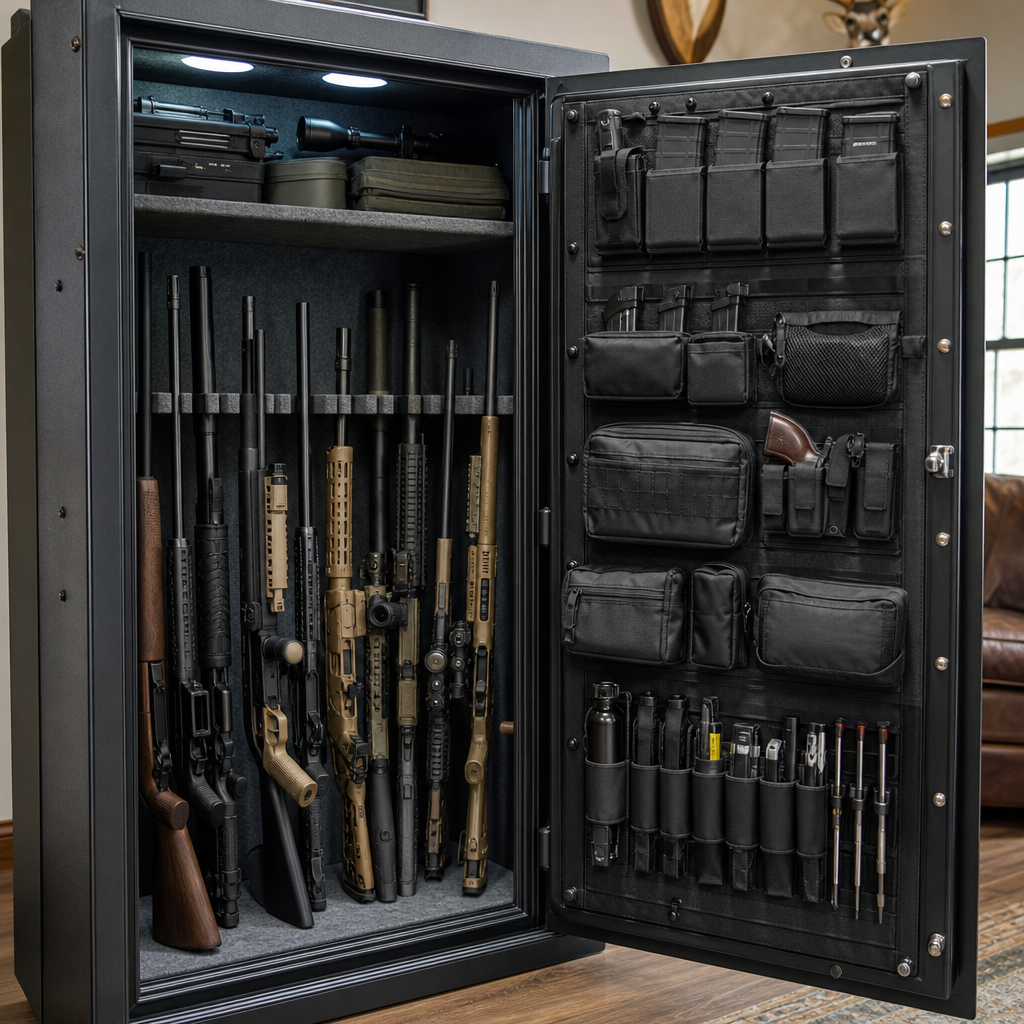
A gun safe is more than a steel box with a lock; for most owners, it becomes a long-term storage system that protects firearms, documents, optics, ammunition, and family safety routines at the same time. The best aftermarket accessories to customize your gun safe turn an empty interior into an organized, faster-access, lower-risk setup tailored to how you actually use your collection. In practical terms, aftermarket accessories are add-on products installed after purchase, while custom and DIY gun safe modifications include owner-applied changes such as lighting, door panels, humidity control, shelving changes, and labeling systems. This matters because factory interiors are usually generic. They are designed to fit many buyers, not your exact mix of rifles, handguns, suppressors, magazines, passports, jewelry, and backup drives.
I have worked with safe owners who thought they needed a bigger safe when the real problem was poor internal configuration. After adding a door organizer, motion-activated LED lighting, a dehumidifier, and adjustable racks, they often gained usable capacity and reduced the time spent handling firearms unnecessarily. That last point is important. A well-organized safe does not just look better; it supports safer gun handling by reducing stacking, leaning, and blind reaching. It also helps preserve value. Wood stocks, metal finishes, optics coatings, and paper records all suffer when humidity swings are ignored or heavy items are stored carelessly.
This hub article covers the core categories of custom and DIY gun safe modifications, the best accessories in each category, and the tradeoffs to consider before drilling, gluing, wiring, or reconfiguring anything. It is designed to serve as the central guide within the broader Gun Safes & Safety topic, so it explains foundational decisions and points toward the types of specialized upgrades owners usually explore next. If you want your safe to hold more, protect better, and work faster in daily use, the answer is rarely one accessory. The answer is a system built around access, protection, space efficiency, and maintenance.
Start with layout: capacity, access, and the limits of factory interiors
The first customization decision is not which accessory to buy. It is how you want the safe to function. Most factory gun safes use notched barrel rests, basic carpeted shelves, and fixed long-gun spacing that assumes slim hunting rifles with minimal accessories. That falls apart when you add scoped bolt guns, AR-platform rifles with lights and foregrips, pistol racks, hard cases, document folders, and rechargeable devices. Owners often overestimate stated gun counts because manufacturers calculate capacity using tightly packed, unscoped long guns. In the real world, a “24-gun safe” may store 12 to 16 long guns comfortably once optics are involved.
When I assess a safe interior, I break it into four zones: long-gun storage, handgun and magazine storage, document and valuables storage, and service space for airflow, lighting, and retrieval. That framework prevents the most common mistake, which is maximizing raw quantity at the expense of safe access. If you must remove three rifles to reach one shotgun, the layout is inefficient and increases handling risk. Adjustable shelving kits, barrel racks with wider spacing, pull-out handgun racks, and modular bins are usually the highest-value improvements because they solve this core geometry problem.
Measure before you buy anything. Record interior width, depth, shelf heights, door clearance, hinge-side intrusion, and the swing path of the door organizer if you plan to add one. Note where the power pass-through is, if your safe has one, and whether adding thick pouches to the door will interfere with stocks or optics when the door closes. This is where many DIY projects fail. A great accessory can become useless if it consumes the exact clearance needed by a scoped rifle. Good customization begins with dimensions, access order, and an honest inventory of what belongs inside the safe full time.
Door organizers are the fastest way to gain space
If there is one aftermarket accessory category that transforms a gun safe immediately, it is the door organizer. Door panels use the underutilized inside surface of the door to store handguns, magazines, documents, choke tubes, hearing protection, and small tools. Brands such as Liberty Safe, SecureIt, and Stealth offer factory-compatible and universal organizer systems, while many third-party options use MOLLE-style webbing or Velcro-backed holsters and pouches. The benefit is simple: items that used to sit on shelves or the floor move to vertical storage, freeing the main compartment for long guns and larger containers.
In practice, the best door organizers balance retention and clearance. A pouch should hold loaded magazines or passports securely when the door is opened sharply, but it should not protrude so far that it presses into rifle optics. For handgun owners, dedicated pistol holsters or barrel-down handgun sleeves usually outperform generic pockets because they maintain orientation and reduce contact between guns. For paperwork, zippered document pockets are better than open sleeves in humid regions because they keep papers flatter and cleaner. I have seen owners recover an entire shelf simply by moving six pistols, twelve magazines, and key documents onto the door.
The main caution is weight and fit. Safe doors are engineered for substantial mass, but concentrated accessory weight can still affect how the panel closes or how interior trim sits. Follow manufacturer mounting guidance carefully. If the organizer uses screws, verify you are fastening into approved interior panel materials rather than compromising fireboard or door seals. Universal adhesive-backed systems can work well for light items, but in warm interiors many adhesives degrade over time. For most owners, a tailored door organizer is the first upgrade to consider because it improves storage density without making the safe harder to use.
Lighting, power, and visibility upgrades improve daily safety
Poor visibility is one of the most overlooked problems in safe use. Deep interiors, dark carpet, and shadowed corners make it hard to identify the right firearm or inspect whether a shelf is clear. Aftermarket LED lighting solves that quickly. The best options are low-heat LED strip kits, rigid light bars, or puck lights designed for enclosed storage. Motion-activated systems are especially useful because they illuminate the interior as soon as the door opens, reducing the temptation to hold a flashlight while moving firearms. For most safe owners, warm or neutral white LEDs around 3000K to 4000K provide good visibility without the harsh glare common in very cool white lighting.
Power matters too. Many modern safes include an electrical pass-through, allowing dehumidifiers, charging docks, or lights to run inside without pinching cords in the door. If your safe lacks that feature, battery-powered lighting is still viable, but maintenance becomes part of your routine. Rechargeable packs are better than disposable cells for frequently opened safes. Magnetic mounting works well on bare steel surfaces, while adhesive channels may be necessary on carpeted interiors. Cable management clips are worth adding so wires do not snag stocks, slings, or drawer slides.
| Accessory | Primary benefit | Best use case | Main caution |
|---|---|---|---|
| LED strip lighting | Even illumination across shelves and long guns | Large safes with dark interiors | Adhesive failure on dusty or textured surfaces |
| Motion sensor light bars | Hands-free visibility on door opening | Frequently accessed safes | Sensor placement can miss side compartments |
| GoldenRod-style dehumidifier | Raises interior temperature slightly to reduce condensation | Humid climates and basement installs | Requires power pass-through and clearance |
| Rechargeable silica canisters | Moisture absorption without constant power | Closets, cabins, and low-access safes | Needs regular drying and monitoring |
Visibility upgrades pair naturally with humidity control, because a powered interior often means you can support both systems cleanly. If you keep optics, night vision devices, tax documents, or family records in the safe, lighting is not cosmetic. It is a functional safety upgrade that reduces fumbling and helps you spot dust, rust, or loose gear before it becomes a larger issue.
Humidity control is essential for firearms, optics, and documents
Moisture management is not optional if you care about corrosion prevention. Gun safes are enclosed spaces, often lined with fabric and placed in garages, basements, or exterior-wall closets where temperature swings create condensation risk. The two most common aftermarket solutions are low-watt heating rods, often recognized by the GoldenRod name, and desiccant products such as rechargeable silica gel canisters. Heating rods work by slightly warming the interior air, discouraging condensation on metal surfaces. Desiccants absorb moisture directly. In my experience, powered rods are the better baseline solution for primary-home safes, while desiccants are useful as supplemental protection or where power is unavailable.
A hygrometer is the accessory that makes both approaches smarter. Without measuring relative humidity, you are guessing. Many owners aim for roughly 45 to 50 percent relative humidity, though exact targets depend on local climate, safe location, and what else is stored inside. If the safe also holds paper records, photos, or electronics, stable conditions matter as much as low moisture. Place the hygrometer where it is easy to read and check it seasonally. If numbers climb during summer, add capacity or improve room-level climate control. No interior accessory can fully overcome a damp basement with no dehumidification.
Be careful with improvised solutions. Open trays of moisture absorber products intended for rooms, closets, or boats can spill and should not be placed near firearms. Likewise, avoid sealing guns into soft cases or foam-lined containers inside the safe for long periods; many fabrics and foams can trap moisture against metal. The right aftermarket humidity accessories protect finishes, reduce rust risk under grips and optics mounts, and preserve legal records or heirloom documents stored alongside your firearms.
Racks, shelves, and handgun storage create usable capacity
Once visibility and moisture are handled, the next gains come from interior organization. Rifle rod systems, barrel rests with wider notches, and freestanding rifle racks can dramatically increase usable long-gun spacing. SecureIt-style cradles, for example, are popular because they support rifles individually and work better than old-school slot systems when guns have optics, offset mounts, bipods, or muzzle devices. For handguns, under-shelf pistol hangers and vertical handgun racks free up shelf space while keeping each pistol separated. Magazine bins with labels prevent the mixed piles that waste time and scratch finishes.
Adjustable shelves deserve special attention because many safes ship with layouts that assume symmetrical storage. Real collections are not symmetrical. You may need one tall bay for precision rifles, one half-width shelf for paperwork, one ammunition shelf with weight distributed over reinforced supports, and one accessories drawer for batteries, choke tubes, and suppressor tools. Use shelving that can be reconfigured without damaging the liner. If you fabricate your own dividers or risers, choose sealed plywood, HDPE, or powder-coated metal rather than raw particleboard, which can sag and shed dust.
Weight distribution matters more than many owners realize. Ammunition is dense, and stacking it high on a top shelf can stress supports or make the safe top-heavy during loading, even if the safe is anchored correctly. Place heavy cans low, valuables and documents mid-level, and the most frequently accessed firearms where they can be removed without crossing other muzzles. A safe feels larger when every category has a defined home and retrieval path.
DIY modifications: what is worth doing and what can void protection
DIY gun safe modifications can be excellent when they respect the safe’s structure, fire lining, and locking system. Low-risk projects include adding battery or plug-in lighting, installing noninvasive handgun racks, building removable shelf risers, adding labels, and using hook-and-loop organizers on approved interior surfaces. These upgrades are reversible and usually do not affect warranty coverage. I also like removable EVA shelf liners because they reduce sliding and make small parts easier to spot.
Higher-risk modifications require restraint. Drilling through the body or door can compromise fire insulation, corrosion resistance, and anti-theft integrity. Altering lock housings, relockers, hard plates, or boltwork is never a casual DIY task. Even adding aftermarket power ports should be done only through existing pass-through points or by a qualified technician familiar with the safe’s fire barrier system. The same caution applies to replacing shelves with heavy steel drawers that add unexpected load to interior supports.
A good rule is simple: modify the interior environment, not the security architecture. If a project touches steel walls, door seals, lock components, or anchor geometry, stop and verify the manufacturer’s guidance. Safe customization should improve function without weakening the core purpose of the safe. The best DIY work looks almost invisible because it solves access and organization problems while preserving theft resistance and fire performance.
Choosing accessories by owner type and safe location
The best accessories depend on who uses the safe and where it lives. A collector with optics-heavy rifles benefits most from modular rifle spacing, lighting, and humidity monitoring. A handgun-focused owner may gain more from door holsters, pistol racks, and labeled magazine storage. Families storing passports, jewelry, and digital backups alongside firearms should prioritize document pouches, small lockboxes, and visibility upgrades that separate everyday valuables from firearms. In a basement, a heating rod and hygrometer move to the top of the list. In a bedroom closet, slim door organizers and quiet motion lighting may matter more.
Location also shapes maintenance. Garage safes see bigger temperature swings, more dust, and higher corrosion risk, so sealed bins, rust prevention routines, and climate control are essential. Cabin or seasonal-property safes need low-maintenance humidity solutions and fewer battery-dependent accessories. If children are in the home, organization should support quick accountability. You should be able to confirm at a glance where handguns, keys, and critical documents are stored. That is another reason this hub topic matters: customization is not decoration. It is part of safe firearm storage strategy.
The best gun safe setup is the one that matches your inventory, climate, and access needs without compromising security. Start with a layout plan, then add a door organizer, lighting, humidity control, and modular racks in that order for most safes. Choose reversible DIY upgrades when possible, measure carefully, and avoid any modification that affects the lock, fire lining, or shell. Done well, aftermarket accessories make a gun safe easier to use, easier to maintain, and safer for everyone in the home.
As you build out your Gun Safes & Safety system, use this guide as the hub for deeper projects such as lighting installation, dehumidifier setup, shelf reconfiguration, and door panel optimization. Review your current safe this week, identify the biggest access or space problem, and upgrade that first. One smart accessory often changes how the entire safe works.
Frequently Asked Questions
What are the best aftermarket accessories to add to a gun safe first?
The best first upgrades are the ones that improve organization, visibility, moisture control, and safe access without complicating the way you already use your safe. For most owners, that starts with a door panel organizer, adjustable shelving or rifle rods, interior lighting, and a dehumidifier. A door organizer instantly creates storage for handguns, magazines, documents, choke tubes, and other small items that would otherwise end up stacked on shelves or buried behind long guns. Adjustable shelves and barrel or stock supports help you use vertical space more efficiently, especially if your safe’s advertised capacity does not reflect real-world storage with optics, slings, and wider stocks. LED lighting is another high-value upgrade because it helps you identify what you need quickly, reduces unnecessary handling, and makes the safe easier to use in low-light conditions. Moisture-control accessories such as desiccant packs or electric dehumidifier rods are also essential because rust prevention is not optional in long-term firearm storage.
After those core upgrades, the next best additions depend on how you use the safe. If fast retrieval matters, consider pistol racks, magazine bins, and labeled storage trays so critical items are separated and easy to find. If you store documents, heirlooms, suppressor accessories, optics, or ammunition components, modular shelf systems and soft-lined bins can prevent damage and reduce clutter. Owners who keep valuables alongside firearms often benefit from zippered pouches, jewelry trays, and dedicated document sleeves. The key is to prioritize accessories that solve a specific problem: wasted space, poor visibility, humidity, or slow access. A smartly customized safe should make your collection more secure, more organized, and easier to manage every day, not just look more impressive on paper.
How do I choose accessories that fit my gun safe properly?
Start by measuring the interior carefully instead of relying only on the manufacturer’s stated capacity or generic compatibility labels. Gun safe interiors vary widely in width, shelf depth, door clearance, carpet thickness, and usable height, especially around hinges, fireboard panels, and interior pockets. Measure the full interior dimensions, then note the space taken up by existing shelves, long guns, optics, and any interior lip or protrusions. Door organizers, lighting strips, rifle racks, and pistol hangers all need real clearance to function well. For example, a door panel organizer that fits the door itself may still interfere with long gun barrels or scoped rifles when the safe closes. Likewise, shelves that look ideal online can become awkward if your safe’s interior dimensions narrow toward the back or have fixed supports.
It also helps to think in terms of storage style rather than just product categories. If your safe mostly holds scoped rifles, choose spacing systems designed for wider profiles, not tight-capacity rifle grids that work only for bare guns. If you store a mix of handguns, ammunition, paperwork, and accessories, modular shelving and flexible bins will usually outperform one-purpose inserts. Look for accessories marketed for retrofit installation, since they are designed to work in existing safes without drilling or major modifications. Adhesive-backed lighting, magnetic organizers, hook-and-loop panels, and freestanding racks are often easier to install and remove than permanent hardware. Finally, check whether any accessory could affect the fire lining, door seal, or warranty before installing it. A good fit is not just about dimensions; it is also about preserving safe function, avoiding interference, and making sure the added accessory actually improves access instead of creating new storage bottlenecks.
Are aftermarket gun safe accessories safe to install, or can they damage the safe?
Most quality aftermarket accessories are safe to install if they are designed specifically for gun safes and used according to the manufacturer’s instructions. In general, non-invasive accessories are the safest choice. These include magnetic lights, hook-and-loop door panels, clip-in handgun hangers, shelf organizers, pistol racks, desiccant canisters, and plug-in dehumidifier rods. These types of upgrades usually do not require drilling, cutting, or altering the steel body, fire lining, or locking components. They can improve function significantly while preserving the safe’s structural integrity and original protective features. For many owners, this is the ideal route because it gives the benefits of customization without introducing unnecessary risk.
Problems typically arise when owners treat a gun safe like a workshop cabinet and start drilling into walls, door panels, or interior structures without understanding what is behind them. Fireboard, relockers, wiring channels, locking bolts, and insulation layers can all be compromised by poorly planned modifications. Even adhesives can be an issue if they damage interior fabric, fail in heat, or leave residue that attracts debris. If you are considering a more permanent accessory, verify whether the safe manufacturer permits modifications and whether those changes could affect fire protection claims, door seal performance, or warranty coverage. The safest rule is simple: avoid any modification that penetrates the safe body or interferes with the lock, bolts, hinges, or door closure. If a product can be installed securely without changing the safe’s structure, it is usually the better option. When in doubt, contact the safe manufacturer or a professional installer before making permanent changes.
What accessories help reduce rust, moisture, and damage inside a gun safe?
Humidity control is one of the most important parts of customizing a gun safe because even a premium safe can become a poor storage environment if moisture is allowed to build up. The most effective accessories usually include an electric dehumidifier rod, rechargeable desiccant packs, humidity indicators, and protective storage materials. An electric dehumidifier rod gently warms the air inside the safe, helping moisture circulate and reducing condensation risk. Rechargeable desiccants absorb excess humidity and are especially useful in areas with seasonal moisture swings or if your safe is opened frequently. A small hygrometer or humidity monitor gives you actual readings so you are not guessing about conditions. This matters because rust prevention is easier and cheaper than corrosion repair, especially for blued firearms, optics mounts, magazines, and small steel components.
Beyond moisture-control devices, interior protection accessories also make a difference. Soft pistol racks, barrel rests, silicone-treated gun socks, and lined shelves reduce scuffs, pressure marks, and finish wear from guns rubbing against each other. If your safe stores documents, choose sealed document pouches or fire-rated organizer bags to reduce exposure to damp air. Avoid overpacking the safe, because cramped storage restricts airflow and makes it easier for moisture to remain trapped around stocks, cases, and metal surfaces. It is also wise to keep ammunition, cleaning chemicals, and oiled cloths organized in separate containers rather than loose on shelves. Good customization is not just about maximizing space; it is about creating stable conditions that support long-term preservation. A properly equipped safe should protect firearms from theft and fire, but it should also protect them from the slow, preventable damage caused by humidity, abrasion, and poor storage habits.
How can aftermarket accessories improve speed, access, and everyday use without reducing security?
The right accessories can make a gun safe dramatically easier to use while still supporting secure storage practices. Better access usually comes from improved layout, not from compromising the lock or leaving items loosely arranged. Interior LED lighting helps you identify firearms and accessories immediately, which reduces fumbling and unnecessary movement in low light. Door organizers place smaller essentials at eye level, freeing shelf space and making handguns, documents, and magazines easier to retrieve. Pistol stands, labeled bins, rifle rods, and modular shelves create consistent storage positions so each item has a clear place. This is especially helpful in larger safes where stacked gear can quickly become disorganized. Faster access in this context means fewer obstacles, less searching, and safer handling when opening the safe for routine use.
At the same time, smart accessories can support household safety by making the safe more predictable and manageable. A cluttered safe often leads to unsafe habits such as shifting multiple firearms to reach one item or leaving the door open longer than necessary while searching. Organized interiors reduce those risks. If your safe is part of a broader family safety plan, accessories can also help separate defensive firearms from long-term storage items, legal paperwork, valuables, and less frequently used equipment. The goal is controlled efficiency: you want a setup that is quick for authorized users, but still secure, deliberate, and resistant to accidental mishandling. Accessories should never bypass the safe’s lock, weaken the structure, or encourage unsafe storage. Instead, they should streamline the way you store, identify, and retrieve items so the safe works as a practical daily system, not just a locked container.