
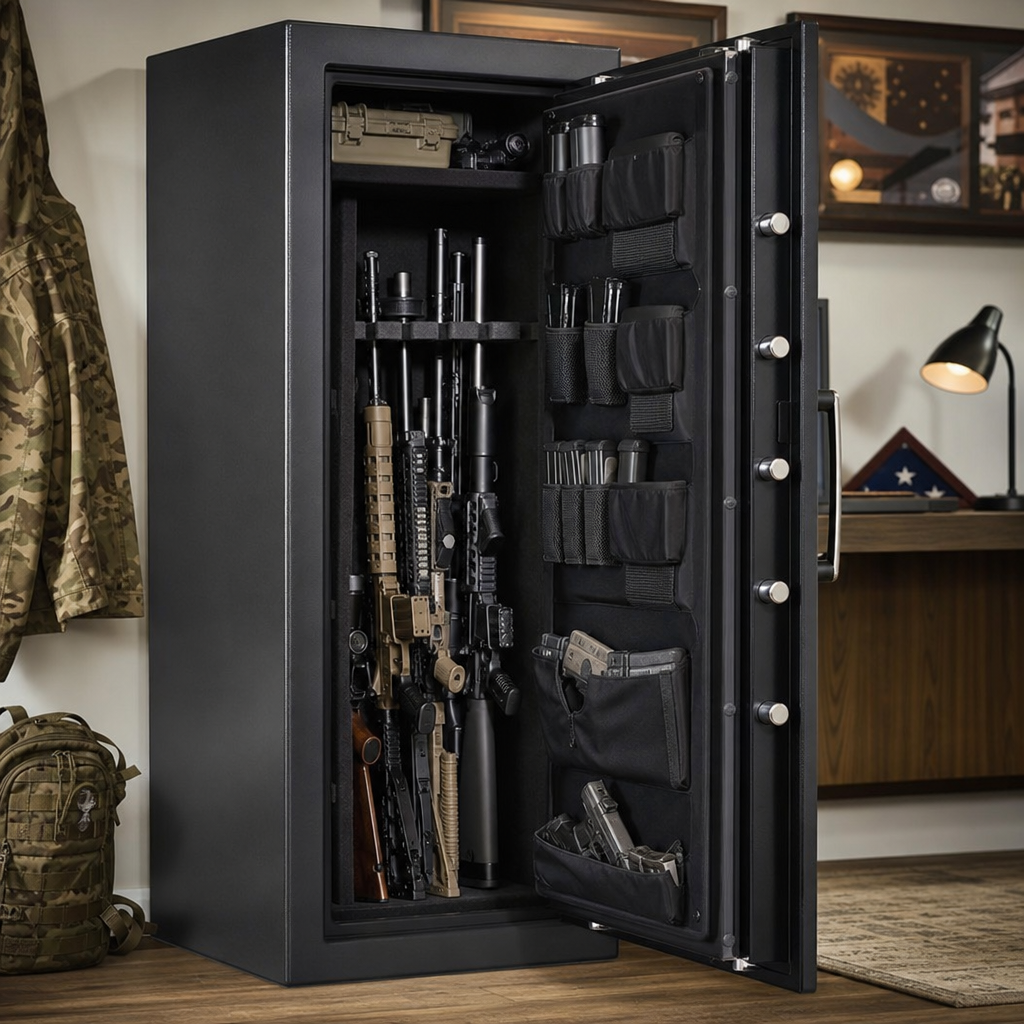
Active military personnel and reservists need gun safes that solve a very specific problem: how to secure firearms, ammunition, documents, and mission-related gear while balancing frequent moves, deployments, training schedules, shared housing, and family safety. A gun safe is a locked storage container designed to prevent unauthorized access, deter theft, and, in many cases, protect contents from fire and water damage. For service members, the right choice is rarely the biggest or most expensive model. It is the safe that fits a real duty lifestyle, from on-base housing and off-base apartments to long stretches away from home.
I have helped military households compare and install safes after PCS moves, after break-ins in apartment complexes near bases, and after children became old enough to test every cabinet and closet in the house. The same lesson keeps repeating: buyer persona matters. A single junior enlisted reservist in a small rental has different needs from a senior NCO with a family, a home shop, and multiple long guns. This article is the hub for military gun safe buyer personas, explaining which safe types, features, and tradeoffs matter most for active-duty members and reservists.
The stakes are practical and immediate. Firearms left unsecured can be stolen, misused by unauthorized people, or become a liability during temporary duty assignments and deployments. Military life also creates special constraints. Weight limits affect upstairs apartments, landlords may restrict bolting into concrete, and rapid relocation means a 1,200-pound safe may become a logistical burden. At the same time, military buyers often own more than one firearm, plus optics, serialized parts, cash, passports, orders, and training records worth protecting. A smart purchase starts with an honest profile of how you live, what you store, who shares your space, and how often you may need to move the safe.
What Active Military and Reservist Buyers Need Most
The best gun safes for active military personnel and reservists combine secure construction, practical size, manageable weight, and fast access where appropriate. Security begins with body steel, door thickness, lock quality, anti-pry design, hard plates that resist drilling, and internal hinge support. For a primary long-gun safe, I usually recommend looking past marketing language like “gun cabinet” unless the goal is only basic child deterrence. True safes should have solid locking bolts, reinforced doors, and enough mass or anchoring capacity to defeat quick smash-and-grab theft.
Military buyers should also evaluate the full storage mission, not only firearm count. Manufacturers routinely overstate capacity by counting bare rifles with no optics, slings, bipods, or magazine extensions. In practice, a “24-gun” safe may hold 10 to 14 realistically configured long guns. Add handguns, suppressors where legal, cleaning kits, hard drives, and paper records, and usable space shrinks fast. Interior modularity matters. Adjustable shelving, door organizers, handgun racks, and power ports are not cosmetic extras; they reduce clutter and keep critical items accessible during high-tempo schedules.
Lock choice is another major decision. Electronic keypad locks are popular because they provide quick access and easy code changes, which helps during family transitions or after a roommate situation changes. Mechanical dial locks remain proven and dependable, especially in environments with humidity swings or long periods of nonuse, though they are slower. Increasingly, reputable safes offer UL-listed electronic locks from brands such as Sargent and Greenleaf or SecuRam, and those are preferable to unbranded imports. Biometric access can be useful on bedside handgun safes, but for larger long-gun safes I still treat fingerprint readers as a convenience feature, not the only line of defense.
Buyer Personas: Matching the Safe to the Service Member
Military gun safe buyer personas fall into clear patterns, and choosing by persona prevents overspending on the wrong features. The first persona is the mobile junior service member: often living in barracks-adjacent housing, a rental, or a smaller off-base apartment, with one to three firearms and a high chance of moving within two years. This buyer usually needs a compact safe or modular safe under roughly 400 pounds, ideally one that can be anchored but still relocated without a professional rigging crew. A Zanotti Armor modular safe or a compact SnapSafe can fit this profile better than a giant traditional safe.
The second persona is the family-focused active-duty household. This buyer may own several long guns and handguns, has children or frequent visitors, and prioritizes layered safety over pure portability. Here, a mid-size or full-size residential security container from Liberty Safe, Fort Knox, Browning, or Hollon often makes sense, especially models with better fire seals, reinforced doors, and flexible interiors. In these homes, fast-access bedside storage often complements the main safe. The primary safe handles long-term storage, while a smaller Vaultek or Fort Knox handgun box keeps a defensive pistol available but secured.
The third persona is the reservist or Guardsman balancing civilian life and periodic service obligations. This buyer often has a stable residence but irregular schedules, making reliability and low maintenance essential. Because reservists may be away for drill weekends, annual training, or activations, they benefit from dehumidification, battery-change discipline for electronic locks, and remote monitoring through a home security system. The fourth persona is the long-term homeowner or senior leader with a larger collection, NFA items where lawful, or mixed valuables. This person may justify a heavier safe with thicker steel, higher fire ratings, and dedicated document organization because relocation is less frequent and asset value is higher.
| Buyer persona | Typical situation | Best safe type | Priority features |
|---|---|---|---|
| Mobile junior service member | Rental, apartment, frequent PCS moves | Compact or modular long-gun safe | Manageable weight, anchor points, electronic lock, realistic 6-12 gun capacity |
| Family-focused active-duty household | Spouse, children, multiple firearms | Mid-size residential safe plus bedside handgun safe | Child resistance, interior organization, fire protection, quick-access secondary safe |
| Reservist or Guardsman | Stable home, periodic absences | Mid-size safe with low-maintenance lock system | Reliable lock, dehumidifier, document storage, alarm integration |
| Long-term homeowner or senior leader | Larger collection, mixed valuables, lower move frequency | Heavy full-size safe | Thicker steel, higher fire rating, door organizer, expansion room |
Key Features That Separate a Good Military-Friendly Safe from a Bad One
Steel thickness is one of the most important indicators of burglary resistance. Many entry-level products use 14-gauge steel bodies, which can deter casual theft but are vulnerable to determined attack with pry tools or power tools. Moving up to 12-gauge or 10-gauge bodies materially improves resistance. Door construction matters just as much. Composite doors with hard plates, robust boltwork, and tight door gaps are harder to peel open. In my experience, buyers often focus too heavily on glossy paint and interior lighting while overlooking body steel and anchor strategy, which are the features most likely to matter during an actual burglary attempt.
Fire protection requires close reading because advertised numbers are inconsistent across the industry. One manufacturer may claim 60 minutes at 1,200 degrees Fahrenheit based on internal testing, while another uses different assumptions entirely. Look for clear details on seal type, insulation method, and whether the door expands under heat. Fire ratings are useful, but they should not distract from burglary resistance. Most theft losses happen far more often than total-house fires. For military families storing orders, passports, medals, and digital backups, it is often smart to add a dedicated fire-rated document pouch or internal media box inside the safe rather than relying only on the published rating.
Installation is where many safe purchases succeed or fail. A moderate safe properly anchored into concrete in a discreet location can outperform a heavier safe left unsecured in a visible garage corner. Military renters may need alternatives when permanent modifications are limited. In those cases, a closet installation, hidden placement, security cable for smaller units, and landlord-approved anchoring solutions become important. Humidity control matters too, especially in coastal regions near major installations. A GoldenRod dehumidifier, desiccant packs, and routine inspection prevent rust on firearms and corrosion on optics, magazines, and electronic accessories.
Best Safe Types for Common Military Living Situations
For apartment living, the best gun safe is usually a compact long-gun safe or a rugged modular design that can be moved in sections. Weight concentrated on upper floors can become a concern, and narrow stairwells make one-piece safes difficult to deliver. A modular unit solves access problems and reduces the risk of damage during PCS moves. If the collection is small, a heavy-duty steel cabinet may be acceptable as a temporary step, but it should be understood as lower security than a true safe. Adding anchored placement, an alarm sensor, and good concealment can still make this setup significantly safer than a closet or under-bed storage.
For on-base or near-base family housing, a mid-size safe around 500 to 800 pounds often hits the right balance. It is substantial enough to resist opportunistic theft, large enough for long guns and documents, and still realistic to move with professional help. Buyers in this category benefit from planning around growth. A household that currently owns four rifles and three handguns may easily double that count over a decade of service, especially after hunting, competitive shooting, or inherited firearms enter the picture. Buying slightly larger than current needs is almost always the better financial choice because trading up later usually costs more in delivery, resale loss, and installation.
For long-term homeowners, a larger safe in a low-visibility interior room is often the strongest answer. Concrete anchoring, camera coverage, monitored alarms, and limited guest awareness create layered protection. Garage placement is common but not ideal unless climate control and concealment are addressed; garages expose safes to temperature swings, moisture, and easier tool access for burglars. For bedside access, a dedicated handgun safe remains the standard recommendation. It allows a loaded defensive firearm to be stored responsibly while the main collection stays locked in the larger safe. This two-safe strategy works especially well for military households managing both readiness and child safety.
Recommended Brands, Price Ranges, and Buying Mistakes to Avoid
Several brands consistently appear in serious comparisons for military buyers. Liberty offers broad dealer support, practical interiors, and a range from entry-level to premium models. Fort Knox is known for customization and stronger construction options. Browning stands out for interior organization, especially door storage. Hollon offers good value in certain steel and fire configurations. Vaultek is a leading option for modern handgun safes with app-based features, while Fort Knox and V-Line remain respected for simplex mechanical handgun boxes. Modular buyers should look at Zanotti Armor and SnapSafe, particularly when frequent relocation is expected.
Budget matters, but price should be framed around risk and service life. Under $500 usually buys a handgun safe or a basic cabinet, not a serious full-size long-gun safe. Between $800 and $1,500, buyers can find respectable entry-to-mid-level safes if they prioritize steel, lock quality, and anchoring over luxury finishes. The $1,500 to $3,000 range is where many military families find the best value, with stronger construction and useful fire protection. Above that, buyers enter premium territory with thicker steel, more customization, and higher delivery costs. Always factor in freight, stair fees, installation, dehumidification, and accessories when comparing quotes.
The most common mistakes are predictable. Buyers choose by published gun count instead of actual configured capacity. They underestimate how often they will move and buy a massive safe unsuited to military life. They overvalue biometric marketing and ignore lock certification. They place the safe in the garage because it seems convenient, then discover rust, visibility, and anchoring challenges. They skip internal organization and end up stacking firearms in ways that reduce capacity and increase wear. The best gun safe for active military personnel and reservists is the one matched to the user profile, installed correctly, and sized for the next five to ten years rather than just today.
The right military-friendly gun safe is not defined by branding alone. It is defined by fit: fit for your housing, your move cycle, your family, your collection, and your tolerance for maintenance and installation complexity. Active-duty members and reservists face distinct storage challenges, which is why buyer personas are the most useful starting point for this subtopic. The mobile renter should focus on modularity and manageable weight. The family household should prioritize child resistance, layered access, and room to grow. The reservist should value dependable locks, humidity control, and low-maintenance operation during absences. The long-term homeowner can justify heavier steel and expanded protection.
Across every persona, the same principles hold. Buy more usable capacity than you think you need. Favor steel thickness, door strength, lock quality, and anchoring over cosmetics. Treat fire ratings carefully and verify what they mean. Use a dedicated quick-access handgun safe if a defensive firearm must remain readily available. Add dehumidification in humid climates and integrate the safe into a broader home security plan. These steps matter more than flashy features, and they produce better long-term results for military households than chasing the lowest advertised price.
As the hub page for gun safe buyer personas, this guide should help you narrow your search before diving into more specific comparisons on apartment safes, family safes, modular safes, bedside handgun safes, and premium long-gun safes. Start by identifying your persona, measuring your space, listing what you actually need to store, and setting a realistic installed budget. Then compare a short list of safes built for your real life, not an idealized brochure version of it. That approach leads to a safer home, a smarter purchase, and fewer regrets at your next move.
Frequently Asked Questions
What should active military personnel and reservists prioritize when choosing a gun safe?
Active military personnel and reservists should focus first on practical fit for their lifestyle rather than simply buying the largest or heaviest safe available. Frequent PCS moves, temporary duty assignments, deployments, drill weekends, and changing housing situations all affect what kind of safe makes sense. A good choice should secure firearms from unauthorized access, provide enough capacity for ammunition, optics, important documents, and mission-related gear, and still be realistic to move or reinstall when duty stations change. In many cases, that means looking for a balance between security, portability, interior flexibility, and size.
Construction quality matters. Look for a safe with a solid steel body, a reinforced door, reliable locking bolts, and a lock from a reputable manufacturer. For many service members, a heavier safe is better for theft deterrence, but weight has to be realistic if the safe may need to be relocated. A safe that can be securely bolted down often provides a better real-world solution than an oversized unit that is difficult to transport. Interior organization is also important because military households often need space for more than firearms alone, including records, passports, serialized accessories, hard drives, and other sensitive items.
It is also smart to think about who shares the home or living space. A reservist in civilian housing with children will likely have different needs than a single active-duty service member in a smaller residence. Quick-access features may be useful for a defensive firearm, while long-gun storage may be the priority for others. Fire protection and water resistance are worth considering as well, especially for paper records, electronics, and valuables. The best gun safe for military life is usually the one that matches real deployment cycles, household safety needs, available space, and the likelihood of future moves.
Are large traditional gun safes always the best option for service members who move frequently?
No. Large traditional gun safes can be excellent for maximum storage and theft resistance, but they are not automatically the best fit for active military personnel and reservists. One of the biggest realities of military life is mobility. A full-size safe can be difficult and expensive to move, may not fit well in base housing or smaller rentals, and can create challenges during PCS transitions. If a safe is so large or heavy that it becomes impractical to transport, it may stop being an asset and start becoming a logistical problem.
Many service members are better served by mid-size safes, modular safes, or compact units that still provide meaningful security without becoming impossible to relocate. A modular design can be especially useful because it can be disassembled and reassembled, making it easier to move through stairwells, tight hallways, and apartment entries. Some military households may even benefit from a two-safe approach: a smaller quick-access safe for a defensive firearm and a separate larger storage solution for long guns, documents, and less frequently accessed equipment.
The best option depends on inventory, housing type, and how often the owner expects to move. A reservist who is settled in one home for years may be well served by a heavier, more permanent safe. An active-duty member anticipating frequent relocations may want something more manageable that can still be bolted down and secured properly. In short, bigger is not always better. The right safe is the one that provides adequate protection without creating unnecessary difficulty every time orders change.
How important are fire and water protection features in a gun safe for military households?
Fire and water protection can be very important, especially because military households often store much more than firearms inside a safe. Service members commonly use safes to protect passports, birth certificates, insurance papers, military records, tax documents, external drives, valuables, and serialized accessories. During a deployment or training period, having those items protected from house fires, burst pipes, storms, or firefighting water can make a major difference in recovery after an emergency. A gun safe that only slows unauthorized access but offers no environmental protection may leave critical items vulnerable.
That said, buyers should evaluate fire and water claims carefully. Not all ratings are equal, and manufacturer testing standards can vary. It is wise to look at how long the safe is rated to withstand heat and at what temperature. For paper documents, electronics, and other sensitive materials, longer and more credible fire protection is generally better. Water resistance is also useful, but it is important to understand whether the safe is designed for splashing, temporary exposure, or more serious flood-style conditions. A military family in a hurricane-prone or flood-prone area may want to place more weight on this feature than someone in a lower-risk environment.
For many service members, a layered approach makes the most sense. A gun safe can protect firearms and some sensitive items, while especially important paperwork or digital media may be kept inside additional fire-rated document containers placed within the safe. This approach can improve protection without requiring the buyer to overspend on a massive premium model. Fire and water protection should not be the only deciding factors, but for military households managing critical records and long absences from home, they are often well worth prioritizing.
What type of locking system is best for military members who need both security and convenience?
The best locking system depends on how the safe will be used, but in general, military members should look for a lock that is dependable, easy to operate under stress, and appropriate for their daily routine. Electronic keypad locks are popular because they offer quick access and are simple to use. This can be helpful for a service member who wants efficient entry before leaving for training, responding to a home-defense situation, or managing gear on a tight schedule. Good electronic locks can be very effective, but buyers should choose proven brands and understand battery maintenance requirements.
Mechanical dial locks remain a strong option for long-term reliability. They do not rely on batteries or electronics, which some owners prefer for peace of mind during extended absences or deployments. The tradeoff is slower access. For a main storage safe that is opened less frequently, a mechanical lock can be a solid fit. For a bedside or rapid-access safe, an electronic or biometric system may be more practical. Biometric locks offer convenience, but quality varies widely, so they should only be trusted if they have a strong reputation and consistent performance. Cheap biometric systems can be frustrating and unreliable.
Ultimately, convenience should never come at the expense of security. The right answer may be a combination of storage types: a traditional safe with a robust lock for long guns and bulk storage, plus a smaller quick-access safe for a handgun. Military households should also think about who might need authorized access, whether children are present, and whether the safe may remain unopened for long periods during deployment. A strong lock is not just about speed or technology; it is about dependable, secure access in the real conditions of military life.
Can one gun safe realistically store firearms, ammunition, documents, and mission-related gear safely and efficiently?
Yes, but only if the safe is selected with organization and actual storage needs in mind. Many active military personnel and reservists want one central location for firearms, ammunition, optics, suppressor paperwork where applicable, personal records, valuables, and duty-related items. That is realistic, but it requires enough interior space, adjustable shelving, and a layout that supports multiple item types. A safe designed only for long guns may not efficiently protect documents or smaller gear unless the interior can be reconfigured. Shelves, door organizers, handgun racks, and dedicated compartments can make a big difference.
It is also important to be realistic about capacity claims. Safe manufacturers often advertise maximum firearm counts that assume tightly packed rifles without optics, slings, magazines, or accessories. In real-world military use, firearms may have mounted gear that takes up additional space, and the owner may need room for ammunition cans, field equipment, and paperwork. As a result, it is often smart to buy more capacity than you think you need. A “12-gun” safe may function much better as an organized storage solution for fewer firearms plus supporting equipment.
That said, there are limits. Storing everything in one safe can be efficient, but it may not always be ideal for access or specialized protection. Sensitive documents may benefit from internal document boxes, and defensive firearms may need faster access than a main safe provides. Ammunition should also be stored in a way that keeps it organized, dry, and compliant with any applicable local rules or housing requirements. For many service members, the best approach is a primary safe with a thoughtfully planned interior, supplemented by smaller dedicated storage solutions where necessary. When chosen carefully, one main safe can absolutely serve as the core security hub for a military household.