
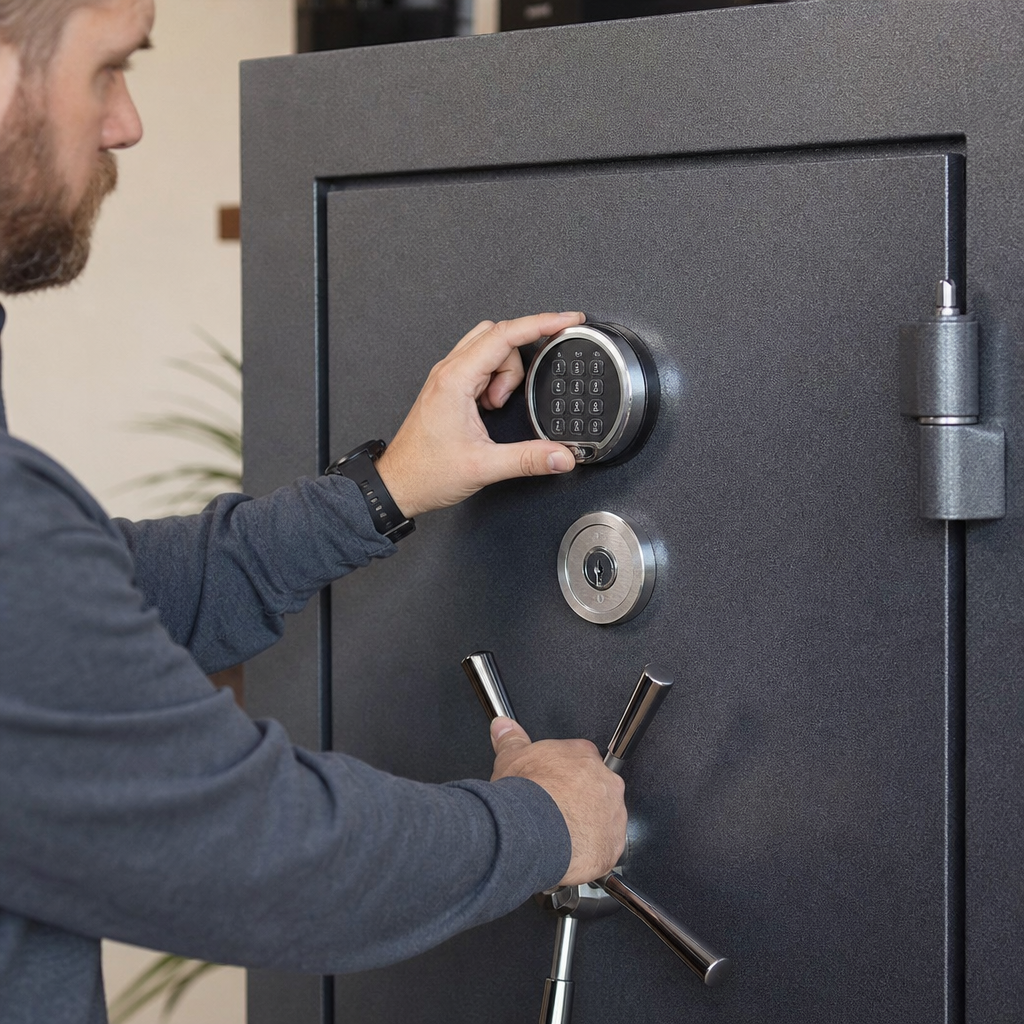
Adding a dual-lock system for extra security on your gun safe is one of the most effective custom upgrades you can make when you want stronger access control without replacing the entire safe. In practical terms, a dual-lock gun safe uses two independent locking methods, such as a mechanical dial and an electronic keypad, a keypad and a key lock, or an electronic lock paired with a secondary hasp, relocker, or internal blocking device. The goal is simple: if one lock is defeated, bypassed, damaged, or misused, a second barrier still stands between unauthorized access and your firearms. For owners focused on gun safe security, responsible firearm storage, and custom gun safe modifications, this approach offers a meaningful step up from a single factory lock.
I have worked on safe upgrades for owners dealing with inherited cabinets, older residential security containers, and premium safes that still had one weak point: a single access path. In almost every case, the conversation started with the same question: is adding another lock really worth it? For many households, the answer is yes, especially when children, frequent visitors, service personnel, or high-value firearms are in the home. A dual-lock system can also help if one user needs daily access while another wants oversight, or if you want a backup opening method during keypad failure without reducing overall protection.
This custom and DIY gun safe modifications hub explains how dual-lock upgrades fit into the broader world of gun safe customization. It covers lock types, planning considerations, installation choices, common mistakes, and the surrounding upgrades that make the system more effective. As a hub page under Gun Safes & Safety, it also frames where related topics belong, including interior reconfiguration, lighting, dehumidification, anchor-down improvements, door panel organizers, relocker retrofits, and fire seal maintenance. If you are considering a gun safe lock upgrade, this guide will help you decide what to modify, what to leave to a locksmith, and how to improve security without compromising reliability.
What a Dual-Lock System Actually Adds to Gun Safe Security
A dual-lock setup adds layered access control. That matters because most real-world safe compromises are not dramatic burglary scenes with cutting torches. More often, they involve predictable weak points: a copied key, an observed code, a keypad with dead batteries, a damaged lock after a move, or an owner who relied on one aging mechanism for too long. By requiring two separate actions to open the door, a dual-lock system reduces single-point failure. In security terms, you are improving both redundancy and delay. Delay matters because nearly every safe protection strategy depends on time, noise, and effort discouraging unauthorized entry.
Not every dual-lock arrangement is equal. Some are true two-step systems in which both locks must be opened to retract the boltwork. Others are supervisory systems, where one lock controls the main opening path and the second lock controls a blocking plate, secondary bar, or external enclosure. The best design depends on the safe’s construction. A thick-plate body with accessible internal door space may accept a properly engineered secondary lock. A lighter residential security container may be better served by an external reinforced lock enclosure or a professionally installed auxiliary deadbolt that does not interfere with existing boltwork geometry.
There is also a legal and safety dimension. A gun safe modification should never make emergency authorized access impossible, but it should absolutely make unauthorized access harder. If children are present, a dual-lock system is useful only if both methods are consistently controlled. If one lock is left permanently open for convenience, the upgrade becomes cosmetic. Real security comes from disciplined use, careful code management, and hardware that matches the threat level.
Choosing the Right Dual-Lock Combination for Your Safe
The most common combinations are electronic plus mechanical, electronic plus key, and mechanical plus key. In my experience, electronic plus mechanical offers the best balance for many gun owners because it pairs quick daily access with a lock type that does not depend on batteries or circuit boards. A quality electronic lock from S&G, SecuRam, or La Gard can provide fast entry, time delay, penalty lockout, and multiple user codes, while a Group 2 mechanical dial provides a proven secondary barrier with long service life. This setup is especially useful for primary home safes storing both defensive firearms and collectibles.
Electronic plus key is usually the least robust of the three if the key cylinder is low grade, but it can still work well when the key lock is a high-security Medeco, Abloy, or Mul-T-Lock cylinder used as a separate blocking function rather than the sole backup. Mechanical plus key can suit owners who dislike electronics entirely, though it sacrifices speed. For some ranch, workshop, or seasonal property installations, that tradeoff is acceptable because reliability in fluctuating temperatures matters more than rapid access.
The safe itself determines what is realistic. Before ordering parts, identify whether your safe uses UL-listed lock mounting patterns, what door steel thickness is available, whether internal relockers are present, and how much clearance exists behind the door panel. Some import safes have decorative interiors hiding cramped cavities and thin sheet structures that do not support arbitrary drilling. Others use standardized footprints that make professional retrofits straightforward. Always inspect hinge-side clearances, bolt throw paths, and fire lining before planning any second lock.
| Dual-Lock Option | Best Use Case | Main Advantage | Main Limitation |
|---|---|---|---|
| Electronic + Mechanical Dial | Daily-use home gun safe | Fast access plus battery-free backup | Higher install complexity |
| Electronic + High-Security Key | Users wanting quick entry with separate physical control | Simple second authorization layer | Key management is critical |
| Mechanical Dial + High-Security Key | Low-tech or variable-temperature environments | Excellent long-term reliability | Slowest opening routine |
| Primary Lock + Secondary Internal Blocker | Custom retrofit on nonstandard doors | Can avoid boltwork interference | Usually requires custom fabrication |
DIY Versus Professional Installation: Where the Line Should Be
Many gun safe owners search for DIY gun safe modifications because the mechanical work appears simple: mark a location, drill a hole, mount a lock, and secure a cam or bar. On a basic cabinet, that may be true. On a real safe or residential security container, it is rarely that simple. The door often contains hardplate, relockers, glass relocker systems, linkages, insulation, and limited tolerance between moving parts. Drilling in the wrong place can disable the primary lock, trigger a relocker, weaken fire protection, or void the manufacturer warranty. I have seen well-intentioned DIY installations turn a working safe into a locked steel box that required destructive opening.
A good rule is this: if the upgrade affects the primary lock, boltwork, relocking devices, or hardplate area, hire a safe technician or locksmith with safe experience, not just general lock experience. Ask whether they regularly service gun safes, whether they understand UL 768 lock standards, and whether they can fabricate or source a proper mounting plate. If the modification is external, nonstructural, and does not compromise fire lining or internal mechanisms, a skilled DIY owner may be able to handle it. Examples include installing a reinforced external lock box over a secondary padlock point or adding an interior locking compartment inside the safe.
Professional installation also improves alignment and serviceability. A second lock must not bind as the door flexes under load, and it must remain operable after years of use. That means proper spindle length, cam travel, bolt engagement depth, and fastener security matter. Threadlocker, backing plates, and corrosion-resistant hardware are not optional details. They are part of what separates a durable modification from a temporary experiment.
Planning the Modification Without Creating New Weak Points
The smartest gun safe upgrades start with threat modeling. Ask what problem you are solving. Are you trying to prevent children from exploiting a learned code? Are you reducing the risk of one compromised credential? Do you need controlled dual custody for business inventory, estate firearms, or family-managed collections? Your answer changes the design. A second key lock adds little if both credentials are stored together. A second keypad adds complexity without much diversity if both are mounted on the same vulnerable outer panel.
Placement matters as much as hardware. Avoid locating a second lock where it encourages leverage against thinner door skin, where it cuts through reinforced lock pockets, or where it interferes with shelving, gun racks, and door organizers. Measure internal depth with the panel removed. Check whether a dehumidifier rod, power outlet kit, or organizer screws occupy the same area. If your safe has fireboard, understand that drilling through it creates dust, reduces local integrity, and may require resealing to maintain fire performance as much as possible.
This is also where a hub approach to custom gun safe modifications helps. A dual-lock system rarely exists in isolation. Owners who upgrade locks often also review anchor-down bolts, because a thief who cannot open a safe may try to remove it. They reassess interior layout, because a new lock body can intrude into long-gun clearance. They add lighting, because managing two locks in a dark room invites user error. They inspect door seals, because repeated door panel removal can damage clips and gaskets. Thinking in systems produces better results than adding hardware one piece at a time.
Supporting Upgrades That Make a Dual-Lock System More Effective
If this page is your starting point for custom and DIY gun safe modifications, the most useful related upgrades fall into five categories. First is anchoring. A safe secured with proper concrete wedge anchors or manufacturer-approved lag solutions is harder to tip, pry, or remove for attack elsewhere. Second is internal organization. Rifle rods, adjustable shelving, pistol hangers, and door panel organizers reduce fumbling during access and keep the second lock body from colliding with stored items. Third is environmental control. GoldenRod-style dehumidifiers, desiccant packs, and hygrometers protect firearms, optics, and documents after the door design changes airflow patterns.
Fourth is visibility and power. LED light kits with motion activation or magnetic mounts help users operate both locks correctly, verify safe contents quickly, and avoid accidental muzzle damage against interior hardware. If you add a power kit for electronics, protect any pass-through from moisture and tampering, and never route cables where they can snag boltwork. Fifth is maintenance. After any lock modification, create a service schedule. Replace keypad batteries annually, test mechanical combinations quarterly, lubricate only where the manufacturer specifies, and inspect mounting screws for movement. Most lock failures I encounter are maintenance failures first and hardware failures second.
One more supporting upgrade deserves mention: documentation control. Keep serial numbers, lock model numbers, override procedures if applicable, and installer information outside the safe in a secure records location. If a lock fails, that information can shorten service time significantly. It also helps future owners, heirs, or trusted family members manage the safe responsibly.
Common Mistakes, Costs, and the Best Final Decision
The most common mistake is choosing convenience hardware instead of security hardware. A generic cabinet cam lock from a hardware store is not a meaningful secondary lock for a gun safe. Another mistake is assuming two weak locks equal one strong system. They do not. Quality matters more than count. Use recognized components, ideally from established safe lock manufacturers, and make sure the mounting method is at least as strong as the lock itself. A hardened lock body mounted to thin sheet without reinforcement simply relocates the weak point.
Cost varies widely. A quality electronic lock body and keypad may run roughly $150 to $350, a mechanical dial lock often $200 to $400, high-security cylinders can exceed that depending on key control, and professional labor can range from a few hundred dollars to much more if custom fabrication, hardplate work, or door disassembly is involved. In many cases, a well-planned dual-lock retrofit costs far less than replacing a premium safe, but more than owners expect when done correctly. That is normal. Precision security work is labor intensive.
The best decision comes down to fit. If your current safe has solid steel, standard lock geometry, and good overall condition, adding a dual-lock system can be a smart investment. If the safe is undersized, lightly built, poorly anchored, or already difficult to use, broader upgrades may deliver more value than a second lock alone. Start with the real risk, choose hardware that matches it, and bring in a qualified technician when the modification touches critical components. Done right, a dual-lock system strengthens firearm security, supports responsible storage, and becomes the foundation for the rest of your gun safe customization plan. Review your safe, map your upgrade priorities, and make the next modification the one that solves the right problem.
Frequently Asked Questions
What is a dual-lock system for a gun safe, and why does it improve security?
A dual-lock system adds a second, independent barrier to your gun safe so access requires more than one method of entry. Instead of relying on a single lock alone, the safe may require a mechanical dial plus an electronic keypad, a keypad plus a key lock, or a primary lock backed up by a secondary device such as a relocker, internal blocking mechanism, or reinforced hasp arrangement. The main security advantage is redundancy. If one lock is compromised, manipulated, damaged, or simply fails, the second lock still stands between an unauthorized person and the contents of the safe.
This type of upgrade is especially valuable for owners who want stronger access control without replacing an otherwise solid safe body. In real-world terms, a dual-lock setup can slow forced entry, complicate tampering, and reduce the odds that a single point of failure will leave the safe vulnerable. It can also help in households where access needs to be tightly controlled, such as homes with children, shared properties, or situations where multiple people may be near the safe but only one should be able to open it. While no lock system makes a safe completely invulnerable, adding a second locking layer is one of the most practical ways to make unauthorized access significantly more difficult.
Can any gun safe be upgraded with a dual-lock system?
Not every gun safe is an ideal candidate, but many can be upgraded depending on the construction of the door, the existing lock configuration, available interior clearance, and the quality of the safe itself. A sturdy safe with a solid locking mechanism, adequate door thickness, and room for additional hardware is often a better candidate than a lightweight cabinet or entry-level container with minimal steel and limited structural reinforcement. The feasibility of the upgrade depends on whether a second lock can be added without weakening the door or interfering with the safe’s boltwork, fire lining, relockers, or internal shelving.
Before modifying the safe, it is important to evaluate several factors carefully. First, the existing lock type matters because some combinations are easier to pair than others. Second, the placement of the second lock is critical; poor placement can create clearance problems or reduce the integrity of the door. Third, any drilling or cutting must be done with precision to avoid damaging important internal components. In many cases, a professional safe technician or locksmith should inspect the safe before the work begins. They can determine whether the safe can accept a true secondary lock, whether an auxiliary locking device is more appropriate, and whether the upgrade will preserve both function and security. In short, many safes can be upgraded, but it should never be treated as a universal do-it-yourself modification without planning and verification.
What types of dual-lock combinations work best for a gun safe?
The best dual-lock combination depends on how you balance security, convenience, reliability, and budget. One of the most common pairings is a mechanical dial with an electronic keypad. This setup gives you the long-term durability and proven track record of a mechanical lock along with the speed and convenience of electronic access. Another practical combination is an electronic lock backed up by a key-operated secondary lock, though this depends heavily on the quality of the key lock and how resistant it is to picking, drilling, and bypass attempts. In higher-security applications, the second “lock” may not be a traditional exterior lock at all, but rather an internal relocker or blocking device designed to activate when tampering is detected.
For many owners, the strongest setup is one that combines two truly independent systems rather than two similar mechanisms that could fail in the same way. For example, pairing two cheap electronic devices may add complexity without adding meaningful security. On the other hand, combining a robust primary lock with a different style of secondary lock can create a more resilient overall defense. It is also important to consider daily use. A security upgrade is only effective if it remains practical enough to use consistently. If the system is too cumbersome, some owners may leave one component disengaged, defeating the purpose of the upgrade. The ideal dual-lock arrangement is one that fits your threat level, is professionally installed when necessary, and adds measurable resistance without making the safe frustrating to access when needed.
Should you install a dual-lock system yourself or hire a professional?
In most cases, hiring a professional is the safer and smarter choice. Gun safe doors are more complex than they appear from the outside. Behind the lock area, there may be relockers, hard plates, glass protection features, linkage components, and boltwork that can be damaged by incorrect drilling, poor alignment, or improper mounting. A professional locksmith or safe technician understands how to work around these components and how to add a second lock without compromising the structural strength or function of the safe. They can also help select compatible hardware instead of forcing a lock combination that looks secure on paper but performs poorly in practice.
That said, some experienced owners do handle simpler auxiliary locking upgrades on their own, particularly when the modification does not require altering critical safe components. Even then, success depends on having the right tools, accurate measurements, manufacturer information, and a clear understanding of how the safe is built. Mistakes can be expensive. A bad installation can void a warranty, interfere with lock operation, reduce fire protection, or even lock you out of your own safe. If the goal is true extra security rather than just cosmetic modification, professional installation is usually worth the cost. It ensures the second lock is not only added, but added correctly, with proper fit, function, and resistance to tampering.
Does adding a dual-lock system affect reliability, access speed, or maintenance?
Yes, and those trade-offs should be understood before making the upgrade. A dual-lock system improves security by adding redundancy, but it also adds complexity. Access will usually take longer because two steps are now required to open the safe. For some owners, that is a perfectly acceptable trade for stronger protection. For others, especially those who prioritize very fast access, the added time may be an important factor. Reliability can improve in one sense because a backup locking method may still secure the safe if one lock fails. However, the total number of components also increases, which means there are more parts that need to be maintained and checked over time.
Maintenance depends on the specific lock types involved. Mechanical locks may need periodic inspection and occasional servicing for smooth operation. Electronic locks require battery management, code updates, and monitoring for keypad wear or electronic faults. Key locks require secure key storage and protection against loss or duplication. If an internal relocker or blocking device is part of the system, it should be installed and tested by someone who understands how it will respond during tampering or malfunction. The best way to preserve reliability is to use quality components, avoid poorly matched lock combinations, and test the full system regularly. A well-designed dual-lock setup should increase security without creating unnecessary headaches, but only if it is maintained with the same seriousness as the safe itself.