
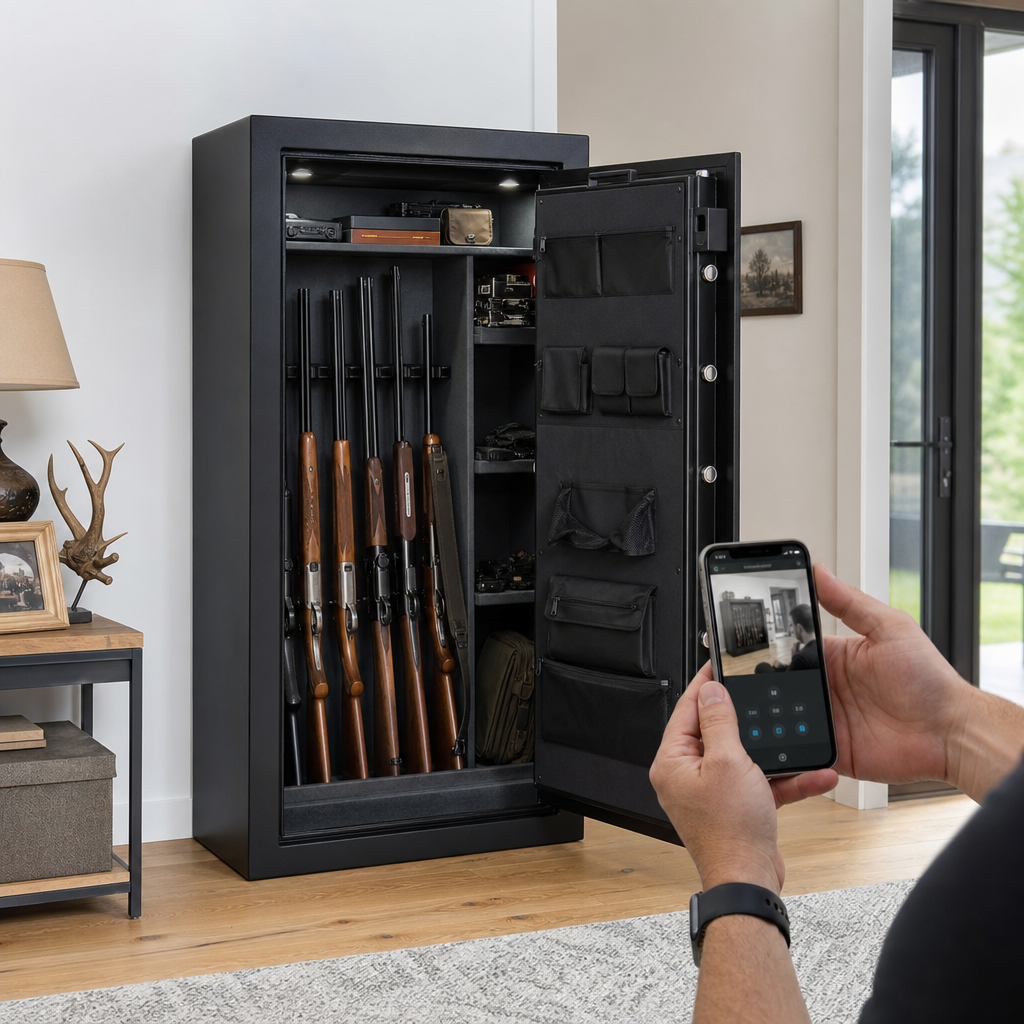
Remote Wi-Fi monitoring has changed what buyers should expect from a modern gun safe, turning a heavy steel box into an active security device that reports status, records events, and warns owners before a problem becomes a loss. In the gun safes and safety category, this matters because secure storage is no longer judged only by steel thickness, locking bolts, and fire ratings. Buyers now want immediate visibility into door activity, tamper attempts, humidity changes, battery health, and the difference between a harmless access event and a genuine security breach. When I evaluate safes for clients and households, I treat remote monitoring as part of the overall risk-management system, not as a gimmick. The best gun safes that feature remote Wi-Fi monitoring combine reliable physical protection with dependable connectivity, sensible alerts, and fail-safe local access when networks or power are interrupted.
A few terms are worth defining up front. A gun safe is a secure enclosure designed to restrict unauthorized access to firearms and, in many cases, protect contents from fire and environmental damage. Remote Wi-Fi monitoring means the safe or an attached module connects to a home network and sends information to a mobile app or cloud service. That information may include door-open notifications, vibration or tilt alerts, failed keypad attempts, temperature and humidity readings, audit trails, and low-battery warnings. Some systems are built into the safe from the factory, while others rely on aftermarket smart sensors placed inside or around the safe. A buying guide has to separate those approaches because built-in systems usually integrate more cleanly with the lock and door sensors, while add-on systems can be more flexible and less expensive.
This hub article focuses on buying guides because shoppers rarely need just a product roundup. They need a framework for deciding what kind of safe, lock, monitoring system, and installation plan fit their home, firearm collection, and risk profile. Apartment dwellers may prioritize compact dimensions, pry resistance, and hidden placement. Rural owners may care more about wildfire exposure, long backup power, and weak broadband conditions. Families with children often need fast local access paired with immediate notifications when anyone touches the safe. Competitive shooters and collectors may need a larger capacity, granular user management, and a detailed audit log that records exactly when the safe was opened. Those are different use cases, and buying well means matching features to actual threats rather than buying the biggest cabinet with the loudest marketing claims.
What makes a Wi-Fi monitored gun safe worth buying
The best Wi-Fi monitored gun safe starts with the same fundamentals required of any good firearm safe: credible steel construction, a reinforced door, solid boltwork, protected hinges or internal hinge design, anchor capability, and a lock with a known service record. Remote monitoring does not compensate for weak physical security. If a safe can be peeled open with basic pry tools, a phone alert simply tells you that you are losing your firearms in real time. For that reason, buyers should first examine body steel gauge, door thickness, relocker design, hard plate protection around the lock, and whether the unit carries a recognized burglary or fire claim from an established testing body or manufacturer with transparent specifications.
Once the physical baseline is set, the monitoring system determines whether the safe is merely connected or genuinely useful. In my experience, useful systems share five traits. First, they send alerts quickly and consistently, not in batches long after the event. Second, they distinguish between meaningful conditions such as door open, vibration, humidity spike, and power failure. Third, they keep a usable event history in the app, so owners can verify whether access happened at 8:05 a.m. or 8:45 a.m. Fourth, they support more than one user, letting a spouse or trusted family member receive notifications without sharing one account. Fifth, they still allow secure local access if the router fails, the internet drops, or the cloud service is offline.
Buyers also need to understand the limits of Wi-Fi itself. A safe in a basement, garage, or concrete-lined room may sit in a weak-signal environment. Metal enclosures can affect radio performance, and some systems rely on 2.4 GHz networks rather than 5 GHz because 2.4 GHz travels farther through walls. That is not a flaw; it is normal. The practical question is whether the safe can maintain a stable connection where it will actually live. If not, a mesh node, access point, or repositioned router may be necessary. If your home internet is unreliable, prioritize systems with clear offline behavior, local alarm capability, and app notifications that resume cleanly once service returns.
Core features buyers should compare before choosing a model
The most important buying factors are easier to evaluate when organized side by side. Capacity is often overstated by manufacturers, so a “24-gun” safe may fit fewer scoped rifles in real use. Fire protection should be reviewed carefully because ratings vary by test method, temperature, and duration. Lock type matters because electronic keypads, biometric readers, and mechanical dials each carry tradeoffs in speed, maintenance, and long-term reliability. Monitoring functions should be specific rather than vague. “Smart safe” is not enough. Ask exactly what the app reports, how notifications are triggered, whether there is an audit log, and whether environmental sensors are included or optional.
| Feature | What to look for | Why it matters |
|---|---|---|
| Steel construction | Heavier body steel, reinforced door, anti-pry design, anchor holes | Physical resistance matters more than any smart feature |
| Lock system | UL-listed electronic lock, quality biometric option, or proven mechanical dial | Determines access speed, reliability, and serviceability |
| Wi-Fi monitoring | Door alerts, tamper alerts, event history, multi-user app access | Provides real-time awareness and accountability |
| Fire protection | Clear time-and-temperature rating, quality door seal, drywall or composite fill | Protects firearms, optics, papers, and valuables during a fire |
| Interior environment | Humidity sensor support, dehumidifier pass-through, lighting | Reduces corrosion risk and improves usability |
| Power backup | Battery backup, external jump option, local entry during outage | Prevents lockouts when batteries die or power fails |
| Connectivity support | Stable 2.4 GHz operation, good app reputation, firmware support | Prevents false confidence caused by dropped connections |
One practical example is the difference between a biometric safe with built-in Wi-Fi and a traditional safe upgraded with third-party contact and motion sensors. The built-in option can report lock activity and wrong-code attempts directly, which is valuable for family accountability. The aftermarket approach can still be effective, especially when using established platforms such as Ring Alarm, Abode, or SimpliSafe around the safe area, but it may only tell you that the door moved or the surrounding room sensed motion. For some buyers, that is sufficient. For others, especially those sharing access among multiple adults, direct safe-level logging is the better fit.
Best categories of gun safes with remote Wi-Fi monitoring
For handgun owners, the strongest category is the quick-access bedside or closet safe with an electronic or biometric lock and built-in app alerts. These products prioritize speed and compact installation, and several premium models now send door-open and tamper notices to a smartphone. They are ideal for one or two defensive handguns, spare magazines, and critical documents, but they are not substitutes for a full-size long-gun safe. When I recommend this category, I stress bolting the unit down and testing biometric enrollment under realistic conditions, including dry fingers, cold hands, and low light.
For mixed collections, mid-size residential security safes with smart sensors are often the best value. This category usually supports long guns, shelves, and accessory storage while fitting a closet, office, or garage wall with proper anchoring. Buyers get enough room to grow without jumping to oversized, hard-to-move vaults. The best models in this segment combine an established lock brand such as Sargent and Greenleaf or SecuRam with Wi-Fi modules or compatible third-party environmental monitoring. If the factory app is immature, a good compromise is a robust safe plus independent humidity, motion, and contact sensors tied into the home network.
For large collections and collectors, premium gun safes and vault-style units are the right category. These emphasize thicker steel, composite doors, better boltwork, stronger fire insulation, and more refined interiors. Remote monitoring here becomes part of a layered security plan that may include cameras, alarm zones, dehumidification, and controlled user access. In these installations, I look for detailed event logs, serviceable electronics, and manufacturer support that extends beyond the sale. Higher-end buyers should also ask about replacement parts, firmware policies, and whether the smart module can be updated without replacing the lock assembly.
How to evaluate lock types, apps, and monitoring reliability
Electronic keypad locks remain the most balanced choice for many buyers because they are fast, familiar, and easier to integrate with smart monitoring than mechanical dials. A good electronic lock should support simple code changes, have a clear low-battery warning, and ideally carry a UL listing. Mechanical dials still appeal to buyers who want minimal electronics and very long service life, but they are slower and less compatible with app-based event reporting. Biometric locks can be excellent for quick-access safes, yet quality varies widely. The difference between a responsive, well-designed fingerprint reader and a cheap sensor is dramatic. Buyers should favor brands with strong enrollment software and a record of low false rejections.
The app deserves as much scrutiny as the steel. Read recent reviews for connection stability, notification speed, user management, and update history. A beautiful interface is less important than dependable behavior. I have seen safes with excellent construction paired with weak apps that delayed alerts or lost event history after updates. That is unacceptable if the monitoring feature is part of the buying decision. Good apps offer clear timestamps, battery status, firmware notices, and straightforward setup. Better ones add customizable alert thresholds for humidity and temperature, which is useful for owners storing optics, suppressors where lawful, heirloom firearms, or paper records.
Reliability improves when the safe’s monitoring feature is treated like any other networked security device. Place the safe where Wi-Fi signal is consistent, use a reputable router, keep firmware current, and test alerts monthly. If the manufacturer supports only cloud-based notifications, ask what happens during outages. If local Bluetooth access exists as a backup, test it. If the lock uses batteries, replace them on a schedule rather than waiting for failure. Simple maintenance prevents most complaints users attribute to the safe itself.
Installation, placement, and environmental protection
Even the best gun safe with remote Wi-Fi monitoring can underperform if installed poorly. Placement should balance concealment, structural support, network connectivity, and speed of access. Ground-floor concrete is ideal for heavy safes because it simplifies anchoring and reduces floor-loading concerns. Upper floors may be possible, but weight distribution needs review, especially once firearms and ammunition are added. Closets help concealment, yet they can reduce Wi-Fi strength, so signal testing matters before final positioning. Garages are convenient but often create temperature swings and visibility risks. Basements offer mass and concealment, though moisture control becomes essential.
Anchoring is not optional. Thieves frequently attack smaller safes by removing the entire unit and opening it elsewhere with time and tools. Proper anchors into concrete or suitable structural members materially improve resistance. Fire protection also depends on installation. A safe in a garage near fuel, solvents, or direct flame pathways may face worse fire exposure than one inside the conditioned envelope of the home. Environmental protection is equally important. Use a dehumidifier rod or desiccant system, monitor relative humidity, and maintain firearms with appropriate rust-prevention practices. Wi-Fi humidity alerts are especially valuable in humid regions because they reveal problems early, before corrosion appears on blued steel or optics mounts.
How to buy confidently and avoid common mistakes
The most common mistake is buying on capacity claims and app marketing while ignoring steel, lock quality, and installation. The second is assuming every smart feature is equally mature. Some manufacturers added Wi-Fi before refining firmware, battery management, or support. The third mistake is forgetting the total system cost. Delivery, stair carries, anchoring, electrical access for dehumidifiers, and possible networking upgrades can materially change the budget. A smaller safe, properly installed and monitored, is usually a better purchase than a larger, thinner unit with unreliable connectivity.
Use this hub as the starting point for every buying-guide decision under gun safes and safety. Narrow the field by firearm type, collection size, fire exposure, and whether you need bedside speed, family accountability, or whole-home monitoring integration. Then compare lock quality, alert capability, app reliability, environmental controls, and installation requirements. The best gun safes that feature remote Wi-Fi monitoring deliver two benefits at once: stronger firearm security and immediate awareness when conditions change. Choose a safe that protects physically, reports accurately, and fits your real-world routine. Then test it, anchor it, maintain it, and build the rest of your storage plan around it.
Frequently Asked Questions
What does remote Wi-Fi monitoring actually do on a gun safe?
Remote Wi-Fi monitoring turns a gun safe from passive storage into an active security system. Instead of only protecting firearms behind steel and a lock, a connected safe can send alerts and status updates directly to your phone or email. Depending on the model, this can include notifications when the door is opened or left ajar, warnings about repeated failed entry attempts, low battery alerts for electronic locks, and environmental readings such as humidity and temperature inside the safe. Some systems also create a time-stamped activity log, which is useful if multiple authorized users have access or if you want a record of when the safe was opened.
For buyers comparing the best gun safes that feature remote Wi-Fi monitoring, the real value is awareness. If a safe is opened while you are at work, if a child attempts access, if the interior humidity rises high enough to threaten optics or firearm finishes, or if the lock battery begins to fail, you can know right away rather than discovering the issue later. This is especially important for owners who travel often, keep firearms in a second home, or simply want confirmation that their storage remains secure throughout the day. In practical terms, Wi-Fi monitoring does not replace physical security, but it greatly improves your ability to respond before a small problem becomes theft, damage, or unauthorized access.
Are Wi-Fi-enabled gun safes as secure as traditional safes, or does connectivity create new risks?
A Wi-Fi-enabled gun safe can be just as secure as a traditional safe, but only if the buyer evaluates both physical construction and digital safeguards. The core security still comes from the same fundamentals that matter in any quality safe: solid steel body construction, a reinforced door, strong locking bolts, a reliable lock mechanism, pry resistance, proper anchoring, and a fire rating that matches your needs. A safe with excellent app features but weak steel or poor anti-tamper design is not a good investment. Remote monitoring should be viewed as an added layer of protection, not a substitute for robust build quality.
Connectivity does introduce new considerations, but the best manufacturers address them carefully. You should look for secure account authentication, encrypted communication between the safe and the app, reliable firmware support, and the ability to control permissions for multiple users. It is also smart to choose a system that continues to function as a secure safe even if the internet goes down, meaning the lock and core protection do not depend entirely on an active Wi-Fi connection. In well-designed products, remote monitoring enhances security by providing immediate alerts and usage records, while the physical safe continues doing the heavy lifting. Buyers who want the benefits of smart monitoring without added vulnerability should favor reputable brands with a documented history of lock reliability, software updates, and responsive customer support.
Which remote alerts and monitoring features are most important when shopping for a smart gun safe?
The most important features are the ones that improve both security and day-to-day ownership. Door status alerts are typically the first feature to prioritize because they tell you when the safe has been opened, closed, or accidentally left open. Tamper notifications are also extremely valuable, especially if the system can detect repeated incorrect code entries, vibration, movement, or attempts to force the door. Low battery alerts deserve more attention than many buyers give them, since electronic lock failures often become a major inconvenience at exactly the wrong time. Good remote monitoring should warn you before battery power becomes critical.
Environmental monitoring is another major benefit, particularly for owners storing valuable rifles, handguns, suppressors, documents, optics, or ammunition in climates with high humidity. A system that tracks humidity and temperature can help prevent rust, corrosion, warped stocks, and damage to sensitive accessories. Activity history logs can also be very useful because they create a record of access events over time, helping owners verify when the safe was opened and by whom if user-specific permissions are supported. Finally, pay attention to app quality. A long list of features means little if the app is unreliable, delayed, difficult to configure, or inconsistent with notifications. The best experience comes from a safe that combines solid physical protection with accurate, timely alerts, clear event history, and dependable connectivity.
Will remote Wi-Fi monitoring work if the power or internet goes out?
In most cases, the safe itself should continue protecting your firearms even if the power or internet fails, but the remote monitoring portion may become limited until the connection is restored. This is why it is so important to distinguish between a safe’s core locking function and its smart features. A quality gun safe should still lock securely and remain physically resistant to tampering regardless of your home network status. If it uses an electronic lock, it should also have a dependable power design and, ideally, a backup entry method or emergency power option as specified by the manufacturer.
What usually changes during an outage is visibility, not basic protection. If your Wi-Fi is down, app-based alerts may pause because the safe can no longer communicate with cloud services or your mobile device. If household power is out, some smart features may rely on battery backup to keep sensors or local electronics running. This is where battery health alerts and system design matter. The best gun safes that feature remote Wi-Fi monitoring are built so that event logging, lock operation, and onboard electronics remain stable during short disruptions, with alerts resuming once connectivity returns. Buyers should read the specifications carefully to understand what happens during outages, how long backup systems last, and whether the app will show missed events after reconnection. In short, the best smart safes degrade gracefully: the security remains in place, and the monitoring system recovers without confusion or data loss.
Who benefits most from a gun safe with remote Wi-Fi monitoring, and is it worth the extra cost?
Remote Wi-Fi monitoring is especially worthwhile for gun owners who want more than basic locked storage. It is a strong fit for households with children, owners who travel frequently, collectors with higher-value firearms, people storing guns in vacation properties, and anyone who wants immediate notice of unauthorized access or environmental changes. It is also useful for owners who keep documents, jewelry, cash, or other valuables in the same safe, since the monitoring features protect the contents as a whole, not just firearms. If several authorized adults use the safe, access logs and notifications can add accountability and simplify routine oversight.
Whether it is worth the extra cost depends on what you value. If your main concern is simply meeting minimum secure storage needs, a well-built traditional safe may be enough. But if you want active awareness, faster response to problems, and better insight into the condition and use of the safe, smart monitoring adds meaningful value. The added cost often makes sense when compared with the potential consequences of moisture damage, a dead keypad battery, unnoticed tampering, or delayed discovery of unauthorized access. For many buyers, the best gun safes that feature remote Wi-Fi monitoring justify their price not because they replace traditional safe attributes, but because they add a modern layer of intelligence that helps owners stay informed, proactive, and in control of their security at all times.