
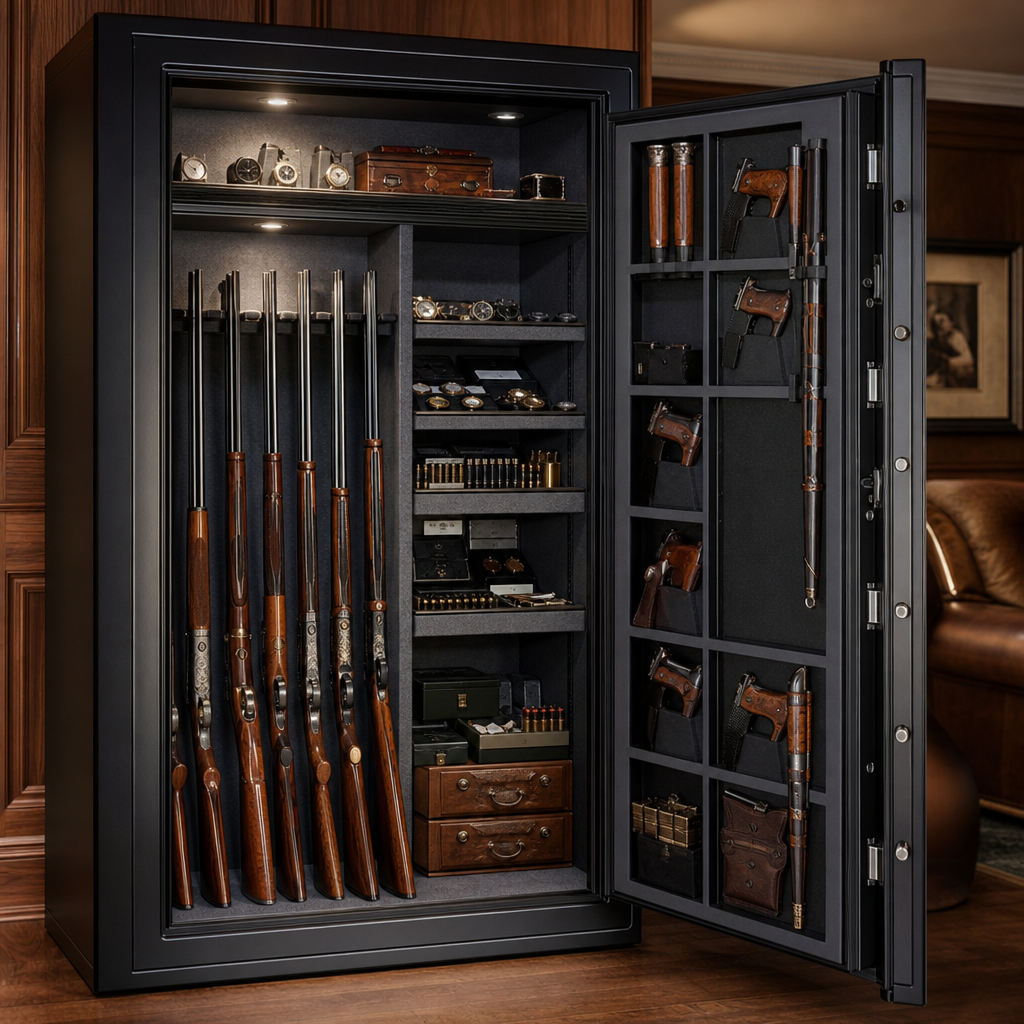
Custom gun safe enhancements for storing valuable collectibles go far beyond adding shelves or changing the paint. When a safe must protect heirloom firearms, rare coins, militaria, watches, documents, and other high-value collectibles, the interior layout, environmental controls, access method, and monitoring setup all need to work together. I have helped collectors retrofit residential security containers and true gun safes for mixed collections, and the same pattern appears every time: factory interiors are built for average use, while serious collections demand custom zoning, stable humidity, careful lighting, and controlled access. Understanding custom and DIY gun safe modifications matters because poor storage can damage finishes, warp wood stocks, tarnish metals, degrade paper, and create handling risks even when theft protection is strong.
In this context, custom enhancements are planned upgrades that improve how a gun safe protects, organizes, and presents stored items. DIY gun safe modifications are owner-installed changes such as adjustable racks, door panels, LED lighting, desiccant systems, sensor kits, and compartment dividers. Valuable collectibles include not only firearms but also optics, knives, medals, stamps, silver, family records, and luxury accessories that benefit from secure, climate-aware storage. The goal is not simply to fit more inside the safe. The goal is to preserve condition, reduce avoidable handling, maintain quick accountability, and add practical security layers without compromising fire protection, door operation, or the safe’s structural integrity. For anyone building a long-term storage plan under the broader gun safes and safety category, this hub explains the main modification paths, the tradeoffs behind them, and how to choose upgrades that suit both the collection and the safe.
Start with the safe’s structure, ratings, and internal constraints
Before adding accessories, verify what kind of container you actually own. Many residential units sold as gun safes are RSCs, or Residential Security Containers, tested under UL 1037 for a limited attack standard rather than the heavier burglary ratings seen on commercial safes. That does not make them useless; it means every modification should respect the limits of the cabinet, door hinges, anchor points, lock footprint, and fire liner. In practical terms, I always check interior dimensions, door swing clearance, hinge-side protrusions, the presence of a factory electrical pass-through, and the load capacity of shelf supports before recommending a custom interior. Collectors often underestimate how much weight ammunition, boxed handguns, silver bars, and bound documents can place on a single shelf.
Material compatibility is just as important. Cheap foam, unsealed MDF, some adhesives, and low-grade carpet can off-gas chemicals that tarnish metals or trap moisture against blued finishes. For collectible firearms with case coloring, original stocks, or high-polish nickel, use archival-conscious liners where possible, sealed wood components, and non-abrasive contact surfaces. If a safe has gypsum-based fireboard, drilling into walls or door panels can reduce fire resistance or create moisture pathways unless done carefully and in noncritical locations. The best custom work starts by treating the safe like a system: steel shell, insulation, lock assembly, door seal, anchor strategy, and interior furniture all interact.
Design an interior layout around categories, risk, and access frequency
The most effective gun safe interior organizer setups are not based on aesthetics alone. They are based on how often each item is accessed, how vulnerable it is to scratches or humidity, and whether it should be isolated from heavier objects. Long guns benefit from buttstock support and barrel spacing that prevent sling swivels, optics turrets, or bolt handles from knocking into neighboring pieces. Handguns should sit in dedicated pistol racks, drawers, or soft holsters on the door panel rather than being stacked in factory shelves. Small collectibles such as coins, watches, and medals usually need shallow trays or segmented drawers so they can be inventoried without digging through cases.
A practical approach is to create zones. Reserve one vertical bay for long guns, one shelf stack for boxed or cased collectibles, one lockable interior compartment for especially sensitive valuables, and one document area for passports, titles, appraisals, and insurance records in fire-rated pouches. Access frequency should govern placement. Defensive firearms or frequently viewed pieces belong in the easiest-reach positions, while long-term holdings can go higher or deeper. For mixed collections, I typically avoid placing metal collectibles directly above firearms because a dropped watch box or coin case can damage a stock or optic. Good layout planning also supports internal linking across your larger storage strategy: separate hubs for handgun organization, rifle spacing, document protection, and jewelry storage can all branch from this core modification topic.
Environmental control is the most important upgrade for collectible preservation
If a collector asks me for the single best enhancement, I usually say humidity control. Theft resistance matters, but corrosion and mold are more common day-to-day threats. Gun safe dehumidifier options generally fall into three groups: electric convection rods such as the GoldenRod, renewable desiccant canisters, and active electronic monitors that track humidity and temperature. In most homes, a target relative humidity around 45 to 50 percent is a sensible starting point for mixed metal, wood, and paper collections, though local climate and safe placement matter. Basements, garages, and exterior walls create larger temperature swings, which increase condensation risk.
Custom gun safe humidity control works best when the method matches the environment. A heating rod slightly warms interior air so moisture does not settle on cold steel and firearms; it is simple and reliable when the safe has power access. Desiccants are useful as supplemental control or in smaller lockboxes, but they require regular recharging and are easy to forget. Digital hygrometers from brands such as SensorPush, Govee, or ThermoPro add accountability because they reveal trends rather than assumptions. For high-value paper ephemera or rare blued firearms, that data matters. If humidity spikes every spring, you can adjust room HVAC, add silica capacity, or relocate the safe before damage occurs. Avoid over-drying as well; extremely low humidity can affect wood stocks, leather accessories, and some adhesives over time.
Lighting, visibility, and inventory systems reduce handling damage
Collectors often think of safe lighting as a luxury upgrade, but it directly improves preservation. The easier it is to see contents, the less unnecessary movement, stacking, and accidental contact occurs. LED gun safe lighting is the standard choice because it produces minimal heat, lasts a long time, and can be installed with motion sensors or door-activated switches. I prefer low-profile LED strips mounted in channels or corners instead of exposed puck lights that consume shelf space. Choose a neutral color temperature so finishes and document colors appear accurate during inspection. Battery lights are quick to install, but wired low-voltage systems are better for larger safes and regular use.
Visibility should be paired with an inventory method. At minimum, maintain a photographed inventory with serial numbers, appraisals, and purchase records stored both outside the safe and in encrypted cloud backup. For very valuable collections, label shelves or drawers discreetly and keep an item map so each collectible returns to the same location after inspection. That reduces searching and unnecessary touching. Some owners now use Bluetooth sensors or smart contact sensors integrated with home security systems to log openings and alert them if the door is left ajar. Those upgrades are not substitutes for a proper lock, but they strengthen daily discipline, especially in households where multiple authorized users may access the safe.
Choose lock, access, and monitoring upgrades carefully
Lock changes are among the most consequential custom gun safe modifications because they affect both security and reliability. Mechanical dial locks remain durable and proven, with long service life and no battery dependence. Electronic keypad locks provide faster entry and support easy code changes, which is useful when access rights change. Redundant locks and biometric options are available on some models, but not all are equally dependable. In my experience, fingerprints can work well for one or two primary users in clean indoor conditions, yet they should not be trusted blindly for mission-critical access. Reputable lock manufacturers such as Sargent and Greenleaf, SecuRam, and La Gard have better service histories than bargain replacements sold with little testing support.
Monitoring upgrades should complement the lock, not complicate it. A tilt sensor, vibration sensor, or door contact tied into a professionally monitored alarm can turn a passive safe into an active security node. Some collectors add interior cameras, but privacy, battery maintenance, and signal interference inside steel enclosures can make them unreliable. A better approach is often a room-level camera plus entry alerts. Any lock or monitoring modification should preserve relocker function, cable routing safety, and warranty terms. If a retrofit requires drilling near the lock body, hardplate, or boltwork, use a trained safe technician. A poor lock upgrade can reduce security more than it improves convenience.
Popular DIY modifications, best uses, and common limits
Many of the most useful safe upgrades are owner-friendly if planned conservatively. The table below compares practical enhancements for collectors storing firearms and other valuables.
| Modification | Best Use | Main Benefit | Common Limitation |
|---|---|---|---|
| Door panel organizer | Handguns, documents, knives | Frees shelf space and improves access | Can interfere with door closure if overfilled |
| Adjustable rifle rack | Scoped rifles and mixed lengths | Prevents contact between firearms | Needs precise spacing to avoid optic collisions |
| LED strip lighting | Whole-safe visibility | Reduces handling damage | Battery versions require frequent maintenance |
| Heating rod plus hygrometer | Humidity management | Improves corrosion prevention | Requires power access and monitoring |
| Shallow drawer inserts | Coins, watches, medals | Organized storage for small collectibles | May reduce vertical clearance for long guns |
| Interior lockbox | Highest-value items | Adds compartmentalization | Consumes usable interior volume |
When doing DIY gun safe shelf modifications, use mechanical fastening only where approved by the manufacturer, and favor reversible solutions first. Hook-and-loop panels, compression-fit dividers, aftermarket racks, and modular trays can transform storage without compromising fire liner or steel walls. For collectors, the best DIY mindset is incremental: install one upgrade, observe how the collection is used for a month, then adjust. That approach avoids the common mistake of building a beautiful interior that becomes impractical once optics, paperwork, and new acquisitions accumulate.
Know when customization can harm performance or void protections
Not every enhancement is wise. Cutting new openings for wiring, drilling through insulated walls, or replacing factory materials with decorative but flammable panels can degrade the very protections that justified buying the safe. Fire ratings, where claimed, depend on tested configurations. Change the seal path or insulation stack and performance may no longer resemble the tested unit. Overloading door organizers can strain hinges and affect alignment. Thick pistol holsters on the door can press against long gun scopes, and heavy shelves without center support can sag. I have also seen dehumidifier cords pinched by the door seal, creating both access and safety problems.
The smarter path is to separate cosmetic customization from structural modification. Reconfigure interiors, improve monitoring, upgrade locks through approved channels, and add environmental controls before altering steel or insulation. Review the manufacturer’s manual, warranty exclusions, and safe mover guidance. If the safe is not anchored, do that before spending money on premium interior accessories. A beautifully customized safe that can be tipped, pried, or removed is not an optimized solution. The core principle for this subtopic hub is simple: every gun safe enhancement should improve preservation, organization, or security without undermining another protection layer. Use this page as the starting point for deeper articles on lighting, humidity control, racks, door panels, lock upgrades, and safe room integration, then build a storage system that matches the true value of your collection.
Custom gun safe enhancements deliver the most value when they are planned around the collection, not around generic accessories. A safe for collectible storage should control humidity, separate fragile items, improve visibility, support inventory discipline, and limit unnecessary handling. For firearms, that means better racks, soft contact points, and corrosion management. For coins, watches, documents, and militaria, it means drawer systems, archival-minded materials, and compartmentalized storage. Security upgrades also matter, but they should be chosen with care. Trusted lock brands, alarm integration, and proper anchoring usually outperform flashy add-ons that complicate maintenance or create new failure points.
The key takeaway is that custom and DIY gun safe modifications work best as a layered system. Structure comes first, then layout, then environmental control, then access and monitoring. If you follow that order, each upgrade supports the next and the safe becomes easier to use while offering better protection for valuable collectibles. If you are building out your broader gun safes and safety plan, start by auditing your current safe: measure the interior, record humidity for two weeks, list your item categories, and identify what is hard to access or at risk of damage. That simple assessment will show which enhancements deserve priority and guide the next articles in your customization roadmap.
Frequently Asked Questions
What custom gun safe enhancements matter most when storing valuable collectibles instead of only firearms?
The most important upgrade is shifting from a firearm-only layout to a collection-focused protection system. That means the safe interior should be designed around the actual mix of items being stored, not around a generic long-gun rack. Heirloom firearms, rare coins, militaria, watches, documents, and other collectibles all have different vulnerabilities. Firearms need stable support and corrosion prevention, coins and watches need organized compartmentalization and abrasion-free storage, paper items need flat, protected placement away from moisture swings, and militaria may include mixed materials such as leather, fabric, wood, and metal that age differently. A well-planned retrofit usually starts with modular shelving, pull-out drawers, divided trays, soft-lined compartments, document sleeves or boxes, and dedicated long-gun supports that do not crowd the rest of the collection.
Environmental protection is the next major priority. Many valuable collectibles are damaged more by humidity fluctuation, trapped moisture, and poor air circulation than by day-to-day handling. A custom setup should include humidity control, air space around sensitive items, and storage materials that will not off-gas harmful chemicals. For mixed collections, this often means pairing a dehumidification solution with carefully arranged compartments so valuables are not packed too tightly. Lighting, if added, should be low-heat and positioned so it improves visibility without exposing sensitive items to unnecessary heat buildup.
Access and monitoring are also critical enhancements. A collector-safe setup should allow quick, controlled access to the right category of items without disturbing everything else. Interior zoning helps a great deal here: documents in one section, watches and coins in drawer systems, firearms in a secured vertical area, and high-fragility items on isolated shelves. The best custom builds also include monitoring tools such as humidity indicators, temperature tracking, door-open alerts, or connected sensors. In practice, the most effective safe enhancements are the ones that make the safe more protective, more organized, and easier to use correctly every single time.
How should the interior of a gun safe be customized for mixed collections like firearms, coins, watches, documents, and militaria?
The key is to treat the interior like a layered storage environment rather than a single open cavity. Mixed collections do best when the safe is divided into functional zones. Firearms typically belong in a vertical section with properly spaced barrel rests and buttstock support so they are secure without rubbing against neighboring pieces. Valuable long guns with optics, custom stocks, or historical finishes often need wider spacing than standard factory layouts provide. Handguns usually benefit from individual soft-lined shelves, rack systems, or drawer inserts that prevent contact damage and make inventory easier to manage.
Smaller valuables such as coins, watches, medals, insignia, and other compact collectibles should be stored in drawers or trays with dedicated compartments. That prevents stacking, scratching, and unnecessary handling. Watches do well in padded watch rolls or fitted inserts, while coin storage should prioritize holders, slabs, or boxes that keep pieces stable and protected from abrasion. Documents, certificates, photographs, and provenance records should be stored flat in archival-quality sleeves or containers, ideally in a section where they are easy to access without moving heavier objects. Militaria is often the most challenging category because it may include edged weapons, textiles, leather gear, badges, paper items, and wood-and-metal artifacts, all of which benefit from separation by material type and sensitivity.
Material selection inside the safe matters just as much as layout. Shelves, liners, adhesives, and drawer materials should be chosen carefully to avoid trapping moisture or releasing vapors that may affect finishes, paper, leather, or metals over time. Collectors often overlook this part, but poor interior materials can undermine an otherwise good safe. A smart customization balances protection, visibility, and ease of use. When every item has a logical place and can be removed without bumping, stacking, or reshuffling the rest of the collection, the safe becomes much better at preserving long-term condition and value.
Do I need humidity control and environmental monitoring inside a custom gun safe for collectibles?
Yes, in most cases environmental control is one of the most valuable upgrades you can make. Many collectibles are highly sensitive to moisture and temperature swings, especially if the collection includes blued steel, case-hardened finishes, wood stocks, paper documents, leather holsters, cloth insignia, watches, or coin sets. Even if a safe is highly secure, it can still become a poor storage environment if humidity is not controlled. Corrosion, mildew, adhesive breakdown, warping, foxing, tarnish, and finish degradation can all begin in conditions that seem minor at first. Collectors often focus on theft and fire resistance, but long-term preservation usually depends just as much on maintaining a stable interior environment.
A good humidity-control setup should fit the size of the safe, the local climate, and the mix of materials being stored. In many cases, a combination approach works best: an electrical dehumidifying element to reduce condensation risk and promote slight air movement, paired with rechargeable desiccants or passive moisture-control products for added stability. Monitoring is equally important because control without measurement is guesswork. A digital hygrometer, or better yet a temperature-and-humidity sensor with historical tracking, can show whether the interior is actually staying within a safe range. For high-value collections, remote alerts are especially useful because they can notify you if the environment changes unexpectedly or if the door is left open.
Environmental management should also include common-sense storage practices. Do not place items directly against surfaces where airflow is poor. Avoid packing the safe so tightly that moisture gets trapped between objects. Keep paper, textiles, and leather away from any area where condensation could develop. If the safe is in a basement, garage, or exterior wall location, environmental control becomes even more important because those spaces tend to experience wider swings. In real-world use, humidity control and monitoring are not luxury add-ons; they are central to protecting collectible condition, originality, and value.
What is the best lock and access setup for a custom safe that stores both security-sensitive and frequently accessed collectibles?
The best lock and access setup is the one that gives you dependable security without encouraging bad habits. For many collectors, that means choosing a high-quality lock system that opens consistently and then pairing it with an interior arrangement that reduces unnecessary handling. Whether you prefer a mechanical dial or an electronic lock, reliability and quality matter more than novelty. Mechanical locks are valued for their long service life and independence from batteries, while electronic locks offer faster access and can be especially convenient when the safe is opened regularly. For some collectors, a redundant locking arrangement or a high-security lock upgrade makes sense if the contents are exceptionally valuable or if multiple users need controlled access.
Interior access design is just as important as the outer lock. A safe that forces you to move documents to reach watches, or remove handguns to reach a coin box, increases the chances of accidental damage and inconsistent security practices. A well-customized interior should provide fast visual identification and easy reach to each category of collectible. Pull-out drawers, labeled compartments, door organizers used appropriately, and dedicated zones can dramatically improve access efficiency. This is especially useful for collectors who frequently update inventories, photograph pieces, retrieve records, or rotate display items.
For higher-end setups, monitoring can be integrated into the access strategy. Door sensors, tamper alerts, audit-capable electronic locks, and camera coverage of the room outside the safe can add another layer of accountability. If more than one person may access the safe, clear procedures matter just as much as hardware. In practice, the best system is not simply the strongest lock available; it is the complete access arrangement that protects the collection while making it easy to open, retrieve, and secure items in a controlled, repeatable way.
Can an existing gun safe be retrofitted effectively for valuable collectibles, or is a new custom safe usually the better option?
An existing gun safe can often be retrofitted very effectively, provided the safe itself is structurally sound, adequately secure, and large enough for the intended collection. Many collectors start with a residential security container or a standard gun safe that was designed around firearm capacity claims rather than true mixed-collection storage. In those cases, a retrofit can dramatically improve performance by replacing generic racks with modular shelving, drawers, soft-lined compartments, better lighting, humidity control, and monitoring equipment. If the shell, door, lock, and fire protection are already suitable, interior customization is often the most cost-effective way to create a much more protective environment.
That said, retrofitting has limits. If the safe is overcrowded, has poor sealing, lacks sufficient fire protection for the value of the collection, or cannot accommodate the kinds of compartments and spacing your items require, a new custom safe may be the better long-term decision. This is especially true for collectors whose holdings have grown beyond firearms into paper archives, coin collections, luxury watches, edged weapons, or unusually shaped artifacts. The right interior design needs room to breathe. If every improvement still leaves the collection cramped, difficult to organize, or hard to access safely, the retrofit may only delay a larger upgrade.
The best way to decide is to evaluate the safe as a complete system: physical security, fire resistance, usable interior volume, environmental performance, and how well the layout matches the collection. In many projects, the same pattern emerges: collectors benefit most when they